The World's Most Extreme Time Zones: From UTC+14 to UTC-12
The world should have 24 time zones, each one hour apart. That would make the maximum time difference 24 hours.
But the world does not work like that.
Today, the maximum time difference on Earth is 26 hours.
| Extreme | Location | UTC Offset |
|---|---|---|
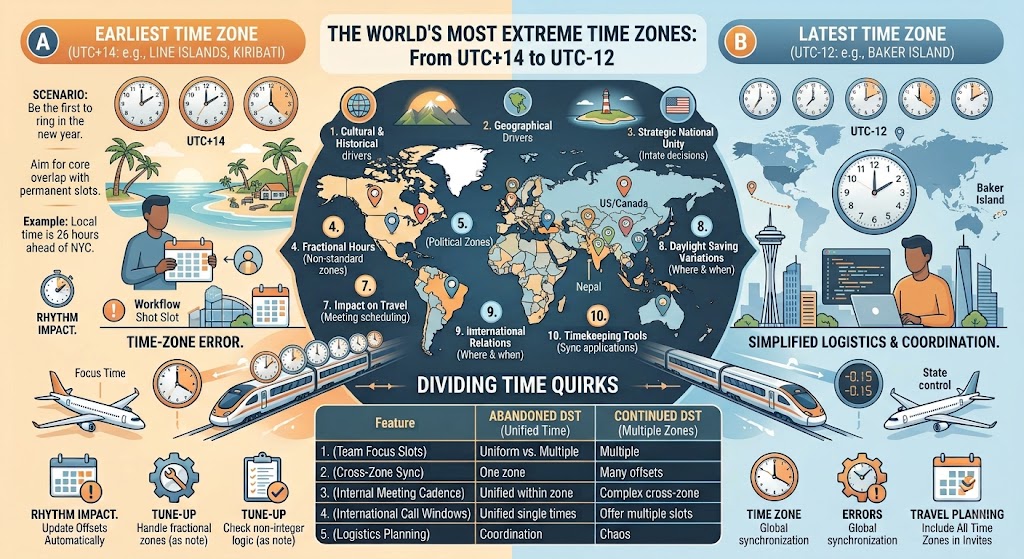
| Earliest | Kiribati (Line Islands) | UTC+14 |
| Latest | Baker Island, Howland Island (US) | UTC-12 |
When it is 12:00 PM (noon) on Tuesday in London (UTC+0):
- It is 2:00 AM on Wednesday in Kiribati's Line Islands (UTC+14)
- It is 12:00 AM on Tuesday in Baker Island (UTC-12)
Two places on the same planet, separated by 26 hours and an entire calendar day. And they are only about 2,000 kilometers apart .
This guide explains how this happened, where these extreme time zones are, and what it means for the world.
Use the free time zone converter here →
The Short Answer: The 26-Hour Gap
| Question | Answer |
|---|---|
| Earliest time zone | UTC+14 (Line Islands, Kiribati) |
| Latest time zone | UTC-12 (Baker Island, Howland Island, US) |
| Maximum time difference | 26 hours |
| Why >24 hours? | Pacific nations deliberately placed themselves on the western side of the International Date Line to align with trading partners |
| Distance between extremes | About 2,000 km |
The Two Extremes: Where Days Begin and End
UTC+14: The Earliest Place on Earth
Location: Line Islands, Kiribati (including Kiritimati / Christmas Island)
UTC Offset: +14:00
Why It Exists: Kiribati moved the International Date Line eastward on January 1, 1995, shifting its Line Islands and Phoenix Islands to UTC+13 and UTC+14 .
The Reason: Before the change, Kiribati's Gilbert Islands were on one side of the date line, and its Phoenix and Line Islands were on the other. The country had two different calendar dates at once — an absurd situation for a single nation . Kiribati also wanted to align its working week with Australia and New Zealand .
The Result: The Line Islands are the first place on Earth to enter each new day. Every New Year's Eve, they celebrate midnight while it is still morning on the previous day in London .
Bonus: Kiritimati (Christmas Island) is now famous for being the first place to see each new year. Kiribati marketed itself as the first place to see the new millennium on January 1, 2000 — a claim that generated significant tourism interest .
UTC-12: The Latest Place on Earth
Location: Baker Island and Howland Island (US territories, uninhabited)
UTC Offset: -12:00
What They Are: Baker Island and Howland Island are small, uninhabited atolls in the central Pacific, about 2,000 km from Kiribati .
Why They Are UTC-12: They are US territories that never changed their offset. They remain on the eastern side of the International Date Line, the last place on Earth to end each day .
Historical Note: Howland Island is famous as the planned destination of Amelia Earhart's ill-fated 1937 round-the-world flight. She disappeared while trying to reach it .
The Result: Baker and Howland Islands are the last place on Earth to enter each new day. They celebrate New Year nearly 26 hours after Kiribati's Line Islands .
The 26-Hour Gap: How It Works
The Math
| Time Zone | UTC Offset |
|---|---|
| Line Islands (Kiribati) | +14:00 |
| Baker Island (US) | -12:00 |
| Difference | +26 hours |
What This Means
| Time (London) | Time in Line Islands (UTC+14) | Time in Baker Island (UTC-12) |
|---|---|---|
| 12:00 PM (noon) Tuesday | 2:00 AM Wednesday | 12:00 AM Tuesday |
| 10:00 PM Tuesday | 12:00 PM Wednesday | 10:00 AM Tuesday |
| 11:00 PM Tuesday | 1:00 PM Wednesday | 11:00 AM Tuesday |
| 12:00 AM Wednesday | 2:00 PM Wednesday | 12:00 PM Tuesday |
Three Calendar Dates at Once
Because the gap exceeds 24 hours, there is a window each day when three different calendar dates coexist on Earth .
During UTC 10:00-10:59:
- Line Islands: Friday 00:15 (UTC+14)
- American Samoa: Wednesday 23:15 (UTC-11)
- Baker Island: Thursday 10:15 (UTC-12)
Result: Three different dates exist simultaneously on the planet .
Inhabited vs. Uninhabited Extremes
The Uninhabited Record: 26 Hours
The maximum difference of 26 hours exists between uninhabited or not permanently inhabited places (Howland/Baker Islands at UTC-12 and the Line Islands at UTC+14) .
The Inhabited Record: 25 Hours
If we only count places where people actually live, the record shrinks by one hour. The westernmost inhabited clocks run at UTC-11 (American Samoa, Niue, Midway Atoll) .
| Place | UTC Offset | Status |
|---|---|---|
| Line Islands (Kiribati) | UTC+14 | Inhabited (earliest) |
| American Samoa | UTC-11 | Inhabited (latest) |
| Difference | 25 hours |
Fun Fact: American Samoa and Kiribati's Line Islands are both in the central Pacific, yet they are 25 hours apart. When it is 07:00 on Sunday in the Line Islands, it is still 06:00 on Saturday in American Samoa — a full day and an hour behind .
How Pacific Nations Created These Extreme Time Zones
Kiribati (1995)
Before:
- Gilbert Islands: UTC+12
- Phoenix Islands: UTC-11
- Line Islands: UTC-10
Problem: The country had two different calendar dates at the same time. The government in Tarawa was on a different date than its own eastern territories .
The Fix: Kiribati moved the International Date Line eastward, shifting the Phoenix Islands to UTC+13 and the Line Islands to UTC+14. The change ensured all of Kiribati shared the same calendar day .
The Date: The change took effect on January 1, 1995 .
Samoa (2011)
Before (2011): UTC-11
After (2011): UTC+13 (and UTC+14 during DST)
The Change: On December 29, 2011, Samoa skipped an entire day. December 30, 2011 never existed in Samoa .
The Reason: Samoa's main trading partners (Australia and New Zealand) are west of the date line. Before the change, when it was Monday in Sydney, it was still Sunday in Samoa. Samoa was losing two business days per week .
The Result: Samoa now aligns with its trading partners. The change also created a 24-hour time difference between Samoa and American Samoa, which are only 100 km apart .
Tonga
What: Tonga has used UTC+13 since the 1940s.
Why: To align with trading partners.
DST: Tonga does not observe DST, staying on UTC+13 year-round .
Quick Reference: The Most Extreme Time Zones
| Rank | Time Zone | Location | UTC Offset | Status |
|---|---|---|---|---|
| 1 | Earliest | Kiribati (Line Islands) | UTC+14 | Inhabited |
| 2 | Latest | Baker Island, Howland Island (US) | UTC-12 | Uninhabited |
| 3 | Latest inhabited | American Samoa, Niue, Midway | UTC-11 | Inhabited |
Standard Offsets Beyond UTC+12
| Time Zone | UTC Offset | Location |
|---|---|---|
| Line Islands Time | UTC+14 | Kiribati (Line Islands) |
| Samoa Time | UTC+13 | Samoa, Tokelau |
| Tonga Time | UTC+13 | Tonga |
| Phoenix Islands Time | UTC+13 | Kiribati (Phoenix Islands) |
| Chatham Islands Time | UTC+12:45 | New Zealand (Chatham Islands) |
The International Date Line: The Key to the Puzzle
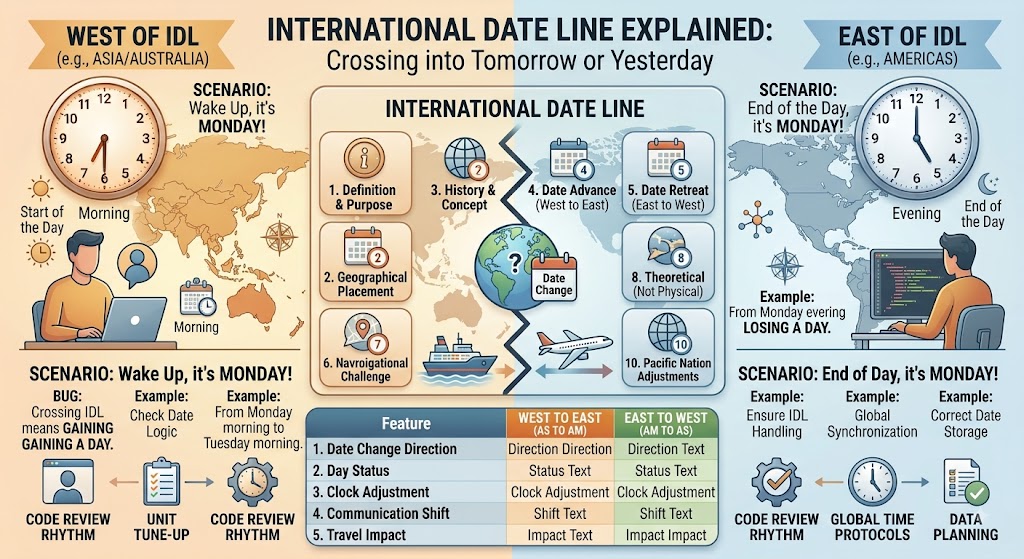
The International Date Line (IDL) is the imaginary line where the date changes. It roughly follows the 180th meridian but zigzags to avoid splitting countries .
How the Zigzags Created Extreme Time Zones
- Kiribati: The IDL was pushed eastward in 1995 to keep the entire country on the same date
- Samoa: The IDL was crossed in 2011 to align with trading partners
- The result: UTC+14 and UTC-12 now exist, creating the 26-hour gap
How Many Time Zones Are There?
The short answer: 38
Why not 24?
- Half-hour offsets: India (UTC+5:30), Myanmar (UTC+6:30), Iran (UTC+3:30)
- 45-minute offsets: Nepal (UTC+5:45), Chatham Islands (UTC+12:45)
- Political choices: Countries choose offsets that align with their needs, not pure geography
The result: 38 distinct UTC offsets exist around the world .
Quick Reference Card
━━━━━━━━━━━━━━━━━━━━━━━━━━━━━━━━━━━━━━━━━━━━━━━━━━━━━━━━━━
           WORLD'S MOST EXTREME TIME ZONES
━━━━━━━━━━━━━━━━━━━━━━━━━━━━━━━━━━━━━━━━━━━━━━━━━━━━━━━━━━

              EARLIEST (UTC+14)    LATEST (UTC-12)
              ─────────────────────────────────────────────
              Kiribati Line Islands  Baker & Howland Islands
              Kiritimati (Christmas)  Uninhabited US territories
              Inhabited              Uninhabited

MAXIMUM TIME DIFFERENCE: 26 HOURS

Distance between them: ~2,000 km

━━━━━━━━━━━━━━━━━━━━━━━━━━━━━━━━━━━━━━━━━━━━━━━━━━━━━━━━━━
           When it is 12:00 PM Tuesday in London:

           Line Islands: 2:00 AM Wednesday
           Baker Island: 12:00 AM Tuesday

━━━━━━━━━━━━━━━━━━━━━━━━━━━━━━━━━━━━━━━━━━━━━━━━━━━━━━━━━━
           Check live conversions at: /timezone-converter
━━━━━━━━━━━━━━━━━━━━━━━━━━━━━━━━━━━━━━━━━━━━━━━━━━━━━━━━━━
Frequently Asked Questions
What is the largest time difference on Earth?
26 hours, between Kiribati's Line Islands (UTC+14) and Baker Island (UTC-12) .
What is the earliest time zone on Earth?
UTC+14, used by Kiribati's Line Islands .
What is the latest time zone on Earth?
UTC-12, used by Baker Island and Howland Island (uninhabited US territories) .
Are Baker and Howland Islands inhabited?
No. They are uninhabited US territories .
What is the largest time difference between inhabited places?
25 hours, between Kiribati's Line Islands (UTC+14) and American Samoa (UTC-11) .
Why is the maximum difference 26 hours, not 24?
Pacific nations deliberately moved themselves to the western side of the International Date Line to align with trading partners. This created offsets beyond UTC+12 and UTC-12 .
What happened in Kiribati in 1995?
Kiribati moved the International Date Line eastward, shifting its Line Islands to UTC+14 and Phoenix Islands to UTC+13. The change took effect on January 1, 1995 .
What happened in Samoa in 2011?
Samoa skipped December 30, 2011, moving from UTC-11 to UTC+13 to align with trading partners in Australia and New Zealand .
What is the first place to see each New Year?
Kiribati's Line Islands, at UTC+14. They are the first inhabited place to enter each new day .
What is the last place to see each New Year?
Baker Island and Howland Island, at UTC-12. They are the last place to enter each new day .
Final Thoughts
The world's most extreme time zones are not a product of geography — they are a product of politics. Countries like Kiribati and Samoa deliberately chose to place themselves on the western side of the International Date Line to align with their trading partners. The result is a 26-hour gap between the earliest and latest places on Earth.
Three things to remember:
- Earliest: UTC+14 (Kiribati's Line Islands) — first to see each new day
- Latest: UTC-12 (Baker Island) — last to see each new day
- The gap: 26 hours — two hours more than a full day
Check time zone conversions instantly → /timezone-converter
Tags: extreme time zones, UTC+14, UTC-12, Kiribati Line Islands, Baker Island time, Howland Island time, International Date Line, biggest time difference, 26 hour time difference, first place to see New Year, last place to see New Year, world's earliest time zone, world's latest time zone, Kiritimati Christmas Island, time zone extremes