Europe vs US DST: Why the Dates Are Different
It is late October. You live in New York. Your team is in London. You have a recurring 9:00 AM meeting every Monday.
On October 25, you join the call. Only half the team is there. Everyone is confused. You check your calendar. It is 9:00 AM. But in London, it is 1:00 PM. Wait — it used to be 2:00 PM.
Europe changed its clocks last week. The US changes next week. For one week, the time difference between New York and London is 4 hours instead of 5.
This is the transatlantic DST mismatch — a twice-yearly headache for anyone scheduling across the Atlantic.
This guide explains why Europe and the US change clocks on different dates, what happens during the mismatch weeks, and how to avoid scheduling chaos.
Use the free time zone converter here →
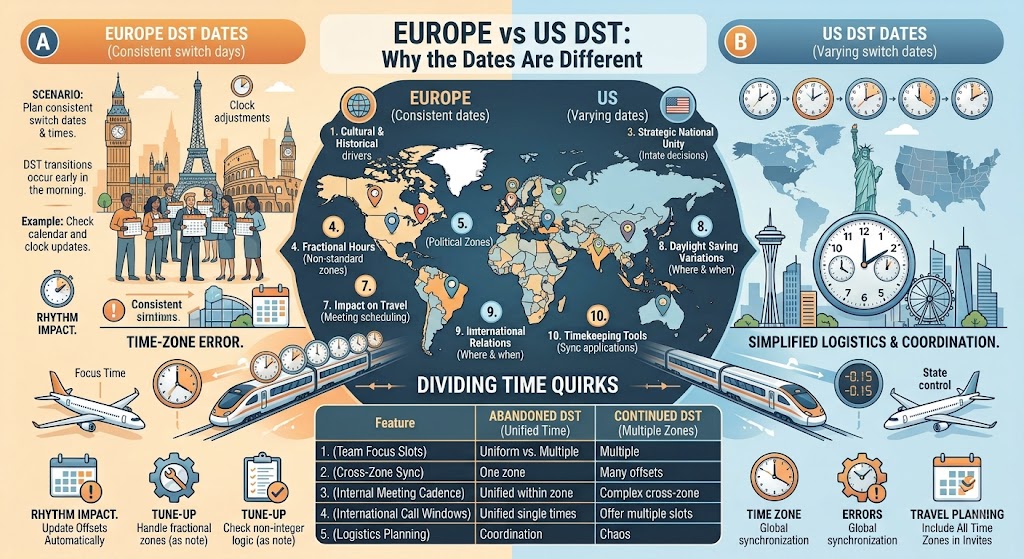
The Short Answer: US vs Europe DST Dates
| Region | Clock Forward (Start) | Clock Back (End) |
|---|---|---|
| United States | Second Sunday in March | First Sunday in November |
| European Union | Last Sunday in March | Last Sunday in October |
For 2026:
| Region | Spring Forward | Fall Back |
|---|---|---|
| United States | March 8 | November 1 |
| European Union | March 29 | October 25 |
| United Kingdom | March 29 | October 25 |
The Result: Two mismatch windows every year:
| Mismatch Period | Dates | Impact |
|---|---|---|
| Spring | March 8 – March 29 (3 weeks) | US springs forward; Europe hasn't yet |
| Fall | October 25 – November 1 (1 week) | Europe falls back; US hasn't yet |
During these weeks, the transatlantic time difference shrinks by one hour.
The US DST Schedule: A Brief History
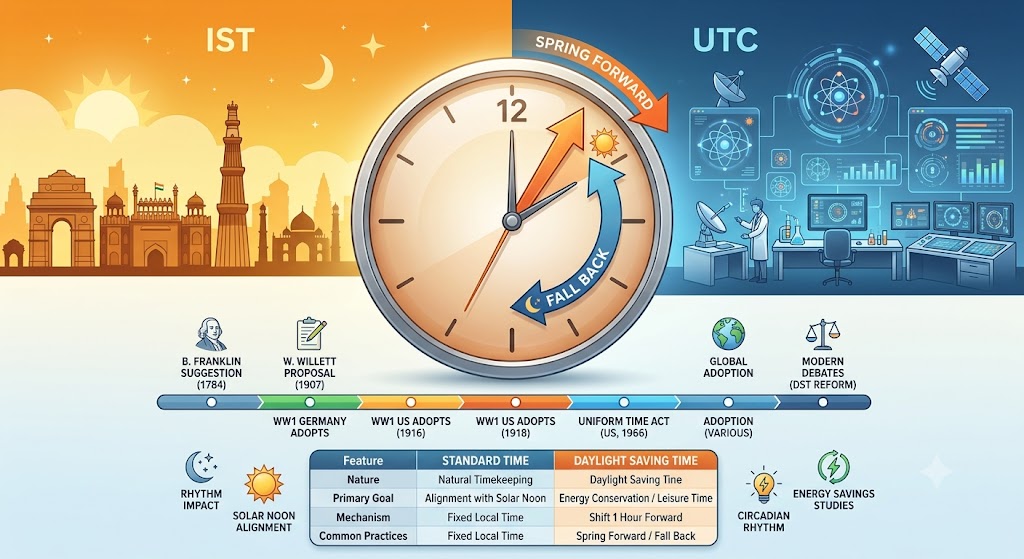
The Uniform Time Act of 1966
The current US DST system was established by the Uniform Time Act of 1966. Before this, DST was a local option — and it was chaotic.
The chaos before 1966:
- States and cities could choose whether to observe DST
- Different jurisdictions had different start and end dates
- By 1965, the patchwork of DST policies made transportation and broadcasting extremely difficult
What the 1966 Act did:
- Mandated uniform DST nationwide
- Allowed states to opt out (Hawaii and Arizona did)
- Original dates: Last Sunday in April to Last Sunday in October
The Energy Crisis of 1973-74
In 1973, the US faced an oil embargo. Congress enacted year-round DST as a trial to conserve energy.
The result:
- Year-round DST began January 6, 1974
- It was hotly debated — advocates cited energy savings; opponents worried about children going to school in the dark
- The trial was cut short. Congress returned to standard time from late October to late February
The 2005 Change
Congress changed the dates again in 2005. The new law took effect in 2007. This extended DST by several weeks, pushing the start earlier into March and the end later into November.
| Period | Start | End |
|---|---|---|
| Before 2007 | First Sunday in April | Last Sunday in October |
| After 2007 | Second Sunday in March | First Sunday in November |
The result: The US and EU DST schedules are now misaligned in March and October.
The European DST Schedule: A Brief History
Europe's Wartime Origins
Europe first adopted DST during World War I. Germany and Austria began moving clocks forward in the summer of 1916. The UK and other countries followed soon after.
The 2002 EU Coordination
From 2002, all EU member states adjusted clocks twice yearly on the same days in March and October.
The EU Rule:
- Start: Last Sunday in March at 1:00 AM UTC
- End: Last Sunday in October at 1:00 AM UTC
This coordination means all EU countries change at the same moment.
The UK After Brexit
The UK follows the same dates as the EU — last Sunday in March and last Sunday in October. Despite Brexit, the UK has maintained this alignment.
Why the US and EU Have Different DST Dates
The difference comes down to separate legislative histories.
| Factor | US | EU |
|---|---|---|
| Governing Law | Uniform Time Act of 1966 (amended 2005) | EU Directive 2002 |
| Recent Changes | 2005 law pushed start earlier and end later | No major changes since 2002 |
| Reason for Difference | US wanted to extend DST; EU kept existing schedule |
Both regions have debated abolishing DST entirely. The US Senate unanimously approved permanent DST in 2022, but it did not advance. The EU has debated the issue since 2019, but no consensus has emerged.
The Mismatch Effect: Transatlantic Time Difference Changes
Spring Mismatch (March)
| Week | US Time | Europe Time | Transatlantic Difference |
|---|---|---|---|
| Before US change | EST (UTC-5) | CET (UTC+1) | 6 hours |
| Mismatch (March 8-29) | EDT (UTC-4) | CET (UTC+1) | 5 hours (1 hour shorter) |
| After Europe change | EDT (UTC-4) | CEST (UTC+2) | 6 hours |
Impact: Your 9:00 AM New York call is now 2:00 PM London instead of 3:00 PM.
Fall Mismatch (October-November)
| Week | US Time | Europe Time | Transatlantic Difference |
|---|---|---|---|
| Before Europe change | EDT (UTC-4) | CEST (UTC+2) | 6 hours |
| Mismatch (Oct 25-Nov 1) | EDT (UTC-4) | CET (UTC+1) | 5 hours (1 hour shorter) |
| After US change | EST (UTC-5) | CET (UTC+1) | 6 hours |
Impact: Your 9:00 AM New York call is now 1:00 PM London instead of 2:00 PM.
Quick Reference: 2026 DST Dates
| Region | Spring Forward | Fall Back |
|---|---|---|
| United States | March 8 | November 1 |
| European Union | March 29 | October 25 |
| United Kingdom | March 29 | October 25 |
2026 Mismatch Weeks
| Mismatch | Dates | Duration | US vs EU Difference |
|---|---|---|---|
| Spring | March 8 – March 29 | 3 weeks | New York → London = 5 hours (instead of 6) |
| Fall | October 25 – November 1 | 1 week | New York → London = 5 hours (instead of 6) |
Future DST Dates (Through 2029)
United States
| Year | Spring Forward (Start) | Fall Back (End) |
|---|---|---|
| 2026 | March 8 | November 1 |
| 2027 | March 14 | November 7 |
| 2028 | March 12 | November 5 |
| 2029 | March 11 | November 4 |
European Union & UK
| Year | Spring Forward (Start) | Fall Back (End) |
|---|---|---|
| 2026 | March 29 | October 25 |
| 2027 | March 28 | October 31 |
| 2028 | March 26 | October 29 |
| 2029 | March 25 | October 28 |
How to Avoid Scheduling Chaos
Rule 1: Use UTC for Calendar Invites
Schedule in UTC. It never changes for DST. Everyone converts from UTC to their local time.
Example: Instead of "9:00 AM EST," use "14:00 UTC."
Rule 2: Check the Date
When scheduling transatlantic meetings in March or October, check the DST status of both locations.
| Question | Why It Matters |
|---|---|
| Has the US changed? | US changes March 8, 2026 |
| Has Europe changed? | EU changes March 29, 2026 |
Rule 3: Use a Time Zone Converter
A converter that reads the IANA database will give you the correct time for the exact date you pick — not a year-round average.
Rule 4: Know the Mismatch Weeks
For 2026:
- March 8-29: US is on DST; EU is not. Transatlantic difference is 1 hour shorter.
- October 25-November 1: EU is off DST; US is not. Transatlantic difference is 1 hour shorter.
Quick Reference Card
━━━━━━━━━━━━━━━━━━━━━━━━━━━━━━━━━━━━━━━━━━━━━━━━━━━━━━━━━━
        US vs EUROPE DST DATES COMPARISON
━━━━━━━━━━━━━━━━━━━━━━━━━━━━━━━━━━━━━━━━━━━━━━━━━━━━━━━━━━

                    US                 EU/UK
━━━━━━━━━━━━━━━━━━━━━━━━━━━━━━━━━━━━━━━━━━━━━━━━━━━━━━━━━━
Spring Forward     Second Sunday       Last Sunday
                   in March            in March

Fall Back          First Sunday        Last Sunday
                   in November         in October
━━━━━━━━━━━━━━━━━━━━━━━━━━━━━━━━━━━━━━━━━━━━━━━━━━━━━━━━━━

2026 DATES:

US Spring:         March 8
EU Spring:         March 29
US Fall:           November 1
EU Fall:           October 25

MISMATCH WINDOWS:

Spring:            March 8 - 29 (US on DST, EU not)
Fall:              October 25 - November 1 (EU off DST, US on)

During mismatch weeks, the transatlantic time difference
is 1 hour shorter than usual.
━━━━━━━━━━━━━━━━━━━━━━━━━━━━━━━━━━━━━━━━━━━━━━━━━━━━━━━━━━
           Check live conversions at: /timezone-converter
━━━━━━━━━━━━━━━━━━━━━━━━━━━━━━━━━━━━━━━━━━━━━━━━━━━━━━━━━━
Frequently Asked Questions
Why do the US and Europe change DST on different dates?
The US and Europe have separate legislative histories. The US changed its dates in 2005 under the Energy Policy Act, extending DST into March and November. The EU has kept its schedule since 2002.
When does the US change clocks in 2026?
Spring forward on March 8, 2026. Fall back on November 1, 2026.
When does Europe change clocks in 2026?
Spring forward on March 29, 2026. Fall back on October 25, 2026.
What happens during the mismatch weeks?
The time difference between the US and Europe shrinks by one hour. In fall 2026, a 9:00 AM New York call lands at 1:00 PM London (instead of 2:00 PM).
Why did the US change its DST dates in 2005?
Congress passed the Energy Policy Act of 2005 to extend DST. The changes took effect in 2007.
Does the UK follow EU DST dates after Brexit?
Yes. The UK still changes on the last Sunday in March and the last Sunday in October.
Are there other countries that change on different dates?
Yes. Many countries have different DST schedules. Canada follows US dates for the most part. Other countries have their own rules.
What time do clocks change in Europe?
At 1:00 AM UTC (Coordinated Universal Time). All EU time zones change at the same moment.
What time do clocks change in the US?
At 2:00 AM local time in each time zone. The change happens at different times in different time zones.
Final Thoughts
The US and Europe have different DST dates because of separate legislative histories. The US extended DST in 2005; the EU has kept its schedule since 2002. The result: two mismatch weeks every year when the transatlantic time difference shrinks by one hour.
Three things to remember:
- US: Second Sunday in March → First Sunday in November
- EU/UK: Last Sunday in March → Last Sunday in October
- Mismatch weeks: March 8-29 and October 25-November 1 in 2026
Check time zone conversions instantly → /timezone-converter
Tags: Europe vs US DST, Europe daylight saving time, US daylight saving time, DST dates comparison, transatlantic time difference, EU summer time, US DST 2026, Europe DST 2026, why DST dates differ, US Europe time mismatch