Daylight Saving Time Explained: Why Does the Clock Change?
It happens twice a year. You wake up, glance at your phone, and realize you've either lost an hour of sleep or gained one. Then you spend the next few weeks confused about whether it's actually dark outside or if your internal clock is just broken.
If you've ever wondered why we do this — and whether there's a good reason — you're not alone.
This guide explains everything you need to know about Daylight Saving Time: when it happens, why it started, whether it actually saves energy, and why some states want to stop changing clocks altogether.
Use the free time zone converter here →
The Short Answer: When Do Clocks Change?
In the United States, clocks change twice a year:
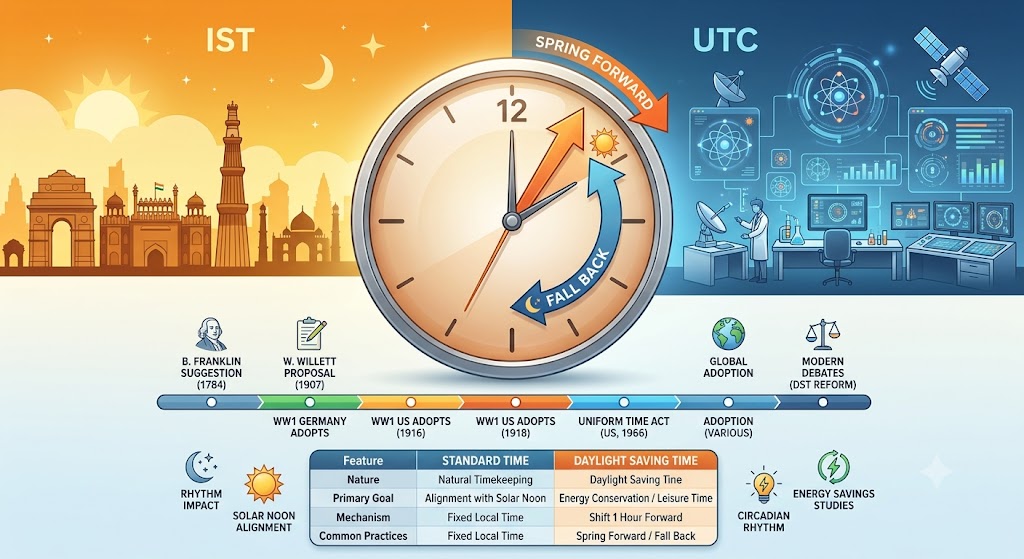
Spring forward: Second Sunday in March at 2:00 AM — clocks move ahead one hour
Fall back: First Sunday in November at 2:00 AM — clocks move back one hour
A simple way to remember: "Spring forward, fall back."
For 2026:
- DST started on March 8, 2026
- DST ends on November 1, 2026
When the clocks spring forward, you lose an hour of sleep but gain later sunsets. When they fall back, you gain an hour of sleep but lose evening daylight.
Why Do We Change the Clocks?
The Original Reason: Saving Energy
The idea behind DST is simple: shift the clocks so that daylight hours align better with when people are awake. The goal is to reduce the need for artificial lighting in the evening.
Germany was actually the first country to implement DST during World War I in 1916. The US followed in 1918 to conserve fuel for the war effort.
After World War I, DST was repealed. But during World War II, the US brought it back again — calling it "War Time" — to save energy for military production.
The Benjamin Franklin Connection
People often credit Benjamin Franklin with inventing DST. In 1784, he wrote a satirical letter suggesting that Parisians could save candles by waking up earlier and using more morning sunlight.
But Franklin was making a joke — not a serious policy proposal. The real credit goes to William Willett, a British builder who campaigned for daylight saving in 1907 after noticing that Londoners were sleeping through the morning sunlight.
What About Farmers?
Contrary to popular belief, farmers didn't want DST. They actually opposed it because their schedule depends on the sun, not the clock. Dairy cows don't care what the clock says — they need to be milked at the same time every day regardless.
The Uniform Time Act: How DST Became Standard
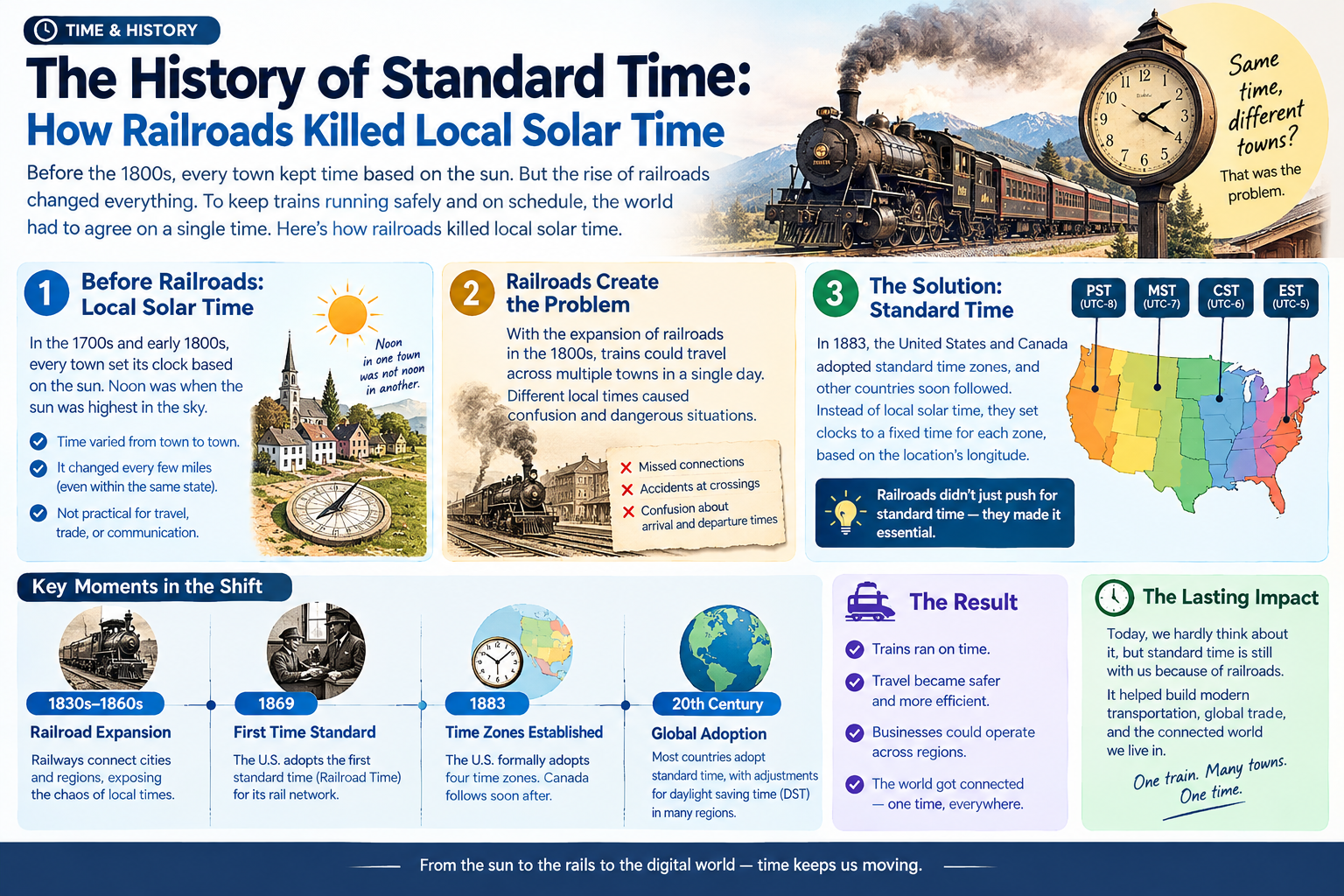
Before 1966, DST was a mess in the US. States and even individual towns could choose whether to observe it and when to start and end it.
The Problem
Take this example: a 35-minute bus ride from Steubenville, Ohio to Moundsville, West Virginia once required passengers to change their watches seven times because different areas had different DST schedules.
Iowa once had 23 different DST start and end dates in different parts of the state.
The Solution
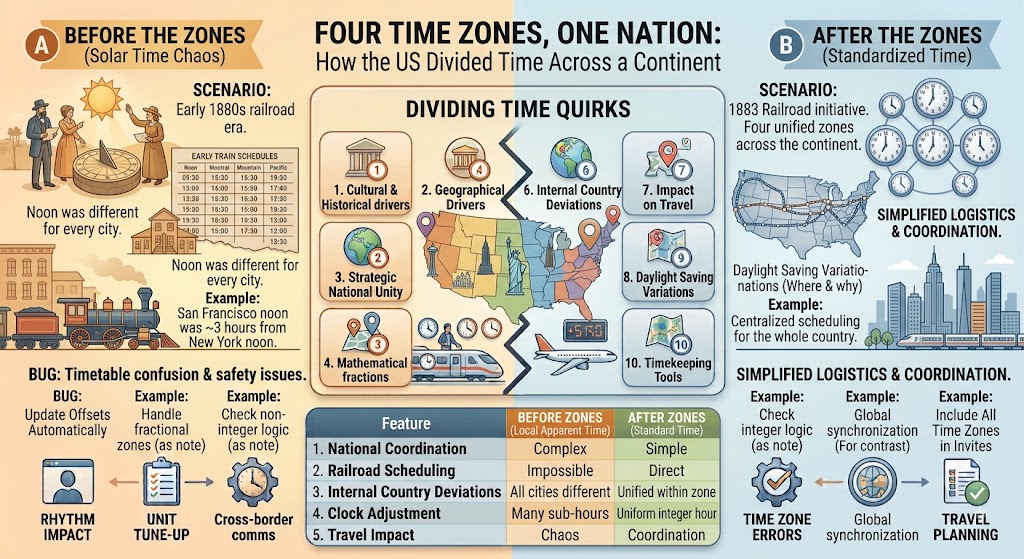
In 1966, Congress passed the Uniform Time Act. This law:
- Mandated standard time zones across the country
- Established a uniform DST schedule (start and end dates)
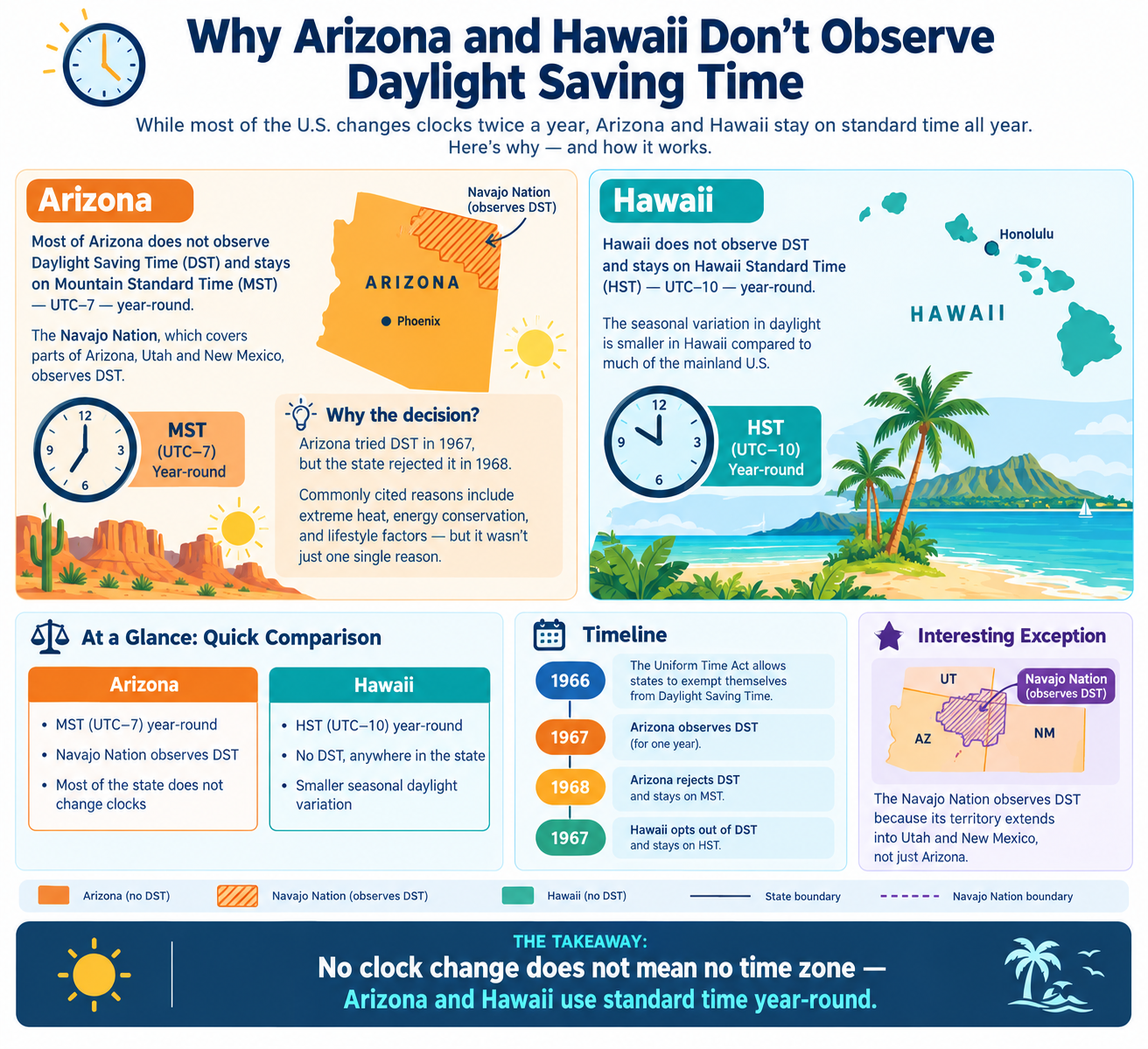
- Allowed states to opt out of DST entirely (Hawaii and Arizona did)
States can choose not to observe DST, but they cannot independently choose to observe it year-round. Only Congress can make that change.
Does DST Actually Save Energy?
This is the million-dollar question — and the answer is surprisingly complicated.
Studies Show Mixed Results
In 2008, the US Department of Energy found that the four-week extension of DST (from March-November instead of April-October) saved about 0.5% in total electricity per day. That adds up to 1.3 billion kilowatt-hours — enough to power more than 100,000 homes for a year.
But: A study by the National Bureau of Economic Research found that DST actually increases electricity demand. While lighting usage went down, heating and cooling demand went up.
The conclusion? The energy savings depend on location. In warmer climates, people use more air conditioning during later daylight hours. In colder climates, they use more heat. There's no clear national benefit.
Other Benefits and Drawbacks
| Potential Benefit | Potential Drawback |
|---|---|
| More daylight for evening activities | Disrupted sleep patterns |
| Reduced crime (more light in the evening) | Increased heart attacks after spring forward |
| Fewer traffic accidents in daylight | More car accidents in the dark morning |
| Energy savings (in some areas) | Energy waste (in other areas) |
Who Doesn't Observe DST?
Not everyone changes their clocks.
US States and Territories Without DST
- Hawaii — opted out
- Most of Arizona — opted out (the Navajo Nation does observe DST)
- American Samoa, Guam, Northern Mariana Islands, Puerto Rico, US Virgin Islands — also don't observe DST
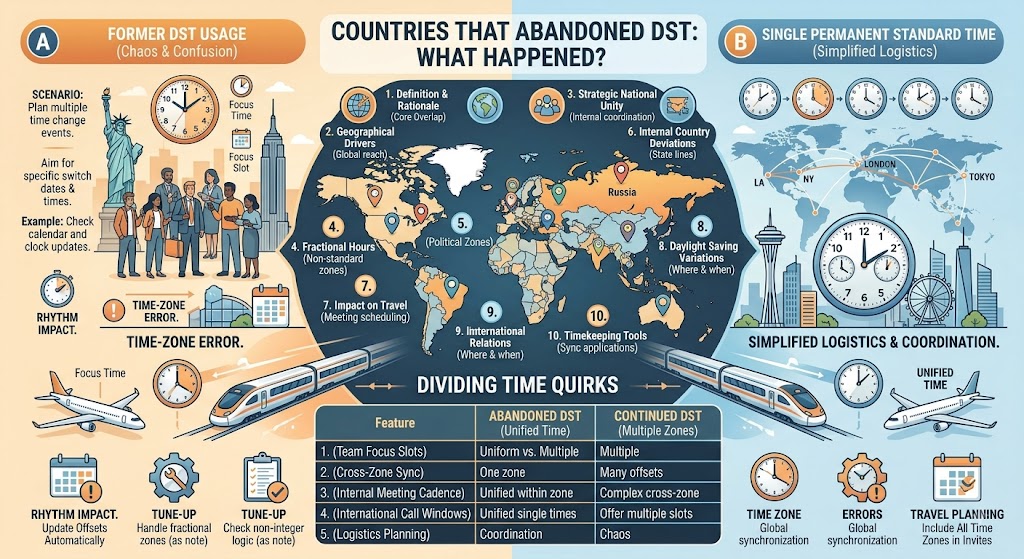
Countries Without DST
Approximately two-thirds of countries do not observe DST.
- China, India, and Russia do not change clocks
- Mexico ended DST in most areas in 2022
- The European Union has been debating ending DST since 2019
- British Columbia, Canada adopted permanent DST in 2026
Countries near the equator don't observe DST because daylight hours don't change much throughout the year.
Why It's Hard to Get Rid of DST
You might think ending the clock change would be easy. It's not.
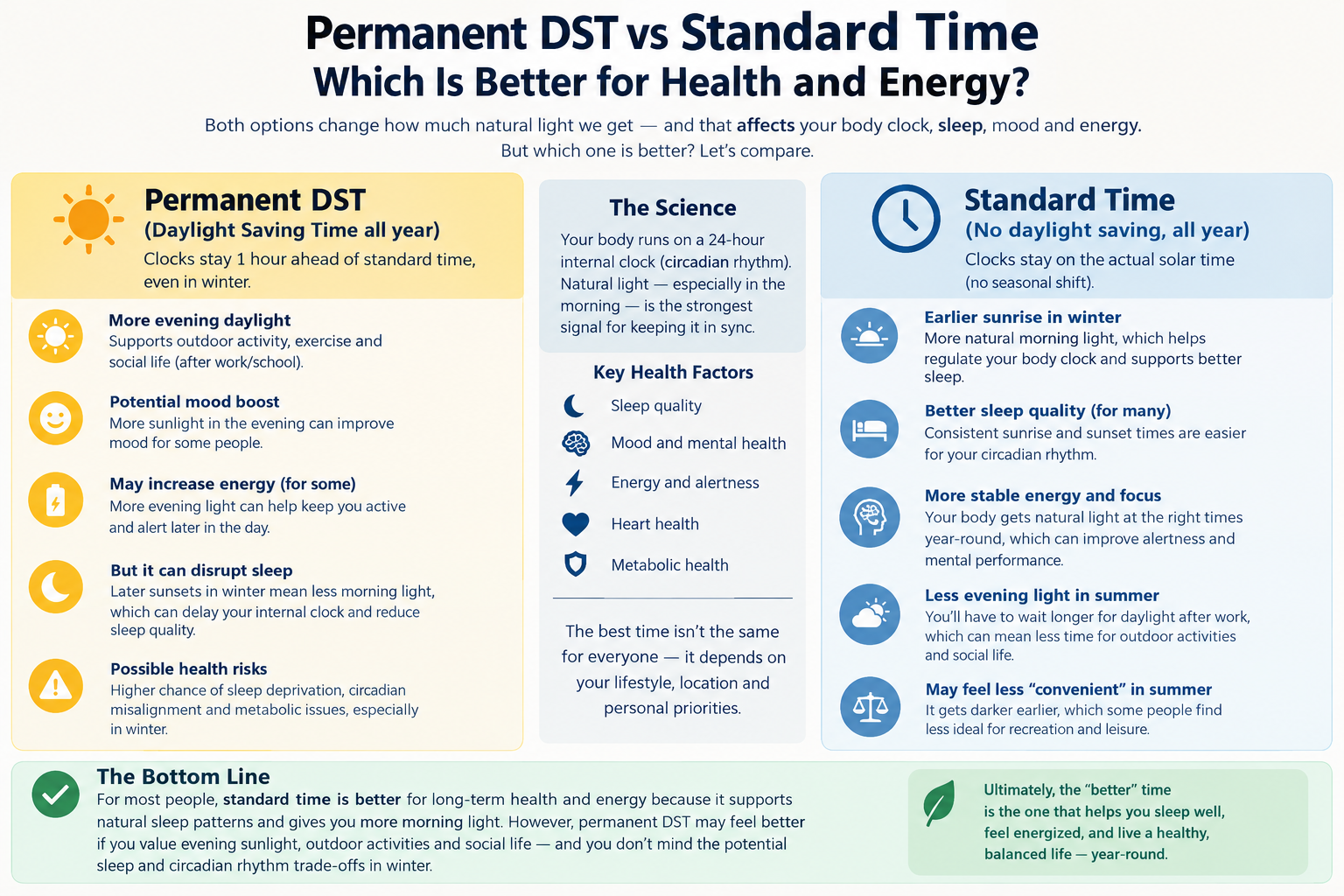
The Problem with Permanent DST
If the US switches to permanent DST (staying on summer time all year), mornings become darker in winter.
In 1974, the US tried permanent DST during an energy crisis. The result: children were going to school in pitch darkness, and working people were commuting in the dark. The complaints were so strong that the experiment was abandoned after less than a year.
The UK tried permanent summer time from 1968 to 1971 and abandoned it for the same reason.
Russia switched to permanent DST in 2011 and abandoned it in 2014 because of public dissatisfaction with late winter sunrises.
The Alternative: Permanent Standard Time
Sleep experts generally recommend permanent standard time over permanent DST because it better aligns with human circadian rhythms.
However, most people prefer the later sunsets that DST provides, making permanent standard time politically unpopular.
The Sunshine Protection Act: Will DST End?
The Sunshine Protection Act is a bill that would make DST permanent in the US.
History:
- First introduced in 2018 by Senator Marco Rubio
- Passed the Senate by unanimous consent in March 2022
- Died in the House of Representatives
- Passed the House in 2026 and moved to the Senate for approval
President Donald Trump has also expressed interest in eliminating DST and making standard time permanent.
So far, no bill has become law. But 20 states have passed "trigger" legislation — laws that would make DST permanent if Congress ever allows it.
Frequently Asked Questions
When is Daylight Saving Time in 2026?
DST started on March 8, 2026 and ends on November 1, 2026.
Does every state observe DST?
No. Hawaii and most of Arizona do not observe DST.
What is the Uniform Time Act?
The 1966 law that standardized DST start and end dates across the US.
What is the Sunshine Protection Act?
A bill that would make DST permanent in the US. It passed the House in 2026 and is now in the Senate.
Why do we call it "spring forward" and "fall back"?
"Spring forward" = clocks move ahead one hour in March. "Fall back" = clocks move back one hour in November.
Do farmers like DST?
No. They opposed it because their schedule depends on the sun, not the clock.
Did Benjamin Franklin invent DST?
No. He wrote a satirical letter about it in 1784, but William Willett campaigned for it in 1907.
How many countries observe DST?
About one-third of countries — roughly 70 — observe DST.
What happens if DST becomes permanent?
Winter mornings would be darker, but evenings would stay lighter all year. The US tried this in 1974 and abandoned it.
Does DST actually save energy?
It depends on the location. Some studies show small savings, others show no savings or even increases in electricity use.
Final Thoughts
Daylight Saving Time is one of those things everyone complains about but can't seem to fix.
It started as a wartime energy-saving measure, became standard through the 1966 Uniform Time Act, and has been debated ever since. The energy savings are modest at best, and the twice-yearly time change disrupts sleep schedules and daily routines.
But permanent DST has its own problems — dark winter mornings — and permanent standard time is politically unpopular because people prefer later sunsets.
So we're stuck in the middle: changing clocks twice a year and complaining about it every time.
Convert Time Zones Instantly →
Tags: Daylight Saving Time, DST, spring forward, fall back, time change, Uniform Time Act, Sunshine Protection Act, DST 2026, when does DST start, when does DST end, why do clocks change, daylight saving time explained, permanent DST, states without DST, DST energy savings, history of DST, Benjamin Franklin DST, William Willett DST