The 24-Hour Sun: How Time Works in Antarctica
Antarctica is the most extreme timekeeping environment on Earth. The continent has no official time zone, no permanent population, and no natural daily rhythm of sunrise and sunset.
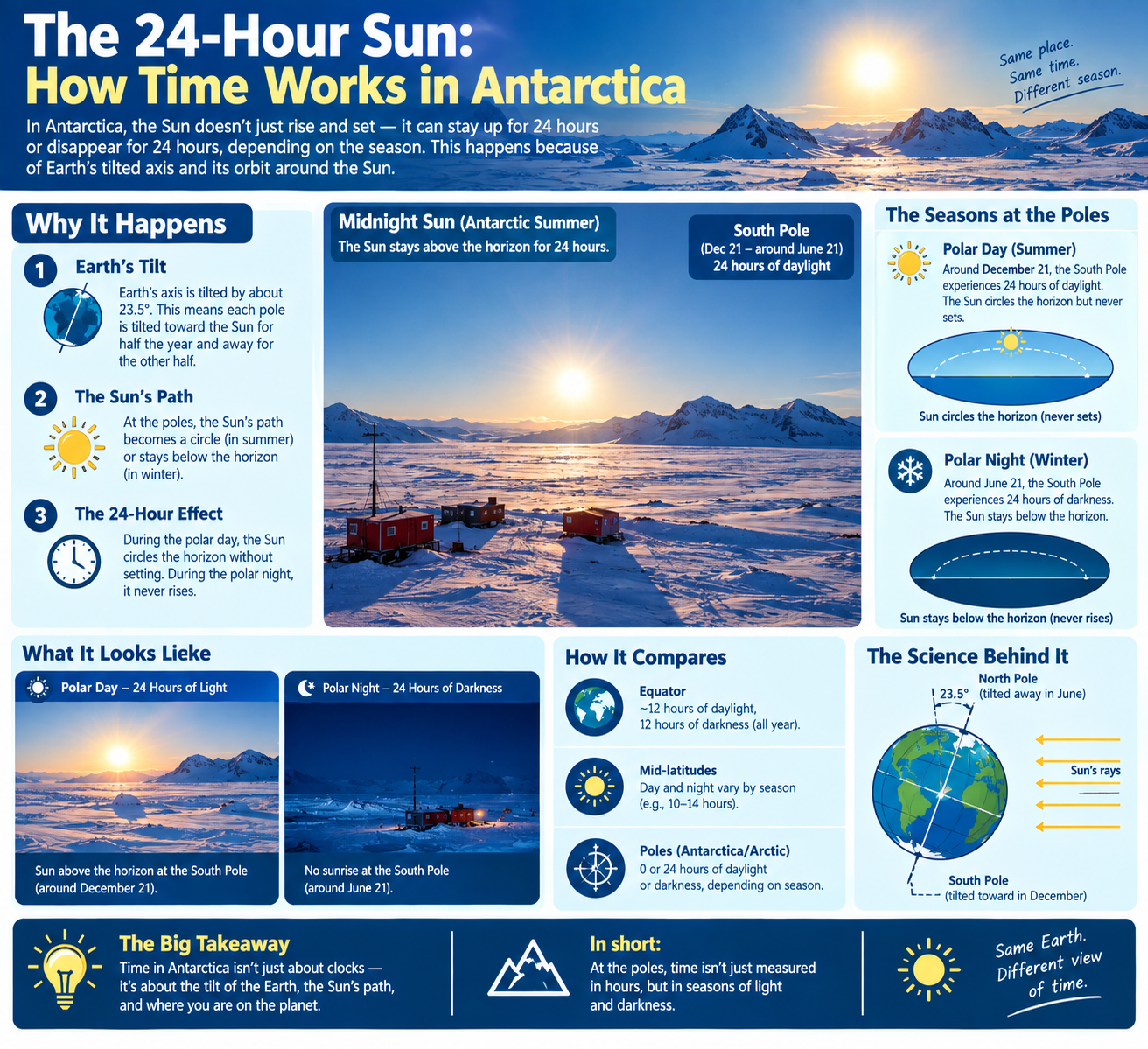
In summer, the sun never sets. In winter, it never rises. Yet thousands of scientists and support staff live and work there, running experiments, flying aircraft, and coordinating with the rest of the world.
This guide explains how time actually works in Antarctica.
Use the free time zone converter here →
The Short Answer: Antarctica Has No Official Time Zone
Antarctica has no officially assigned time zone. Each research station chooses its own time, usually to align with its supply base or home country.
| Aspect | Details |
|---|---|
| Official time zone | None |
| Who decides | Each station |
| Common reference | Supply base or home country |
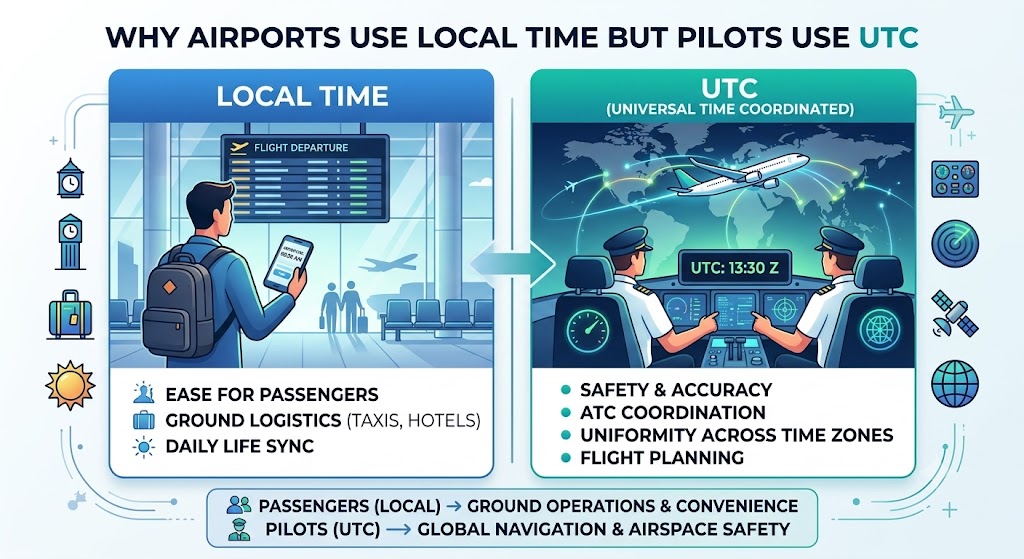
| UTC used for | Aviation, science, coordination |
| DST | Some stations observe it |
| Total stations | About 70 |
| Time zones in use | At least 8 different offsets |
Why Antarctica Has No Time Zone
The Geographic Problem
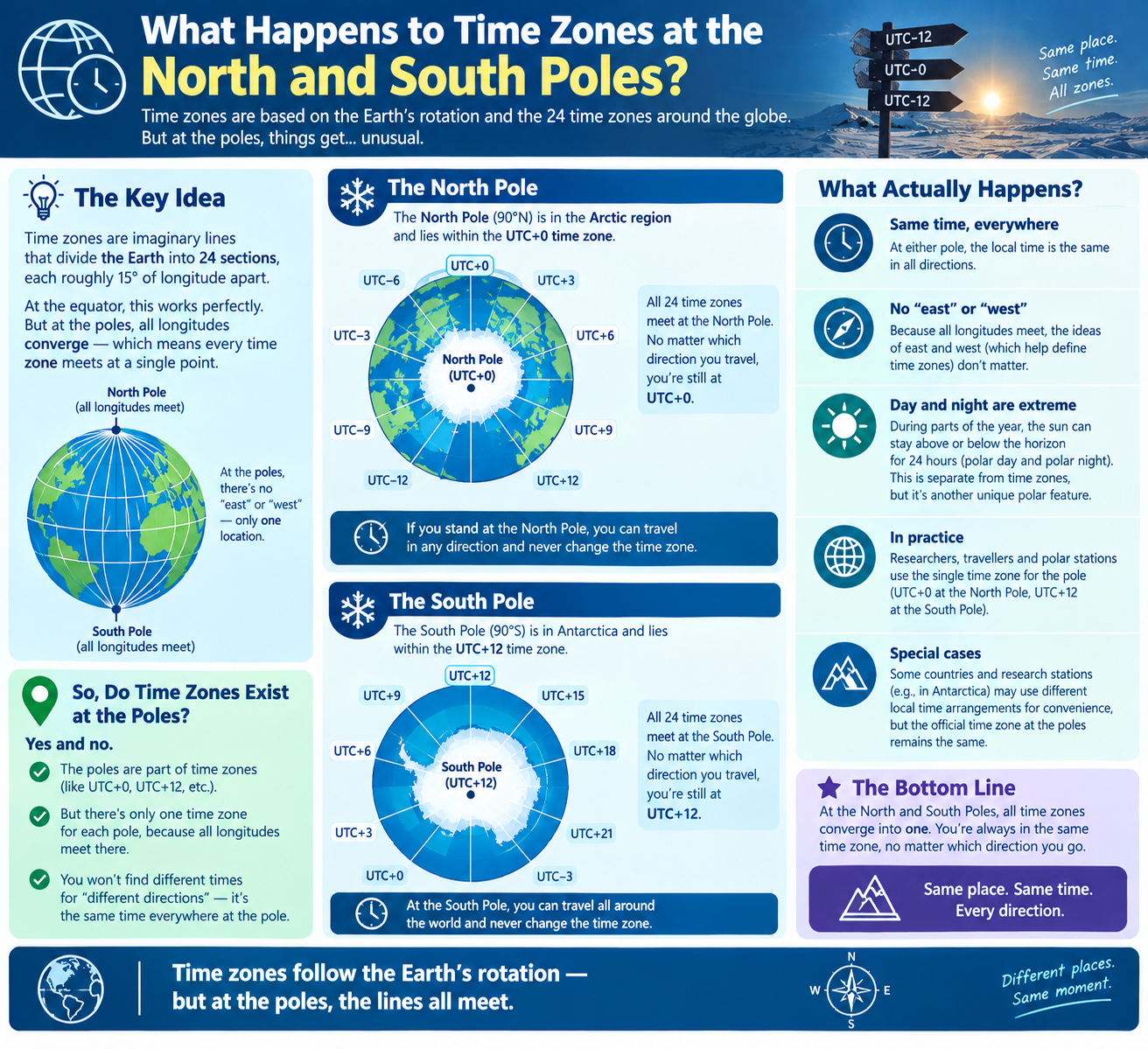
Time zones are defined by lines of longitude. Antarctica sits at the bottom of the globe, where all lines of longitude converge.
| Concept | What Happens |
|---|---|
| Longitude | All lines meet at the pole |
| Time zones | All intersect |
| Natural noon | Undefined at the pole |
| Standard time | Not applicable |
The Political Reality
Antarctica is governed by the Antarctic Treaty System, which does not address time zones. No country owns the continent, so no country has the authority to impose a time zone.
| Treaty Aspect | Effect on Time |
|---|---|
| No sovereignty | No one can set time |
| Peaceful use | No military time standard |
| Scientific focus | Stations choose their own |
| International | Multiple zones coexist |
The Midnight Sun and Polar Night
The Midnight Sun
During the Antarctic summer (roughly November to February), the sun stays above the horizon 24 hours a day in many locations.
| Location | Continuous Daylight |
|---|---|
| South Pole | ~6 months |
| McMurdo Station | ~4 months |
| Antarctic Circle | At least 1 day |
There is no sunset. No natural signal that the day has ended.
The Polar Night
During winter (roughly May to August), the sun stays below the horizon for months.
| Location | Continuous Darkness |
|---|---|
| South Pole | ~6 months |
| McMurdo Station | ~4 months |
| Antarctic Circle | At least 1 day |
There is no sunrise. No natural signal that the day has begun.
What This Means for Timekeeping
| Without Sun | Consequence |
|---|---|
| No solar noon | Clocks must be set arbitrarily |
| No daily rhythm | Body clocks drift |
| No natural cues | Schedules must be enforced |
| 24-hour operations | Time is purely social |
How Antarctic Stations Choose Their Time
Common Approaches
| Approach | Example |
|---|---|
| Align with supply base | South Pole uses McMurdo time |
| Align with home country | Some stations use home time |
| Use UTC | Aviation and science |
| Use local solar time | Rare, impractical |
McMurdo Station
McMurdo Station is the largest base in Antarctica and the hub for most US operations.
| Aspect | Details |
|---|---|
| Operator | United States |
| Standard time | UTC+12:00 |
| Daylight time | UTC+13:00 |
| DST observed | Yes |
| Reference for | South Pole Station |
McMurdo aligns with New Zealand, which handles most of its logistics and supply flights.
Amundsen-Scott South Pole Station
The South Pole Station follows McMurdo time for daily life.
| Aspect | Details |
|---|---|
| Daily life | McMurdo time |
| Science | UTC |
| Standard | UTC+12:00 |
| Daylight | UTC+13:00 |
Other Stations
Different countries' stations use different times.
| Station | Country | Typical Time |
|---|---|---|
| McMurdo | US | UTC+12:00 |
| Amundsen-Scott | US | UTC+12:00 |
| Vostok | Russia | UTC+06:00 |
| Concordia | France/Italy | UTC+08:00 |
| Halley | UK | UTC−03:00 |
| Casey | Australia | UTC+08:00 |
| Davis | Australia | UTC+07:00 |
| Mawson | Australia | UTC+06:00 |
The Result: A Patchwork of Time
Neighboring stations can be on completely different clocks.
| Station A | Station B | Difference |
|---|---|---|
| McMurdo (UTC+12:00) | Halley (UTC−03:00) | 15 hours |
| Vostok (UTC+06:00) | Concordia (UTC+08:00) | 2 hours |
| Casey (UTC+08:00) | Davis (UTC+07:00) | 1 hour |
The International Date Line in Antarctica
A Footstep Across the Date Line
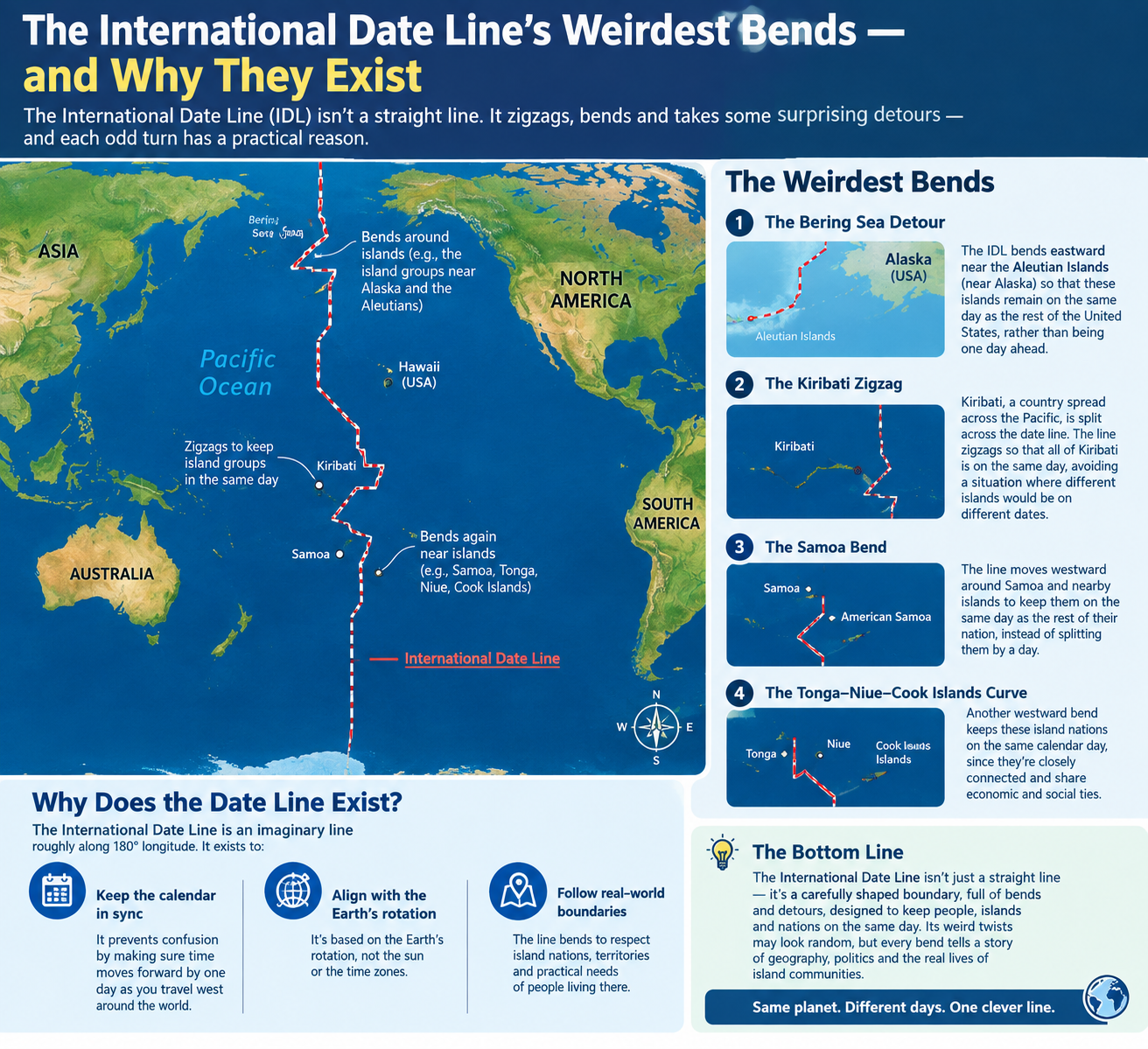
The International Date Line passes through Antarctica, creating a boundary between calendar days.
| Direction | Effect |
|---|---|
| West to East | Subtract a day |
| East to West | Add a day |
| At the pole | A step changes the date |
The Softball Game
A famous anecdote from a South Pole research station describes a softball game where the ball was hit "from today into yesterday" — and then back again. The date line is not a physical barrier; it is a line of definition.
How People Cope With Timelessness
Enforced Schedules
Without natural cues, stations enforce strict schedules.
| Tool | Purpose |
|---|---|
| Alarm clocks | Wake up |
| Scheduled meals | Structure the day |
| Work shifts | Coordinate activity |
| Lights | Simulate day and night |
| Blackout curtains | Simulate darkness |
Artificial Light
Light is used deliberately to mimic a normal day.
| Time | Lighting |
|---|---|
| Morning | Bright light |
| Evening | Dim light |
| Night | Darkness |
Psychological Challenges
| Challenge | Cause |
|---|---|
| Circadian disruption | No natural light cycle |
| Sleep problems | Body clock drifts |
| Mood changes | Polar night, isolation |
| Time disorientation | Days blur together |
The "Antarctic Stare"
Prolonged darkness and isolation can cause a condition informally called the "Antarctic stare" — a blank, detached look associated with sleep deprivation and circadian disruption.
A Day in the Life: Summer vs Winter
Summer (Midnight Sun)
| Time | Activity |
|---|---|
| 07:00 | Wake up (alarm) |
| 08:00 | Breakfast |
| 09:00–12:00 | Work |
| 12:00 | Lunch |
| 13:00–18:00 | Work |
| 18:00 | Dinner |
| 19:00–22:00 | Recreation |
| 23:00 | Sleep (blackout curtains) |
The sun is still up at midnight. Only the clock says it is night.
Winter (Polar Night)
| Time | Activity |
|---|---|
| 07:00 | Wake up (alarm) |
| 08:00 | Breakfast |
| 09:00–12:00 | Work |
| 12:00 | Lunch |
| 13:00–18:00 | Work |
| 18:00 | Dinner |
| 19:00–22:00 | Recreation |
| 23:00 | Sleep |
It is dark all day. Only the clock says it is morning.
Quick Reference Card
━━━━━━━━━━━━━━━━━━━━━━━━━━━━━━━━━━━━━━━━━━━━━━━━━━━━━━━━━━
   TIME IN ANTARCTICA — CHEAT SHEET
━━━━━━━━━━━━━━━━━━━━━━━━━━━━━━━━━━━━━━━━━━━━━━━━━━━━━━━━━━

CORE TRUTH:
  Antarctica has NO official time zone
  Each station chooses its own time

WHY:
  • All lines of longitude converge at the pole
  • No sovereign government to set time
  • Antarctic Treaty does not address time

MIDNIGHT SUN:
  Summer — sun never sets
  South Pole: ~6 months of daylight
  McMurdo: ~4 months

POLAR NIGHT:
  Winter — sun never rises
  South Pole: ~6 months of darkness
  McMurdo: ~4 months

STATION TIMES:
  McMurdo (US)        → UTC+12:00 / +13:00
  Amundsen-Scott (US) → UTC+12:00 / +13:00
  Vostok (Russia)     → UTC+06:00
  Concordia (FR/IT)   → UTC+08:00
  Halley (UK)         → UTC−03:00
  Casey (Australia)   → UTC+08:00
  Davis (Australia)   → UTC+07:00
  Mawson (Australia)  → UTC+06:00

RESULT:
  Neighboring stations can differ by 15 hours

COPING STRATEGIES:
  • Enforced schedules
  • Alarm clocks
  • Artificial light
  • Blackout curtains
  • Scheduled meals

GOLDEN RULE:
  In Antarctica, time is a social agreement, not a solar fact.

━━━━━━━━━━━━━━━━━━━━━━━━━━━━━━━━━━━━━━━━━━━━━━━━━━━━━━━━━━
         Check live conversions at: /timezone-converter
━━━━━━━━━━━━━━━━━━━━━━━━━━━━━━━━━━━━━━━━━━━━━━━━━━━━━━━━━━
Frequently Asked Questions
Does Antarctica have a time zone?
No. Antarctica has no officially assigned time zone. Each research station chooses its own time, usually to align with its supply base or home country.
What time zone does McMurdo Station use?
McMurdo Station uses UTC+12:00 in standard time and UTC+13:00 in daylight saving time, aligning with New Zealand.
What time does the South Pole use?
For daily life, the Amundsen-Scott South Pole Station follows McMurdo time. For science and aviation, it often uses UTC.
Why does Antarctica have no time zone?
All lines of longitude converge at the South Pole, and the Antarctic Treaty does not assign sovereignty or time zones. No authority exists to impose one.
What is the midnight sun?
During Antarctic summer, the sun stays above the horizon 24 hours a day. There is no sunset for months.
What is the polar night?
During Antarctic winter, the sun stays below the horizon for months. There is no sunrise.
How do people sleep during the midnight sun?
Stations use blackout curtains, enforced schedules, and artificial lighting to simulate a normal day-night cycle.
Do Antarctic stations observe daylight saving time?
Some do. McMurdo and the South Pole Station shift between UTC+12:00 and UTC+13:00.
Can two Antarctic stations be on different days?
Yes. Because the International Date Line passes through Antarctica, stations on opposite sides can be on different calendar days.
How do scientists coordinate across Antarctica?
For aviation and science, UTC is the common reference. For daily life, each station follows its own chosen time.
Final Thoughts
Antarctica is the only place on Earth where time is entirely a human invention. There is no solar noon, no daily rhythm, and no official time zone. Time exists there only because people agree to follow a clock.
That makes Antarctica a fascinating case study in timekeeping. It shows that time zones are not natural laws — they are social conventions, chosen to serve human needs.
Three things to remember:
- Antarctica has no official time zone. Each station chooses
- The sun gives no daily cues. Midnight sun and polar night last for months
- Time is a social agreement. Without it, days would blur together
Check time zone conversions instantly → /timezone-converter
Tags: how time works in Antarctica, Antarctica time zones, midnight sun Antarctica, polar night time, McMurdo Station time, Antarctica no official time zone, research station time zones, time at the South Pole, Antarctica timekeeping, time zone converter