Why Airports Use Local Time but Pilots Use UTC
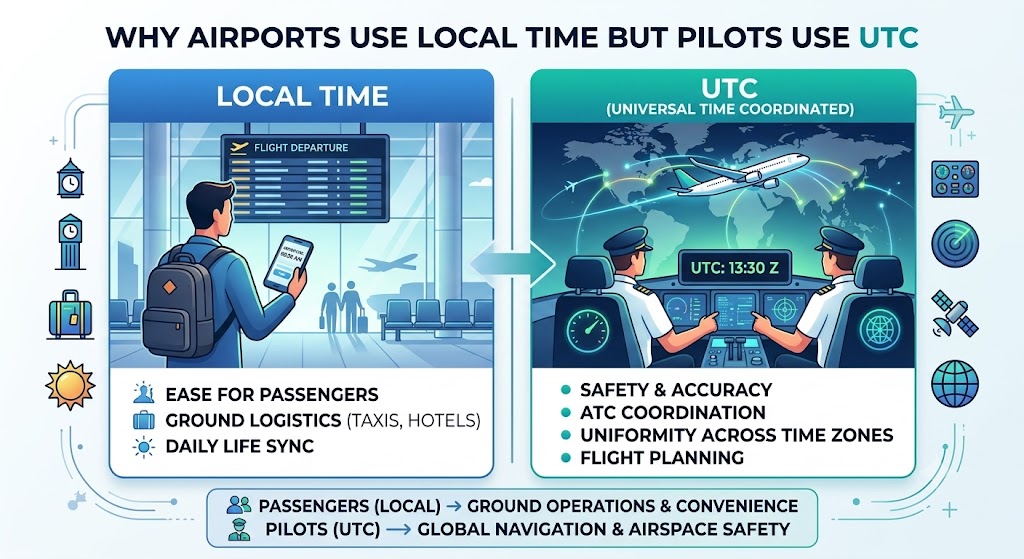
Walk through any airport terminal and every clock, departure board, and boarding pass shows local time. Step into the cockpit, and every instrument, flight plan, and radio call uses UTC — also called Zulu Time.
This dual system confuses passengers, but it is not a mistake. It is a deliberate design that has kept aviation safe for decades.
This guide explains why airports and pilots use different clocks, and how the two systems work together.
Use the free time zone converter here →
The Short Answer: Two Audiences, Two Clocks
Airports serve passengers, who live in local time. Pilots and controllers coordinate globally, so they use UTC. Both systems are correct — they just serve different needs.
| Audience | Time Used | Why |
|---|---|---|
| Passengers | Local time | Matches daily life |
| Airport operations | Local time | Coordination with ground services |
| Pilots | UTC | Global consistency |
| Air traffic control | UTC | No time zone confusion |
| Flight plans | UTC | Single reference |
| Weather reports | UTC | Global standard |
| Aircraft systems | UTC | Unambiguous logging |
Why Airports Use Local Time
The Passenger Experience
Passengers do not think in UTC. They think in the time on their phone, the time on their watch, and the time of their hotel checkout.
| Activity | Time Reference |
|---|---|
| Check-in | Local time |
| Boarding | Local time |
| Departure board | Local time |
| Arrival board | Local time |
| Ground transport | Local time |
| Hotel booking | Local time |
If departure boards showed UTC, every passenger would need to convert manually — and most would get it wrong.
The Airport Operations Need
Airport operations are tied to the local community.
| Function | Time Reference |
|---|---|
| Staff shifts | Local time |
| Retail hours | Local time |
| Ground transport | Local time |
| Noise curfews | Local time |
| Local coordination | Local time |
Airports are part of a city. They run on the city's clock.
Why This Matters
| Benefit | Explanation |
|---|---|
| Reduces errors | Passengers read the correct time |
| Matches daily life | Aligns with local schedules |
| Simplifies ground ops | Staff work local hours |
| Legal compliance | Noise rules use local time |
Why Pilots Use UTC
The Global Coordination Problem
A flight from New York to Tokyo crosses 13 time zones. If every crew, controller, and dispatcher used local time, coordination would collapse.
| Problem | Explanation |
|---|---|
| Many zones | One flight crosses many |
| DST changes | Shifts twice a year |
| Handoffs | Controllers in different zones |
| International crews | Different home zones |
| Safety | Ambiguity is dangerous |
The Solution: One Time Reference
UTC gives aviation a single, unchanging reference that everyone uses, everywhere.
| Benefit | Explanation |
|---|---|
| No DST | UTC never shifts |
| No ambiguity | One time, one meaning |
| Global standard | Everyone uses the same |
| Precise | Seconds matter |
| Safe | Eliminates confusion |
Where Pilots Use UTC
| Document or System | Time Used |
|---|---|
| Flight plan | UTC |
| Weather (METAR/TAF) | UTC |
| NOTAMs | UTC |
| ATC clearances | UTC |
| Flight log | UTC |
| Aircraft clock | UTC |
| Position reports | UTC |
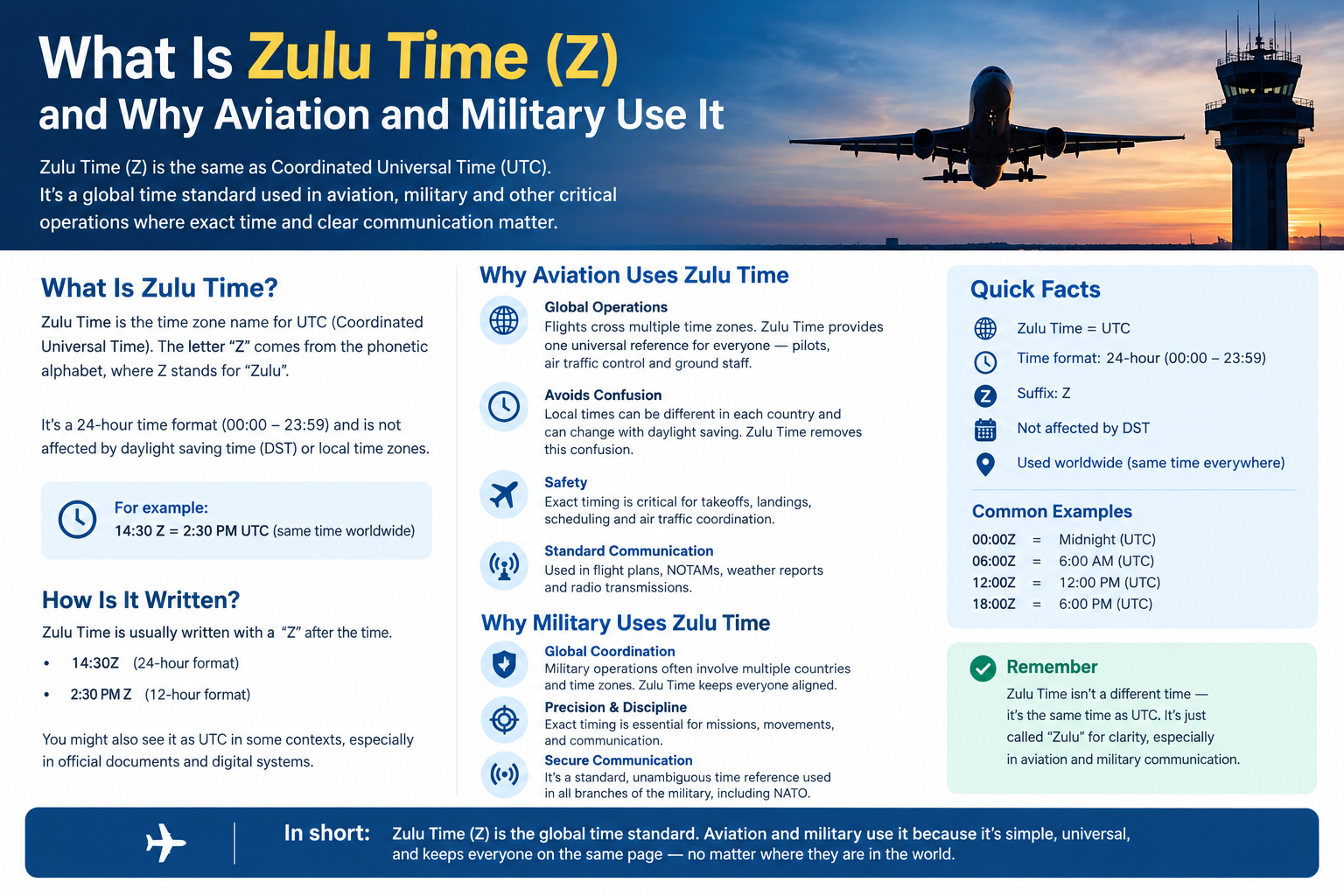
What Is Zulu Time?
The Name
Zulu Time is another name for UTC. It comes from the NATO phonetic alphabet, where Z is pronounced "Zulu." The letter Z historically stood for the Zero meridian (Greenwich).
| Term | Meaning |
|---|---|
| Z | Zero meridian |
| Zulu | Spoken form of Z |
| Zulu Time | UTC in aviation and military usage |
How It Is Written
| Format | Example |
|---|---|
| With Z suffix | 1430Z |
| Spoken | "Fourteen thirty Zulu" |
| With colon | 14:30Z |
Why Pilots Say "Zulu"
Radio communication requires clarity. "Zulu" is unmistakable, even over noisy frequencies.
| Term | Risk of Mishearing |
|---|---|
| UTC | Letters can blur |
| GMT | Ambiguous in some contexts |
| Zulu | Distinctive sound |
The Two Clocks in Practice
A Flight From London to New York
| Event | Local Time | UTC |
|---|---|---|
| Departure (London) | 10:00 BST | 09:00Z |
| Cruise | — | 09:00–17:00Z |
| Arrival (New York) | 13:00 EDT | 17:00Z |
The passenger sees 10:00 depart and 13:00 arrive — a three-hour flight. The pilot sees 09:00Z depart and 17:00Z arrive — an eight-hour flight.
Both are correct. The passenger sees local clock time. The pilot sees actual elapsed time.
Why the Discrepancy
| Reason | Explanation |
|---|---|
| Time zones | London and New York differ by 5 hours |
| DST | Both may be on summer time |
| Elapsed time | UTC shows the real duration |
| Local time | Shows clock time at each end |
How the Two Systems Coexist Safely
The Handoff Points
There are specific moments where local time and UTC meet.
| Handoff | System |
|---|---|
| Boarding pass | Local time |
| Gate display | Local time |
| Cockpit clock | UTC |
| ATC radio | UTC |
| Flight plan | UTC |
| Arrival board | Local time |
The Conversion Discipline
Pilots are trained to convert between local and UTC routinely. This is a core skill.
| Skill | Purpose |
|---|---|
| Local to UTC | Flight planning |
| UTC to local | Arrival estimates |
| Zone awareness | Knowing current offset |
| DST awareness | Seasonal changes |
The Safety Net
| Safeguard | Purpose |
|---|---|
| Standard phraseology | Clear communication |
| UTC everywhere in ops | No ambiguity |
| Local only for passengers | Human-friendly |
| Cross-checks | Catch errors |
What Passengers Should Know
Reading a Boarding Pass
| Field | Time Zone |
|---|---|
| Departure time | Local time of departure airport |
| Arrival time | Local time of arrival airport |
| Boarding time | Local time of departure airport |
The Arrival Time Confusion
A passenger flying from Los Angeles to Tokyo sees a departure at 11:00 and an arrival at 15:00 the next day. The flight is not 28 hours — it is about 11 hours, plus the time zone difference.
| Factor | Effect |
|---|---|
| Flight duration | About 11 hours |
| Time zone shift | +17 hours |
| Apparent duration | Much longer |
Tips for Travelers
| Tip | Why |
|---|---|
| Check local time at destination | Avoid confusion |
| Set your watch on arrival | Match local life |
| Note the date change | Crossing the date line |
| Use a time zone converter | Verify times |
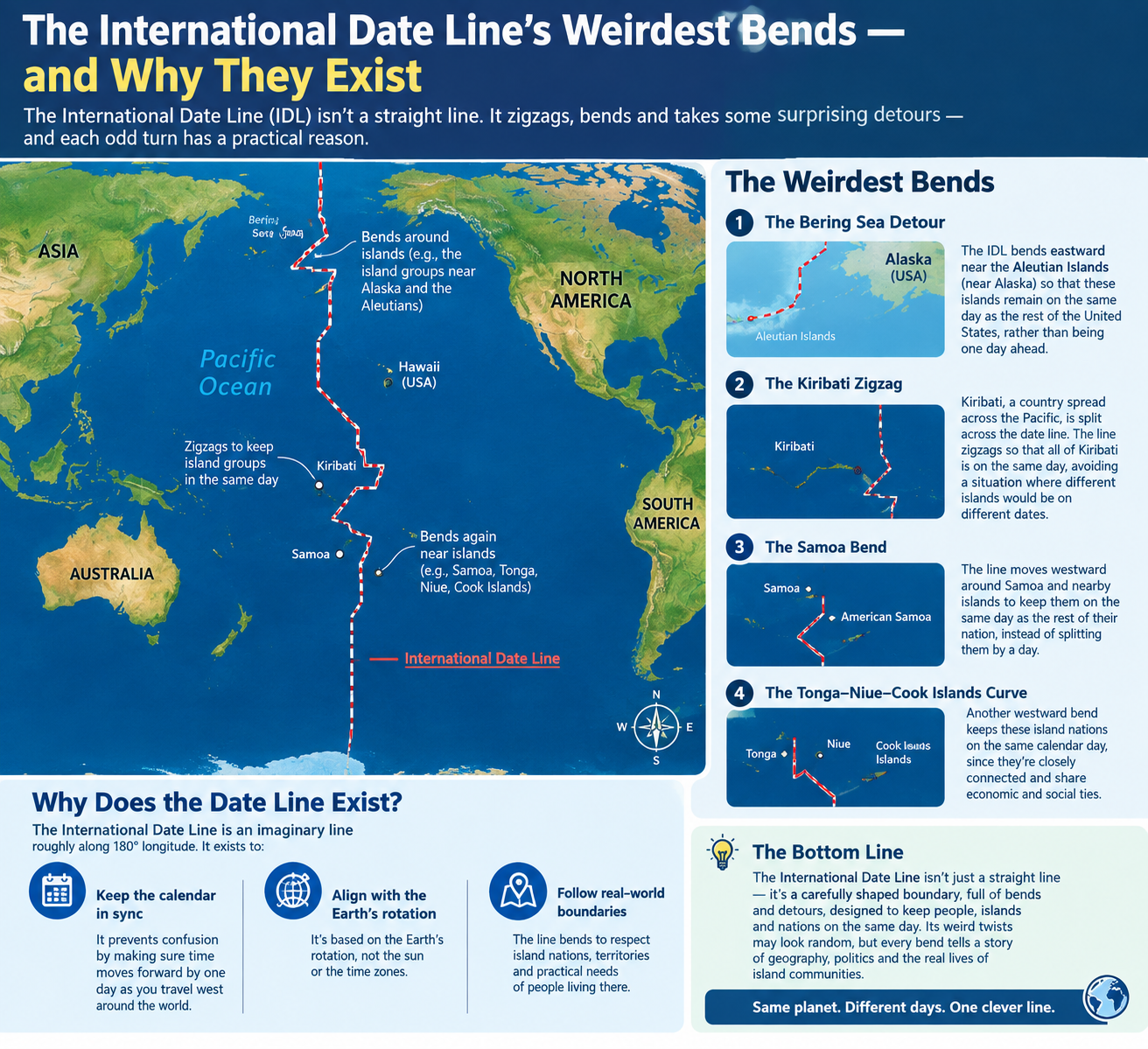
International Date Line Crossings
What Happens
Flights crossing the International Date Line can arrive before they depart in local time.
| Flight | Departure | Arrival |
|---|---|---|
| Tokyo to Honolulu | 20:00 JST | 08:00 HST same day |
| Auckland to Los Angeles | 19:00 NZST | 12:00 PDT same day |
The arrival time appears to be before the departure time in local terms.
Why This Happens
| Factor | Explanation |
|---|---|
| Date line | Separates calendar days |
| Westward travel | Gain hours |
| Eastward travel | Lose hours |
| UTC view | Always consistent |
Quick Reference Card
━━━━━━━━━━━━━━━━━━━━━━━━━━━━━━━━━━━━━━━━━━━━━━━━━━━━━━━━━━
   AIRPORTS vs PILOTS — TIME CHEAT SHEET
━━━━━━━━━━━━━━━━━━━━━━━━━━━━━━━━━━━━━━━━━━━━━━━━━━━━━━━━━━

TWO AUDIENCES:
  Passengers & airport ops  → LOCAL TIME
  Pilots & controllers      → UTC (Zulu Time)

WHY AIRPORTS USE LOCAL:
  • Passengers think in local time
  • Staff shifts use local time
  • Ground transport is local
  • Noise curfews use local time

WHY PILOTS USE UTC:
  • Flights cross many time zones
  • No DST confusion
  • One global reference
  • Safety requires no ambiguity

WHERE UTC IS USED:
  Flight plans, METAR/TAF, NOTAMs,
  ATC clearances, flight logs, aircraft clocks

WHERE LOCAL TIME IS USED:
  Departure boards, boarding passes,
  gate displays, arrival boards

ZULU TIME:
  Z = Zero meridian
  Zulu = NATO phonetic for Z
  1430Z = "Fourteen thirty Zulu"

EXAMPLE (LHR → JFK):
  Local: depart 10:00, arrive 13:00 (3 hours?)
  UTC:   depart 09:00Z, arrive 17:00Z (8 hours)
  UTC shows the real elapsed time

GOLDEN RULE:
  Local time for humans. UTC for operations.

━━━━━━━━━━━━━━━━━━━━━━━━━━━━━━━━━━━━━━━━━━━━━━━━━━━━━━━━━━
         Check live conversions at: /timezone-converter
━━━━━━━━━━━━━━━━━━━━━━━━━━━━━━━━━━━━━━━━━━━━━━━━━━━━━━━━━━
Frequently Asked Questions
Why do airports use local time?
Passengers, staff, and ground services all operate on local time. Showing local time on boards and tickets matches daily life and reduces confusion.
Why do pilots use UTC?
Pilots, controllers, and dispatchers coordinate globally. UTC has no DST and no time zone ambiguity, so everyone shares a single reference.
What is Zulu Time?
Zulu Time is another name for UTC. It comes from the NATO phonetic alphabet, where Z is "Zulu," and Z historically stood for the Zero meridian.
Do air traffic controllers use UTC?
Yes. ATC communications, clearances, and coordination all use UTC to avoid time zone confusion.
Why does my flight duration look wrong?
Boarding passes show local time at departure and arrival. Time zone differences and the International Date Line can make a flight appear longer or shorter than it is.
What is the International Date Line?
It is an imaginary line in the Pacific Ocean that separates calendar days. Crossing it can make a flight arrive before it departs in local time.
Do all airlines use UTC?
Yes. UTC is the standard for aviation worldwide, endorsed by ICAO and used by every major airline and authority.
How do pilots convert between local time and UTC?
Pilots are trained to convert routinely using time zone knowledge, flight planning tools, and onboard systems. It is a core skill.
Why does the same flight show different times on different screens?
Departure boards and boarding passes show local time. Cockpit instruments and flight plans show UTC. Both are correct for their audience.
Is UTC the same as GMT?
For practical purposes in aviation, yes. UTC is the modern standard, while GMT is a legacy term. They show the same time.
Final Thoughts
Aviation runs on two clocks because it serves two audiences. Passengers need local time to navigate their day. Pilots and controllers need UTC to navigate the sky safely. The two systems coexist because each is used where it makes sense.
The next time you see a departure board and a cockpit clock disagree, you will know why. Neither is wrong — they are simply speaking to different people.
Three things to remember:
- Airports use local time. It matches the passenger's world
- Pilots use UTC. It is the only safe global reference
- Both are correct. Each serves its audience
Check time zone conversions instantly → /timezone-converter
Tags: why airports use local time, why pilots use UTC, aviation time zones, Zulu time pilots, flight plan UTC, air traffic control time, airport departure boards local time, aviation time standard, UTC in aviation, time zone converter