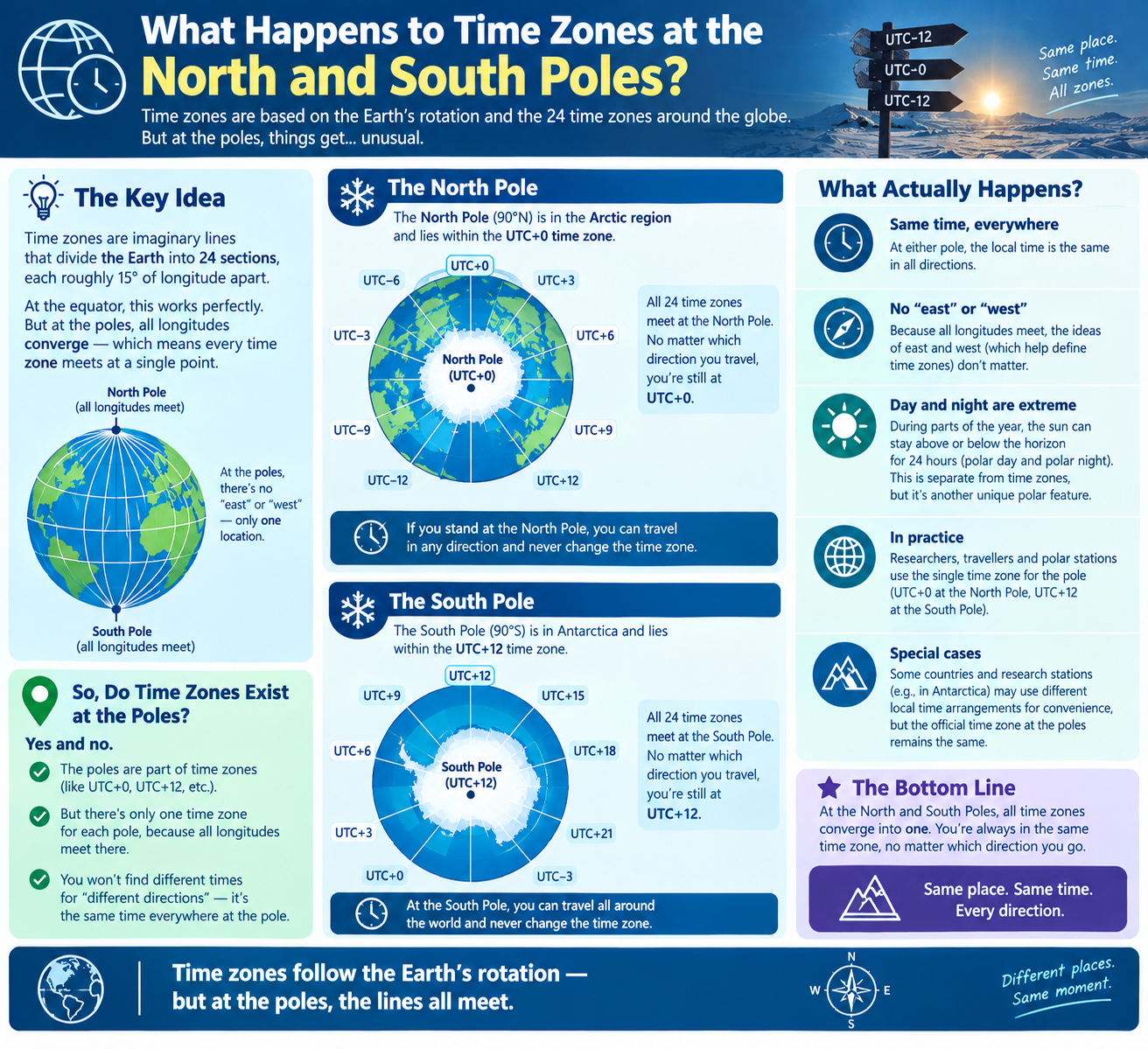
What Happens to Time Zones at the North and South Poles?
Stand at the North Pole or South Pole and ask a simple question: what time is it? The answer is not straightforward. There is no local time at the poles. No time zone has ever been assigned to them, and no clock naturally aligns with the sun[citation:1][citation:13].
This is one of the strangest quirks of timekeeping on Earth. At the very points where all time zones converge, time itself becomes a matter of choice.
This guide explains why the poles are timeless, how people who work there handle it, and why the rules are different at each end of the planet.
Use the free time zone converter here →
The Short Answer: Why the Poles Have No Time Zone
Time zones are defined by lines of longitude. At the poles, all lines of longitude converge at a single point, so the poles are technically in all time zones simultaneously[citation:17]. No time zone has been officially assigned to either pole, meaning any time can be used[citation:1][citation:13].
| Aspect | North Pole | South Pole |
|---|---|---|
| Time zone assigned | None | None |
| Land | No (floating ice) | Yes (Antarctica) |
| Permanent population | No | Yes (research station) |
| Practical time used | Ship's choice | McMurdo Station time |
| UTC offset (station) | Varies | UTC+12:00 (standard) |
| DST observed | No | Yes (UTC+13:00) |
Why the Poles Are Timeless
All Longitudes Converge
Time zones are created by dividing the Earth into 24 longitudinal slices, each 15 degrees wide. Every line of longitude starts at the North Pole and ends at the South Pole.
At the exact pole, all these lines meet at a single point. You are literally standing at the source of every time zone[citation:6][citation:8].
| Concept | What Happens at the Pole |
|---|---|
| Longitude | All values converge |
| Time zones | All intersect |
| Standard time | Undefined |
| Practical solution | Choose a time |
The Sun Gives No Clues
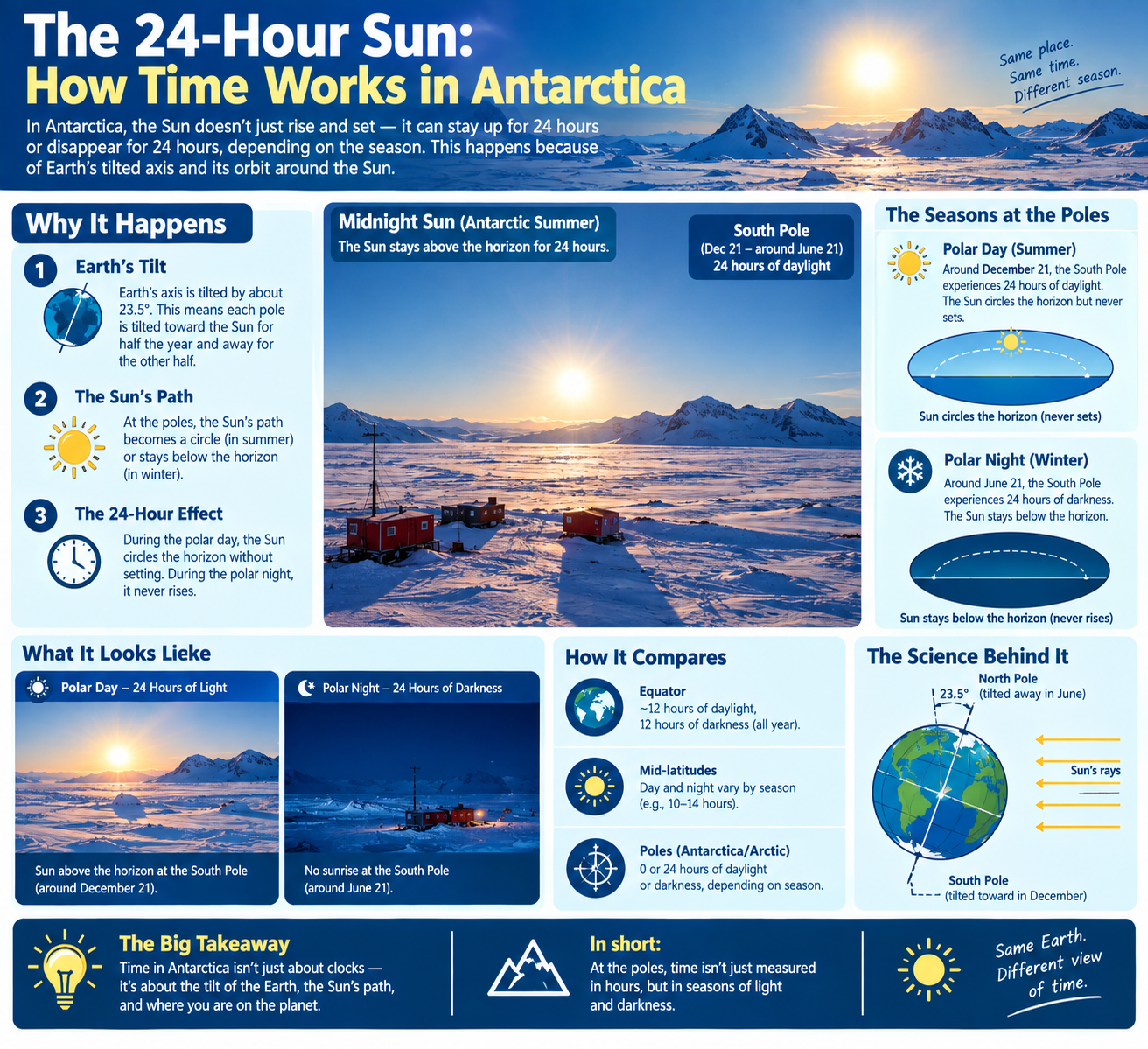
Even if you wanted to set your clock by the sun, you could not. At the poles, the sun rises and sets only once per year[citation:8][citation:11].
| Season | Sun Position |
|---|---|
| Summer | Always above horizon |
| Winter | Always below horizon |
| Equinoxes | Briefly on horizon |
There is no daily cycle of sunrise and sunset. "Noon" and "midnight" have no meaning[citation:16].
The North Pole: No Land, No Time, No People
The Floating Ice Cap
The North Pole is not land. It is a point on the constantly shifting sea ice floating on the Arctic Ocean[citation:11][citation:16].
| Aspect | Details |
|---|---|
| Surface | Sea ice |
| Permanent station | None |
| Population | None |
| Nearest town | Longyearbyen (817 miles away) |
Because there is no permanent human presence, there is no need for a permanent time zone[citation:3].
How Arctic Explorers Handle Time
When ships travel to the North Pole, the captain chooses the time zone for the mission[citation:11].
| Who | How They Choose |
|---|---|
| Arctic ships | Captain's choice |
| Research vessels | Home port's zone |
| Drifting stations | Coordinated with support base |
One famous expedition moved its clocks back once a week for six weeks as it drifted toward the pole, creating a gradual time shift[citation:11].
The Time Zone Gap
Two ships moored just meters apart at the North Pole can be in different time zones if their captains chose different reference times[citation:11].
The South Pole: Land, Stations, and a Chosen Time
The Amundsen-Scott Station
Unlike the North Pole, the South Pole sits on solid land — the continent of Antarctica. It is home to the Amundsen-Scott South Pole Station, continuously staffed since 1956[citation:9].
| Aspect | Details |
|---|---|
| Land | Yes (Antarctica) |
| Station | Amundsen-Scott |
| Staffed since | 1956 |
| Population | Research and support personnel |
Because people live and work there, the station needs a time zone.
The Practical Choice: McMurdo Time
For everyday purposes, the South Pole Station sets its clocks to match McMurdo Station, the largest base in Antarctica[citation:3].
| Aspect | Details |
|---|---|
| Reference station | McMurdo |
| Reason | Supplies and communications |
| Standard offset | UTC+12:00 |
| Daylight offset | UTC+13:00 |
The South Pole Station observes daylight saving time, shifting between UTC+12:00 and UTC+13:00[citation:14].
Scientific Use: UTC
For scientific and aviation purposes, the South Pole Station often uses Coordinated Universal Time (UTC)[citation:3].
| Purpose | Time Used |
|---|---|
| Everyday life | McMurdo time |
| Science | UTC |
| Aviation | UTC |
| Communications | Varies |
The International Date Line at the Poles
A Day Apart in One Step
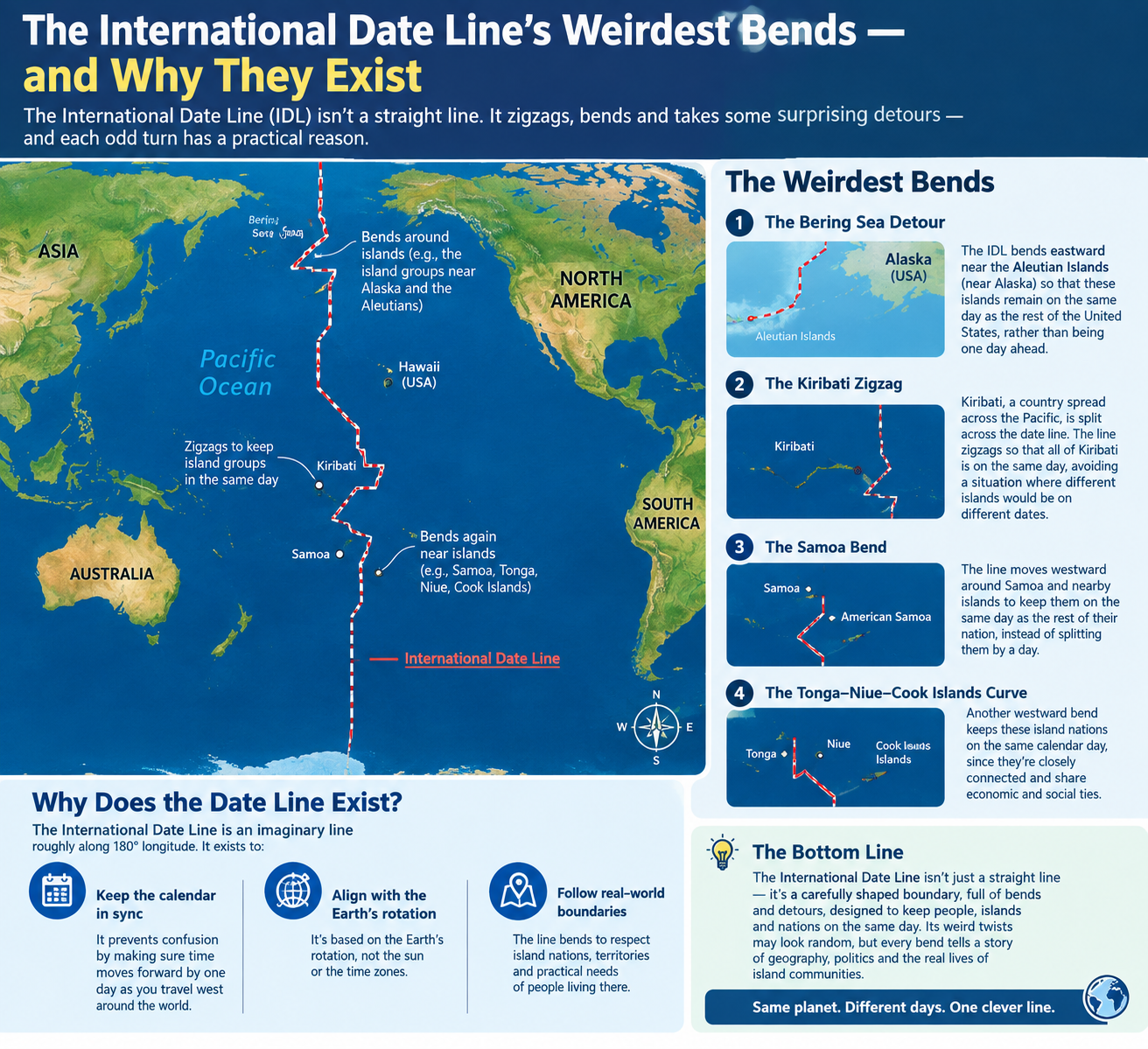
The International Date Line passes near both poles. At the poles, stepping across this line means stepping into a different date[citation:3].
| Direction | Effect |
|---|---|
| West to East | Date changes |
| East to West | Date changes |
| At the pole | A footstep can change the day |
The Softball Game Story
A famous anecdote from a South Pole research station describes a softball game where the ball was hit "from today into yesterday" — and then back again[citation:5].
The date line at the pole is not a physical barrier. It is a line of definition, and crossing it changes the calendar.
Why the Poles Are Different From Each Other
| Factor | North Pole | South Pole |
|---|---|---|
| Surface | Sea ice | Land |
| Station | None | Amundsen-Scott |
| Time zone | Chosen per mission | McMurdo time |
| DST | No | Yes |
| UTC reference | Varies | +12:00 / +13:00 |
| Who decides | Ship captain | Station management |
The key difference is permanence. The South Pole has a permanent station and a permanent time choice. The North Pole has neither.
Quick Reference Card
━━━━━━━━━━━━━━━━━━━━━━━━━━━━━━━━━━━━━━━━━━━━━━━━━━━━━━━━━━
   TIME ZONES AT THE POLES — CHEAT SHEET
━━━━━━━━━━━━━━━━━━━━━━━━━━━━━━━━━━━━━━━━━━━━━━━━━━━━━━━━━━

CORE TRUTH:
  No time zone is assigned to either pole
  All time zones converge at the poles
  Any time can be used

WHY:
  • All lines of longitude meet at the poles
  • The sun rises and sets only once a year
  • No natural daily rhythm

NORTH POLE:
  • No land (floating sea ice)
  • No permanent station
  • No assigned time
  • Ship captains choose the time
  • Two ships can be in different zones

SOUTH POLE:
  • Land (Antarctica)
  • Amundsen-Scott Station
  • Uses McMurdo Station time
  • Standard: UTC+12:00
  • Daylight: UTC+13:00
  • Science often uses UTC

DATE LINE:
  Passes near both poles
  A footstep can change the date
  "From today into yesterday"

GOLDEN RULE:
  At the poles, time is a choice, not a fact.

━━━━━━━━━━━━━━━━━━━━━━━━━━━━━━━━━━━━━━━━━━━━━━━━━━━━━━━━━━
         Check live conversions at: /timezone-converter
━━━━━━━━━━━━━━━━━━━━━━━━━━━━━━━━━━━━━━━━━━━━━━━━━━━━━━━━━━
Frequently Asked Questions
What time zone is the North Pole in?
No time zone has been assigned to the North Pole. Any time can be used, and ship captains typically choose the time zone for their missions[citation:1][citation:11].
What time zone is the South Pole in?
No official time zone is assigned to the South Pole. In practice, the Amundsen-Scott Station uses McMurdo Station time, which is UTC+12:00 in standard time and UTC+13:00 in daylight saving time[citation:3][citation:14].
Why don't the poles have time zones?
Time zones are defined by lines of longitude. At the poles, all lines of longitude converge at a single point, so the poles are technically in all time zones simultaneously. No single zone applies[citation:17].
How do polar explorers know what time it is?
They choose a time. Arctic ship captains select a time zone for their mission. Antarctic stations use the time of a larger support base, like McMurdo[citation:3][citation:11].
Does the sun rise and set at the poles?
At the poles, the sun rises and sets only once per year. There is continuous daylight in summer and continuous darkness in winter[citation:8][citation:11].
Can two people at the North Pole be in different time zones?
Yes. Two ships moored just meters apart can be in different time zones if their captains chose different reference times[citation:11].
Does the South Pole observe daylight saving time?
Yes, the Amundsen-Scott Station observes daylight saving time, shifting between UTC+12:00 and UTC+13:00[citation:14].
What is the International Date Line like at the poles?
The date line passes near both poles. Stepping across it changes the date, even though the physical distance is tiny[citation:3].
Do scientists at the South Pole use UTC?
Yes, for scientific and aviation purposes, the South Pole Station often uses Coordinated Universal Time (UTC)[citation:3].
Why is the North Pole different from the South Pole?
The North Pole is floating sea ice with no permanent station, so no fixed time zone is needed. The South Pole is on land with a permanent research station, so a practical time zone is chosen[citation:9][citation:16].
Final Thoughts
The poles are the only places on Earth where time zones break down completely. All lines of longitude meet there, all time zones converge, and the sun offers no daily rhythm to follow.
For the North Pole, this means time is whatever the ship's captain decides. For the South Pole, it means following the clock of a distant support base. Both are practical solutions to an impossible problem.
Three things to remember:
- No time zone is assigned to either pole. They are technically in all zones at once
- The North Pole has no permanent time. Ship captains choose
- The South Pole uses McMurdo time. UTC+12:00 or UTC+13:00
Check time zone conversions instantly → /timezone-converter
Tags: time zones at the poles, North Pole time zone, South Pole time zone, what time is it at the North Pole, polar time keeping, McMurdo Station time, Amundsen-Scott South Pole Station time, no time zone North Pole, time at the poles explained, time zone converter