Time Zone Converter: How to Convert Time Between Different Time Zones
Ever scheduled a 9 AM meeting with someone in New York only to realize it's actually 7:30 PM in India? Yeah, time zones are tricky. One wrong calculation and you're either waking someone up at 3 AM or waiting alone on a Zoom call.
This guide is here to help you get time conversions right — no more math mistakes, no more awkward "sorry, I messed up the time" emails.
Use the free time zone converter here →
What Even Is a Time Zone Converter?
A time zone converter does exactly what it sounds like: it tells you what time it is somewhere else.
Say you're in London and your client's in Los Angeles. You type "3 PM London" into the converter and boom — it's 7 AM in LA. Simple as that.
People use time converters for:
- Scheduling work calls with remote teams or international clients
- Planning travel — knowing when you actually arrive (and if you should sleep on the plane)
- Calling family without accidentally calling at 4 AM their time
- Watching live events — like that concert streaming from Japan at 2 AM your time
- Setting up recurring meetings that actually work for everyone
How Time Zones Actually Work
Before we get into conversions, let's clear up the basics.
What's UTC and Why Should You Care?
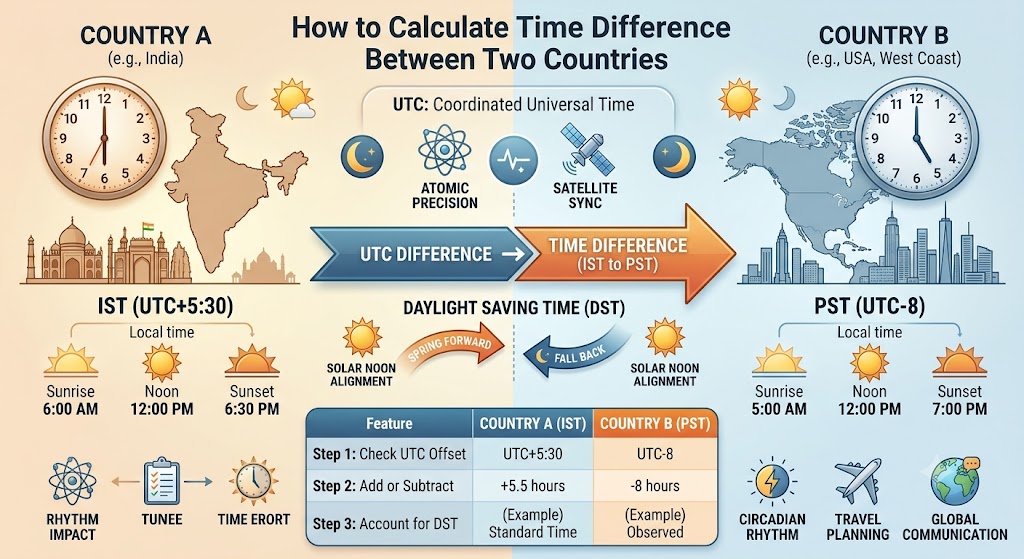
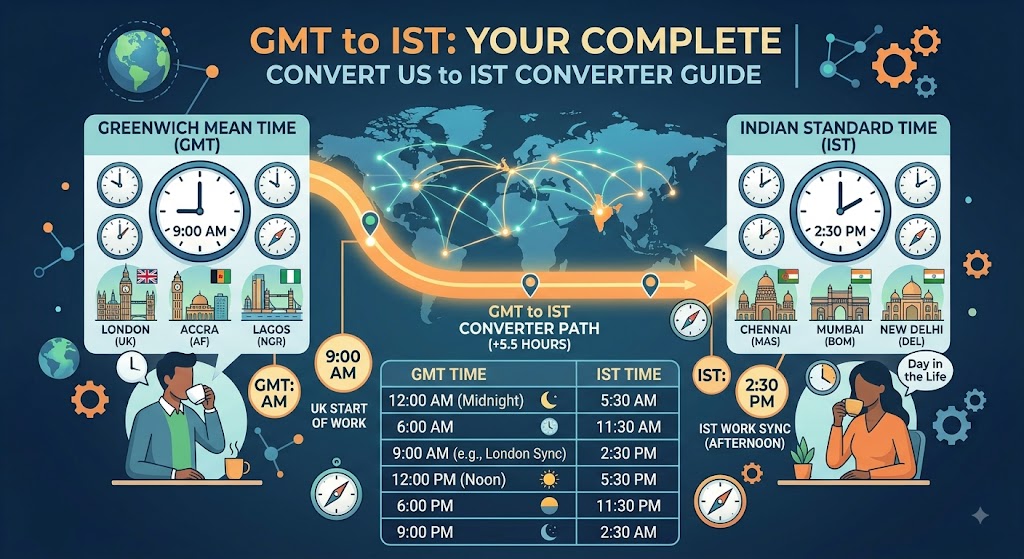
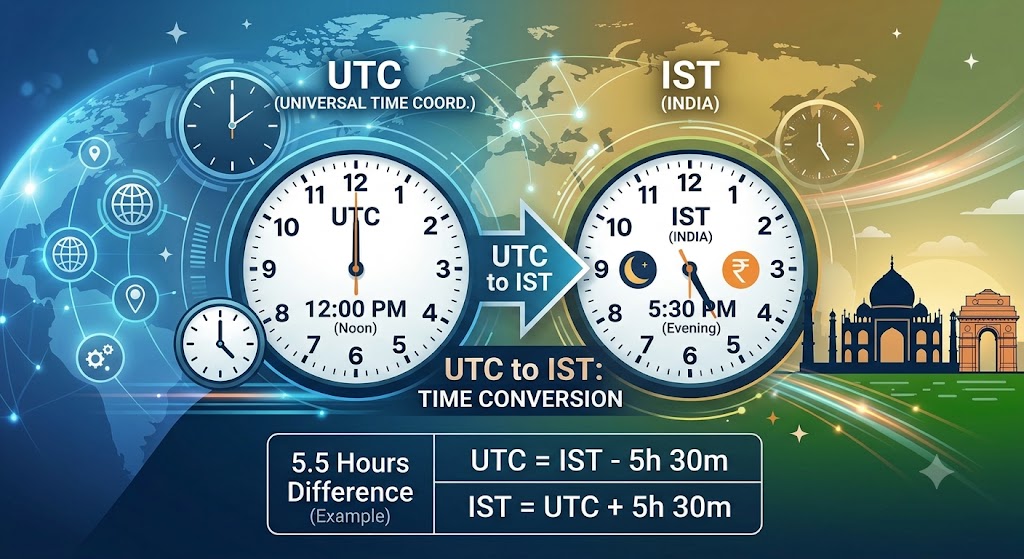
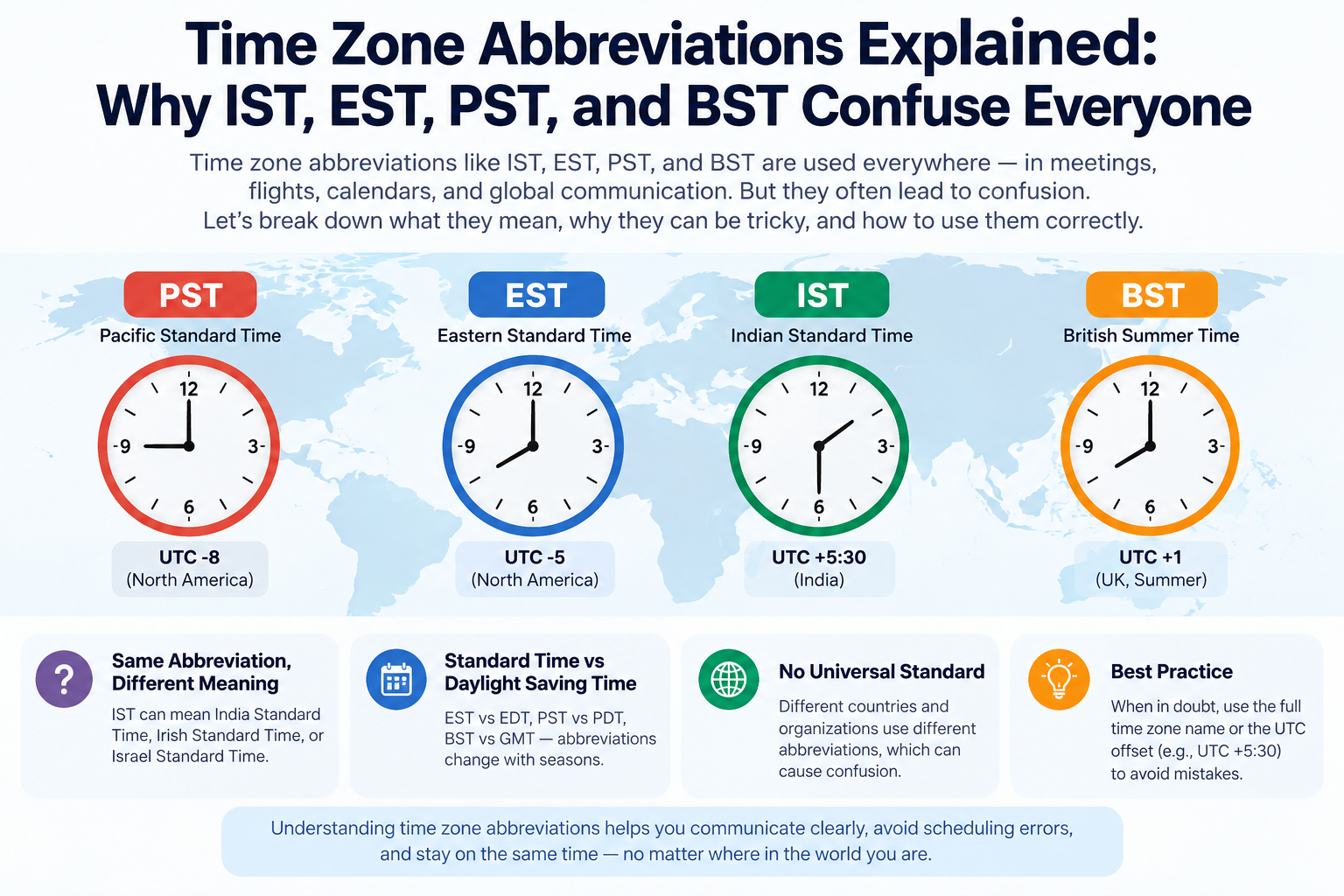
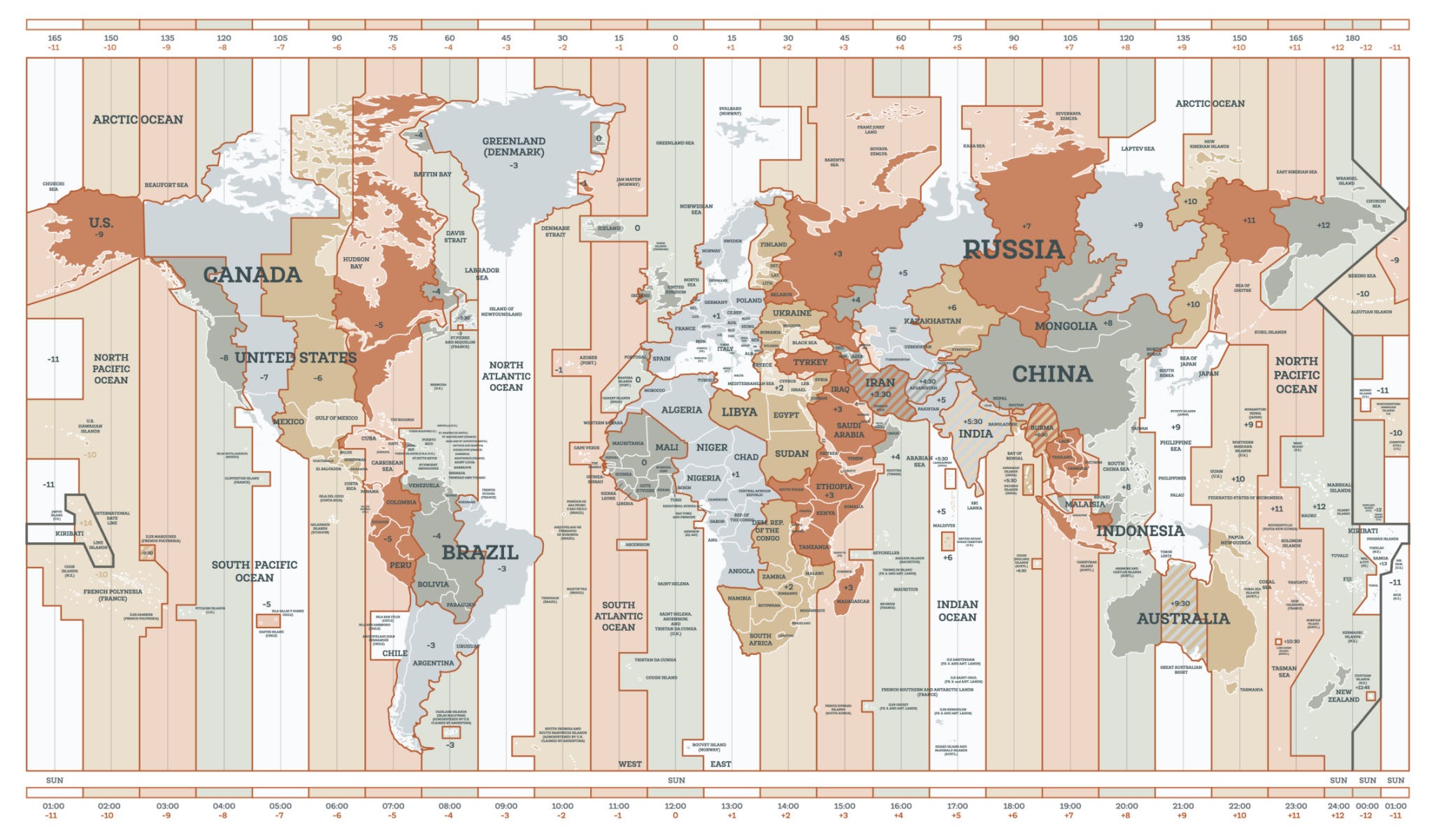
UTC (Coordinated Universal Time) is the world's time reference. Think of it as "time zero." Everything else is just UTC plus or minus some hours.
| Time Zone | UTC Offset | Where It's Used |
|---|---|---|
| UTC | UTC ± 0:00 | Global standard |
| EST | UTC - 5:00 | US East Coast (winter) |
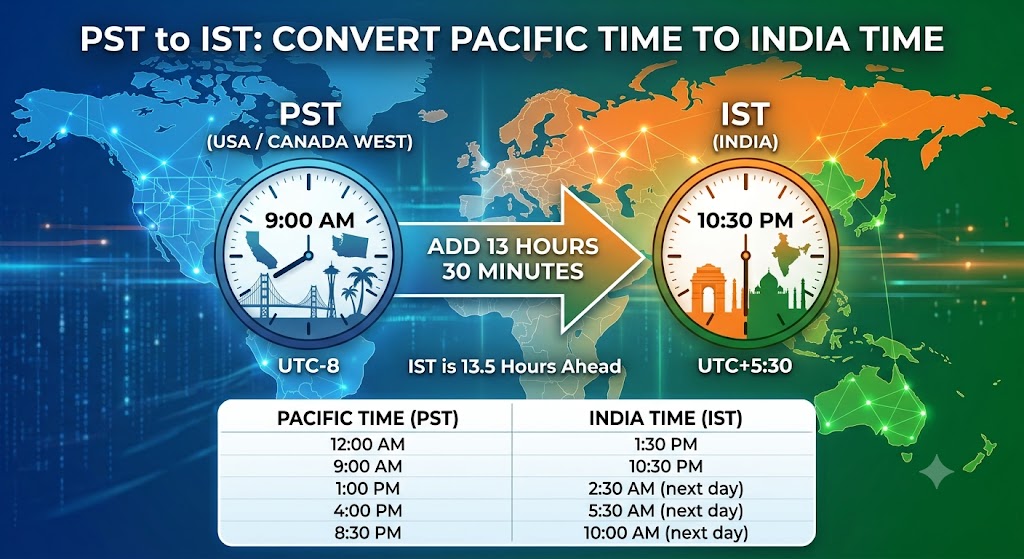
| PST | UTC - 8:00 | US West Coast (winter) |
| CET | UTC + 1:00 | Most of Europe |
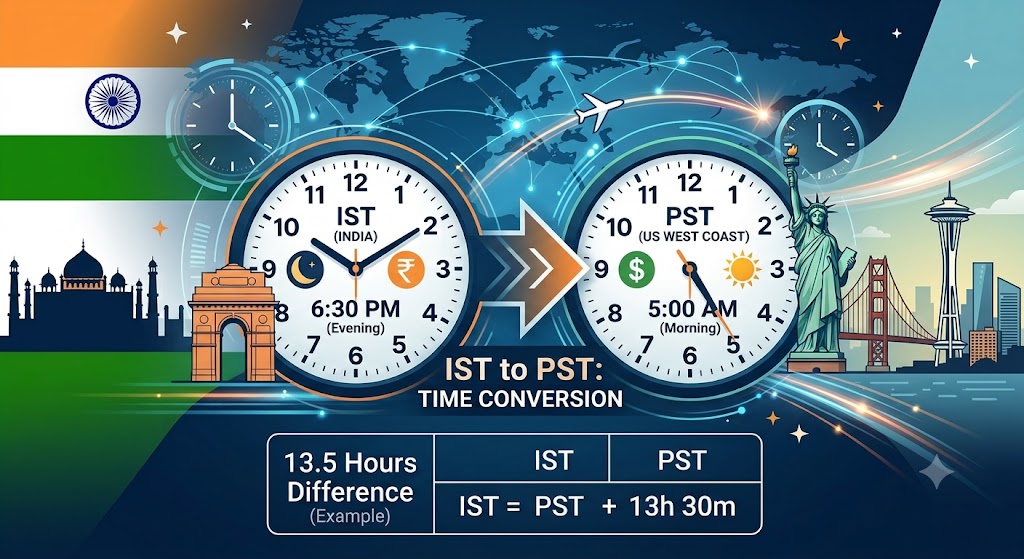
| IST | UTC + 5:30 | India, Sri Lanka |
| JST | UTC + 9:00 | Japan |
| AEST | UTC + 10:00 | Australia's east coast |
Here's the Trick
When someone says "it's 2 PM in New York," that means:
New York is 5 hours behind UTC. So 2 PM EST = 7 PM UTC.
That's it. Once you know the UTC offsets, converting is just addition and subtraction.
The One Thing That Always Messes People Up: DST
Daylight Saving Time (DST) is the reason half the internet's time zone calculators exist.
What Happens
From March to November, the US and many European countries move clocks forward by 1 hour.
- Winter: EST = UTC - 5:00
- Summer: EDT = UTC - 4:00
Here's the catch: Not everyone observes DST. India doesn't. Japan doesn't. Arizona (mostly) doesn't.
So What Does This Mean for You?
| If You're Converting | Winter Difference | Summer Difference |
|---|---|---|
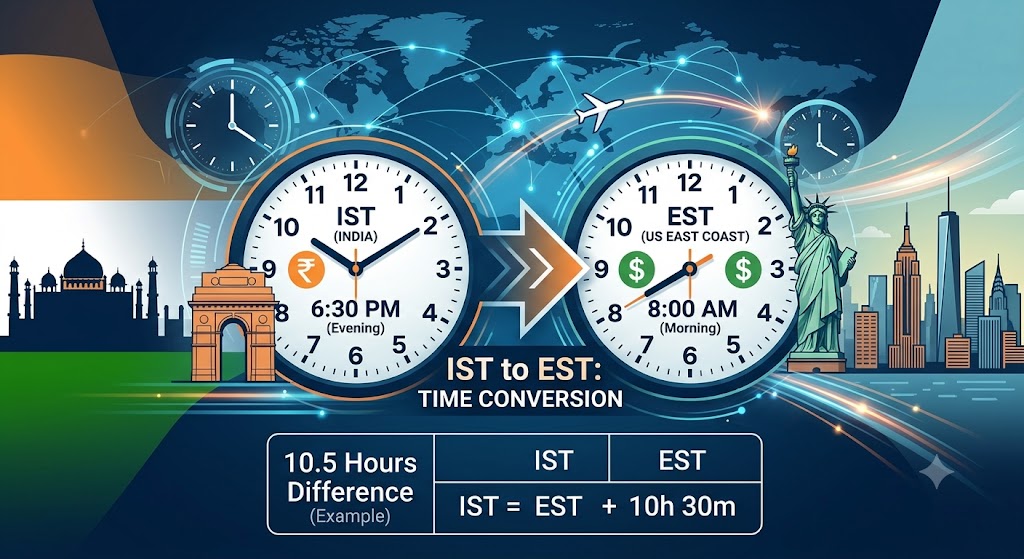
| India to NYC | 10.5 hours ahead | 9.5 hours ahead |
| UK to NYC | 5 hours ahead | 4 hours ahead |
| Sydney to NYC | 16 hours ahead | 14 hours ahead |
Pro tip: Always check if DST is active at your destination. This is where tools like ours save you from embarrassment.
Manual Conversion: Do It Yourself (But Why Would You?)
If you ever need to convert without a tool, here's the formula:
Target Time = Source Time + (Target Offset - Source Offset)
Let's try it:
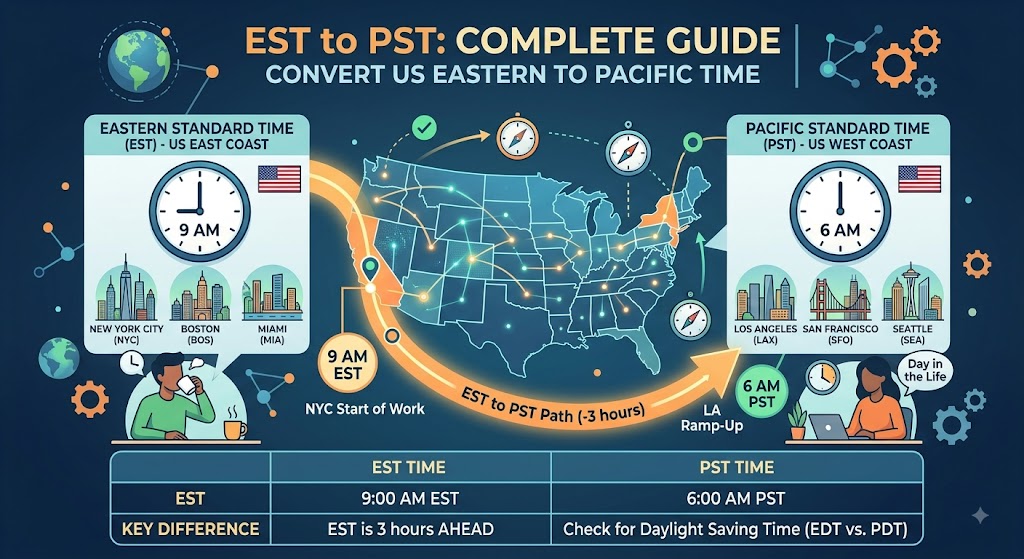
Convert 2 PM EST to PST.
- EST offset: UTC - 5:00
- PST offset: UTC - 8:00
- Difference: -8 - (-5) = -3 hours
- 2 PM - 3 hours = 11 AM PST
That's straightforward. The real headache is when you're converting across 4 time zones with DST in some places but not others.
Honestly? I just use a time zone converter. It's faster and there's zero chance of messing up.
Real Scenarios Where This Actually Matters
Scenario 1: The Remote Team Meeting
You're in San Francisco. Your team's in Berlin. You need a weekly sync.
- San Francisco (PST): 9 AM start
- Berlin (CET): 6 PM (9 hours ahead)
- The problem: If you push it later, Berlin's working late. If you pull it earlier, you're waking up at 6 AM.
- What works: 8 AM your time = 5 PM their time. Annoying for both but doable.
Scenario 2: The International Flight
You're flying from London to Tokyo.
- Depart London: 10 AM GMT, Monday
- Flight: 11 hours
- Arrival (Tokyo time): 10 AM GMT + 11 hours = 9 PM GMT = 6 AM JST, Tuesday
That's how you get jet lag, folks.
Scenario 3: The "I'll Call You" Moment
You're in Dubai, your mom's in New York. You promise to call "tomorrow morning."
- Your 9 AM Dubai = New York's 1 AM (winter) or 2 AM (summer)
- Result: You wake her up. She's annoyed. You learn to check next time.
Common Mistakes (And How to Avoid Them)
1. Confusing EST and EDT
People say "Eastern Time" and assume it's the same year-round. It's not. March–November is EDT (UTC -4); November–March is EST (UTC -5).
Fix: Use "ET" (Eastern Time) when the season isn't clear, or just ask.
2. Forgetting About Half-Hour and Quarter-Hour Offsets
Not every time zone is a whole hour apart.
- India is UTC +5:30
- Nepal is UTC +5:45
- Newfoundland is UTC -3:30
Fix: Don't assume. Always verify the actual offset.
3. Ignoring the Date Line
If you're converting from New York to Tokyo, your date changes. 2 PM EST Monday = 3 AM Tuesday JST. The day flips.
Fix: Always check the date, not just the time. It's easy to schedule a meeting for "Tuesday" that's actually Monday in the other time zone.
Quick Reference: Common Time Zone Conversions
Here's a cheat sheet for the most common conversions (winter, no DST):
| From | To | Difference | Example (9 AM From) |
|---|---|---|---|
| New York (EST) | Los Angeles (PST) | -3 hours | 6 AM PST |
| New York (EST) | London (GMT) | +5 hours | 2 PM GMT |
| New York (EST) | Paris (CET) | +6 hours | 3 PM CET |
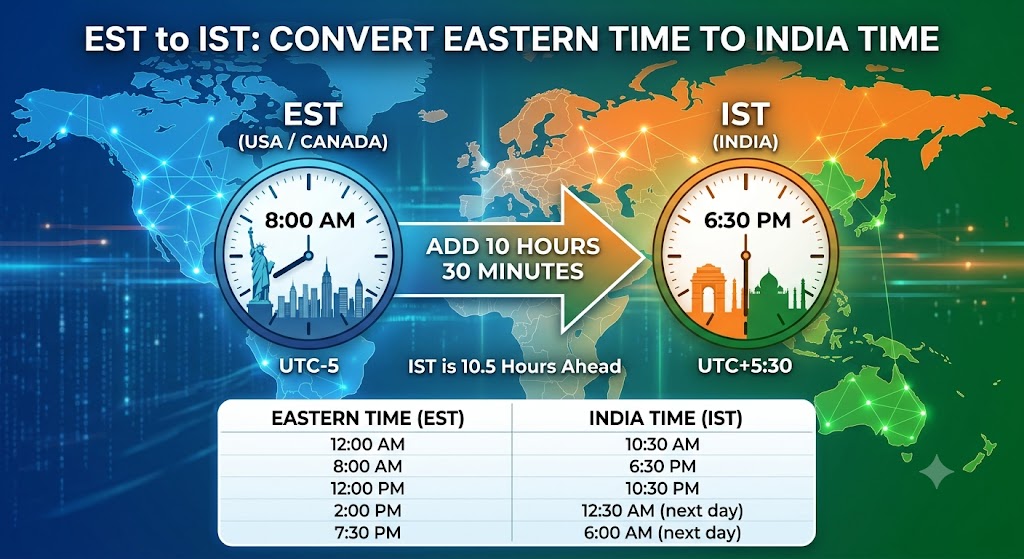
| New York (EST) | India (IST) | +10.5 hours | 7:30 PM IST |
| New York (EST) | Tokyo (JST) | +14 hours | 11 PM JST |
| London (GMT) | Sydney (AEST) | +11 hours | 8 PM AEST |
| London (GMT) | New York (EST) | -5 hours | 4 AM EST |
Remember: These change during DST. Always double-check.
How Our Converter Makes This Easy
Our time zone converter handles the hard parts for you:
Live clocks — See both times updating in real-time. No more "wait, is that AM or PM?"
Daylight saving handled — It automatically knows whether DST is active. You don't have to remember.
Working hours overlap — It shows you when both parties are likely to be at work. This alone saves so much back-and-forth.
24-hour view — See the full day side-by-side. Great for planning all-day events or finding non-obvious time slots.
Frequent pairs — Quickly convert between common zones like EST↔PST, London↔NYC, India↔US.
Tips for Scheduling Across Time Zones
After years of working with global teams, here's what actually works:
Find the overlap window first. Most teams work 9–5 local time. Find the 2–3 hour window where everyone's awake. That's your meeting slot.
Use 24-hour time. 14:00 is impossible to confuse with 2:00 AM. This simple habit saves so many errors.
Share a link to your time zone converter. Instead of explaining "8 AM EST is 5:30 PM IST," just send a link. People trust the tool more than your mental math.
Schedule in UTC. For truly global teams, setting meetings in UTC is neutral and unambiguous. Everyone converts to their local time.
Check holidays, not just time zones. Monday morning in the US might be Diwali in India or Boxing Day in Australia. Time zones won't save you from that.
Frequently Asked Questions
What is a time zone converter, exactly?
It's a tool that shows you what time it is in one location when you know the time in another. It handles offsets, DST, and date changes automatically.
How do I convert time zones without a calculator?
Find the UTC offsets for both zones, subtract the source offset from the target offset, and add that number to the source time. But honestly, just use a converter.
Why does the time difference change?
Because some places observe DST and others don't. That 5-hour difference between London and New York becomes 4 hours in summer.
How do I know if DST is active?
Check a reliable source. The US DST runs March–November. Europe runs March–October. Australia's DST runs October–April. Or just use a converter.
What's the best time to call someone in India from the US?
Morning US time = evening India time. 8 AM EST = 6:30 PM IST. That's a decent time for both.
How many time zones are there?
About 40, including half-hour and quarter-hour offsets. Most people only need the major ones for business travel.
Why does India have a 30-minute offset?
Historical reasons. India chose to stay 30 minutes off the major time zone lines for political and practical reasons. Nepal even has 45 minutes.
Is GMT the same as UTC?
For practical purposes, yes. UTC is the modern standard; GMT is the old one. Same offset (±0).
Can I convert time zones in Google Calendar?
Yes! Google Calendar shows multiple time zones if you enable it. Calendar apps are often the easiest way to schedule across zones.
Final Thoughts
Time zone conversions seem simple until you've accidentally scheduled a meeting at 3 AM for someone.
Once you understand UTC, DST, and a few key offsets, you're 90% of the way there. The remaining 10% is just checking your math and using reliable tools.
And when in doubt, use the converter. It's free, it's instant, and it saves you from waking anyone up.
Try the time zone converter here → /timezone-converter
Tags: time zone converter, time converter, UTC converter, world clock, time difference calculator, international time converter, how to convert time zones, UTC offset, time zone conversion, convert time between time zones, time zone calculator, live time converter, time zone guide, international meeting scheduler, remote work time zones, time zone basics, GMT converter, EST to PST, UTC to IST, time zone explained, time zone conversion guide