UTC to IST: Convert UTC Time to India Standard Time
If you've ever looked at a timestamp like "14:30 UTC" and wondered what that means in India time, you're not alone.
Whether you're coordinating with a team in Bangalore, scheduling a webinar for a global audience, or just trying to figure out when your favorite streamer goes live, converting UTC to IST is a common need.
The good news? It's simple math.
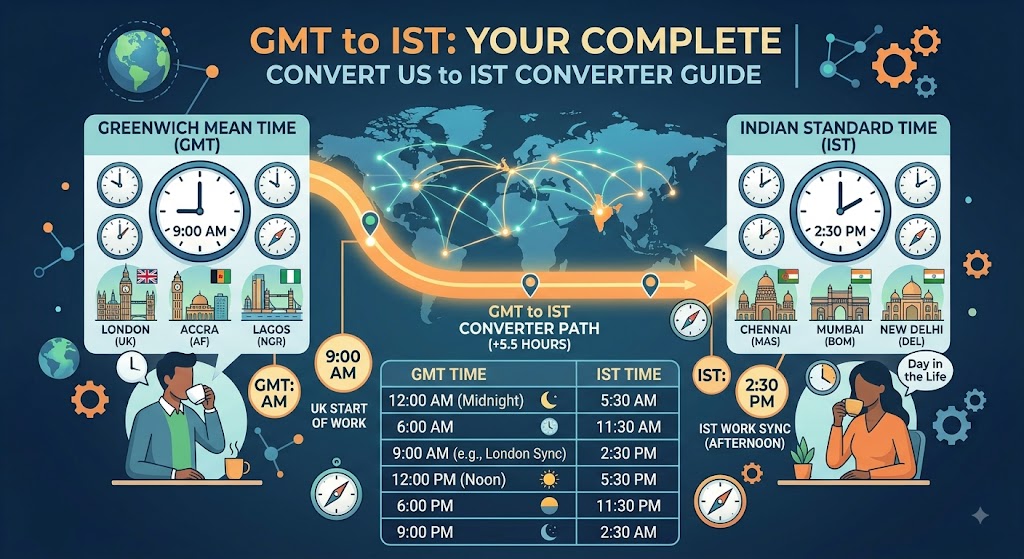
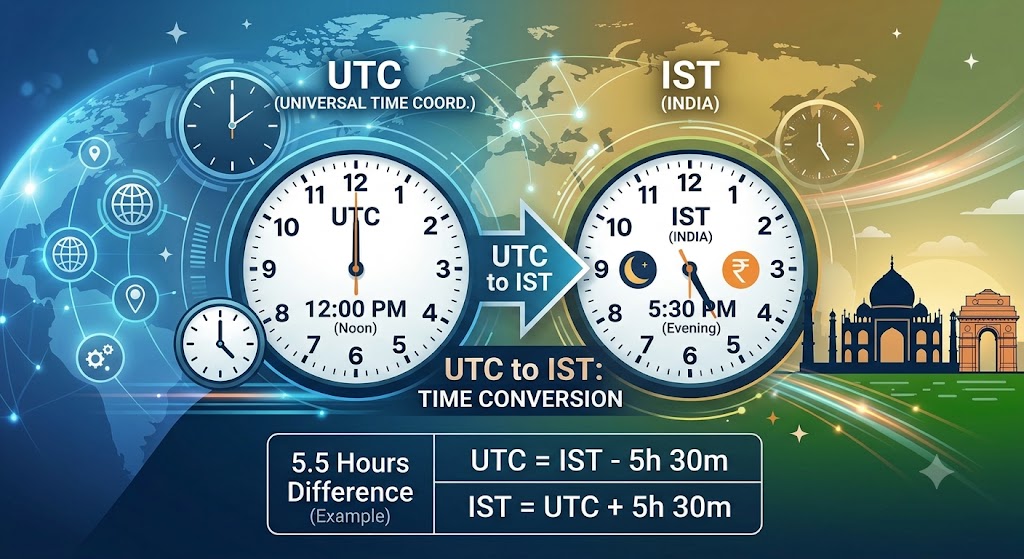
UTC is 5 hours and 30 minutes behind India Standard Time (IST).
So if it's 12:00 PM UTC, it's 5:30 PM IST. Add 5.5 hours — that's it.
Use the free UTC to IST converter here →
The Short Answer: What's the Time Difference?
IST is always UTC +5:30. No exceptions, no daylight saving changes.
| If it's... | UTC Time | India Time (IST) |
|---|---|---|
| Midnight UTC | 12:00 AM | 5:30 AM |
| Morning | 6:00 AM | 11:30 AM |
| Noon | 12:00 PM | 5:30 PM |
| Evening | 6:00 PM | 11:30 PM |
Here's the beauty of UTC to IST: The conversion never changes. There's no summer/winter difference to remember. India doesn't observe Daylight Saving Time, and UTC is constant by definition.
Why Is India 5 Hours 30 Minutes Ahead of UTC?
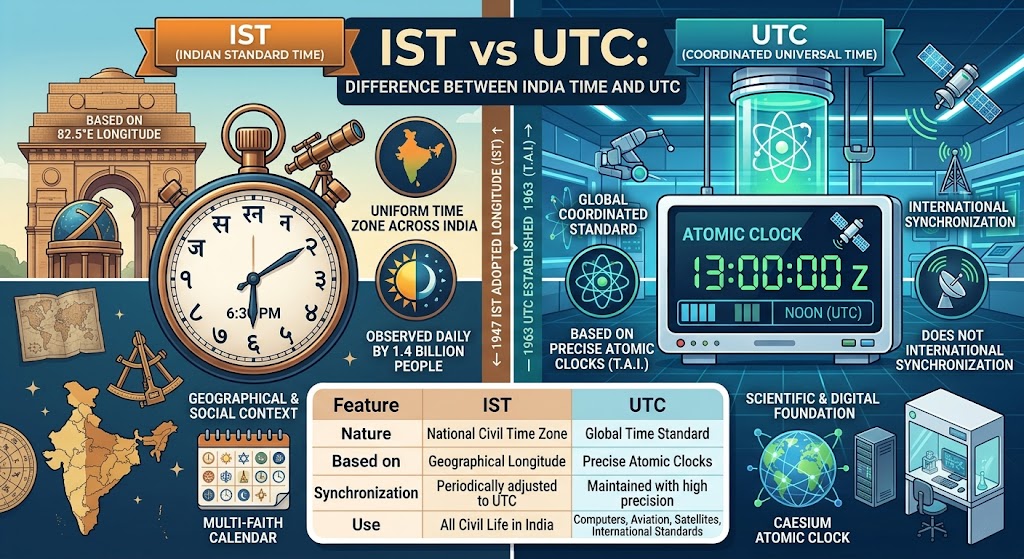
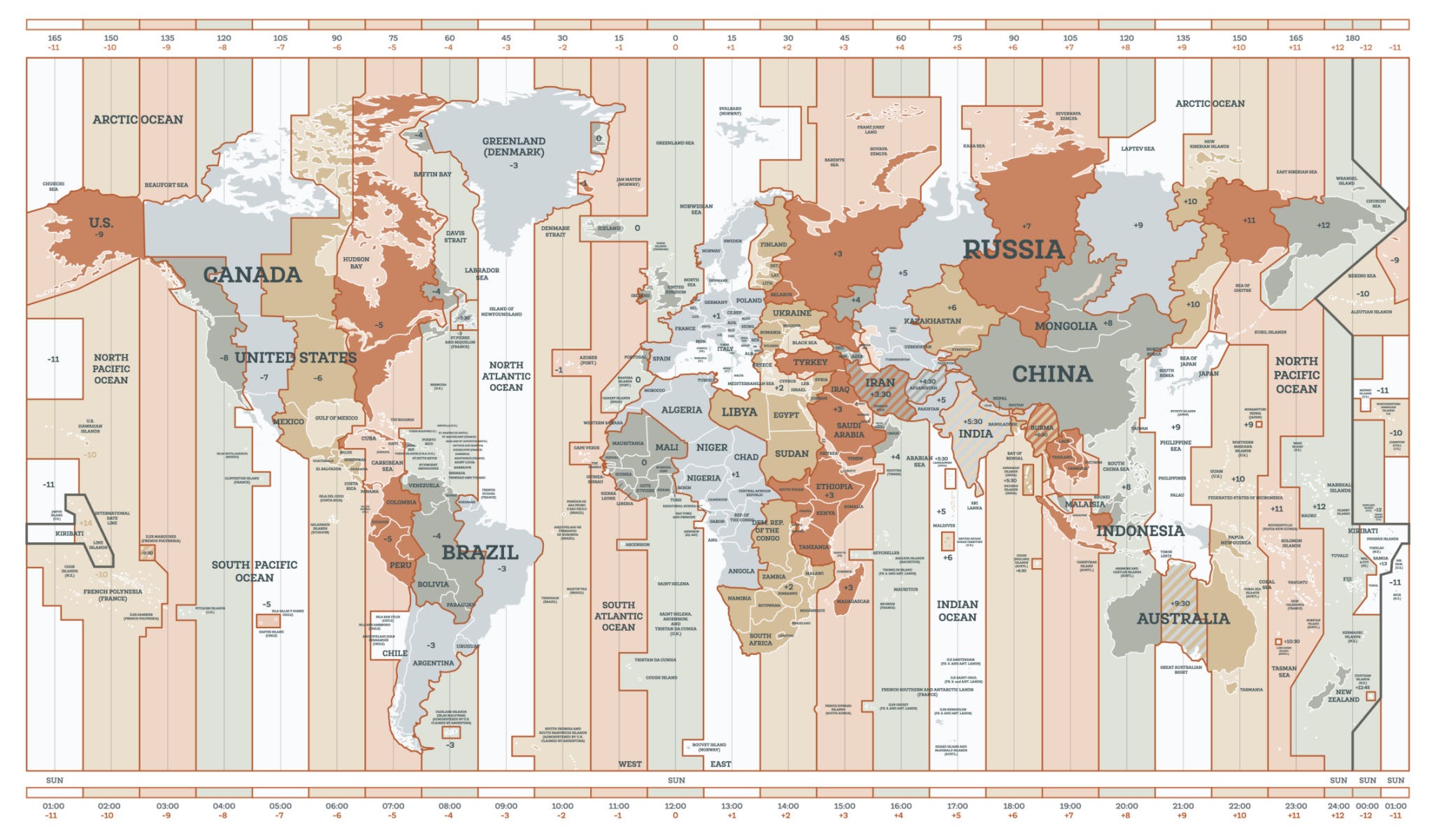
India's time zone is UTC +5:30. That's 5.5 hours ahead of UTC.
The half-hour offset is unusual — most time zones are on the hour. But India chose UTC +5:30 to cover its wide east-west span with a single time zone.
The 30-minute offset roughly aligns with the 82.5°E meridian, which passes through Mirzapur in Uttar Pradesh. That's why Indian Standard Time sits halfway between UTC +5 and UTC +6.
Most countries choose to align their time zones to the nearest hour. India chose not to. The 30-minute offset lets the entire country use one time zone, avoiding the chaos of multiple zones like the US has.
Major cities in IST: Mumbai, Delhi, Bangalore, Chennai, Kolkata.
The Best Part: No DST Confusion
Unlike many other time zones, India does not observe Daylight Saving Time.
This means:
- IST stays at UTC +5:30 all year
- UTC to IST conversion is always the same
- No need to check whether you're in "standard" or "daylight" time
Compare this to converting UTC to US time zones:
| Time Zone | Winter Difference | Summer Difference |
|---|---|---|
| UTC to IST | 5.5 hours ahead | 5.5 hours ahead (no change) |
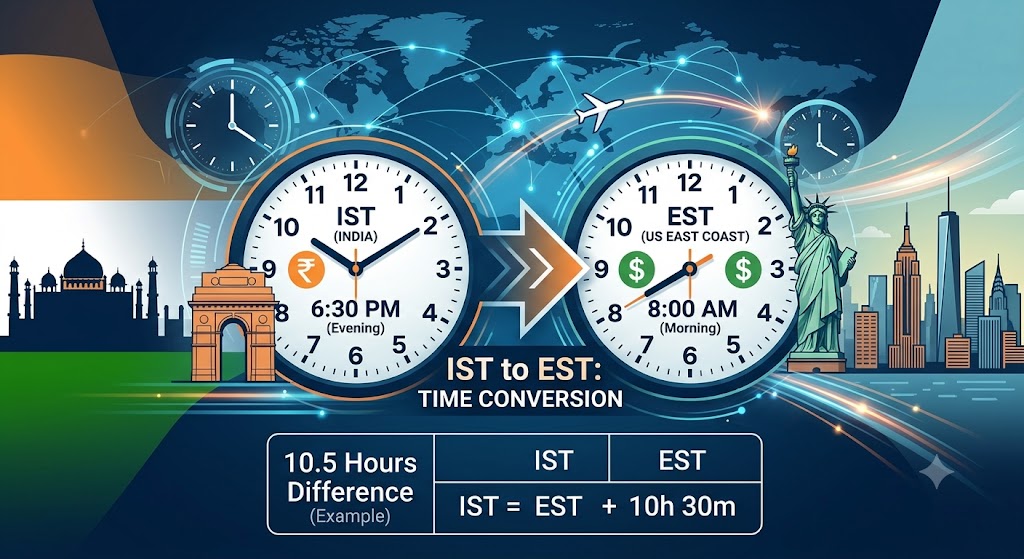
| UTC to EST | 5 hours behind | 4 hours behind |
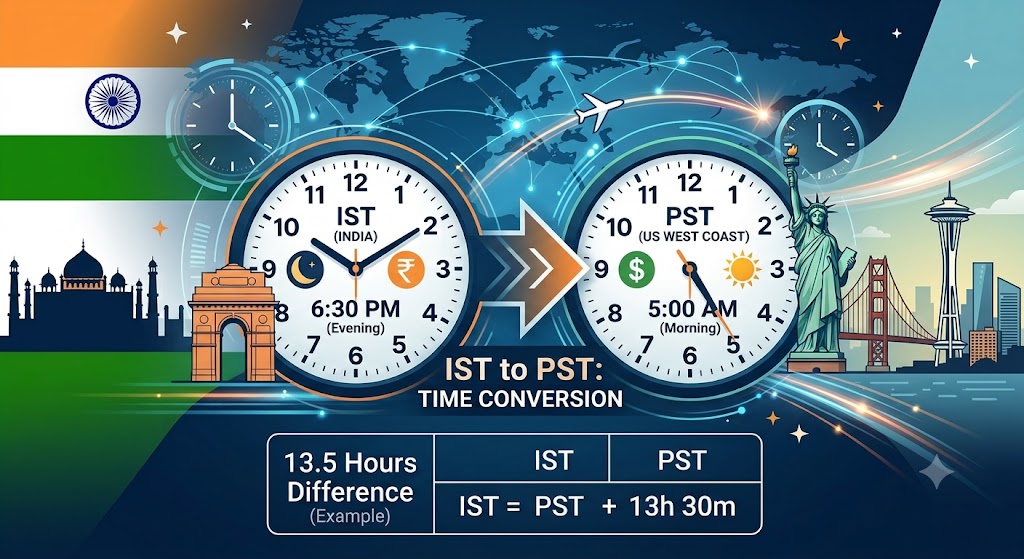
| UTC to PST | 8 hours behind | 7 hours behind |
This makes UTC to IST one of the simplest time zone conversions there is.
Quick Reference: UTC to IST Conversion Table
Since the offset never changes, these conversions are valid every day of the year:
| UTC Time | IST Time |
|---|---|
| 00:00 (midnight) | 05:30 |
| 01:00 | 06:30 |
| 02:00 | 07:30 |
| 03:00 | 08:30 |
| 04:00 | 09:30 |
| 05:00 | 10:30 |
| 06:00 | 11:30 |
| 07:00 | 12:30 |
| 08:00 | 13:30 |
| 09:00 | 14:30 |
| 10:00 | 15:30 |
| 11:00 | 16:30 |
| 12:00 (noon) | 17:30 |
| 13:00 | 18:30 |
| 14:00 | 19:30 |
| 15:00 | 20:30 |
| 16:00 | 21:30 |
| 17:00 | 22:30 |
| 18:00 | 23:30 |
| 19:00 | 00:30 (next day) |
| 20:00 | 01:30 (next day) |
| 21:00 | 02:30 (next day) |
| 22:00 | 03:30 (next day) |
| 23:00 | 04:30 (next day) |
Real Scenarios: UTC to IST in Action
Scenario 1: The Global Team Meeting
Your software team is spread across London, Bangalore, and San Francisco. You need a weekly sync.
- Bangalore (IST) team: Works 10 AM - 7 PM
- London (UTC) team: Works 9 AM - 5 PM
- Best overlap window: 2:30 PM - 5:00 PM IST = 9:00 AM - 11:30 AM UTC
What to do: Schedule your meeting at 10:00 AM UTC / 3:30 PM IST. Both teams are fully online.
Scenario 2: The Software Release
You're deploying a critical update. The release notes say "2026-08-09 15:00 UTC."
- In India: 8:30 PM IST (15:00 + 5:30)
What to do: Make sure your on-call team is ready at 8:30 PM IST. This is late for many India team members — consider an earlier deployment time if possible.
Scenario 3: The Live Stream
The international sports event starts at 8:00 PM UTC.
- In India: 1:30 AM IST (next day). That's a late night or early morning, depending on how you look at it.
What to do: If you're watching live, plan to stay up. If not, find a highlights channel the next morning.
How to Convert UTC to IST in Your Head
The formula is simple:
IST = UTC + 5 hours 30 minutes
Example: 14:00 UTC
- Add 5 hours → 19:00
- Add 30 minutes → 19:30 (7:30 PM IST)
Going the other way (IST to UTC):
UTC = IST - 5 hours 30 minutes
Example: 10:00 AM IST
- Subtract 5 hours → 5:00 AM
- Subtract 30 minutes → 4:30 AM UTC
But honestly? Just use a converter. The math is simple, but when you're scheduling something important, you don't want to do it in your head.
Common Mistakes (And How to Avoid Them)
1. Adding Instead of Subtracting When Going IST to UTC
Going UTC → IST? Add 5.5 hours. Going IST → UTC? Subtract 5.5 hours.
Fix: Remember: India is ahead of UTC. If it's noon UTC, it's already 5:30 PM in India.
2. Forgetting the 30 Minutes
UTC and IST don't align on the hour. You can't just add 5 or 6 hours — it's 5.5. This matters for meeting times and deadlines.
Fix: Always include the 30 minutes. 14:00 UTC = 19:30 IST, not 19:00 or 20:00.
3. Confusing IST with Other "IST" Time Zones
"IST" can mean multiple things:
- India Standard Time — UTC +5:30 (most common)
- Irish Standard Time — UTC +1
- Israel Standard Time — UTC +2
On most global platforms, "IST" defaults to India Standard Time.
Fix: If the context isn't clear, specify "India Standard Time" or use the IANA identifier Asia/Kolkata.
4. Ignoring the Date Change
When adding 5.5 hours, the date might change. A meeting at 23:00 UTC is 4:30 AM IST the next day.
Fix: Always check the date, not just the time.
Why UTC Exists in the First Place
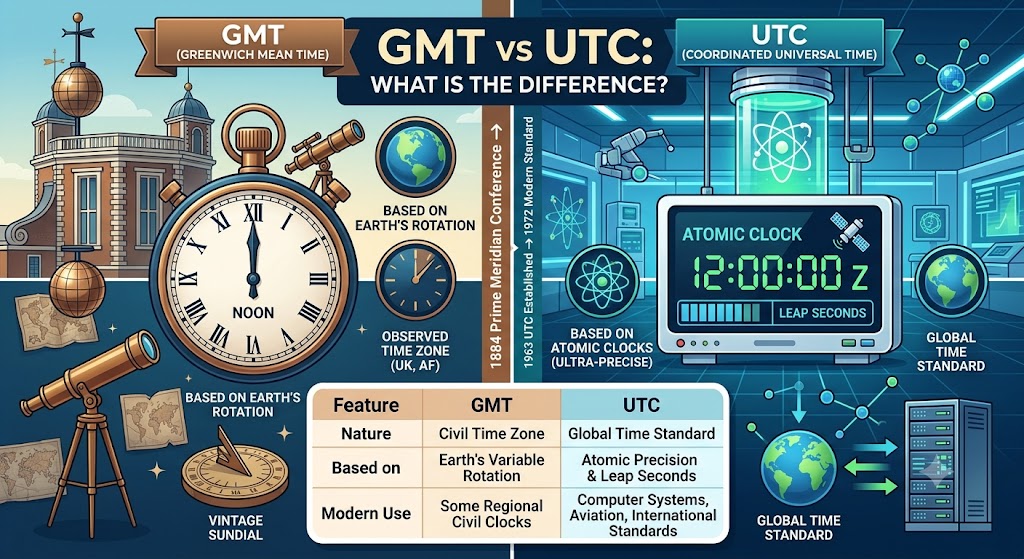
UTC (Coordinated Universal Time) is the world's time reference. It's "time zero" — everything else is just UTC plus or minus some hours.
UTC is used:
- In aviation and shipping
- For global software timestamps
- As the basis for all other time zones
- For scheduling international events
Because UTC doesn't observe DST, it's a stable reference point for global coordination.
Frequently Asked Questions
What is the UTC to IST time difference?
IST is 5 hours and 30 minutes ahead of UTC. This difference is constant year-round.
Does India observe Daylight Saving Time?
No. India stays on IST (UTC +5:30) throughout the entire year.
Why does India have a 30-minute offset?
India chose UTC +5:30 as a compromise to cover its wide east-west span with a single time zone. The offset aligns with the 82.5°E meridian.
Is IST always the same as UTC +5:30?
Yes. IST is always UTC +5:30, year-round. Unlike US or European time zones, it doesn't change for DST.
What's the best time for a meeting between UTC and IST?
For UTC-based teams and IST-based teams, the best overlap window is typically 9:00 AM - 11:30 AM UTC, which corresponds to 2:30 PM - 5:00 PM IST.
What is 12:00 PM UTC in IST?
12:00 PM UTC = 5:30 PM IST.
What is 9:00 AM UTC in IST?
9:00 AM UTC = 2:30 PM IST.
What is the IANA identifier for India Standard Time?
Asia/Kolkata is the standard IANA time zone identifier for India.
Final Thoughts
UTC to IST is one of the simplest time zone conversions you'll deal with. Add 5 hours and 30 minutes, and you're done. No DST changes to track, no seasonal adjustments to remember.
The 30-minute offset might seem unusual, but it's a deliberate choice that gives India a single time zone covering its vast geography.
And if you're ever in doubt, use the tool. It handles the math instantly, shows you the exact conversion, and saves you from making a scheduling mistake.
Convert UTC to IST instantly → /timezone-converter/utc-to-ist
Tags: UTC to IST, convert UTC to IST, UTC time to India time, UTC to IST converter, UTC to IST time difference, India Standard Time, India time zone, UTC+5:30, UTC to IST conversion table, time difference UTC IST, UTC to IST 5.5 hours, UTC to IST converter online, IST to UTC, what time is UTC in IST, UTC time now in IST, UTC to IST calculator, time zone converter UTC IST, UTC to IST work hours, UTC to IST business hours