IST vs UTC: Difference Between India Time and UTC – Complete Guide
Ever looked at a timestamp like "14:30 UTC" and wondered what that means in India? Or seen "IST" on a meeting invite and had to double-check what time that actually is?
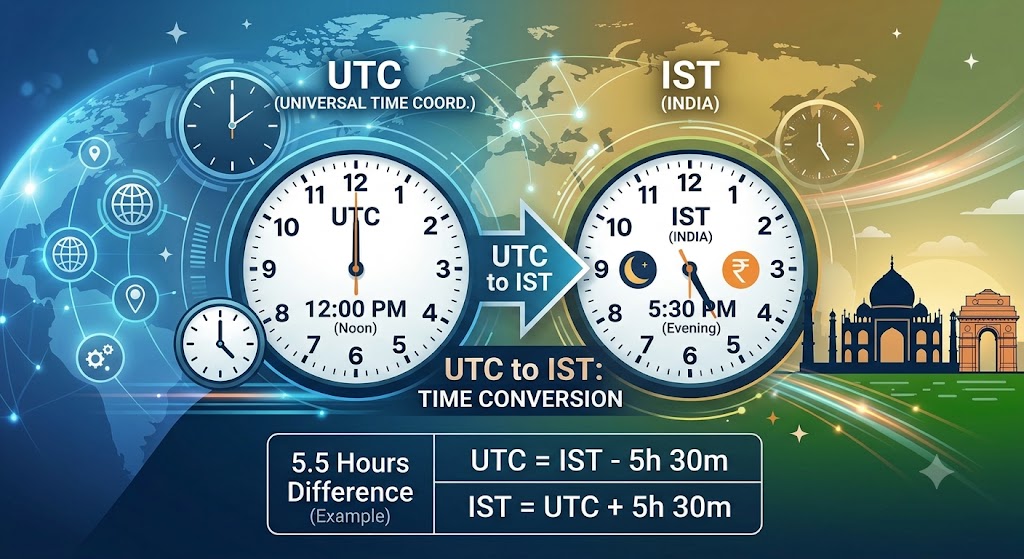
Here's the short answer: India Standard Time (IST) is exactly 5 hours and 30 minutes ahead of Coordinated Universal Time (UTC).
So when it's noon in UTC, it's already 5:30 PM in India. That half-hour makes all the difference.
This guide explains the difference between IST and UTC — why India has a 30-minute offset, how to convert between them, and why UTC is the global standard.
Use the free UTC to IST converter here →
The Short Answer: What's the Difference?
IST is UTC +5:30. India is 5 hours and 30 minutes ahead of UTC.
| If it's... | UTC Time | India Time (IST) |
|---|---|---|
| Midnight UTC | 00:00 | 05:30 |
| Morning | 06:00 | 11:30 |
| Noon | 12:00 | 17:30 |
| Evening | 18:00 | 23:30 |
Here's the beauty of this conversion: It never changes. India doesn't observe Daylight Saving Time, and UTC is constant by definition. No summer/winter difference to remember.
What Is UTC?
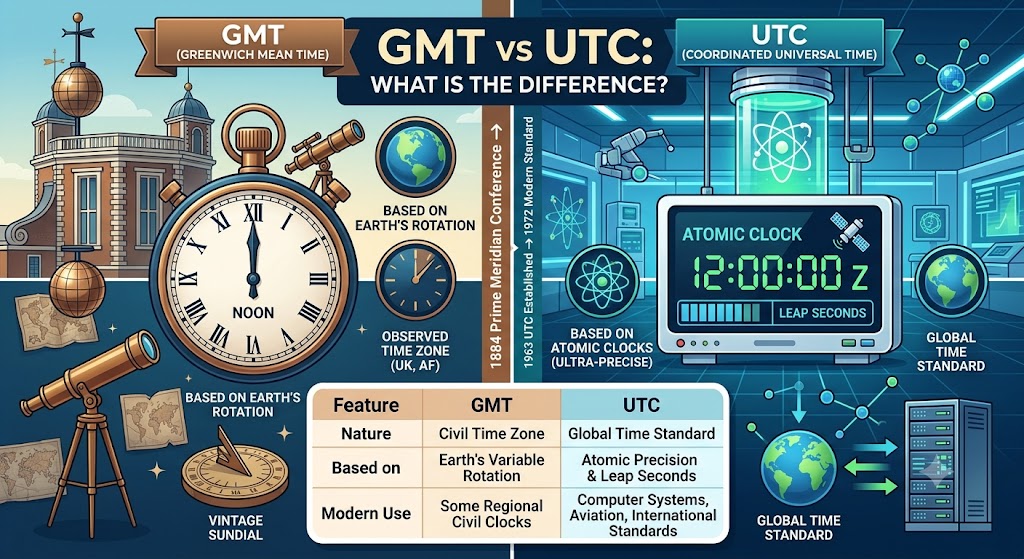
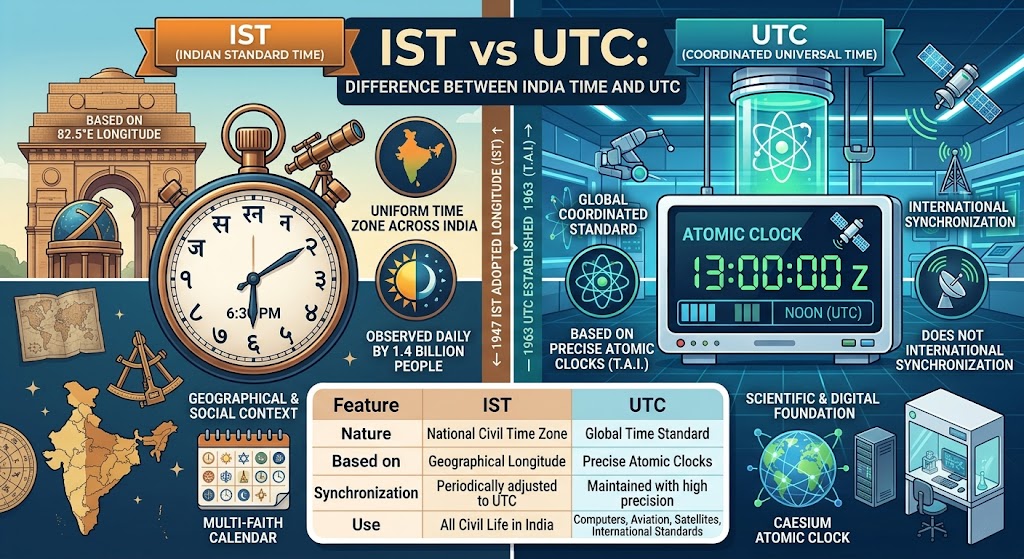
UTC (Coordinated Universal Time) is the world's primary time standard. It's maintained by atomic clocks — over 300 of them worldwide — and is accurate to within a billionth of a second.
Key facts about UTC:
- It's a time standard, not a time zone. UTC is the reference point from which all time zones are defined. Japan is UTC+9, New York is UTC-5 in winter, and India is UTC+5:30.
- It's based on atomic clocks. UTC's second is defined by 9,192,631,770 oscillations of a cesium-133 atom. This makes it incredibly stable.
- It uses leap seconds. Since Earth's rotation is gradually slowing, leap seconds are occasionally added to UTC to keep it aligned with astronomical time. Since 1972, 36 leap seconds have been added.
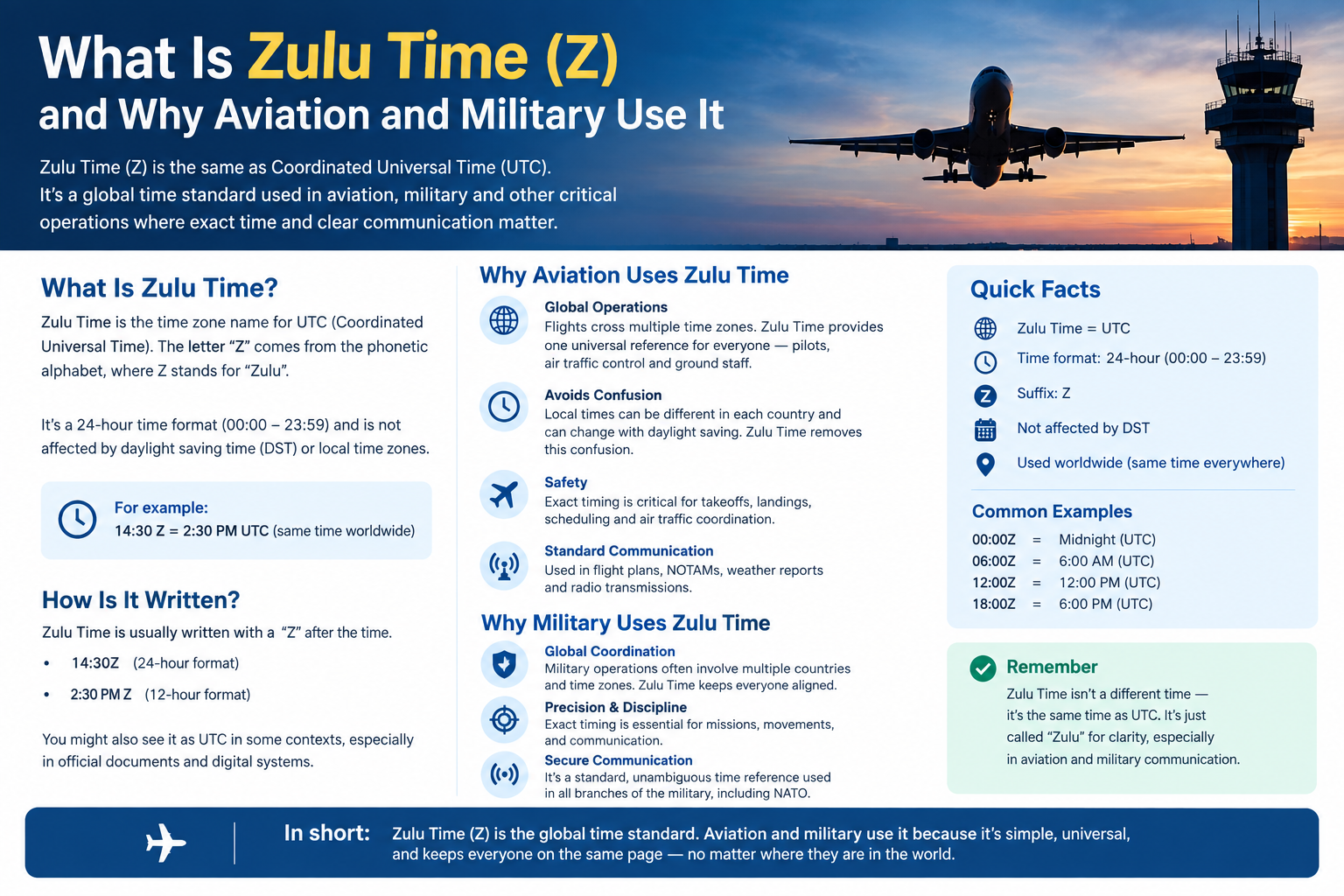
UTC is used in aviation, global computer networks, navigation, and scientific research. When you see a timestamp in "Zulu" time, that's UTC — "Z" is the military designation for the UTC time zone.
What Is IST?
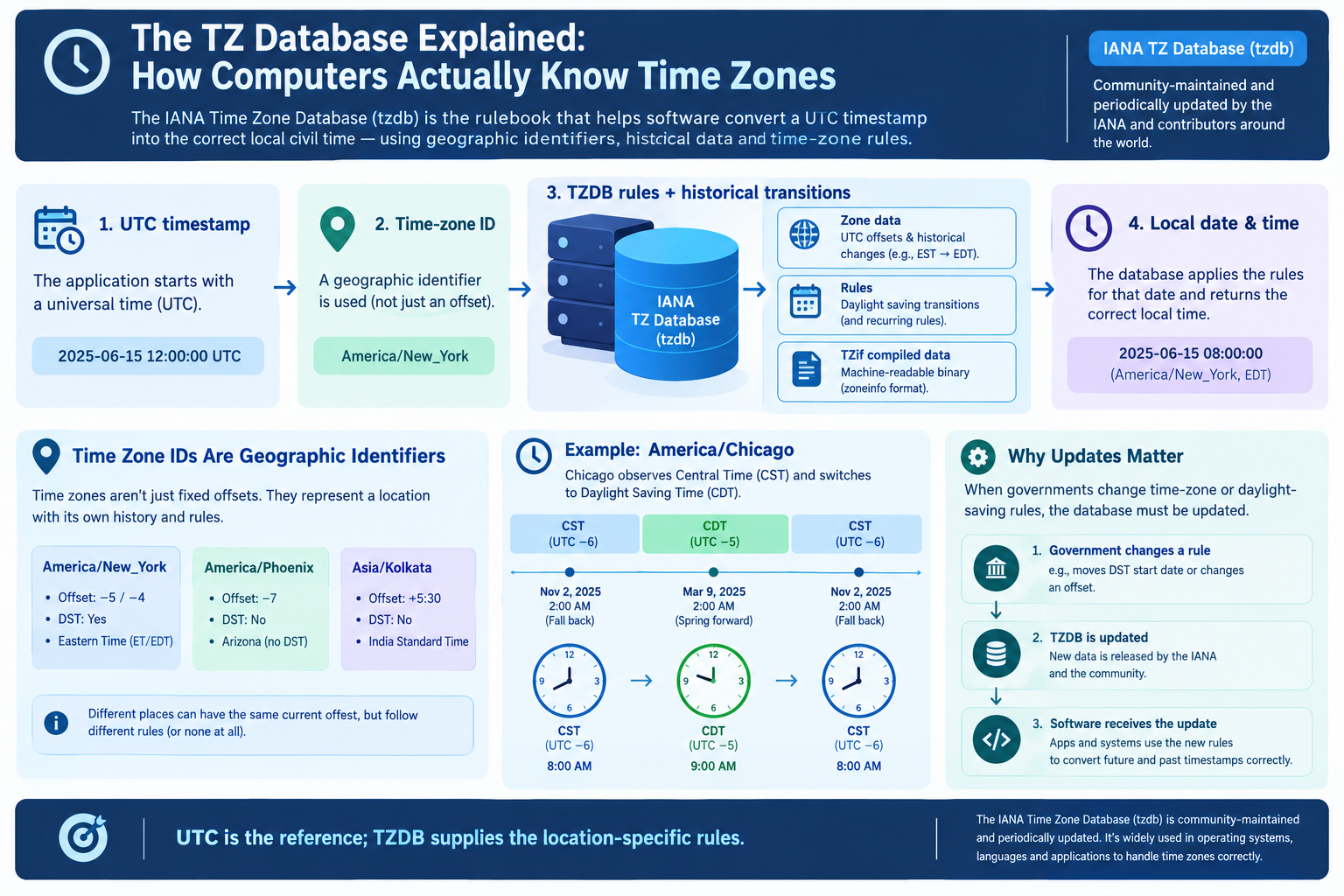
IST (India Standard Time) is the time observed throughout India and Sri Lanka. It's one of the few time zones in the world with a half-hour offset.
Key facts about IST:
- It's a time zone. IST is the actual time used by people living in India. Unlike UTC, you can actually set your watch to IST.
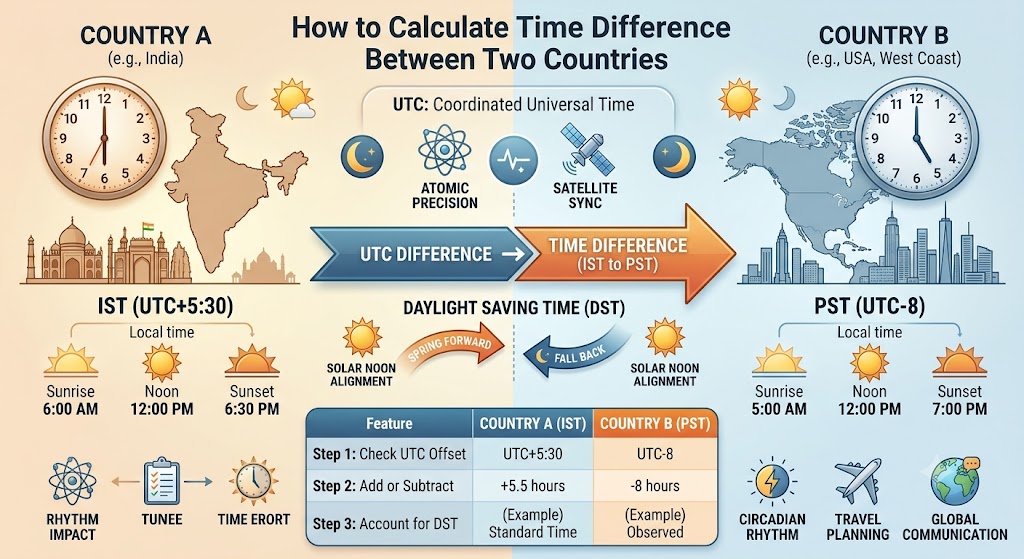
- It's UTC +5:30. India is 5.5 hours ahead of UTC.
- It doesn't change for DST. India does not observe Daylight Saving Time. IST stays UTC+5:30 all year, every year.
Major cities in IST: Mumbai, Delhi, Bangalore, Chennai, Kolkata.
IANA identifier: The official time zone identifier for India is Asia/Kolkata.
Why Does India Have a 30-Minute Offset?
Most time zones are on the hour — UTC+5, UTC+6, UTC+8. But India sits at UTC+5:30. Why?
The Geography
India spans about 30 degrees of longitude from east to west. Since Earth rotates 360° in 24 hours, every 15° of longitude corresponds to a one-hour time difference.
This means India's westernmost and easternmost regions have a natural two-hour difference in local time. Without a single standard time, it would be 6 AM in one part of the country and 8 AM in another.
The Compromise
Instead of splitting India into multiple time zones (like the US has Eastern, Central, Mountain, and Pacific), India chose to use a single time zone for the entire country.
UTC+5:30 was chosen as the compromise. It balances the natural time differences across the country, so no region is too far from solar time.
The Meridian
IST is based on the 82.5°E longitude — the Indian standard meridian — which passes through Mirzapur, Uttar Pradesh.
Since 82.5° divided by 15° (the rotation per hour) equals 5.5, IST is UTC+5:30. This meridian is east of the Greenwich Meridian, so IST is ahead of UTC.
Quick Reference: UTC to IST Conversion Table
Since IST is always UTC+5:30, these conversions never change:
| UTC Time | IST Time |
|---|---|
| 00:00 (midnight) | 05:30 |
| 01:00 | 06:30 |
| 02:00 | 07:30 |
| 03:00 | 08:30 |
| 04:00 | 09:30 |
| 05:00 | 10:30 |
| 06:00 | 11:30 |
| 07:00 | 12:30 |
| 08:00 | 13:30 |
| 09:00 | 14:30 |
| 10:00 | 15:30 |
| 11:00 | 16:30 |
| 12:00 (noon) | 17:30 |
| 13:00 | 18:30 |
| 14:00 | 19:30 |
| 15:00 | 20:30 |
| 16:00 | 21:30 |
| 17:00 | 22:30 |
| 18:00 | 23:30 |
| 19:00 | 00:30 (next day) |
| 20:00 | 01:30 (next day) |
| 21:00 | 02:30 (next day) |
| 22:00 | 03:30 (next day) |
| 23:00 | 04:30 (next day) |
How to Convert UTC to IST in Your Head
The formula is simple:
IST = UTC + 5 hours 30 minutes
Example: 14:00 UTC
- Add 5 hours → 19:00
- Add 30 minutes → 19:30 (7:30 PM IST)
Going the other way (IST to UTC):
UTC = IST - 5 hours 30 minutes
Example: 10:00 AM IST
- Subtract 5 hours → 5:00 AM
- Subtract 30 minutes → 4:30 AM UTC
But honestly? Just use the converter. The half-hour math is easy to mess up under pressure.
The Bigger Difference: Time Standard vs Time Zone
The most important difference between IST and UTC isn't the 5.5 hours — it's what they actually are.
UTC is a Time Standard
- Used as the reference for the entire world
- Maintained by atomic clocks
- Doesn't change for DST
- No one actually lives in UTC
IST is a Time Zone
- Used by people in India
- Defined by its UTC offset (+5:30)
- Doesn't change for DST
- You can set your watch to IST
GMT is another time zone, like IST. UTC is the standard that defines both.
Common Mistakes (And How to Avoid Them)
1. Forgetting the 30 Minutes
This is the most common mistake. People know India is ahead of UTC, but they assume it's 5 or 6 hours. It's 5.5 hours.
Fix: Always include the 30 minutes. 14:00 UTC = 19:30 IST, not 19:00 or 20:00.
2. Confusing IST with Other "IST" Time Zones
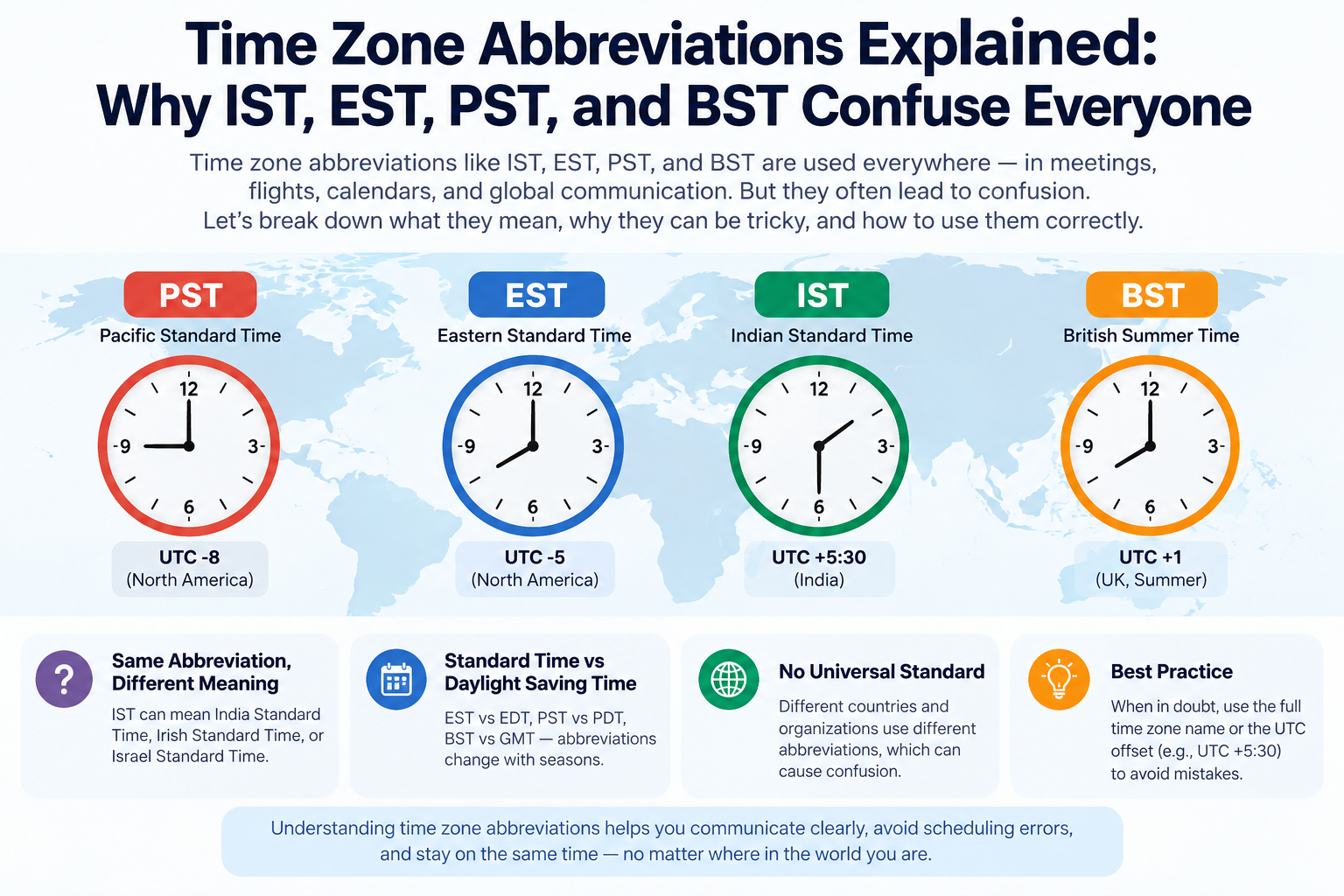
"IST" can mean multiple things:
- India Standard Time — UTC +5:30 (most common)
- Irish Standard Time — UTC +1
- Israel Standard Time — UTC +2
Fix: If the context isn't clear, specify "India Standard Time" or use Asia/Kolkata.
3. Ignoring the Date Change
When adding 5.5 hours, the date might change. 23:00 UTC is 4:30 AM IST the next day.
Fix: Always check the date, not just the time.
Frequently Asked Questions
What is the UTC to IST time difference?
IST is 5 hours and 30 minutes ahead of UTC. This difference is constant year-round.
Does India observe Daylight Saving Time?
No. India stays on IST (UTC+5:30) throughout the entire year. It did briefly use DST during the Sino-Indian War in 1962 and the Indo-Pakistan Wars in 1965 and 1971, but not since.
Why does India have a 30-minute offset?
India chose UTC+5:30 as a compromise to cover its wide east-west span with a single time zone. The offset aligns with the 82.5°E meridian that passes through Mirzapur, Uttar Pradesh.
Is IST the same as UTC+5:30?
Yes. IST is always UTC+5:30, year-round. Unlike US or European time zones, it doesn't change for DST.
What's the best time for a meeting between UTC and IST?
For UTC-based teams and IST-based teams, the best overlap window is typically 9:00 AM - 11:30 AM UTC, which corresponds to 2:30 PM - 5:00 PM IST.
What is 12:00 PM UTC in IST?
12:00 PM UTC = 5:30 PM IST.
What is 9:00 AM UTC in IST?
9:00 AM UTC = 2:30 PM IST.
What is the IANA identifier for India Standard Time?
Asia/Kolkata is the standard IANA time zone identifier for India. Asia/Calcutta is also used.
What is the abbreviation for UTC?
UTC is the abbreviation for Coordinated Universal Time. It doesn't match either the English or French abbreviation — it was a compromise. It's also called "Zulu" time in military and aviation contexts.
Final Thoughts
IST vs UTC is one of the simplest time differences you'll deal with — 5 hours and 30 minutes, no DST changes, no seasonal adjustments.
The 30-minute offset might seem unusual, but it's a deliberate choice that gives India a single time zone covering its vast geography. It's a compromise between east and west, between practicality and accuracy.
The key takeaway: IST = UTC+5:30, and it never changes.
And if you're ever in doubt, use the tool. It handles the math instantly and saves you from making a scheduling mistake.
Convert UTC to IST instantly → /timezone-converter/utc-to-ist
Tags: IST vs UTC, difference between IST and UTC, India Standard Time, Coordinated Universal Time, UTC+5:30, India time zone, IST offset, UTC to IST, IST to UTC, India time now, UTC vs IST, Indian Standard Time, why IST is 5:30 ahead of UTC, IST time zone, UTC time standard