Why Some Countries Have 15-Minute Time Zone Offsets (Like Nepal and Chatham Islands)
The world of time zones is stranger than most people realize. While the vast majority of the planet operates on neat, one-hour offsets from Coordinated Universal Time (UTC), a handful of places stubbornly follow the sun a little more literally. This results in the odd, but entirely real, 15-, 30-, and 45-minute time zones.
The reasons behind these fractional offsets are rarely about simple geography. They are a mix of history, national identity, and in some cases, a deliberate desire to stand apart from one's neighbors.
Use the free time zone converter here →
The Short Answer: What Is a Fractional Time Zone?
A fractional time zone is a time zone whose offset from UTC is not a whole number of hours. Instead, it uses a 15-, 30-, or 45-minute offset.
| Aspect | Details |
|---|---|
| What it is | A time zone offset that is not a whole hour from UTC |
| Common offsets | 30 minutes (India), 45 minutes (Nepal), 15 minutes (rare) |
| Why they exist | Geography, history, politics, and national identity |
| Famous examples | Nepal (UTC+05:45), Chatham Islands (UTC+12:45), India (UTC+05:30) |
| The core issue | Solar time rarely aligns perfectly with hourly zones |
| Impact | Confusing scheduling, tricky software handling |
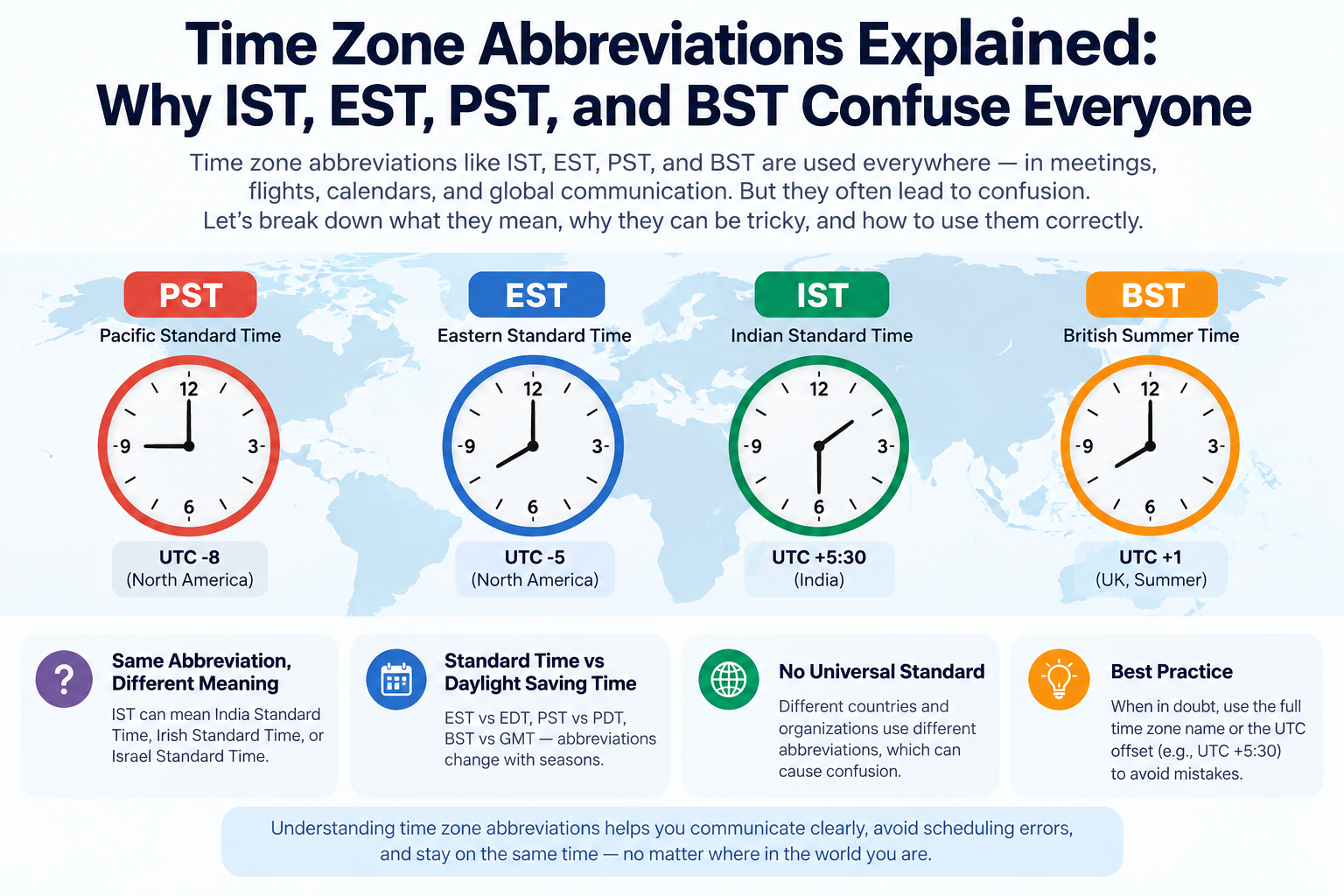
| Better practice | Always use numeric UTC offsets, not abbreviations |
Nepal: The 45-Minute Statement of Independence
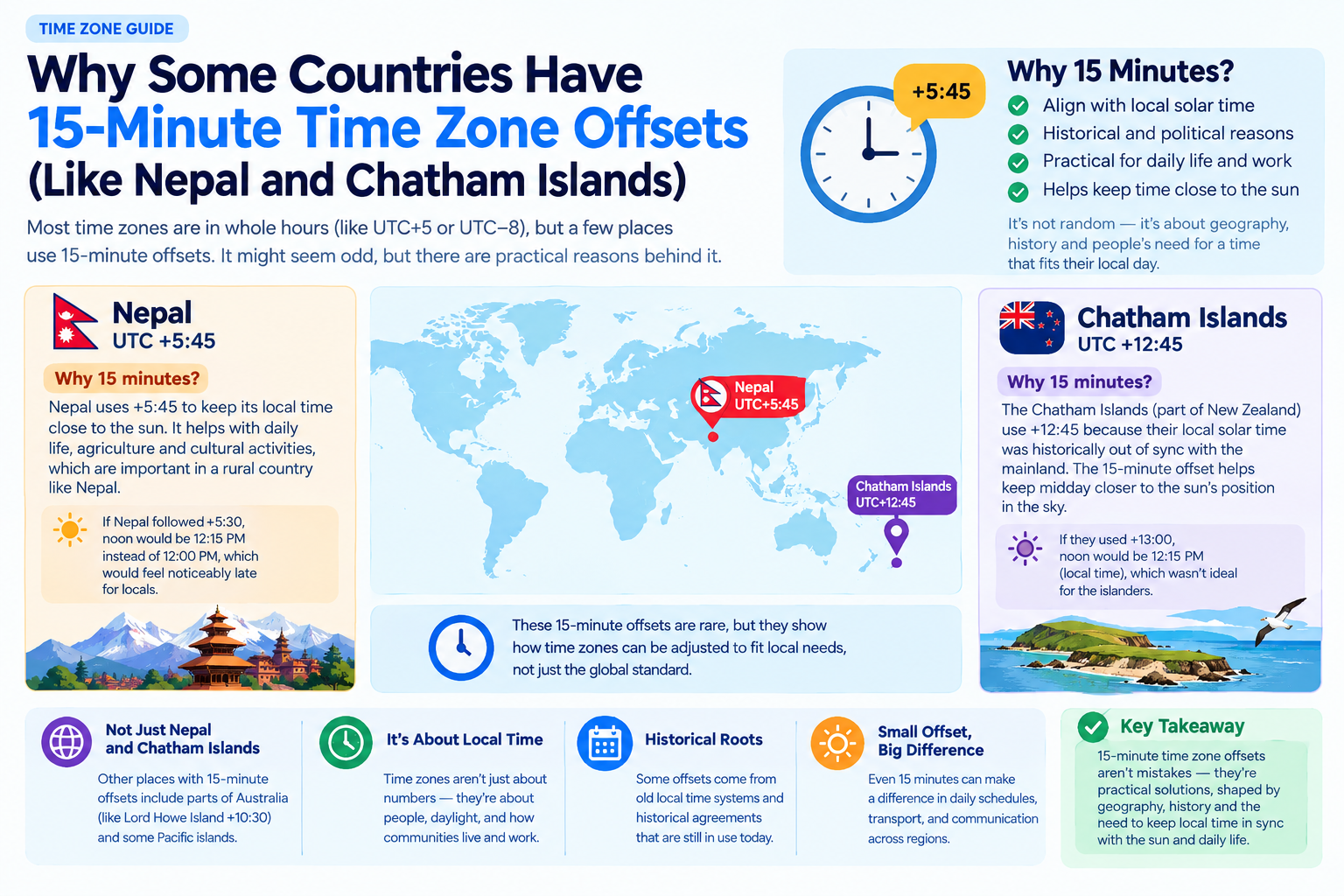
Nepal is perhaps the most famous example of a "weird" time zone, sitting at UTC+05:45.
Historically, Nepal followed India Standard Time (IST), which is UTC+05:30. However, in 1986, Nepal decided to advance its clocks by 15 minutes. The official rationale was to set the time zone meridian to 86° east longitude, which passes through the peak of Gauri Shankar mountain, about 100 km east of Kathmandu.
While this geographical justification exists, the move is also widely seen as a symbolic assertion of independence from India, which surrounds Nepal on three sides. Proposals to re-adopt India's time have consistently gone nowhere. As a result, Nepal Time is only 15 minutes ahead of its giant neighbor, creating a unique scheduling quirk for cross-border communication.
Nepal Time at a Glance
| Aspect | Details |
|---|---|
| Offset | UTC+05:45 |
| Changed in | 1986 |
| Previous offset | UTC+05:30 (India Standard Time) |
| Official reason | Meridian through Gauri Shankar mountain |
| Real reason | National identity and independence from India |
| DST | Not observed |
Chatham Islands: A Relic of Half-Hour Standardization
Far to the south, the Chatham Islands, an archipelago about 800 km east of New Zealand, operate on UTC+12:45 (or UTC+13:45 during daylight saving).
The Chathams' odd offset is a fascinating historical accident. When New Zealand standardized its time to be a whole number of hours from GMT (moving from a half-hour offset), the Chatham Islands were left in a peculiar position.
Historically, the Chathams had been 45 minutes ahead of New Zealand. When New Zealand shifted its own standard time by 30 minutes in the mid-20th century, no corresponding adjustment was made for the Chathams. This left the islanders effectively with three different times in use: a nautical time, a legal New Zealand time, and their own local preference.
To resolve the confusion, legislation was passed in 1956 to formally validate the Chathams' time as 45 minutes ahead of New Zealand, cementing its status as a quarter-hour zone. It remains a point of local identity, legally distinct from the mainland.
Chatham Islands Time at a Glance
| Aspect | Details |
|---|---|
| Standard offset | UTC+12:45 |
| Daylight offset | UTC+13:45 |
| Legislation | 1956 |
| Relation to NZ | 45 minutes ahead of mainland |
| Why it persists | Local identity and historical precedent |
| DST | Observed |
The Broader Picture: Offsets Are Not Just Hours
Nepal and the Chatham Islands are not alone. A range of other places use 30-minute offsets for similar practical or historical reasons.
Other Fractional Time Zones
| Region | Offset | Type | Notes |
|---|---|---|---|
| India | UTC+05:30 | 30-minute | Chosen to balance solar time across its width |
| Newfoundland, Canada | UTC−03:30 | 30-minute | Unique position and history |
| Iran | UTC+03:30 / UTC+04:30 | 30-minute | Base offset plus DST |
| Northern Territory, Australia | UTC+09:30 | 30-minute | Regional preference |
| South Australia | UTC+09:30 | 30-minute | Regional preference |
| Eucla, Australia | UTC+08:45 | 45-minute | Remote town, isolated from rest |
| Myanmar | UTC+06:30 | 30-minute | Historical choice |
| Venezuela | UTC−04:30 | 30-minute | Changed in 2007, reverted 2016 |
These fractional zones highlight a fundamental truth about timekeeping: it is not a law of nature but a social and political construct. As the W3C once noted, time zone offsets are "arbitrary and prone to change."
Why Do These Offsets Cause Problems?
While fractional time zones make perfect sense locally, they create headaches globally.
The Tech Headache
| Problem | Explanation |
|---|---|
| Software bugs | Many systems assume whole-hour offsets |
| Scheduling errors | 15-minute differences are easy to miss |
| Calendar syncing | Recurring meetings can shift unexpectedly |
| Legacy systems | Older databases may not store minute-level offsets |
| Human error | People round to the nearest hour |
The Human Headache
- A meeting at "10 AM Nepal time" is 15 minutes ahead of "10 AM India time"
- A call between New Zealand and the Chathams can be off by 45 minutes
- Travelers often misjudge connections and appointments
Quick Reference Card
━━━━━━━━━━━━━━━━━━━━━━━━━━━━━━━━━━━━━━━━━━━━━━━━━━━━━━━━━━
        FRACTIONAL TIME ZONE CHEAT SHEET
━━━━━━━━━━━━━━━━━━━━━━━━━━━━━━━━━━━━━━━━━━━━━━━━━━━━━━━━━━

WHAT: Time zones offset by 15, 30, or 45 minutes from UTC

FAMOUS EXAMPLES:
  Nepal          → UTC+05:45  (45 min)
  Chatham Islands → UTC+12:45  (45 min)
  India          → UTC+05:30  (30 min)
  Newfoundland   → UTC−03:30  (30 min)
  Eucla, Australia → UTC+08:45 (45 min)
  Iran           → UTC+03:30  (30 min)
  Myanmar        → UTC+06:30  (30 min)

WHY THEY EXIST:
  • Geography (solar alignment)
  • History (colonial legacy)
  • Politics (national identity)
  • Isolation (remote regions)

BEST PRACTICE:
  Always use UTC offsets → UTC+05:45
  Never rely on abbreviations alone

━━━━━━━━━━━━━━━━━━━━━━━━━━━━━━━━━━━━━━━━━━━━━━━━━━━━━━━━━━
         Check live conversions at: /timezone-converter
━━━━━━━━━━━━━━━━━━━━━━━━━━━━━━━━━━━━━━━━━━━━━━━━━━━━━━━━━━
Frequently Asked Questions
What is a fractional time zone?
A fractional time zone is one whose offset from UTC is not a whole number of hours. Examples include Nepal (UTC+05:45), India (UTC+05:30), and the Chatham Islands (UTC+12:45).
Why does Nepal have a 45-minute offset?
Nepal moved to UTC+05:45 in 1986 to align with the meridian passing through Gauri Shankar mountain, and to assert independence from India's time zone.
Why do the Chatham Islands have a 45-minute offset?
The Chathams were historically 45 minutes ahead of New Zealand. When New Zealand changed its own offset, the Chathams kept their original time, formalized by legislation in 1956.
Which countries use 30-minute offsets?
India, Iran, Myanmar, Newfoundland (Canada), and parts of Australia (Northern Territory, South Australia) use 30-minute offsets.
Are there any 15-minute offsets?
True 15-minute offsets are extremely rare. Nepal's 45-minute offset is the closest common example. Historically, some regions used 15-minute increments before standardization.
Do fractional time zones observe daylight saving time?
Some do. The Chatham Islands observe DST (moving to UTC+13:45). Nepal and India do not observe DST.
Why not just use whole-hour offsets everywhere?
Whole-hour offsets are simpler for global coordination, but fractional offsets better match local solar time. Many regions value that alignment more than global convenience.
How should I write fractional time zones?
Always use the numeric UTC offset, such as UTC+05:45 or UTC+12:45. Avoid abbreviations like NPT or CHAST when precision matters.
Final Thoughts
Fractional time zones are a reminder that time is not purely mathematical — it is deeply human. Nepal's 45-minute offset is a quiet act of independence. The Chatham Islands' quarter-hour zone is a relic of a bureaucratic oversight that became local identity.
Three things to remember:
- Not every time zone is a whole hour. Nepal, India, and the Chathams prove it
- The reasons are human, not scientific. Politics, history, and identity all play a role
- UTC offsets are always safer. Use them when precision matters
Check time zone conversions instantly → /timezone-converter
Tags: 15 minute time zone, Nepal time zone UTC+05:45, Chatham Islands time zone, why Nepal has 45 minute offset, fractional time zones, half hour time zones, India UTC+05:30, Newfoundland time zone, Eucla time zone, weird time zones explained, time zone converter