GMT vs UTC: What Is the Difference? – Complete Guide
You've probably seen both GMT and UTC on clocks, websites, and schedules. They show the same time, so they must be the same thing, right?
Not quite.
GMT and UTC are often used interchangeably, but they're not the same. One is a time zone. The other is a time standard. The difference matters — especially when you're dealing with international schedules, software systems, or just trying to understand why your UK colleague's clock changes twice a year while UTC doesn't.
This guide breaks down the real difference between GMT and UTC, explains why UTC replaced GMT as the world's standard, and helps you use each one correctly.
Use the free time zone converter here →
The Short Answer: What's the Difference?
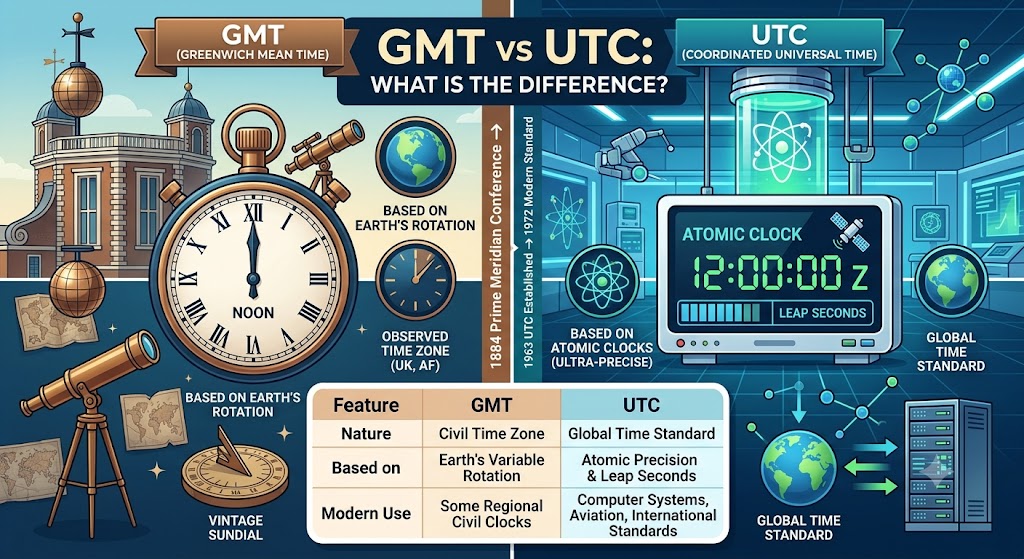
GMT (Greenwich Mean Time) is a time zone. UTC (Coordinated Universal Time) is a time standard.
They show the same current time — UTC +0 is identical to GMT +0. But conceptually, they're different.
| GMT | UTC | |
|---|---|---|
| What it is | A time zone | A time standard |
| Based on | Mean solar time at Greenwich | Atomic clocks |
| Used by | UK (in winter), Iceland, some African countries | The entire world as a reference |
| Changes for DST? | No, but countries using GMT change their clocks | Never changes |
| Accuracy | Limited by Earth's rotation | Accurate to billionths of a second |
In practice: If it's 12:00 GMT, it's also 12:00 UTC. But GMT is a time zone you might be in, while UTC is the reference point that defines every other time zone on Earth.
What Is GMT?
Greenwich Mean Time is the time measured on the Earth's zero degree line of longitude — the Greenwich Meridian. This line runs from the North Pole to the South Pole, passing through the Old Royal Observatory in Greenwich, London.
Key facts about GMT:
- It's a time zone. GMT is one of the 24 time zones around the world. It just happens to be the one centered on the prime meridian.
- It's based on the sun. GMT was historically determined by the position of the "mean sun" — an imaginary sun that averages out the effects of Earth's elliptical orbit.
- It doesn't change for DST. GMT itself remains constant throughout the year. But countries that use GMT as their standard time (like the UK) often switch to a different time zone during summer months.
Where Is GMT Used?
GMT is observed as standard time in:
- The United Kingdom (during winter months)
- Iceland (year-round)
- Several West African countries
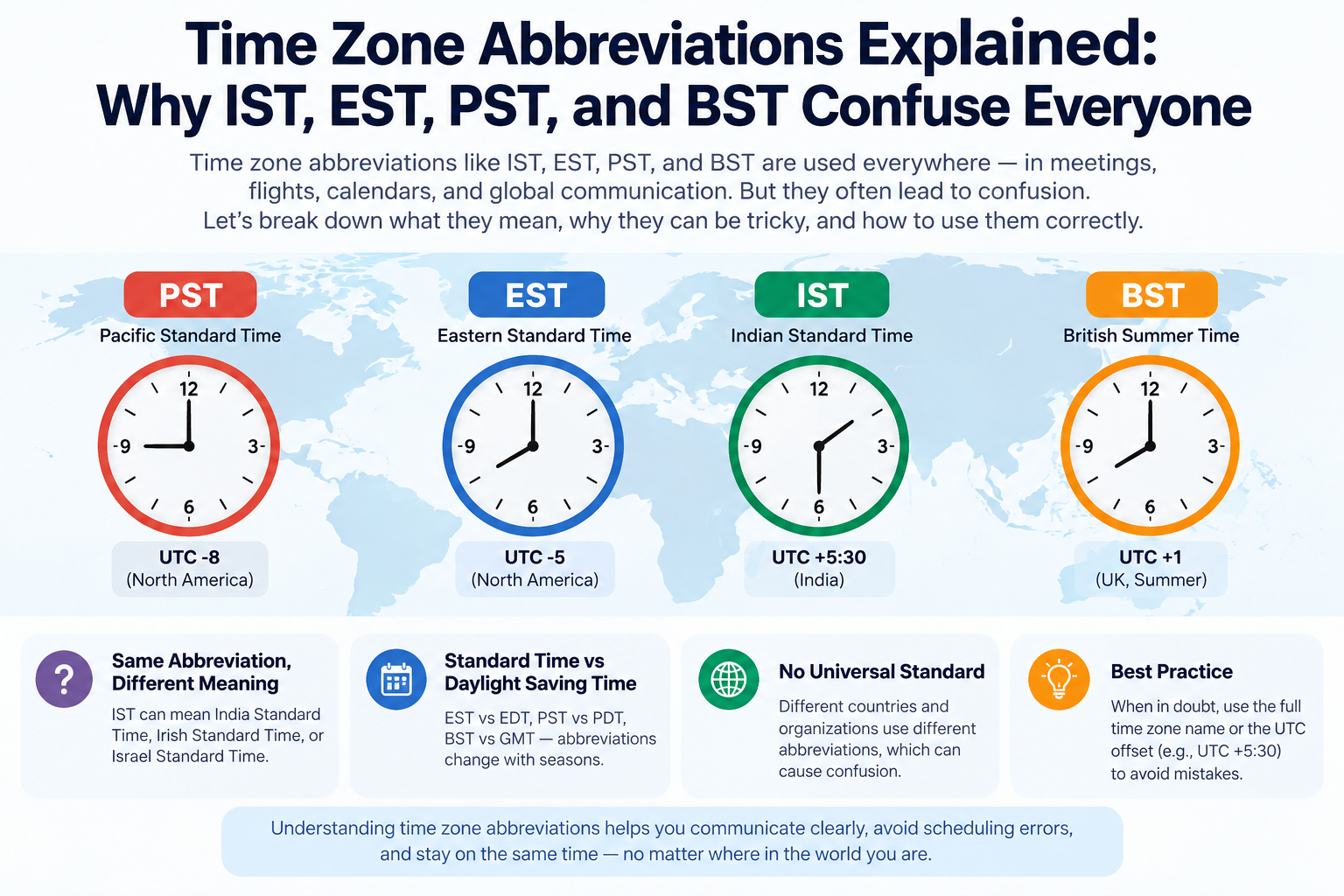
When the UK switches to British Summer Time (BST) in March, they're no longer on GMT. They move to UTC+1 until October.
What Is UTC?
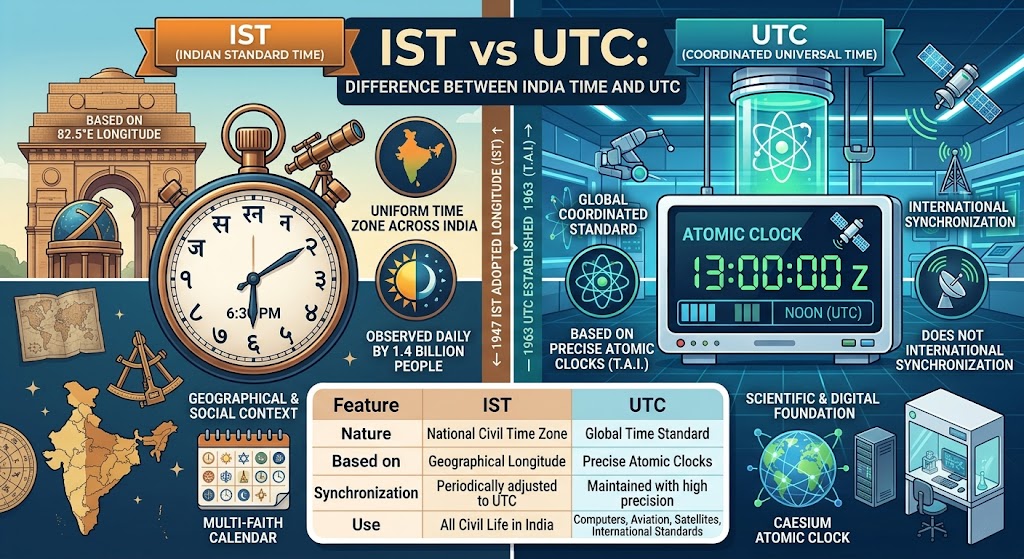
Coordinated Universal Time is the world's scientific standard of timekeeping. It's maintained by carefully synchronized atomic clocks and is incredibly stable — its rate doesn't change by more than about 100 picoseconds per day.
Key facts about UTC:
- It's a time standard. UTC is the reference point for all civil time worldwide. Every time zone is defined by its offset from UTC.
- It's based on atomic clocks. UTC's second is defined by 9,192,631,770 oscillations of a cesium-133 atom. This makes it far more accurate than solar-based time.
- It uses leap seconds. Since Earth's rotation isn't perfectly steady, leap seconds are occasionally added to UTC to keep it within 0.9 seconds of astronomical time.
How UTC Is Used
UTC is used by:
- Astronomers and space agencies
- Navigators and the aviation industry
- Global computer networks and time synchronization protocols
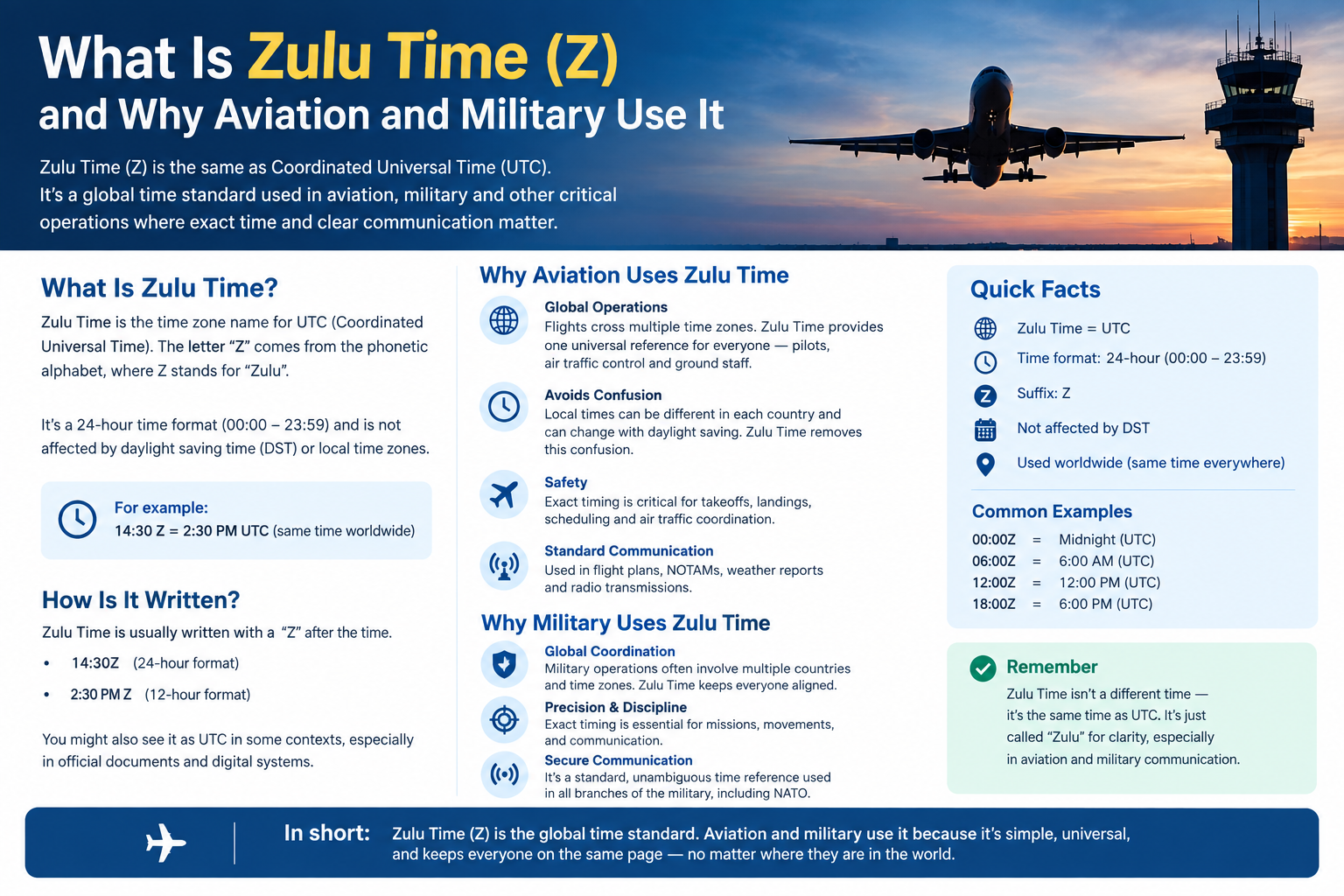
- Weather agencies worldwide (where it's called "Zulu time" or "Z time")
- As the basis for all time zone offsets
Why UTC Replaced GMT as the World's Standard
Before 1972, GMT was the world's time standard. So why did we switch to UTC?
Reason 1: GMT Wasn't Accurate Enough
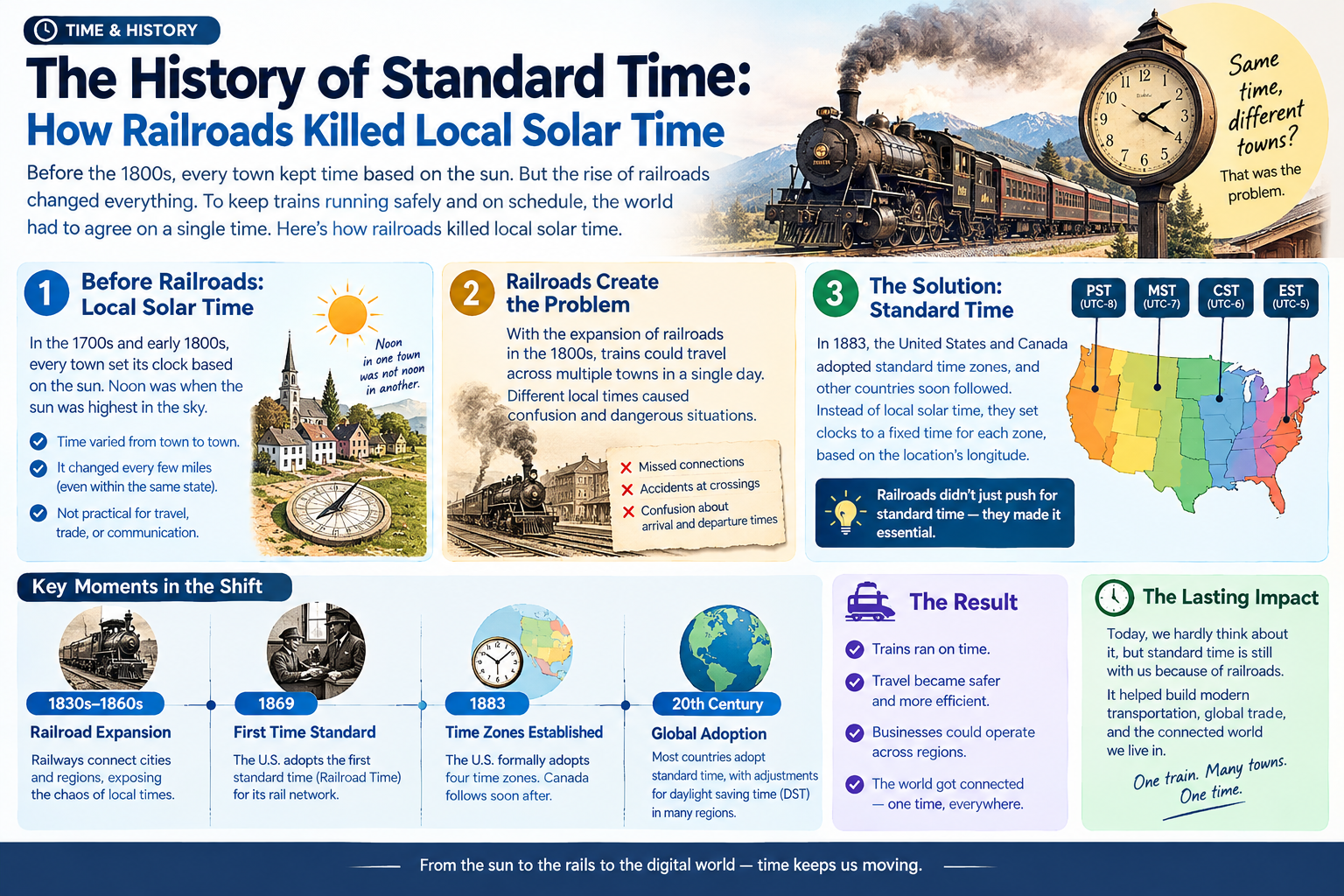
GMT was based on mean solar time — Earth's rotation. The problem is that Earth's rotation isn't constant. It slows down slightly over time, and it wobbles.
So GMT was never perfectly consistent. For everyday life, that didn't matter. But for scientific applications and global communication, the inconsistency became a problem.
Reason 2: Atomic Clocks Changed Everything
In the 1960s, atomic clocks became accurate enough to measure time far more precisely than Earth's rotation. Countries needed a standard that was stable and predictable.
UTC was created as that standard. It's based on atomic time, with leap seconds added occasionally to keep it aligned with the Earth's rotation.
Reason 3: GMT Had Too Much Baggage
Historically, GMT was used with two different conventions — one counting hours from noon, the other from midnight. This caused confusion until 1925, when the midnight convention was finally adopted.
UTC avoided this ambiguity from the start. It's always measured from midnight, period.
The Source of Confusion: Why People Mix Them Up
The confusion comes down to two things:
1. They show the same time.
When you see a clock showing UTC +0, it's showing exactly the same time as GMT +0. So in practice, the time on a GMT clock and a UTC clock is identical.
2. Many people still use the old terms.
Even in 2026, you'll see outdated references to GMT in flight projects, weather reports, and software systems — even when UTC is what's actually being used.
Practical Differences You Need to Know
Difference 1: How They're Defined
| GMT | UTC | |
|---|---|---|
| Definition | Mean solar time at the Greenwich Meridian | Atomic clock time with leap seconds |
| Rate | Varies slightly with Earth's rotation | Constant to within 100 picoseconds/day |
| Leap seconds | Not applicable | Added occasionally |
Difference 2: What They're Used For
Use GMT when:
- You're referring to the time zone in the UK during winter
- You're referencing historical time records
- The context specifically calls for GMT
Use UTC when:
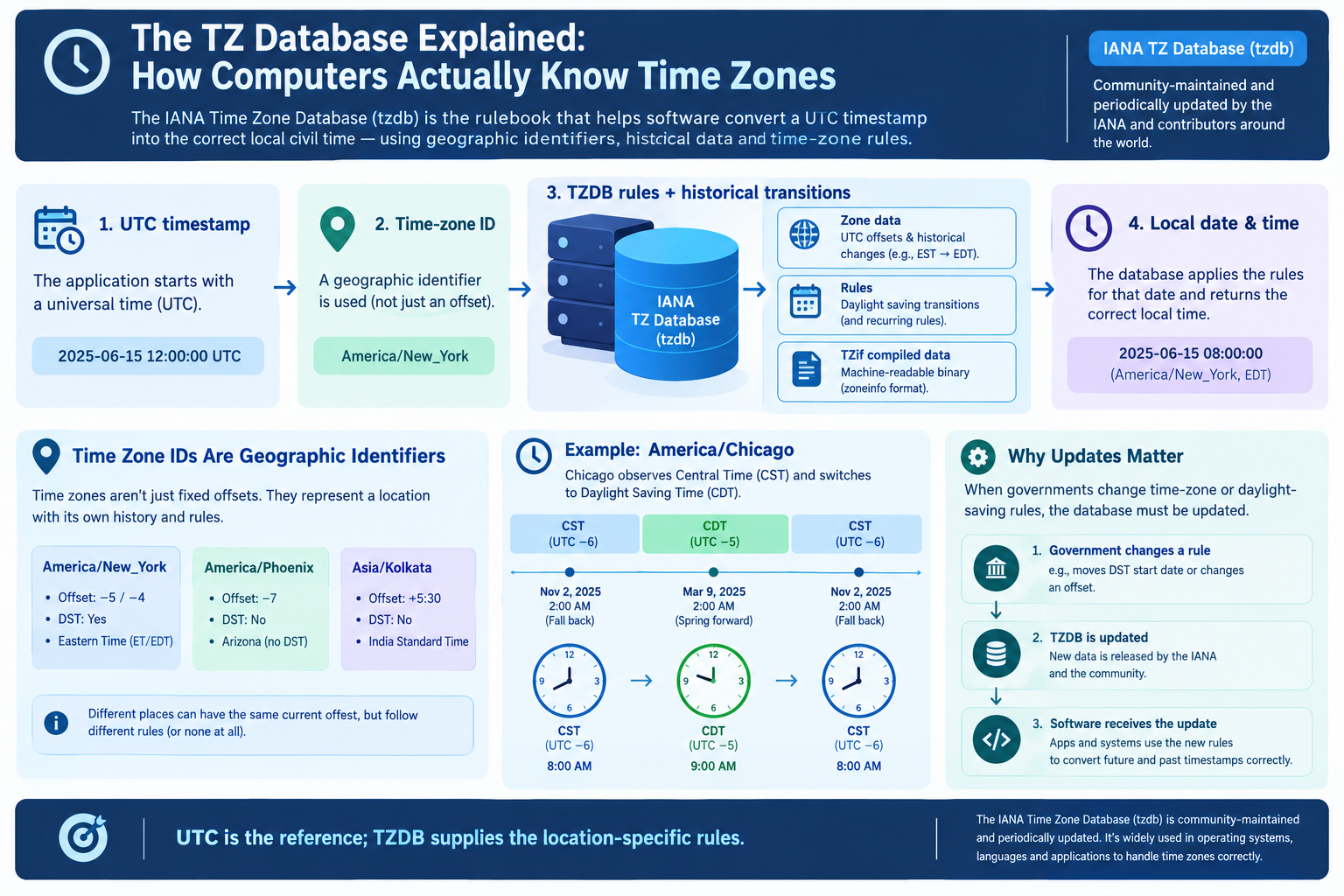
- You're defining a time zone offset (UTC+5:30, UTC-8:00, etc.)
- You're working with software, networks, or APIs
- You need the accurate international standard
Difference 3: The Time Zone vs. Standard Distinction
GMT is a time zone. Like EST, PST, or CET, it's one of the 24 zones that people actually live in.
UTC is a standard. It's the reference from which all time zones are derived. Japan is UTC+9. New York is UTC-5 in winter. No one actually lives in UTC — they live in time zones defined by their UTC offset.
The DST Confusion: How It Affects Everything
Here's where most people get tripped up.
Neither GMT nor UTC changes for Daylight Saving Time. They both stay exactly the same all year round.
But — and this is the key point — countries that use GMT as their standard time may change their clocks.
Take the UK:
- In winter: The UK is on GMT (UTC+0)
- In summer: The UK switches to British Summer Time (UTC+1)
So if you assume "UK time = GMT" year-round, you'll be wrong from March to October.
This is why experts recommend using UTC for international time coordination. It never changes. There's no ambiguity.
Quick Reference: When to Use GMT vs UTC
| Scenario | Use |
|---|---|
| You're in the UK in January | GMT |
| You're in the UK in July | BST, not GMT |
| You're specifying a time zone offset | UTC (e.g., UTC+5:30) |
| You're scheduling an international meeting | UTC |
| You're writing historical documents | GMT |
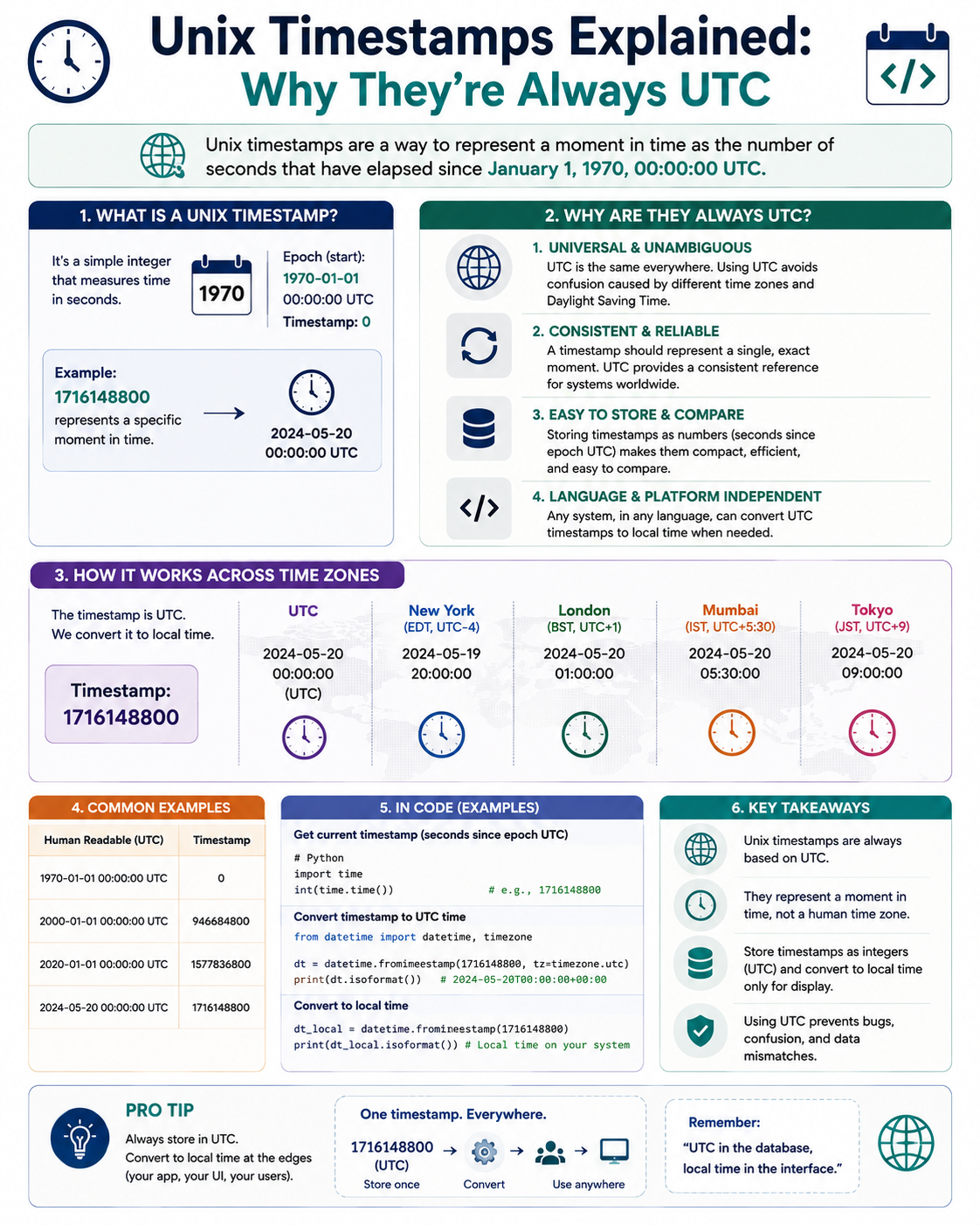
| You're working with software timestamps | UTC |
| You're reading a weather report | UTC (it's called "Zulu" time) |
| You're doing astronomical calculations | UTC |
Frequently Asked Questions
Is UTC the same as GMT?
In practice, they show the same time. But UTC is a time standard, while GMT is a time zone. UTC is more accurate because it's based on atomic clocks.
Does GMT ever change?
No. GMT itself is constant. But countries that use GMT as their standard time often switch to other time zones during Daylight Saving Time.
Does UTC ever change?
UTC itself is constant, but leap seconds are occasionally added to keep it aligned with Earth's rotation. This doesn't affect the time for most practical purposes.
Why was UTC created?
GMT was based on Earth's rotation, which isn't perfectly stable. UTC was created as a more accurate standard using atomic clocks, with leap seconds to keep it synchronized.
Is it wrong to use GMT and UTC interchangeably?
For everyday purposes, not really. But technically, they're different concepts. If you're defining a time zone, use UTC. If you're referring to the time zone in the UK during winter, GMT is fine.
What time zone is the UK in?
GMT in winter (November to March) and BST (UTC+1) in summer (March to November).
What is Zulu time?
Zulu time is the military and aviation term for UTC. It's called "Zulu" because UTC is at the "Z" time zone, and "Z" is pronounced as "Zulu" in the NATO phonetic alphabet.
Why does UTC have a weird abbreviation?
UTC doesn't match either the English (Coordinated Universal Time) or French (Temps Universel Coordonné) abbreviation. It was a compromise — UTC was chosen because it doesn't favor either language.
Final Thoughts
GMT and UTC show the same time. But they're not the same thing.
GMT is a time zone — the one centered on the prime meridian in Greenwich. It's based on the sun, and it's been around for centuries.
UTC is a time standard — the reference point for time zones everywhere. It's based on atomic clocks, it's more accurate, and it's what the world actually uses for coordination.
The practical rule: For most everyday uses, you can treat them as interchangeable. But when you're defining time zones, working with software, or communicating internationally, use UTC. It's clearer, it's correct, and it avoids the DST confusion that GMT carries with it.
Convert Time Zones Instantly →
Tags: GMT vs UTC, difference between GMT and UTC, Greenwich Mean Time, Coordinated Universal Time, UTC time standard, GMT time zone, what is GMT, what is UTC, UTC vs GMT explained, GMT to UTC, time zones explained, Zulu time, UTC offset, GMT time zone countries, UTC time standard definition, time standard vs time zone, leap seconds UTC, atomic clock UTC, why UTC replaced GMT