Why Russia Has 11 Time Zones
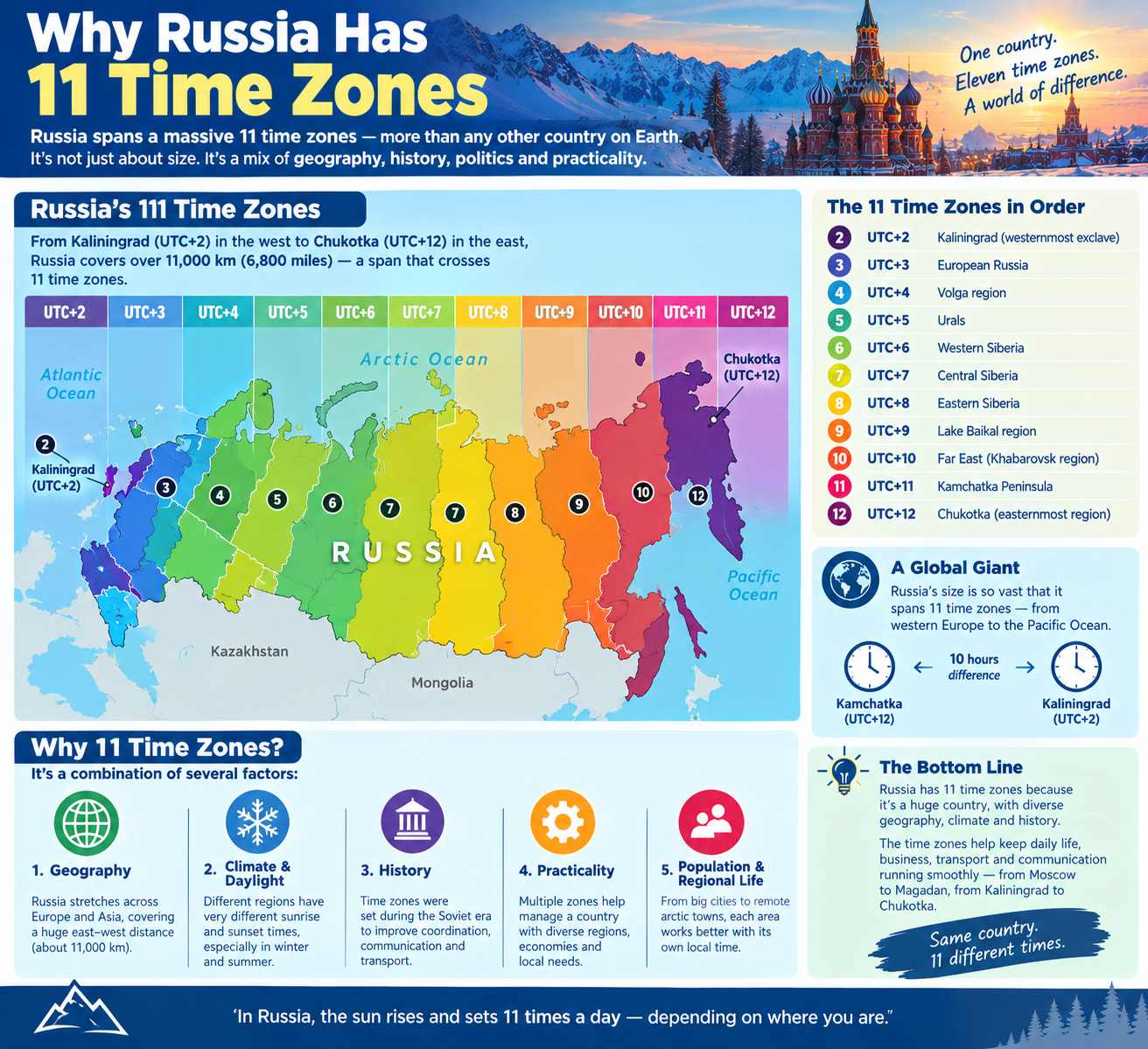
Russia is the largest country on Earth. It stretches across 11 time zones, from the European exclave of Kaliningrad in the west to the Chukotka Peninsula facing Alaska in the east[citation:2][citation:14].
That means when it is 9:00 AM in Moscow, it is already 6:00 PM in Kamchatka — a difference of 9 hours across a single country[citation:2].
Why does one nation need so many clocks? The answer lies in geography, administration, and a long history of reform.
Use the free time zone converter here →
The Short Answer: Why Russia Has 11 Time Zones
Russia has 11 time zones because it spans about 170 degrees of longitude, covering nearly half the globe. A single time zone would be impractical for coordinating daily life and administration across such a vast territory.
| Aspect | Details |
|---|---|
| Total time zones | 11 |
| Westernmost offset | UTC+2 (Kaliningrad) |
| Easternmost offset | UTC+12 (Kamchatka, Chukotka) |
| Maximum difference | 10 hours |
| Reference time | Moscow Time (UTC+3) |
| DST | Not observed since 2011 |
| Unique case | Yakutia spans 3 time zones |
The Geographic Reality: 170 Degrees of Longitude
A Country Half the Globe Wide
Russia stretches roughly 9,000 kilometers from west to east, spanning about 170 degrees of longitude[citation:14].
| Metric | Value |
|---|---|
| West to east span | ~9,000 km |
| Longitude span | ~170 degrees |
| Time zones crossed | 11 |
| Contiguous landmass zones | 10 |
Why One Time Zone Fails
If Russia used a single time zone, the consequences would be severe.
| Problem | Effect |
|---|---|
| Sunrise mismatch | Sunrise could be at 3:00 AM or 3:00 PM |
| Business hours | Impossible to align across the country |
| Daily rhythm | People would live out of sync with the sun |
| Administration | Coordination would be a nightmare |
The practical solution is multiple time zones, each roughly aligned with local solar time.
The 11 Time Zones of Russia
From West to East
| Offset | Zone Name | Example City |
|---|---|---|
| UTC+2 | Eastern European Time | Kaliningrad |
| UTC+3 | Moscow Standard Time | Moscow |
| UTC+4 | Samara Time | Samara |
| UTC+5 | Yekaterinburg Time | Yekaterinburg |
| UTC+6 | Omsk Standard Time | Omsk |
| UTC+7 | Krasnoyarsk / Novosibirsk Time | Krasnoyarsk |
| UTC+8 | Irkutsk Time | Irkutsk |
| UTC+9 | Yakutsk Time | Chita |
| UTC+10 | Vladivostok Time | Vladivostok |
| UTC+11 | Magadan / Sakhalin Time | Magadan |
| UTC+12 | Anadyr / Kamchatka Time | Anadyr |
Moscow Time: The Reference Point
Moscow Time (UTC+3) serves as the reference for all other zones in Russia[citation:16]. Most of European Russia, including major cities like St. Petersburg, operates on Moscow Time.
| Aspect | Details |
|---|---|
| Offset | UTC+3 |
| Used by | Most of European Russia |
| Reference for | Railways, space program, satellites |
| Administrative role | Federal coordination |
The Yakutia Exception: Three Zones in One Region
The Rule: One Region, One Time Zone
Russia follows a policy of "one federal subject, one time zone"[citation:5]. Each administrative region uses a single time zone to simplify governance.
The Exception: Yakutia
Yakutia (Sakha Republic) is the largest federal subject in Russia, covering about 18% of the country's territory. It is so vast that it spans three time zones[citation:5][citation:7].
| Aspect | Details |
|---|---|
| Region | Sakha Republic (Yakutia) |
| Territory | ~18% of Russia |
| Time zones | 3 (UTC+6, UTC+7, UTC+8) |
| Reason | Extreme east-west span |
This makes Yakutia the only region in Russia that breaks the one-region-one-zone rule.
The Kaliningrad Anomaly: A Zone Apart
The Exclave Problem
Kaliningrad is a Russian exclave wedged between Lithuania and Poland, separated from the rest of Russia by other countries.
| Aspect | Details |
|---|---|
| Location | Between Lithuania and Poland |
| Offset | UTC+2 |
| Relation to Moscow | 1 hour behind |
| Why different | Geographic and historical |
Why Kaliningrad Has Its Own Zone
Kaliningrad is geographically closer to Central Europe than to Moscow. Using UTC+2 aligns it better with its immediate neighbors and natural solar time.
| Factor | Explanation |
|---|---|
| Geography | Further west than mainland Russia |
| Solar time | UTC+2 matches local noon better |
| Neighbors | Poland and Lithuania use UTC+1/+2 |
| History | Formerly part of Germany |
Kaliningrad is the only Russian region on UTC+2, making it one hour behind Moscow.
The History of Russian Time Zones
The Reform of 2010: 11 to 9
In 2010, President Dmitry Medvedev initiated a reform to reduce the number of time zones from 11 to 9[citation:1][citation:8].
| Change | Details |
|---|---|
| Year | 2010 |
| From | 11 zones |
| To | 9 zones |
| Reason | Administrative efficiency |
| Also | Abolished daylight saving time |
The goal was to reduce the time difference between Moscow and the Far East, making administration easier and strengthening economic ties.
The Reversal: Back to 11
In 2014, Russia reversed course and restored 11 time zones[citation:7][citation:18].
| Change | Details |
|---|---|
| Year | 2014 |
| From | 9 zones |
| To | 11 zones |
| Reason | Regional complaints |
| Result | Current system |
Regions that had been merged into neighboring zones complained about living out of sync with the sun. The reform was undone.
The Daylight Saving Experiment
| Period | DST Policy |
|---|---|
| Before 2011 | Observed seasonal DST |
| 2011–2014 | Permanent summer time |
| 2014–present | No DST |
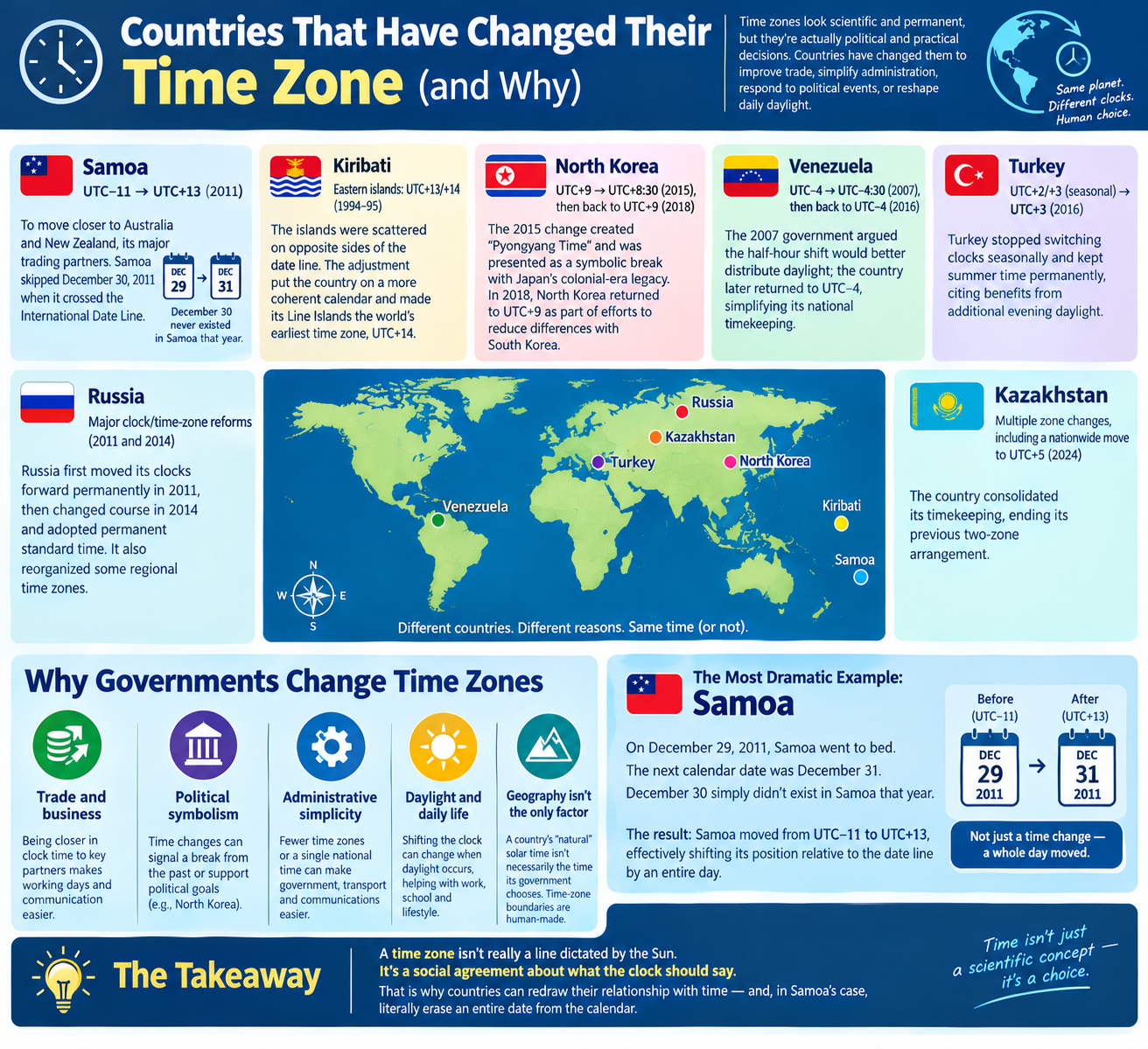
Russia abolished daylight saving time in 2011, then briefly experimented with permanent summer time before settling on permanent standard time in 2014[citation:2][citation:11].
Why So Many Time Zones Matter
Administrative Challenges
| Challenge | Explanation |
|---|---|
| Federal coordination | Moscow must reach 11 zones |
| Railway schedules | Trains cross many zones |
| Broadcasting | TV and radio timing |
| Elections | Voting across zones |
The Railway Solution
Russian Railways uses Moscow Time for all schedules, regardless of local time. This simplifies coordination across the vast network[citation:16].
The Space Program
Russia's space program uses Moscow Time for all operations, ensuring a single reference for launches and communications.
Quick Reference Card
━━━━━━━━━━━━━━━━━━━━━━━━━━━━━━━━━━━━━━━━━━━━━━━━━━━━━━━━━━
   RUSSIA'S 11 TIME ZONES — CHEAT SHEET
━━━━━━━━━━━━━━━━━━━━━━━━━━━━━━━━━━━━━━━━━━━━━━━━━━━━━━━━━━

WHY 11 ZONES:
  • Spans ~170 degrees of longitude
  • ~9,000 km west to east
  • One zone would be impractical

THE 11 ZONES (UTC):
  +2  → Kaliningrad
  +3  → Moscow (reference)
  +4  → Samara
  +5  → Yekaterinburg
  +6  → Omsk
  +7  → Krasnoyarsk / Novosibirsk
  +8  → Irkutsk
  +9  → Yakutsk
  +10 → Vladivostok
  +11 → Magadan / Sakhalin
  +12 → Anadyr / Kamchatka

MOSCOW TIME:
  UTC+3
  Reference for railways, space, satellites

YAKUTIA EXCEPTION:
  Only region with 3 time zones
  Covers ~18% of Russia

KALININGRAD:
  Only zone on UTC+2
  1 hour behind Moscow

HISTORY:
  2010 → Reduced to 9 zones
  2011 → Abolished DST
  2014 → Restored 11 zones

DST: Not observed since 2011

GOLDEN RULE:
  Russia's time zones reflect its size, not just its geography.

━━━━━━━━━━━━━━━━━━━━━━━━━━━━━━━━━━━━━━━━━━━━━━━━━━━━━━━━━━
         Check live conversions at: /timezone-converter
━━━━━━━━━━━━━━━━━━━━━━━━━━━━━━━━━━━━━━━━━━━━━━━━━━━━━━━━━━
Frequently Asked Questions
Why does Russia have 11 time zones?
Russia spans about 170 degrees of longitude, covering nearly half the globe. A single time zone would make daily life and administration impractical, so the country uses 11 zones roughly aligned with local solar time.
What is the time difference across Russia?
The difference between the westernmost zone (UTC+2 in Kaliningrad) and the easternmost zone (UTC+12 in Kamchatka) is 10 hours.
What is Moscow Time?
Moscow Time is UTC+3. It serves as the reference for all other Russian time zones and is used for railways, space operations, and federal coordination.
Why does Yakutia have three time zones?
Yakutia (Sakha Republic) is Russia's largest federal subject, covering about 18% of the country. It is so vast that it spans three time zones (UTC+6, UTC+7, UTC+8), making it the only region to break the one-region-one-zone rule.
Why is Kaliningrad on a different time zone?
Kaliningrad is a Russian exclave between Lithuania and Poland. It uses UTC+2, one hour behind Moscow, to align with its geographic position and neighboring countries.
Did Russia ever have fewer time zones?
Yes. In 2010, Russia reduced its time zones from 11 to 9 for administrative efficiency. In 2014, the reform was reversed and 11 zones were restored.
Does Russia observe daylight saving time?
No. Russia abolished daylight saving time in 2011 and has not observed it since[citation:2].
What time zone is used for Russian railways?
Russian Railways uses Moscow Time (UTC+3) for all schedules, regardless of local time, to simplify coordination across the country.
How many time zones does Russia have compared to other countries?
Russia has 11 time zones, tied with the United States for the most among contiguous countries. France has 12 when overseas territories are included.
What is the most populated time zone in Russia?
Moscow Time (UTC+3) is the most populated, covering most of European Russia including Moscow and St. Petersburg.
Final Thoughts
Russia's 11 time zones are a direct consequence of its immense size. Spanning nearly half the globe, the country cannot function on a single clock — the sun itself makes that impossible.
The system has been reformed and reversed, expanded and contracted. What remains is a practical compromise: 11 zones, one reference time, and a vast nation that somehow keeps running.
Three things to remember:
- Russia spans 11 time zones. From UTC+2 to UTC+12
- Moscow Time is the reference. UTC+3 for railways, space, and administration
- Yakutia is the exception. The only region with three time zones
Check time zone conversions instantly → /timezone-converter
Tags: why Russia has 11 time zones, Russia time zones map, Moscow time UTC+3, Russia time zone reform, Kaliningrad time zone, Kamchatka time zone, Yakutia three time zones, how many time zones in Russia, Russia daylight saving time, time zone converter