Daylight Saving Time's Wartime Origins
Every spring, millions of people groan as they lose an hour of sleep. The reason we do this — adjusting clocks forward — has nothing to do with farmers, despite a persistent myth. It began as a wartime measure to save fuel.
When World War I broke out in 1914, coal was the primary source of power. Governments desperately needed to conserve it for the war effort. The solution they found was simple: shift the clocks forward so people used less artificial light in the evening.
This is the story of how daylight saving time was born from the fires of war.
Use the free time zone converter here →
The Short Answer: Why DST Started
Daylight Saving Time was introduced during World War I as a fuel-saving measure. Germany was the first nation to adopt it in 1916, and other warring countries quickly followed. The United States adopted it in 1918 and repealed it in 1919.
| Aspect | Details |
|---|---|
| Original purpose | Conserve fuel for war industries |
| First country | Germany (1916) |
| UK adoption | 1916 |
| US adoption | 1918 |
| US repeal | 1919 |
| Key mechanism | Shift clocks forward one hour |
| Effect | Less evening lighting needed |
| Biggest opponents | Farmers |
The Pre-War Idea: From Bug Hunting to Parliament
George Hudson: The Bug Hunter
In 1895, a New Zealand post office worker and amateur entomologist named George Hudson proposed shifting clocks forward by two hours so he would have more after-work daylight for bug hunting in summer [citation:10][citation:5].
| Aspect | Details |
|---|---|
| Who | George Hudson |
| Year | 1895 |
| Country | New Zealand |
| Reason | More daylight for recreation |
| Proposal | 2-hour shift |
William Willett: The British Builder
Seven years later, a British builder named William Willett independently proposed the idea while horseback riding. He suggested moving clocks forward during summer to prevent wasting daylight [citation:10].
| Aspect | Details |
|---|---|
| Who | William Willett |
| Year | 1907 |
| Country | Britain |
| Reason | Stop wasting daylight |
| Supporters | Winston Churchill, Arthur Conan Doyle |
Willett proposed the idea to Parliament, but it was rejected. He continued arguing for it until his death in 1915 [citation:10]. He never lived to see it adopted.
World War I: The Fuel Crisis That Changed Everything
Why Coal Mattered
In 1914, coal was the lifeblood of war. It powered factories, trains, and ships. It lit homes and businesses. Every ton saved was a ton available for the war effort [citation:5][citation:10].
| Resource | Military Use |
|---|---|
| Coal | Factories, trains, ships |
| Electricity | Lighting, industry |
| Oil | Emerging, less dominant |
Germany's Decision: First in the World
In 1916, two years into the war, Germany became the first country to adopt daylight saving time nationwide [citation:10][citation:5].
| Aspect | Details |
|---|---|
| Country | Germany |
| Year | 1916 |
| Reason | Conserve coal for war |
| Implementation | By fiat |
As David Prerau, author of Seize the Daylight, explained: "While the British were talking about it year after year, the Germans decided to do it more or less by fiat" [citation:10].
Britain Follows
Britain adopted daylight saving time shortly after Germany, in 1916 [citation:5][citation:17]. The first attempt to introduce it in 1908 had been rejected on the farming vote, but during the war, the measure passed [citation:8].
| Aspect | Details |
|---|---|
| Country | Britain |
| Year | 1916 |
| Name | British Summer Time |
| Result | Cows survived despite predictions |
The United States Enters the War (and Adopts DST)
The Standard Time Act of 1918
The United States adopted daylight saving time on March 19, 1918, as part of the Standard Time Act [citation:1][citation:7][citation:12].
| Aspect | Details |
|---|---|
| Law | Standard Time Act |
| Date | March 19, 1918 |
| Purpose | Conserve fuel for war industries |
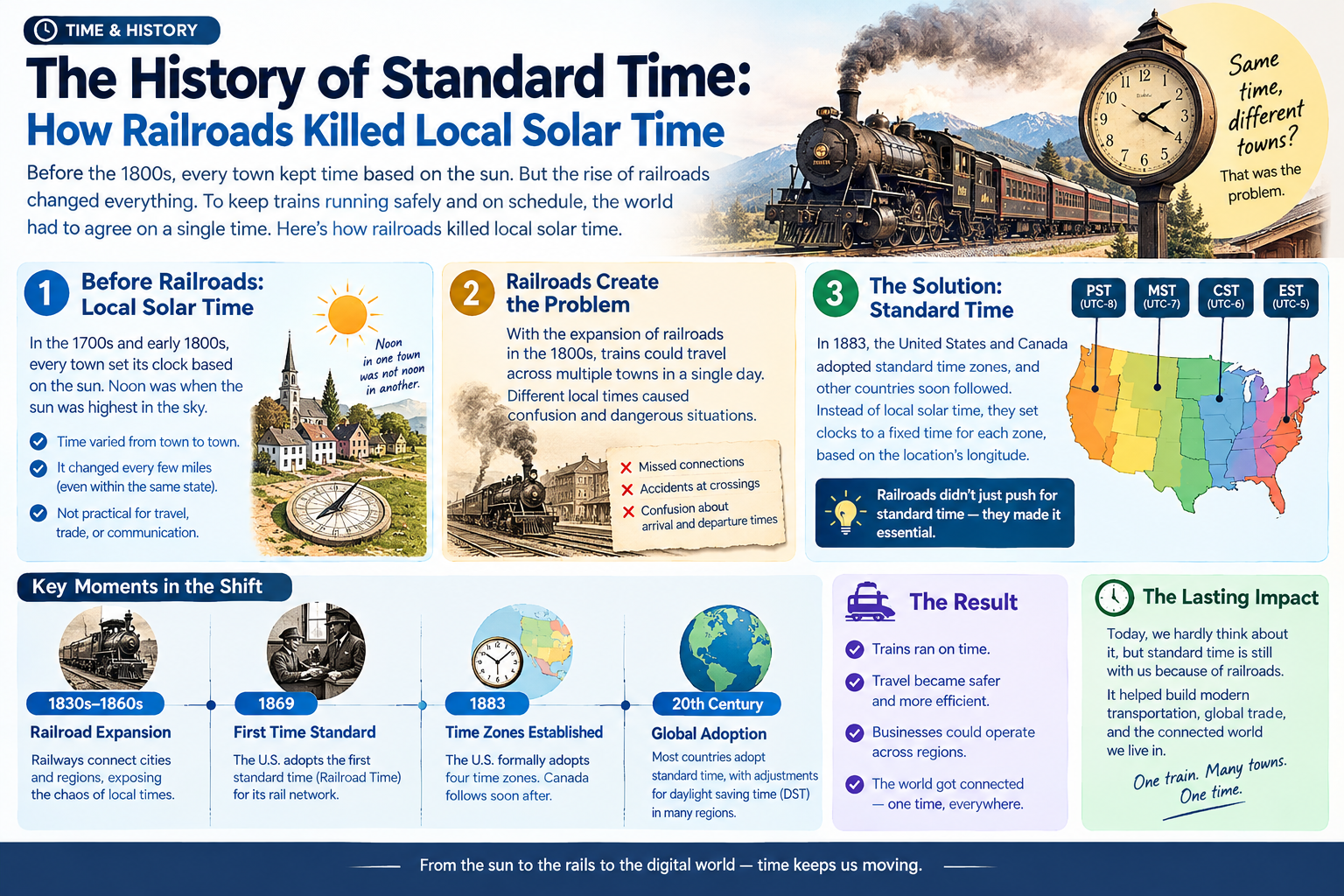
| Also | Established five US time zones |
The Official Reason
The law was entitled "An Act to Save Daylight and to Provide Standard Time for the United States" [citation:7]. The goal was to conserve electricity during wartime [citation:19].
What It Actually Did
The law established standard time zones across the continental US and introduced daylight saving time from the last Sunday in March to the last Sunday in October [citation:7].
The Farmers' Revolt
The Myth
A persistent myth claims daylight saving time was created to help farmers. This is false [citation:16][citation:19].
The Reality
Farmers fiercely opposed daylight saving time. Their schedules were based on sunrise and sunset, not the clock. Shifting clocks forward meant they had to start work in darkness and had less morning time to get crops to market [citation:19][citation:3].
| Group | Position | Reason |
|---|---|---|
| Farmers | Opposed | Work based on sun, not clock |
| Urban workers | Supported | More evening recreation |
| Retailers | Supported | More shopping hours |
| Coal miners | Opposed | Inconvenience [citation:3] |
The Repeal of 1919
The war ended in November 1918. In 1919, Congress repealed the daylight saving law, overriding President Wilson's veto [citation:1][citation:7][citation:19].
| Aspect | Details |
|---|---|
| Repeal date | August 20, 1919 |
| Veto | President Wilson vetoed twice |
| Override | Congress overrode |
| Reason | War over, farmers opposed |
World War II: War Time and Double Summer Time
The United States: "War Time"
When the US entered World War II, it adopted year-round daylight saving time from February 9, 1942 to September 30, 1945 [citation:9][citation:12][citation:18].
| Aspect | Details |
|---|---|
| Name | War Time |
| Start | February 9, 1942 |
| End | September 30, 1945 |
| Type | Year-round DST |
| Reason | Conserve fuel |
After the war, states and cities were left to decide for themselves, creating confusion until the Uniform Time Act of 1966 [citation:12].
Britain: Double Summer Time
Britain went even further, adopting Double Summer Time during WWII — two hours ahead of GMT in summer and one hour ahead in winter [citation:2][citation:6][citation:13].
| Aspect | Details |
|---|---|
| Name | British Double Summer Time |
| Summer offset | GMT+2 |
| Winter offset | GMT+1 |
| Period | 1941–1945 |
| Reason | War effort, fuel conservation |
Herbert Morrison, Minister of Home Security, announced the measure in 1941, stating it would help the war effort by enabling longer working hours in factories and docks [citation:13].
Germany and Other Nations
Germany reintroduced daylight saving time in 1940, and Spain adopted it as well, with a brief period of Double Summer Time in 1942 [citation:14][citation:11].
Why Wartime DST Worked (Then)
The Energy Reality
In 1916, coal power was dominant. Lighting was a significant share of energy use. Shifting clocks forward meant one less hour of evening lighting, which translated to real fuel savings [citation:10].
| Factor | Wartime | Today |
|---|---|---|
| Primary lighting | Coal, gas | LED, efficient |
| Lighting share | High | Low |
| Air conditioning | Rare | Dominant |
| Energy savings | Real | Negligible [citation:9] |
The Wartime Justification
The argument was simple: more daylight during working hours = less artificial lighting = more fuel for the war [citation:5][citation:19].
Quick Reference Card
━━━━━━━━━━━━━━━━━━━━━━━━━━━━━━━━━━━━━━━━━━━━━━━━━━━━━━━━━━
   DAYLIGHT SAVING TIME WARTIME ORIGINS — CHEAT SHEET
━━━━━━━━━━━━━━━━━━━━━━━━━━━━━━━━━━━━━━━━━━━━━━━━━━━━━━━━━━

WHY DST STARTED:
  World War I fuel conservation
  More daylight during working hours
  Less evening lighting = more coal for war

WHO STARTED IT:
  1895 → George Hudson (NZ) proposed idea
  1907 → William Willett (UK) promoted idea
  1916 → Germany first to adopt nationwide
  1916 → Britain followed
  1918 → United States followed

US TIMELINE:
  1918 → Standard Time Act (March 19)
  1919 → Repealed (August 20)
  1942 → War Time (year-round DST)
  1945 → War Time ends
  1966 → Uniform Time Act

BRITAIN'S DOUBLE SUMMER TIME:
  Summer → GMT+2
  Winter → GMT+1
  Period → 1941–1945

WHO OPPOSED IT:
  Farmers (work based on sun)
  Coal miners
  Rural populations

WHO SUPPORTED IT:
  Urban workers
  Retailers
  War industries

KEY DATES:
  1916 → Germany adopts DST
  1916 → Britain adopts DST
  1918 → US adopts DST
  1919 → US repeals DST
  1942 → US War Time begins
  1945 → US War Time ends

GOLDEN RULE:
  DST was born from war, not farming.

━━━━━━━━━━━━━━━━━━━━━━━━━━━━━━━━━━━━━━━━━━━━━━━━━━━━━━━━━━
         Check live conversions at: /timezone-converter
━━━━━━━━━━━━━━━━━━━━━━━━━━━━━━━━━━━━━━━━━━━━━━━━━━━━━━━━━━
Frequently Asked Questions
Why was daylight saving time created?
Daylight saving time was created during World War I as a fuel-saving measure. Shifting clocks forward meant people used less artificial light in the evening, conserving coal for the war effort [citation:5][citation:19].
Which country first adopted daylight saving time?
Germany was the first country to adopt daylight saving time nationwide in 1916, two years into World War I [citation:10][citation:5].
Did farmers want daylight saving time?
No. Farmers fiercely opposed it. Their schedules were based on sunrise and sunset, not the clock. Shifting clocks forward disrupted their work [citation:19][citation:3].
When did the United States adopt daylight saving time?
The US adopted daylight saving time on March 19, 1918, as part of the Standard Time Act, to conserve fuel during World War I [citation:1][citation:7].
When was daylight saving time repealed in the US?
It was repealed on August 20, 1919, after the war ended. Congress overrode President Wilson's veto [citation:1][citation:7].
What was "War Time"?
"War Time" was year-round daylight saving time adopted by the US during World War II, from February 1942 to September 1945 [citation:9][citation:18].
What was British Double Summer Time?
During World War II, Britain set clocks two hours ahead of GMT in summer and one hour ahead in winter to conserve fuel and support the war effort [citation:2][citation:13].
Does daylight saving time save energy today?
Modern research shows savings are negligible. In 1916, coal-powered lighting was a major energy use. Today, lighting is a small share of consumption, and air conditioning dominates [citation:9].
Why do we still have daylight saving time?
The wartime rationale is gone, but the practice persists for reasons of tradition, convenience, and economic interests like retail and recreation.
Did Germany's adoption influence other countries?
Yes. Germany's move in 1916 prompted Britain and other European nations to follow quickly, and the US adopted it in 1918 [citation:5][citation:10].
Final Thoughts
Daylight saving time was not designed to help farmers. It was designed to help armies. Born in the coal-fired urgency of World War I, it was a pragmatic solution to a fuel crisis. Germany led, Britain followed, and the United States adopted it in 1918.
When the war ended, so did the consensus. Farmers revolted. Congress repealed. But the idea never fully died. It returned in World War II as "War Time" and "Double Summer Time," and eventually became a permanent fixture of peacetime life.
Three things to remember:
- DST was born from war. Germany adopted it first in 1916
- Farmers opposed it. The farming myth is backwards
- It was a fuel-saving measure. Coal was the reason, not agriculture
Check time zone conversions instantly → /timezone-converter
Tags: daylight saving time wartime origins, why was daylight saving time created, WWI daylight saving time, WWII double summer time, Germany first daylight saving 1916, US War Time 1942, fuel conservation daylight saving, farmers opposed daylight saving, history of daylight saving time, time zone converter