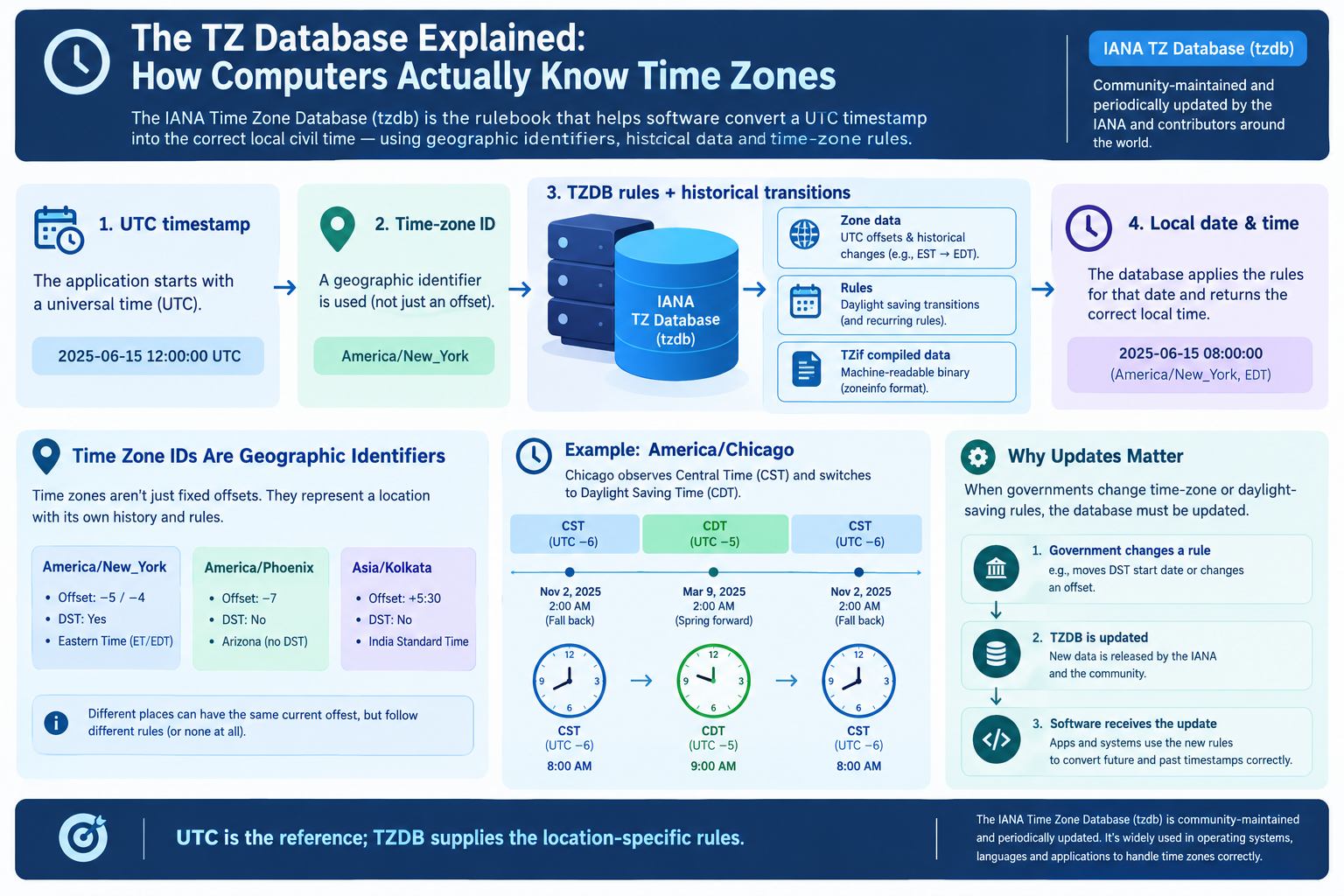
The TZ Database Explained: How Computers Actually Know Time Zones
Every time your phone shows the correct local time, every time a calendar invite lands at the right hour, and every time a server logs a timestamp that matches reality, a quiet piece of infrastructure is doing the work: the TZ database.
It is one of the most important databases you have never heard of. It powers time zones in nearly every operating system, programming language, and cloud platform on Earth.
This guide explains what the TZ database is, how it works, why it uses names like America/New_York, and why it needs constant updates.
Use the free time zone converter here →
The Short Answer: What Is the TZ Database?
The TZ database (also called tzdata, the IANA Time Zone Database, or the Olson database) is a collaborative, open-source collection of data that tells computers the exact time zone rules for every region in the world.
| Aspect | Details |
|---|---|
| What it is | A database of global time zone rules |
| Also called | tzdata, IANA Time Zone Database, Olson database |
| Maintained by | IANA (Internet Assigned Numbers Authority) |
| Key content | Offsets, DST rules, historical changes |
| Identifiers | Names like America/New_York, Asia/Kolkata |
| Used by | Every major OS, language, and cloud platform |
| Updates | Several times a year |
| Why it matters | Without it, computers would guess time zones wrong |
Why Computers Cannot Just Use UTC Offsets
The Problem with Fixed Offsets
A naive approach would be to store a simple UTC offset for each region, like UTC−05:00. But this fails immediately.
| Problem | Explanation |
|---|---|
| DST changes | Offsets shift twice a year in many regions |
| Historical changes | Countries change their rules frequently |
| Political changes | Governments alter time zones by decree |
| Regional differences | Two cities in the same country can differ |
| Future rules | Rules are announced in advance and change |
The Real-World Mess
| Region | Complication |
|---|---|
| United States | DST rules changed in 2007 |
| Russia | Has changed offsets and DST multiple times |
| Brazil | Abolished DST in 2019 |
| Turkey | Stayed on permanent DST since 2016 |
| Mexico | Abolished DST in 2022 |
| Egypt | Reintroduced DST in 2023 |
A fixed offset cannot capture any of this. Computers need a rulebook, not a single number.
What the TZ Database Actually Contains
The Core Data
For each time zone, the database stores:
| Data Type | Example |
|---|---|
| Standard offset | UTC−05:00 |
| DST offset | UTC−04:00 |
| DST start rule | Second Sunday in March at 2:00 AM |
| DST end rule | First Sunday in November at 2:00 AM |
| Historical changes | Every past rule change |
| Abbreviation | EST, EDT, IST, etc. |
The IANA Time Zone IDs
The most visible part of the database is its time zone identifiers — names like:
| Identifier | Region |
|---|---|
America/New_York |
US Eastern |
America/Chicago |
US Central |
America/Denver |
US Mountain |
America/Los_Angeles |
US Pacific |
Europe/London |
UK |
Europe/Paris |
Central Europe |
Asia/Kolkata |
India |
Asia/Tokyo |
Japan |
Australia/Sydney |
Eastern Australia |
Pacific/Auckland |
New Zealand |
These IDs are the gold standard for representing time zones in software. They are unambiguous, stable, and globally unique.
Why the Names Look Like That
The naming convention follows a Area/Location pattern, usually based on the largest city in the region.
| Pattern | Example | Meaning |
|---|---|---|
| Continent/City | America/New_York |
City-based reference |
| Ocean/Island | Pacific/Auckland |
Region-based reference |
| Country/City | Asia/Kolkata |
Country + major city |
| Special cases | UTC, Etc/GMT+5 |
Fixed offsets |
Why Cities Instead of Countries?
Using cities avoids political disputes and ambiguity.
| Reason | Explanation |
|---|---|
| Avoids politics | No disputes over country names |
| Precise | Cities have clear locations |
| Stable | City names rarely change |
| Historical | Captures regional differences |
The Backward Compatibility Files
Some older or alternative names still work because the database includes backward links.
| Old Name | Modern Name |
|---|---|
US/Eastern |
America/New_York |
Asia/Calcutta |
Asia/Kolkata |
Europe/Kiev |
Europe/Kyiv |
The Problem with Abbreviations
Why Abbreviations Fail
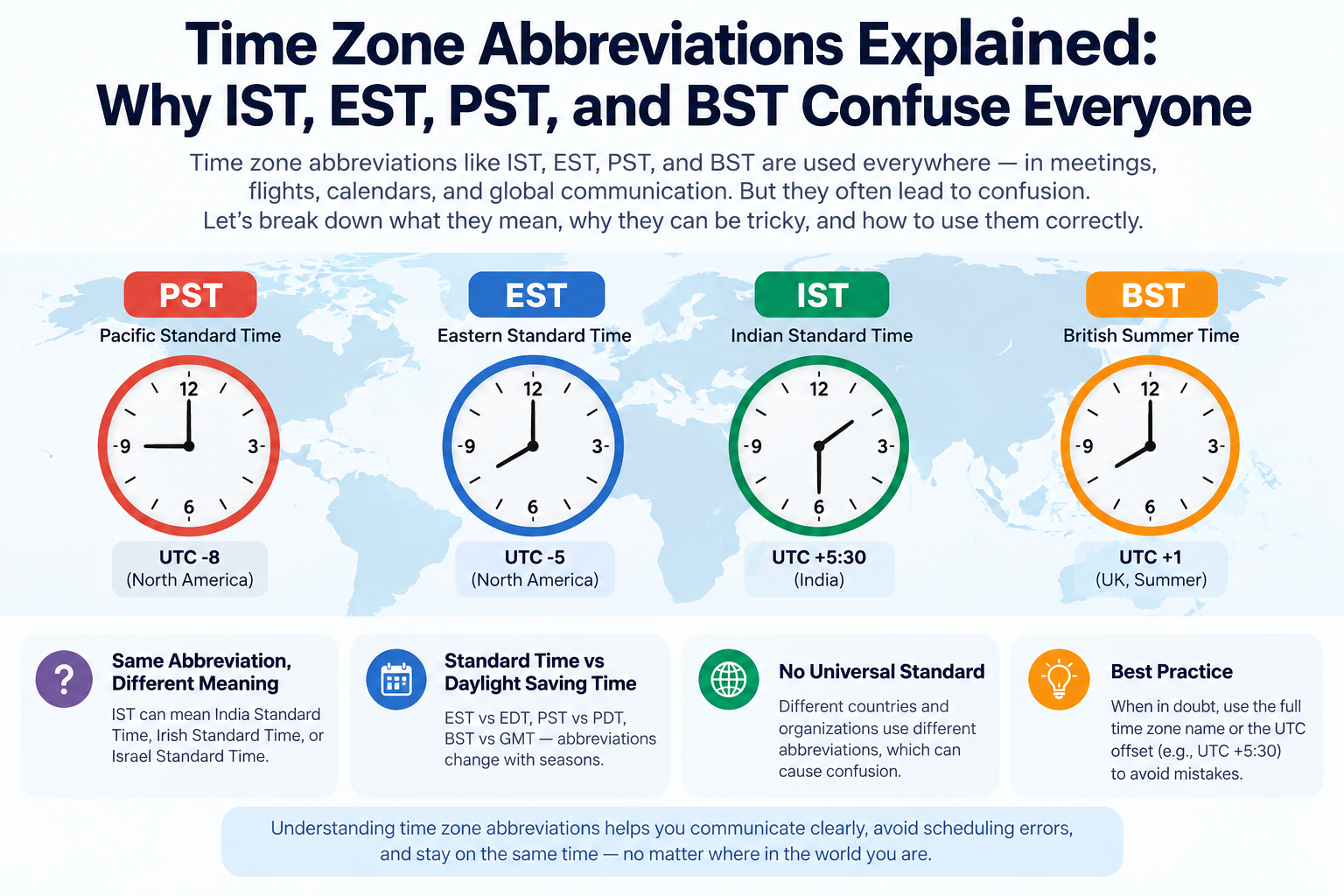
The TZ database deliberately discourages using abbreviations like EST, PST, or IST.
| Problem | Explanation |
|---|---|
| Not unique | IST means India, Ireland, or Israel |
| DST changes | EST becomes EDT in summer |
| No standard | Different systems use different codes |
| Ambiguous | CST means China, US Central, or Cuba |
Abbreviations vs IDs
| Abbreviation | Ambiguous? | IANA ID | Clear? |
|---|---|---|---|
| IST | Yes | Asia/Kolkata |
Yes |
| EST | Partly | America/New_York |
Yes |
| CST | Yes | America/Chicago |
Yes |
| BST | Yes | Europe/London |
Yes |
Rule of thumb: Use IANA IDs in software. Use UTC offsets in human communication. Avoid abbreviations when precision matters.
How DST Rules Are Stored
The Rule Structure
Each time zone entry contains rules for when DST starts and ends.
| Component | Example |
|---|---|
| Rule name | US |
| From year | 2007 |
| To year | max |
| Month | March |
| Day | Second Sunday |
| Time | 2:00 |
| Offset | −04:00 |
Historical Rules
The database also stores historical rules — what the time zone was in the past.
| Year | Rule |
|---|---|
| 1918 | US DST introduced |
| 1942 | "War Time" year-round DST |
| 1945 | Return to standard time |
| 1966 | Uniform Time Act |
| 1987 | DST dates changed |
| 2007 | Current DST rules |
This matters because software often needs to convert past timestamps accurately.
Who Maintains the TZ Database?
The Maintainers
The database is maintained by a small group of volunteers, coordinated by IANA.
| Aspect | Details |
|---|---|
| Coordinator | IANA |
| Editors | Small volunteer group |
| Contributors | Governments, researchers, developers |
| License | Public domain |
| Updates | Several times a year |
How Changes Happen
When a government changes its time zone rules, the database is updated.
| Step | Description |
|---|---|
| 1 | Government announces change |
| 2 | Contributor submits patch |
| 3 | Editors review and merge |
| 4 | New release published |
| 5 | Vendors distribute update |
Recent Changes
| Year | Change |
|---|---|
| 2019 | Brazil abolished DST |
| 2022 | Mexico abolished DST |
| 2022 | Europe/Kiev renamed to Europe/Kyiv |
| 2023 | Egypt reintroduced DST |
| 2023 | Greenland changed offsets |
Why Your Software Needs Updates
The Update Problem
Because time zone rules change, your software needs regular tzdata updates.
| System | How It Gets Updates |
|---|---|
| Linux | Package manager (tzdata) |
| Windows | Windows Update |
| macOS/iOS | System updates |
| Android | System updates |
| Java | JDK updates |
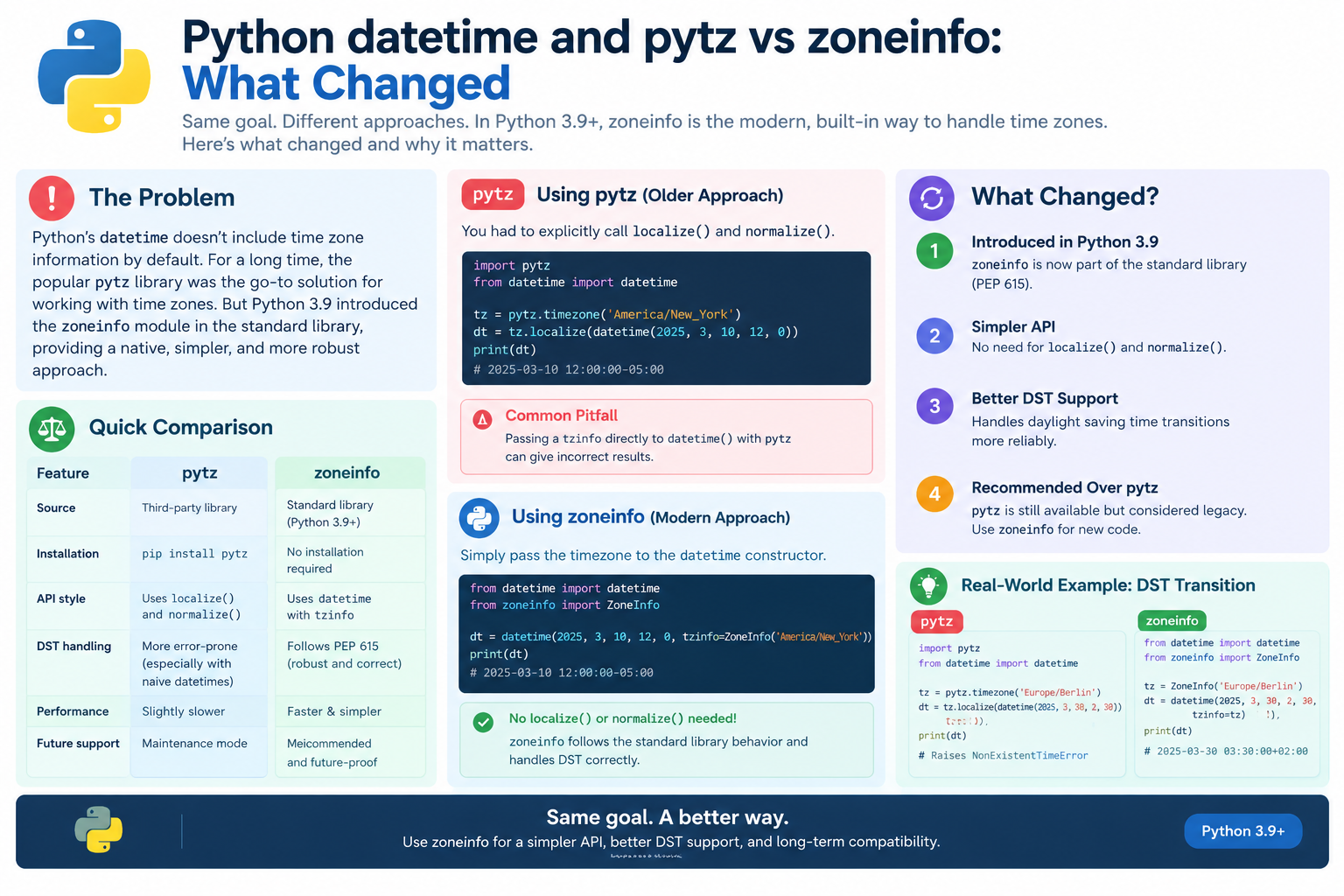
| Python | tzdata package or OS |
| JavaScript | Browser or Node updates |
| Databases | Vendor patches |
What Happens Without Updates
| Consequence | Explanation |
|---|---|
| Wrong DST | Clocks shift on wrong dates |
| Wrong offsets | Times off by an hour or more |
| Missed meetings | Calendar invites wrong |
| Billing errors | Timestamps incorrect |
| Log confusion | Debugging becomes harder |
Quick Reference Card
━━━━━━━━━━━━━━━━━━━━━━━━━━━━━━━━━━━━━━━━━━━━━━━━━━━━━━━━━━
            TZ DATABASE CHEAT SHEET
━━━━━━━━━━━━━━━━━━━━━━━━━━━━━━━━━━━━━━━━━━━━━━━━━━━━━━━━━━

WHAT: IANA Time Zone Database (tzdata / Olson database)
WHO:  Maintained by IANA, used by every major OS and language

KEY IDS:
  America/New_York    → US Eastern
  America/Chicago     → US Central
  America/Denver      → US Mountain
  America/Los_Angeles → US Pacific
  Europe/London       → UK
  Asia/Kolkata        → India
  Asia/Tokyo          → Japan
  Australia/Sydney    → Eastern Australia

WHY NOT ABBREVIATIONS:
  IST = India / Ireland / Israel
  CST = China / US Central / Cuba
  BST = Britain / Bangladesh

WHAT IT STORES:
  • Standard offset
  • DST offset and rules
  • Historical changes
  • Abbreviations (for reference)

UPDATES:
  Several times a year — keep your systems patched

BEST PRACTICE:
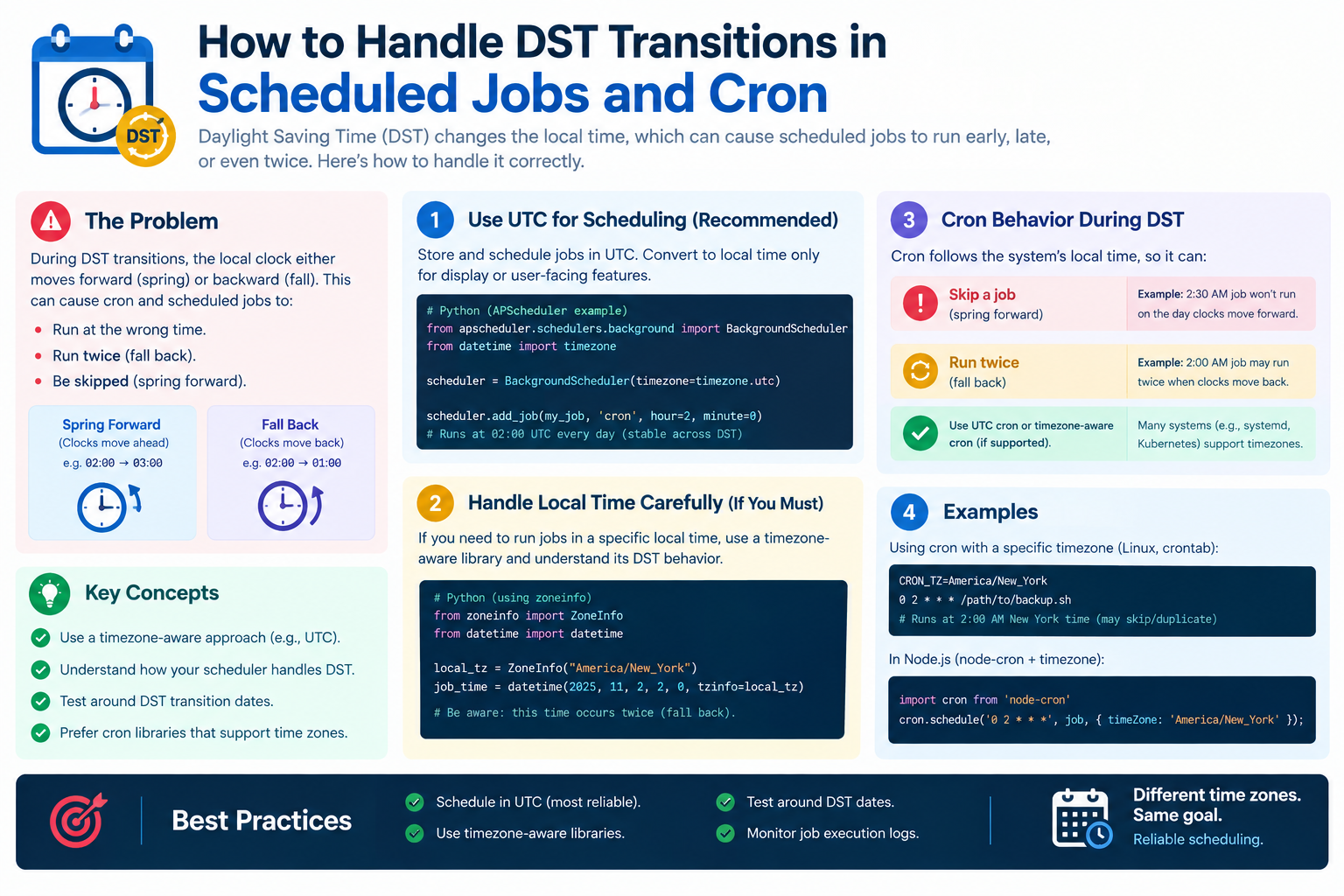
  Store UTC + IANA ID. Never store abbreviations alone.

━━━━━━━━━━━━━━━━━━━━━━━━━━━━━━━━━━━━━━━━━━━━━━━━━━━━━━━━━━
         Check live conversions at: /timezone-converter
━━━━━━━━━━━━━━━━━━━━━━━━━━━━━━━━━━━━━━━━━━━━━━━━━━━━━━━━━━
Frequently Asked Questions
What is the TZ database?
The TZ database (tzdata) is a collaborative, open-source collection of time zone rules used by computers worldwide. It is maintained by IANA.
What is another name for the TZ database?
It is also called tzdata, the IANA Time Zone Database, or the Olson database, after original maintainer Arthur David Olson.
Why do computers use names like America/New_York?
IANA time zone IDs use an Area/Location pattern based on major cities. This avoids political ambiguity and provides stable, unique identifiers.
Why not just use UTC offsets?
UTC offsets alone cannot capture daylight saving time, historical changes, or political shifts. The TZ database stores the full rulebook.
Why are abbreviations like IST a problem?
Abbreviations are not globally unique. IST can mean India, Ireland, or Israel. IANA IDs like Asia/Kolkata are unambiguous.
How often is the TZ database updated?
Several times a year, whenever governments change time zone rules or new historical data is discovered.
What happens if my system has outdated tzdata?
Your clocks may shift on the wrong dates, causing missed meetings, billing errors, and incorrect logs.
Who maintains the TZ database?
IANA coordinates the database, with a small group of volunteer editors and contributions from governments and developers worldwide.
Is the TZ database free to use?
Yes. It is in the public domain and free to use in any software.
Final Thoughts
The TZ database is invisible infrastructure. It runs quietly in the background, keeping the world's clocks in sync with political reality. Without it, computers would have no idea what time it is in New York, Kolkata, or Auckland.
Three things to remember:
- The TZ database is the rulebook. It stores offsets, DST rules, and history
- Use IANA IDs, not abbreviations.
America/New_YorkbeatsESTevery time - Keep it updated. Time zone rules change, and your software must keep up
Check time zone conversions instantly → /timezone-converter
Tags: TZ database explained, IANA time zone database, tzdata, Olson database, America/New_York, IANA time zone IDs, how computers know time zones, DST rules database, time zone abbreviations vs IDs, time zone converter