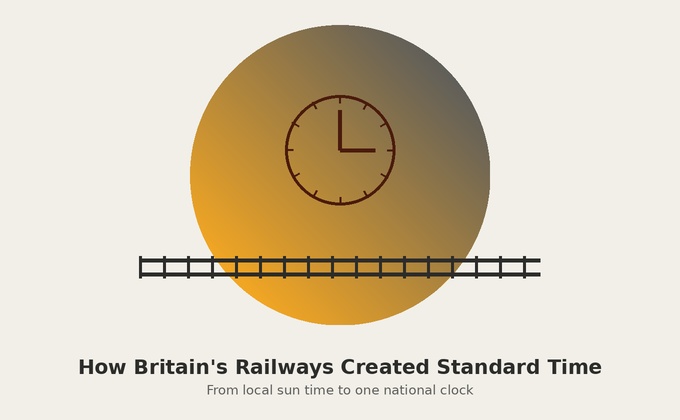
How Britain's Railway Companies Created Standard Time
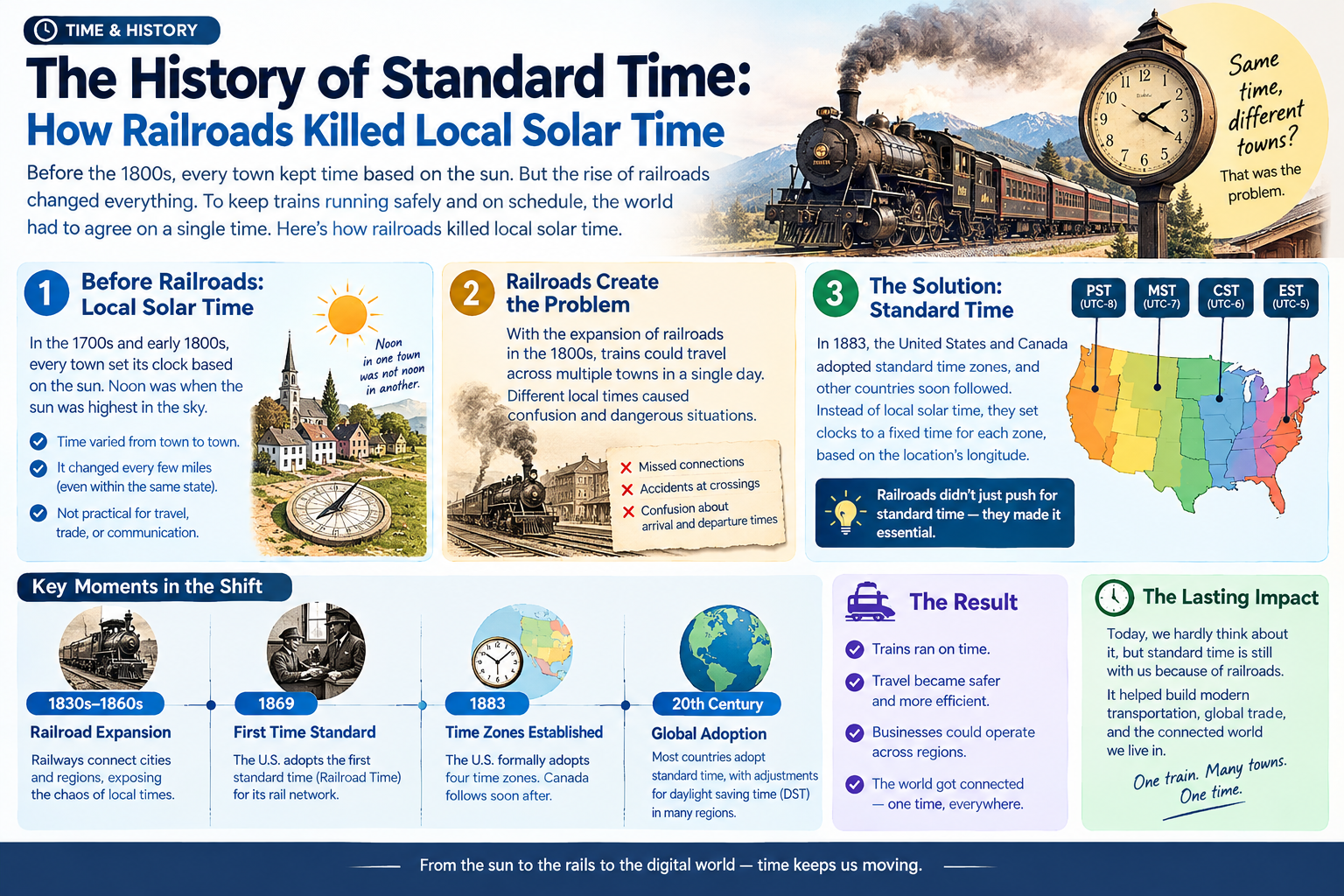
Before the 1840s, Britain had no national time. Every town set its clocks by the sun, and noon in London was several minutes ahead of noon in Bristol. This worked fine for centuries — until railways arrived.
Trains moved faster than the sun. A passenger could leave one town and arrive in another where the clocks disagreed. Timetables became impossible. Accidents happened.
The solution came not from Parliament or scientists, but from railway companies. This is the story of how Britain invented standard time.
Use the free time zone converter here →
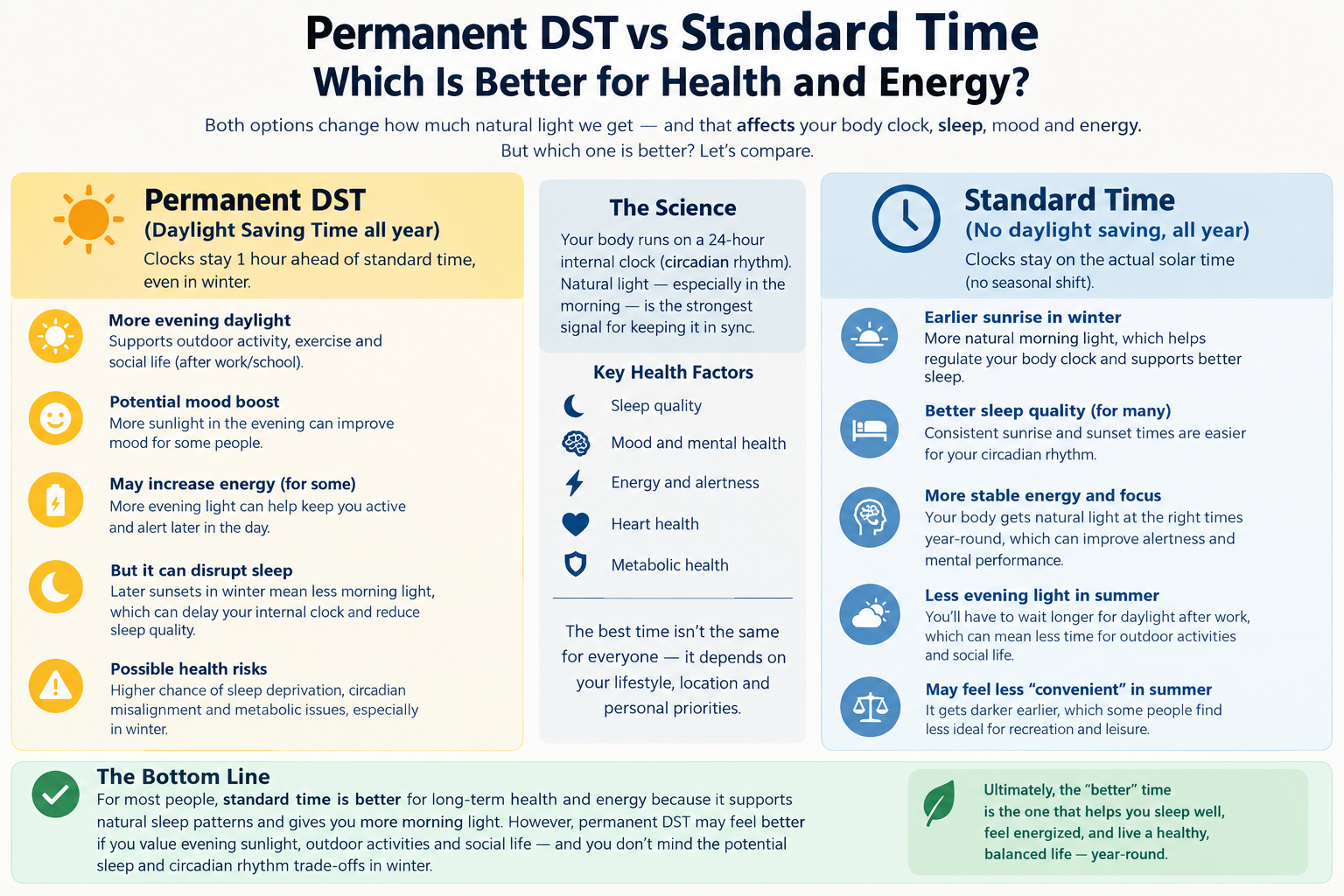
The Short Answer: Railways Forced Britain to Standardize
Britain's railway companies adopted Greenwich Mean Time (GMT) in the 1840s because local solar time made timetables unworkable. The Great Western Railway led the way in 1840, and by 1855, most of Britain ran on Railway Time.
| Aspect | Details |
|---|---|
| Before | Every town had its own local time |
| The problem | Railways needed consistent schedules |
| The solution | Greenwich Mean Time |
| Who drove it | Railway companies |
| First railway | Great Western Railway (1840) |
| National adoption | 1855 (most railways) |
| Legal adoption | 1880 (Statutes Definition of Time Act) |
| Key figure | Isambard Kingdom Brunel |
The World Before Railway Time: Every Town Had Its Own Noon
Local Solar Time
For most of history, time was defined by the sun. Noon was when the sun was highest in the sky — and that moment was different in every town.
| Aspect | Explanation |
|---|---|
| What it was | Time based on the sun's position |
| Noon | When the sun was highest |
| Measurement | Sundials, then observatory clocks |
| Variation | Every town slightly different |
How Different Was It?
| Location | Difference from Greenwich |
|---|---|
| Greenwich | 0 minutes |
| London | ~0 minutes |
| Bristol | ~11 minutes behind |
| Birmingham | ~7 minutes behind |
| Manchester | ~8 minutes behind |
| Liverpool | ~12 minutes behind |
| Edinburgh | ~13 minutes behind |
| Glasgow | ~16 minutes behind |
These small differences were invisible in daily life. But they became catastrophic for railways.
The Railway Problem: Chaos on the Tracks
Why Railways Couldn't Function
Railways connected distant cities at high speed. A single line could pass through dozens of local times. This created serious problems.
| Problem | Explanation |
|---|---|
| Timetable chaos | Each station used its own local time |
| Missed connections | Passengers and freight arrived at wrong times |
| Safety hazards | Two trains on the same track could misjudge timing |
| Collisions | Confusion over schedules contributed to accidents |
| No coordination | Different railways used different reference times |
The Real Danger
A train leaving London at 9:00 GMT would arrive in Bristol when the local clock said 9:50 — but the actual journey time was different. Passengers and railway staff were constantly confused.
Railway companies realized they needed a single, unified time system.
The Great Western Railway: The First to Adopt GMT
The Pioneer
The Great Western Railway (GWR) was the first railway in Britain to adopt Greenwich Mean Time across its entire network.
| Aspect | Details |
|---|---|
| Railway | Great Western Railway |
| Year | 1840 |
| Engineer | Isambard Kingdom Brunel |
| Adopted | Greenwich Mean Time |
| Reason | Consistent timetables |
Why the GWR Led
The GWR ran from London to Bristol and Exeter. Its chief engineer, Isambard Kingdom Brunel, understood that a single time reference was essential for safe, efficient operation.
| Factor | Explanation |
|---|---|
| Brunel's vision | Standardization was essential |
| London terminus | Already on GMT |
| Long routes | Crossed many local times |
| Safety | Consistent schedules prevented collisions |
The GWR's Approach
The GWR adopted GMT for all its timetables and instructed stations to set their clocks accordingly. Other railways soon followed.
Railway Time Spreads Across Britain
The 1840s: Early Adoption
| Year | Railway | Action |
|---|---|---|
| 1840 | Great Western Railway | Adopted GMT |
| 1841 | London and Birmingham Railway | Adopted GMT |
| 1845 | Railway Clearing House | Recommended GMT |
| 1847 | Most major railways | Adopted GMT |
The Railway Clearing House
The Railway Clearing House, established in 1842, played a crucial role in standardizing time across different railway companies.
| Aspect | Details |
|---|---|
| Founded | 1842 |
| Role | Coordinate between railways |
| Time standard | Recommended GMT |
| Impact | Unified railway time |
By 1855: Most of Britain on Railway Time
By 1855, the vast majority of British railways were using GMT for their timetables. Local time was still used for daily life in many places, but the railways ran on a single clock.
The Two Clocks Problem
Railway Time vs. Local Time
For years, Britain ran on two clocks: Railway Time (GMT) and local solar time. This created confusion.
| Setting | Time Used |
|---|---|
| Railway stations | GMT |
| Timetables | GMT |
| Town clocks | Local solar time |
| Church bells | Local solar time |
| Daily life | Local solar time |
The Public Confusion
| Problem | Explanation |
|---|---|
| Missed trains | People used local time |
| Confusion | Two clocks in one town |
| Resistance | Some refused to change |
| Gradual acceptance | Took decades |
The Transition
Many towns had two clocks: one showing Railway Time, one showing local time. Some towns resisted, but the practical benefits of a single time standard eventually won.
Legal Adoption: The Statutes Definition of Time Act 1880
When Did GMT Become Law?
Greenwich Mean Time became legal time in Britain with the Statutes (Definition of Time) Act 1880.
| Aspect | Details |
|---|---|
| Year | 1880 |
| Law | Statutes (Definition of Time) Act |
| Effect | GMT became legal time |
| Result | One time for all of Britain |
Why It Took So Long
| Reason | Explanation |
|---|---|
| Local tradition | Towns valued their own time |
| No urgency | Railways already used GMT |
| Legal complexity | Needed parliamentary action |
| Gradual shift | Public opinion changed slowly |
Ireland Followed
Ireland adopted GMT in 1880 as well, and later moved to Irish Standard Time (UTC+01:00) in 1916.
The Global Impact
Britain's Example Spread Worldwide
Britain's railway-driven standardization inspired other countries.
| Country | Year Adopted |
|---|---|
| Britain | 1840 (railways), 1880 (law) |
| United States | 1883 (railroads) |
| Canada | 1883 (railroads) |
| Japan | 1886 |
| India | 1906 |
The 1884 Washington Conference
In 1884, representatives from 25 nations met in Washington, D.C., and agreed to adopt Greenwich as the prime meridian. This made GMT the global standard for time.
| Aspect | Details |
|---|---|
| Date | October 1884 |
| Location | Washington, D.C. |
| Attendees | 25 nations |
| Decision | Greenwich = prime meridian |
| Result | Global standard time |
GMT and UTC
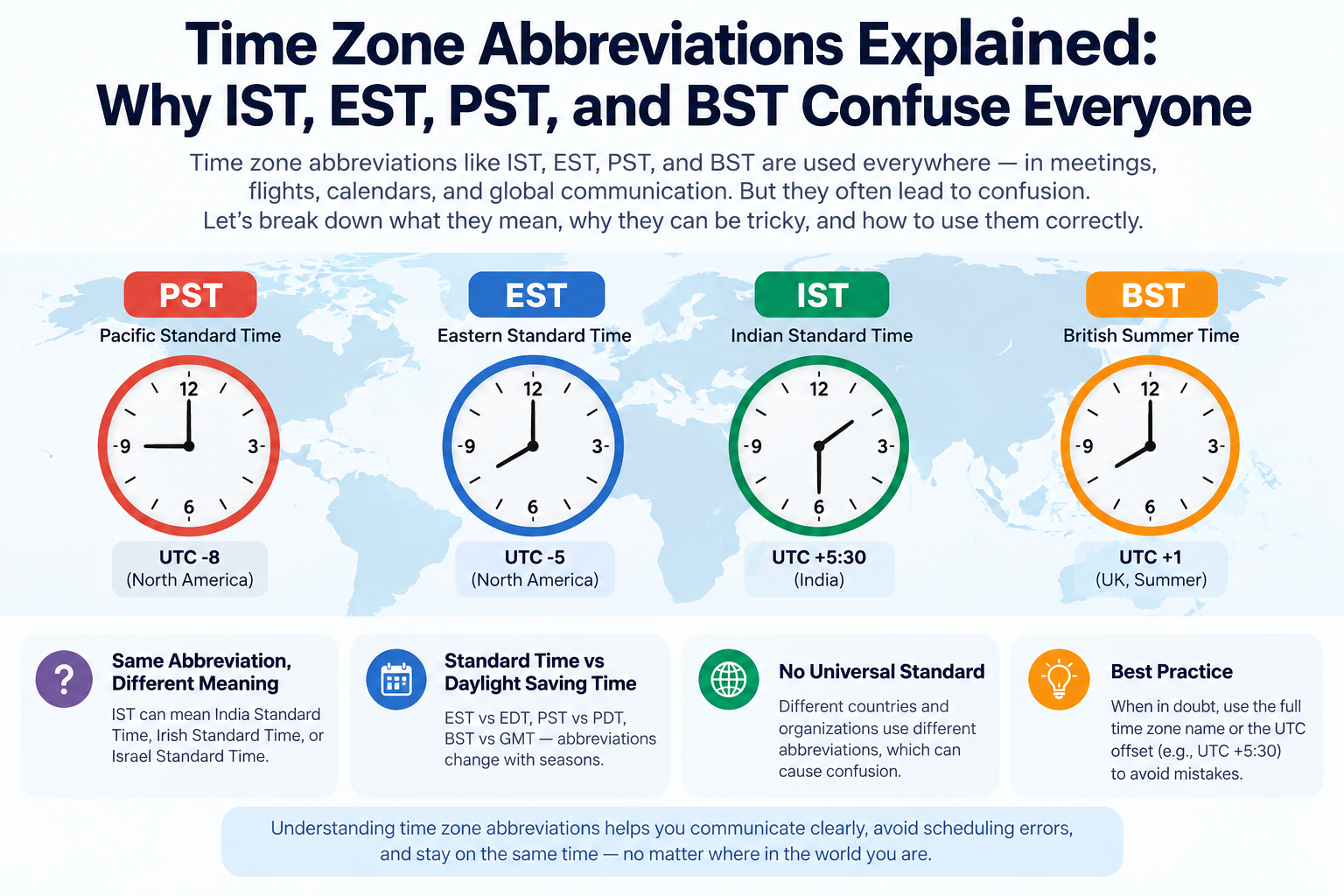
Today, UTC (Coordinated Universal Time) has largely replaced GMT as the global standard. But GMT is still used informally and in some contexts.
| Aspect | GMT | UTC |
|---|---|---|
| Type | Time zone | Time standard |
| Based on | Earth's rotation | Atomic clocks |
| Leap seconds | No | Yes |
| Common use | UK winter time | Global reference |
Key Figures
Isambard Kingdom Brunel
| Aspect | Details |
|---|---|
| Born | 1806 |
| Role | Chief engineer, GWR |
| Contribution | Adopted GMT for GWR |
| Legacy | Standard time in Britain |
The Railway Clearing House
| Aspect | Details |
|---|---|
| Founded | 1842 |
| Role | Coordinated railways |
| Contribution | Standardized time |
| Impact | Unified British railways |
Quick Reference Card
━━━━━━━━━━━━━━━━━━━━━━━━━━━━━━━━━━━━━━━━━━━━━━━━━━━━━━━━━━
   BRITAIN'S RAILWAY TIME — CHEAT SHEET
━━━━━━━━━━━━━━━━━━━━━━━━━━━━━━━━━━━━━━━━━━━━━━━━━━━━━━━━━━

BEFORE 1840:
  Every town had its own local solar time
  Noon differed by minutes across Britain
  Railways made this unworkable

THE PROBLEM:
  Trains crossed many local times
  Timetables were impossible
  Safety was compromised

THE SOLUTION:
  Greenwich Mean Time (GMT)
  Adopted by railway companies

KEY DATES:
  1840 → Great Western Railway adopts GMT
  1842 → Railway Clearing House founded
  1845 → Clearing House recommends GMT
  1855 → Most railways use GMT
  1880 → Statutes Definition of Time Act

KEY FIGURES:
  Isambard Kingdom Brunel — GWR engineer
  Railway Clearing House — coordinated railways

THE TWO CLOCKS:
  Railway Time (GMT) for trains
  Local time for daily life
  Coexisted for decades

GLOBAL IMPACT:
  1884 → Washington Conference adopts Greenwich
  Other countries followed Britain's example

GOLDEN RULE:
  Railways created standard time, not governments.

━━━━━━━━━━━━━━━━━━━━━━━━━━━━━━━━━━━━━━━━━━━━━━━━━━━━━━━━━━
         Check live conversions at: /timezone-converter
━━━━━━━━━━━━━━━━━━━━━━━━━━━━━━━━━━━━━━━━━━━━━━━━━━━━━━━━━━
Frequently Asked Questions
How did Britain's railways create standard time?
Britain's railway companies adopted Greenwich Mean Time in the 1840s to make timetables consistent. The Great Western Railway led the way in 1840, and other railways followed.
Why did railways need standard time?
Before standard time, every town had its own local solar time. Railways crossing many towns could not create reliable timetables, and the confusion caused safety hazards.
Which railway first adopted GMT?
The Great Western Railway adopted Greenwich Mean Time in 1840, under the direction of its chief engineer, Isambard Kingdom Brunel.
When did Britain legally adopt GMT?
Greenwich Mean Time became legal time in Britain with the Statutes (Definition of Time) Act of 1880.
What was the Railway Clearing House?
The Railway Clearing House, founded in 1842, coordinated between different railway companies and recommended the adoption of GMT.
Did everyone accept Railway Time immediately?
No. Many towns continued using local time for daily life. Some had two clocks: one for Railway Time and one for local time.
How long did the transition take?
The transition took decades. Railways adopted GMT in the 1840s, most had adopted it by 1855, and it became law in 1880.
How did Britain's example affect the world?
Britain's railway-driven standardization inspired other countries. The United States adopted standard time in 1883, and the 1884 Washington Conference made Greenwich the global prime meridian.
What is the difference between GMT and UTC?
GMT is a time zone based on Earth's rotation. UTC is a time standard based on atomic clocks. UTC is now the global reference.
Who was Isambard Kingdom Brunel?
Brunel was the chief engineer of the Great Western Railway. He championed the adoption of Greenwich Mean Time for railway operations.
Final Thoughts
Britain's standard time was not created by Parliament or scientists. It was created by railway companies that needed to run trains safely and on time. What began as a practical solution became the foundation of the modern world's time system.
Three things to remember:
- Railways created standard time. Not governments or scientists
- The Great Western Railway led the way. Adopted GMT in 1840
- GMT became law in 1880. The Statutes Definition of Time Act
Check time zone conversions instantly → /timezone-converter
Tags: how Britain's railways created standard time, Railway Time history, Great Western Railway time, Greenwich Mean Time history, standard time Britain 1840, Railway Clearing House, time zones history, British railway time, GMT adoption, time zone converter