Why Some Countries Use Half-Hour Time Zones: A Colonial Legacy?
The short answer is partly yes, but not entirely. The half-hour offset used by India is rooted in British colonial administration, but other half-hour zones (like Iran, Myanmar, and Newfoundland) arose from different circumstances — often simply because a half-hour better matched a country's natural solar time or its capital city's position.
Use the free time zone converter here →
The Short Answer: Colonial Legacy or Solar Reality?
Some half-hour time zones are colonial legacies, but most exist because a whole-hour offset simply did not fit the country's longitude or history.
| Region | Offset | Primary Reason |
|---|---|---|
| India | UTC+05:30 | Colonial railway compromise |
| Iran | UTC+03:30 | Solar alignment |
| Myanmar | UTC+06:30 | Historical Rangoon Mean Time |
| Newfoundland | UTC−03:30 | Separate dominion, eastern capital |
| Sri Lanka | UTC+05:30 | Aligned with India |
| Afghanistan | UTC+04:30 | Solar alignment |
The Colonial Case: India
The Problem: Three Presidencies, Three Times
Before independence, British India had three major presidency cities — Bombay, Calcutta, and Madras — each with its own local time.
| City | Local Time Basis |
|---|---|
| Bombay | Local solar time |
| Calcutta | Local solar time |
| Madras | Local solar time |
Railways and telegraphs could not coordinate across these competing times.
The Railway Solution: Madras Time
British authorities needed a single standard for railways and telegraphs. Railways already used Madras Time, because its observatory was roughly midway between the other two cities and ran the telegraph service that synchronized station clocks.
| Aspect | Details |
|---|---|
| Reference city | Madras |
| Reason | Central location, telegraph hub |
| Role | Synchronized railway clocks |
The 1905 Standardization
When the British formally adopted a national standard in 1905, they chose the 82.5° East meridian, which corresponds to UTC+05:30.
| Aspect | Details |
|---|---|
| Year | 1905 |
| Meridian | 82.5° East |
| Offset | UTC+05:30 |
| Basis | Madras Time made official |
This was essentially Madras Time made official — a compromise that split the difference between Bombay and Calcutta.
Post-Independence Continuity
After independence in 1947, India kept the half-hour offset and the single time zone. It remains the standard today.
| Aspect | Details |
|---|---|
| Year | 1947 |
| Decision | Keep UTC+05:30 |
| Reason | Continuity, national unity |
| Status | Still in use |
The Non-Colonial Cases
Iran: Solar Alignment (UTC+03:30)
Iran's half-hour offset is based on the 52.5° East meridian, which is the solar time for a point east of Tehran.
| Aspect | Details |
|---|---|
| Offset | UTC+03:30 |
| Meridian | 52.5° East |
| Reason | Better solar fit than whole hour |
| DST | Abolished in 2022 |
A whole-hour offset would have been less accurate for the country's actual position relative to the sun.
Myanmar: Rangoon Mean Time (UTC+06:30)
Myanmar (formerly Burma) has used UTC+06:30 since the early 20th century.
| Aspect | Details |
|---|---|
| Offset | UTC+06:30 |
| Former name | Rangoon Mean Time |
| Basis | Local observatory meridian |
| Reason | Better solar fit |
Before standardization, Myanmar used Rangoon Mean Time, based on the local observatory's meridian. When the country standardized, the half-hour offset was retained.
Newfoundland: The Separate Dominion (UTC−03:30)
Newfoundland's half-hour offset is a holdover from its time as a separate dominion.
| Aspect | Details |
|---|---|
| Offset | UTC−03:30 |
| Reason | Separate from Canada until 1949 |
| Capital | St. John's (easternmost point) |
| 1963 attempt | Tried to switch, withdrew |
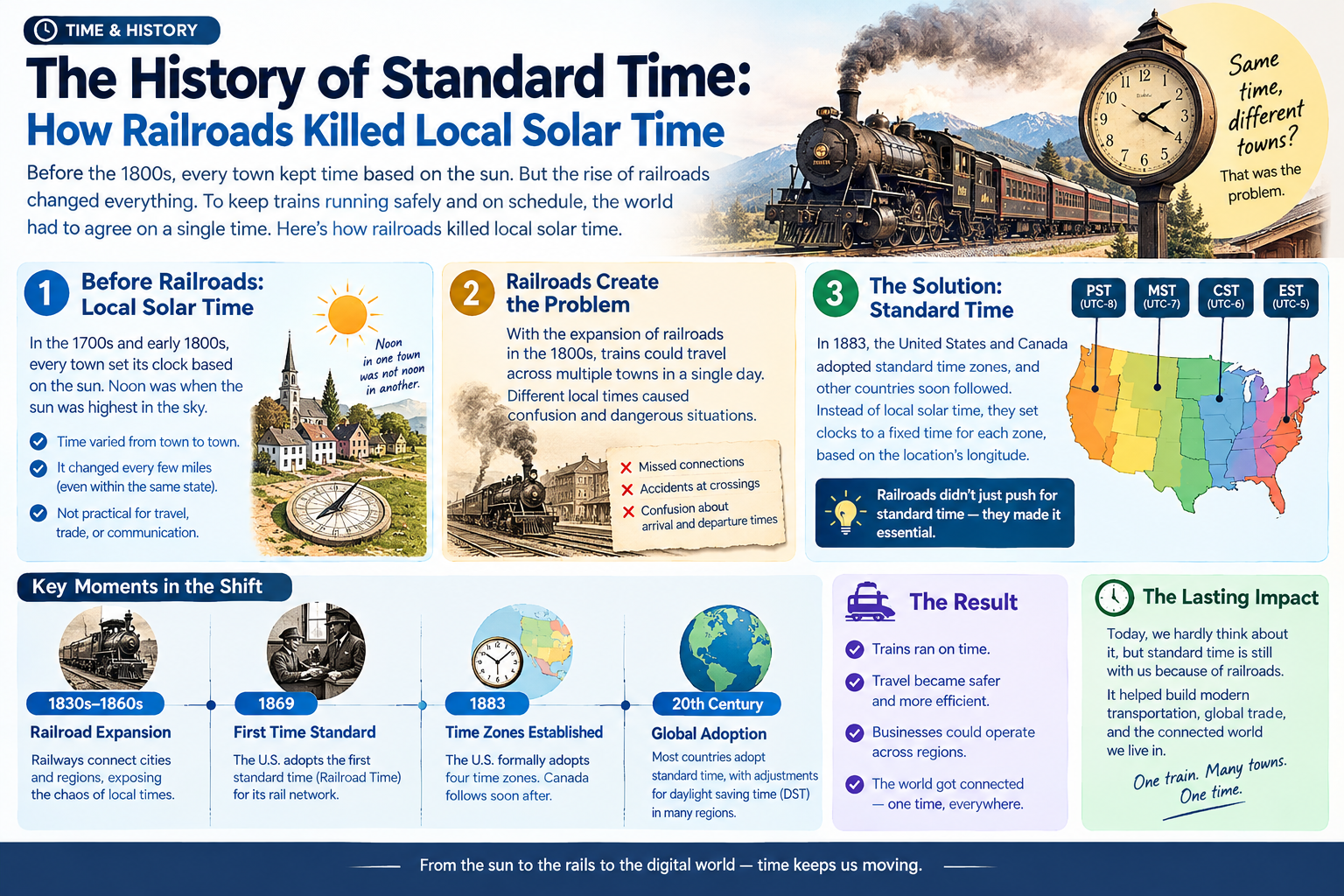
When North American railroads standardized time in 1883, Newfoundland didn't participate because it had an independent government and was disconnected from the continental rail network. The island's capital, St. John's, was also its most easterly point, so its local solar time fell roughly 30 minutes ahead of Atlantic Time.
When Newfoundland eventually standardized, it adopted St. John's time as the provincial standard — and the half-hour offset stuck. In 1963, the government tried to switch to Atlantic Time, but withdrew in the face of stiff public opposition.
Other Half-Hour and Fractional Zones
The Full List
Several regions use fractional offsets beyond the half-hour.
| Region | Offset | Type |
|---|---|---|
| India | UTC+05:30 | Half-hour |
| Iran | UTC+03:30 | Half-hour |
| Myanmar | UTC+06:30 | Half-hour |
| Newfoundland | UTC−03:30 | Half-hour |
| Sri Lanka | UTC+05:30 | Half-hour |
| Afghanistan | UTC+04:30 | Half-hour |
| Venezuela (historical) | UTC−04:30 | Half-hour |
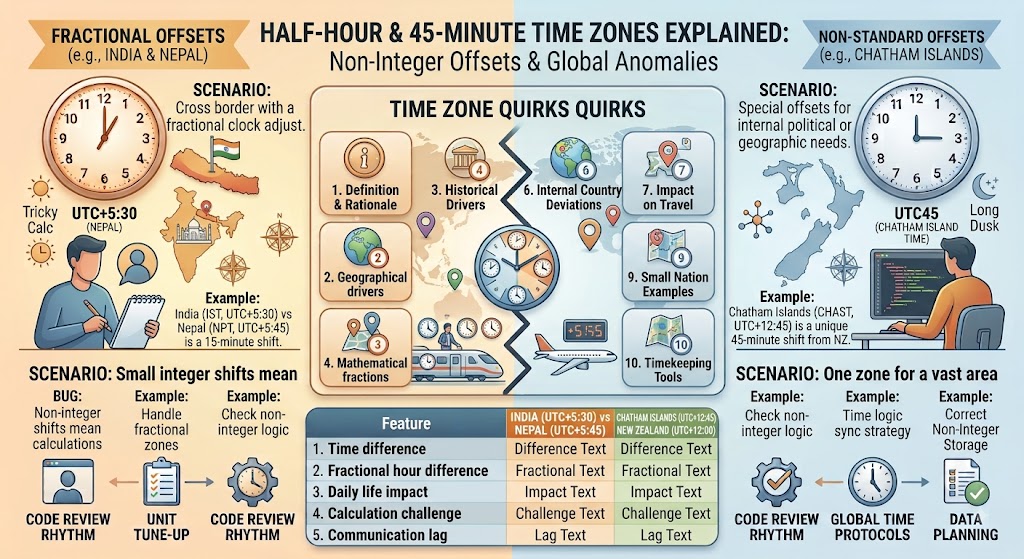
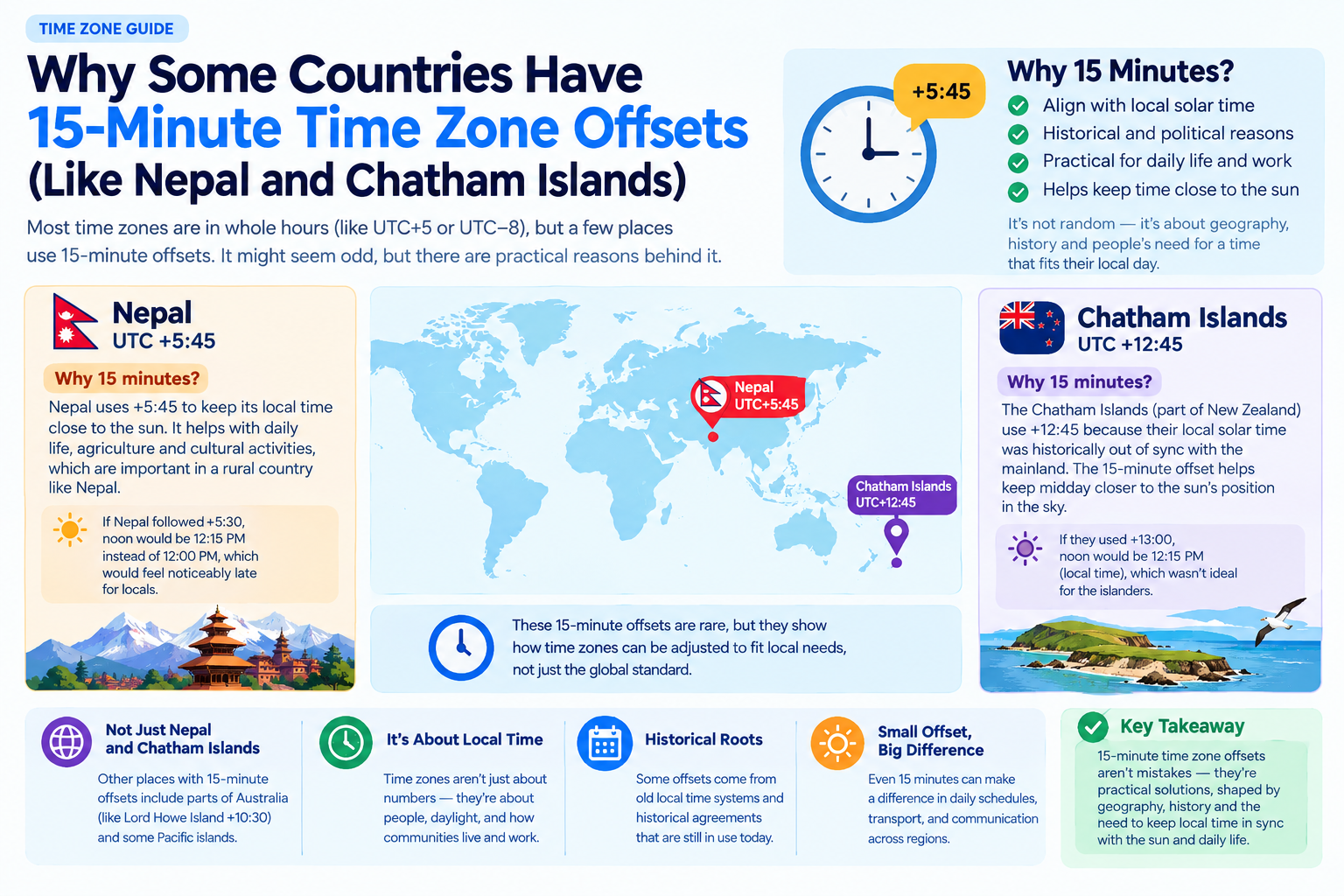
| Nepal | UTC+05:45 | 45-minute |
| Chatham Islands | UTC+12:45 | 45-minute |
| Eucla, Australia | UTC+08:45 | 45-minute |
The 45-Minute Zones
Nepal, the Chatham Islands, and Eucla use 45-minute offsets — even more unusual than half-hour zones.
| Region | Offset | Reason |
|---|---|---|
| Nepal | UTC+05:45 | Solar, national identity |
| Chatham Islands | UTC+12:45 | Historical, local identity |
| Eucla | UTC+08:45 | Remote, solar fit |
Why Half-Hour Zones Persist
The Solar Argument
Time zones are designed to approximate the sun's position. Sometimes a half-hour offset is simply a better fit for a country's longitude than a whole-hour one.
| Longitude | Ideal Offset |
|---|---|
| 82.5°E | UTC+05:30 |
| 52.5°E | UTC+03:30 |
| 97.5°E | UTC+06:30 |
| 52.5°W | UTC−03:30 |
The Political Argument
Once a time zone is established, changing it is difficult. Communities adapt, and the offset becomes part of local identity.
| Factor | Effect |
|---|---|
| Inertia | Hard to change |
| Local identity | Offset becomes familiar |
| Business continuity | Changing disrupts schedules |
| Public opposition | Newfoundland's 1963 attempt failed |
Quick Reference Card
━━━━━━━━━━━━━━━━━━━━━━━━━━━━━━━━━━━━━━━━━━━━━━━━━━━━━━━━━━
   HALF-HOUR TIME ZONES — CHEAT SHEET
━━━━━━━━━━━━━━━━━━━━━━━━━━━━━━━━━━━━━━━━━━━━━━━━━━━━━━━━━━

THE SHORT ANSWER:
  Partly colonial, mostly solar
  Whole-hour zones do not always fit

COLONIAL CASE — INDIA:
  Three presidencies, three times
  Railways used Madras Time
  1905 → Adopted 82.5°E meridian
  Offset: UTC+05:30
  Retained after independence in 1947

NON-COLONIAL CASES:
  Iran       → UTC+03:30 (52.5°E solar)
  Myanmar    → UTC+06:30 (Rangoon Mean Time)
  Newfoundland → UTC−03:30 (separate dominion)

NEWFOUNDLAND'S STORY:
  Did not join 1883 railroad standardization
  Capital St. John's was easternmost
  Adopted St. John's time
  1963 switch attempt failed

OTHER FRACTIONAL ZONES:
  Nepal          → UTC+05:45 (45-minute)
  Chatham Islands → UTC+12:45 (45-minute)
  Eucla, Australia → UTC+08:45 (45-minute)
  Afghanistan    → UTC+04:30 (half-hour)
  Sri Lanka      → UTC+05:30 (half-hour)

WHY THEY PERSIST:
  • Better solar alignment
  • Local identity and inertia
  • Hard to change once established

GOLDEN RULE:
  The sun does not care about neat one-hour intervals.

━━━━━━━━━━━━━━━━━━━━━━━━━━━━━━━━━━━━━━━━━━━━━━━━━━━━━━━━━━
         Check live conversions at: /timezone-converter
━━━━━━━━━━━━━━━━━━━━━━━━━━━━━━━━━━━━━━━━━━━━━━━━━━━━━━━━━━
Frequently Asked Questions
Why do some countries use half-hour time zones?
Half-hour time zones exist because a whole-hour offset does not always match a country's longitude or history. Some, like India's, are colonial legacies. Others, like Iran's and Myanmar's, are based on solar alignment.
Is India's half-hour time zone a colonial legacy?
Yes. India's UTC+05:30 offset comes from British colonial administration. It was chosen in 1905 to coordinate railways and telegraphs across the subcontinent, based on Madras Time and the 82.5° East meridian.
Why does Iran use UTC+03:30?
Iran's offset is based on the 52.5° East meridian, which better matches the country's solar time than a whole-hour offset. Iran abolished daylight saving time in 2022.
Why does Myanmar use UTC+06:30?
Myanmar retained its half-hour offset from the colonial era, when it used Rangoon Mean Time based on the local observatory's meridian.
Why does Newfoundland use UTC−03:30?
Newfoundland was a separate dominion and did not join the 1883 North American railroad time standardization. Its capital, St. John's, was the easternmost point, so its solar time fell about 30 minutes ahead of Atlantic Time. The offset stuck.
Did Newfoundland ever try to change its time zone?
Yes. In 1963, the government tried to switch to Atlantic Time, but withdrew after stiff public opposition.
Which other countries use half-hour offsets?
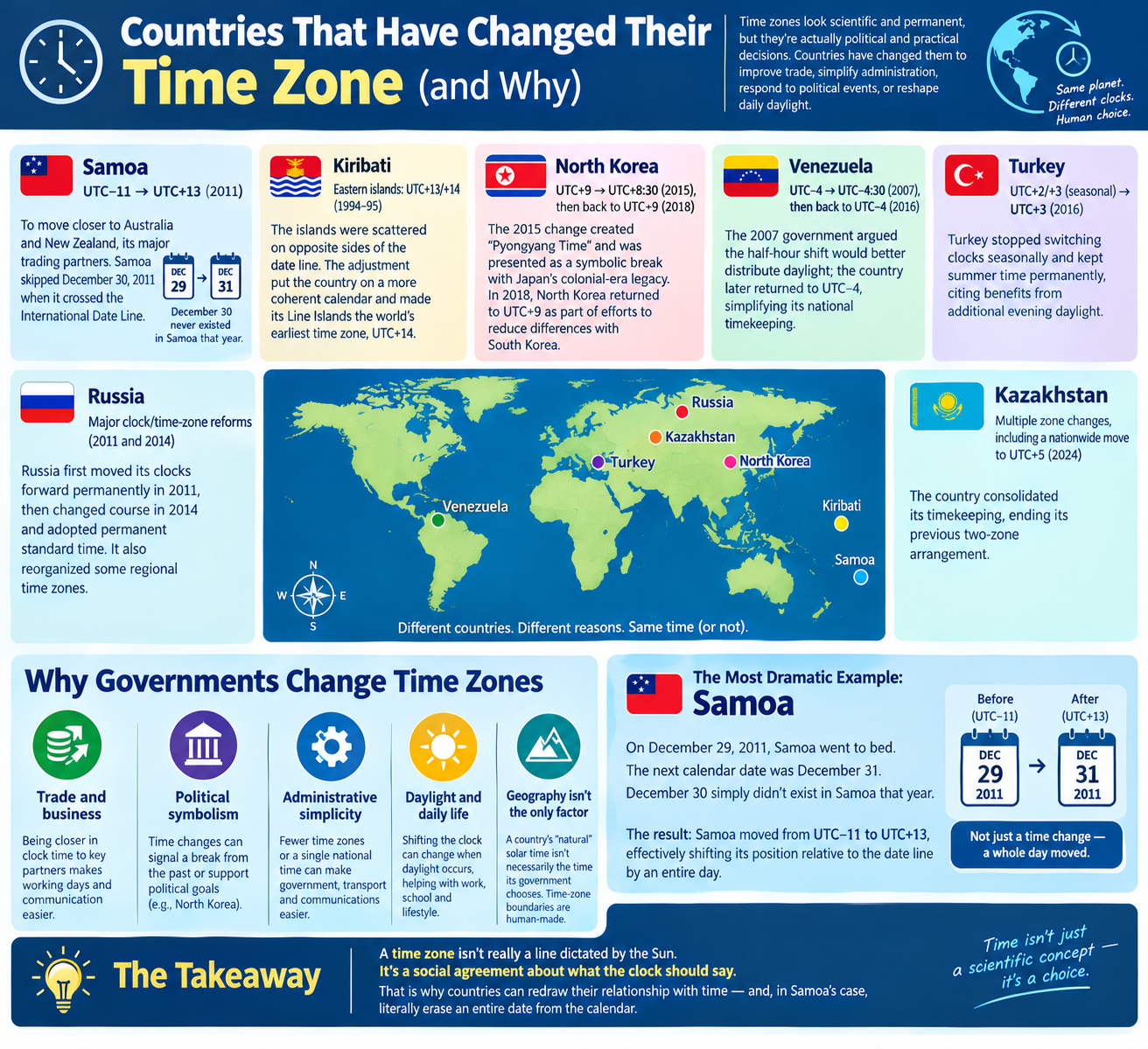
Sri Lanka (UTC+05:30) and Afghanistan (UTC+04:30) also use half-hour offsets. Venezuela used UTC−04:30 from 2007 to 2016.
What about 45-minute offsets?
Nepal (UTC+05:45), the Chatham Islands (UTC+12:45), and Eucla, Australia (UTC+08:45) use 45-minute offsets.
Why not just use whole-hour offsets everywhere?
Whole-hour offsets are simpler, but they do not always match local solar time. Countries choose offsets that make sense for their geography and history.
Do half-hour zones cause problems?
They can cause confusion in scheduling and software. But for the countries that use them, the practical benefits outweigh the inconvenience.
Final Thoughts
The half-hour time zone is not a single phenomenon. It has multiple origins: colonial railways in India, solar alignment in Iran and Myanmar, and separate political history in Newfoundland. The common thread is that a whole-hour offset did not fit.
So while India's half-hour zone is a clear colonial artifact, the broader phenomenon of half-hour time zones is less about empire and more about the simple fact that the sun does not care about neat one-hour intervals.
Three things to remember:
- India's offset is a colonial legacy. Madras Time and the 82.5°E meridian
- Iran and Myanmar chose half-hours for solar reasons. Not empire
- Newfoundland's offset is political history. A separate dominion that kept its own time
Check time zone conversions instantly → /timezone-converter
Tags: why some countries use half hour time zones, half hour time zone colonial legacy, India UTC+05:30 history, Iran UTC+03:30 reason, Myanmar UTC+06:30 history, Newfoundland UTC-03:30, Madras Time history, 82.5 east meridian, half hour offsets explained, time zone converter