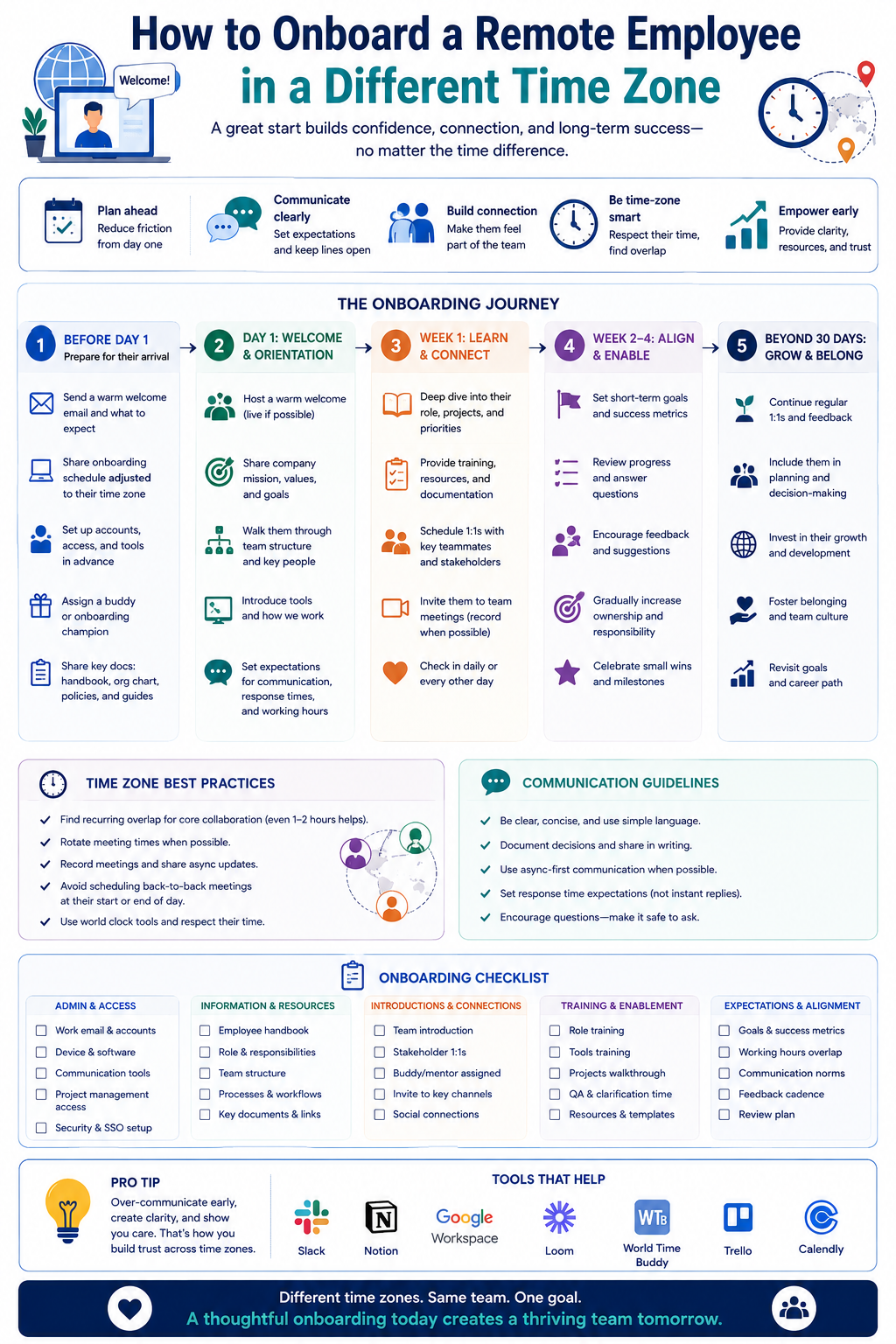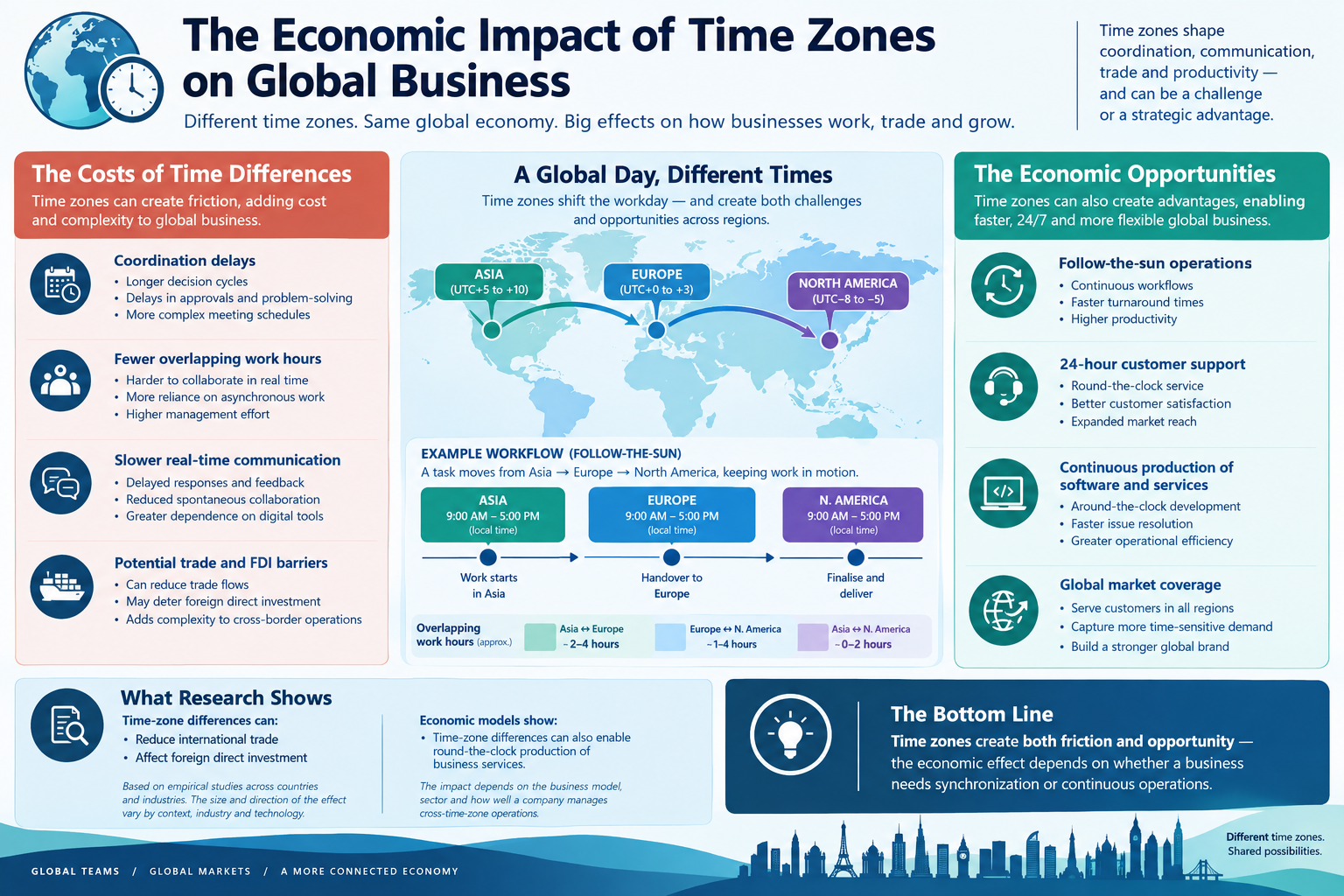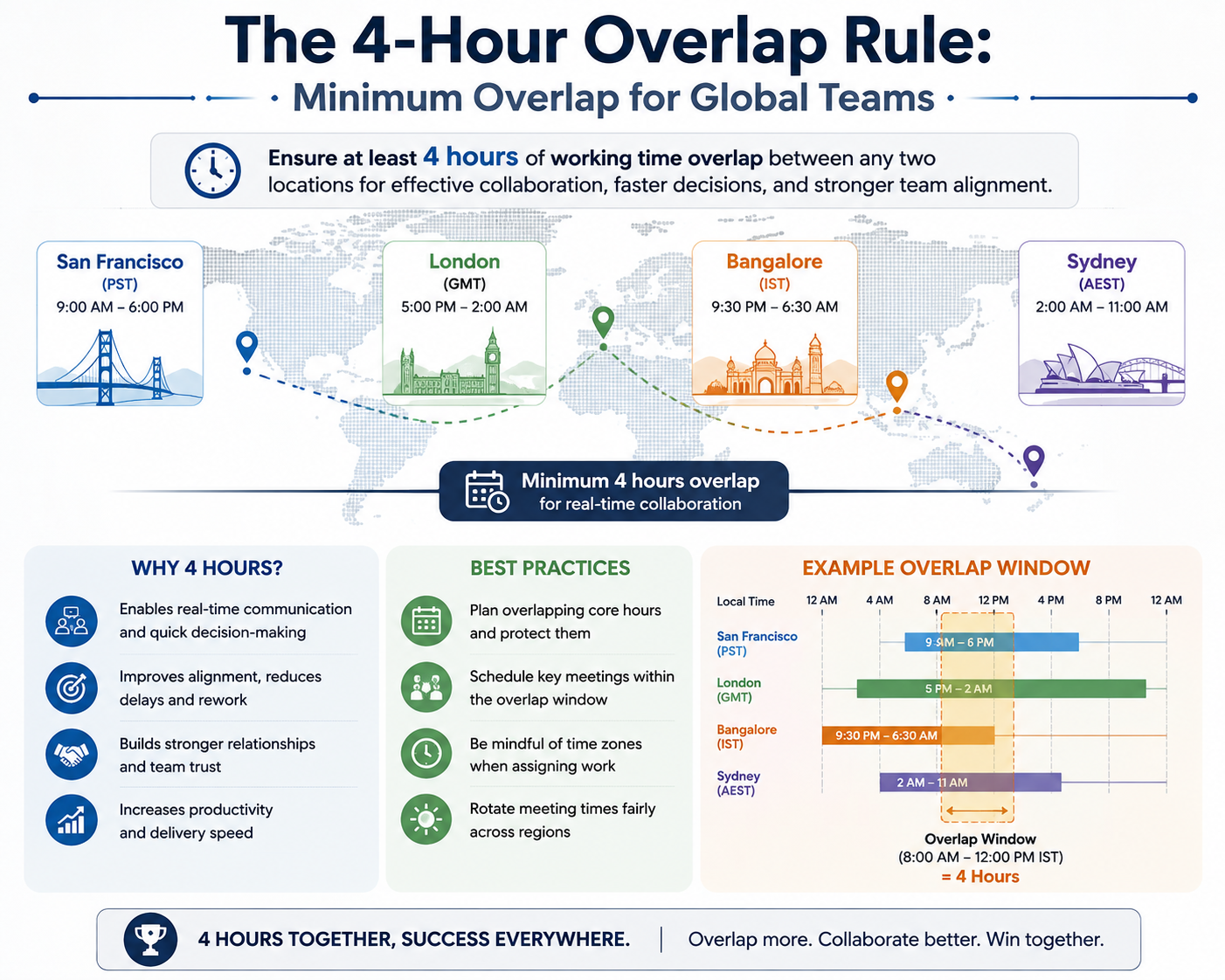
The 4-Hour Overlap Rule: Minimum Overlap for Global Teams
Every global team faces the same question: how much time zone overlap do we actually need?
Too little, and collaboration collapses into slow, frustrating async exchanges. Too much, and you are not really global — you are just hiring in one region.
After years of distributed work research and practice, a rough consensus has emerged: four hours is the minimum viable overlap for a healthy, collaborative global team.
This guide explains the 4-Hour Overlap Rule, how to calculate your overlap, and what to do if you fall short.
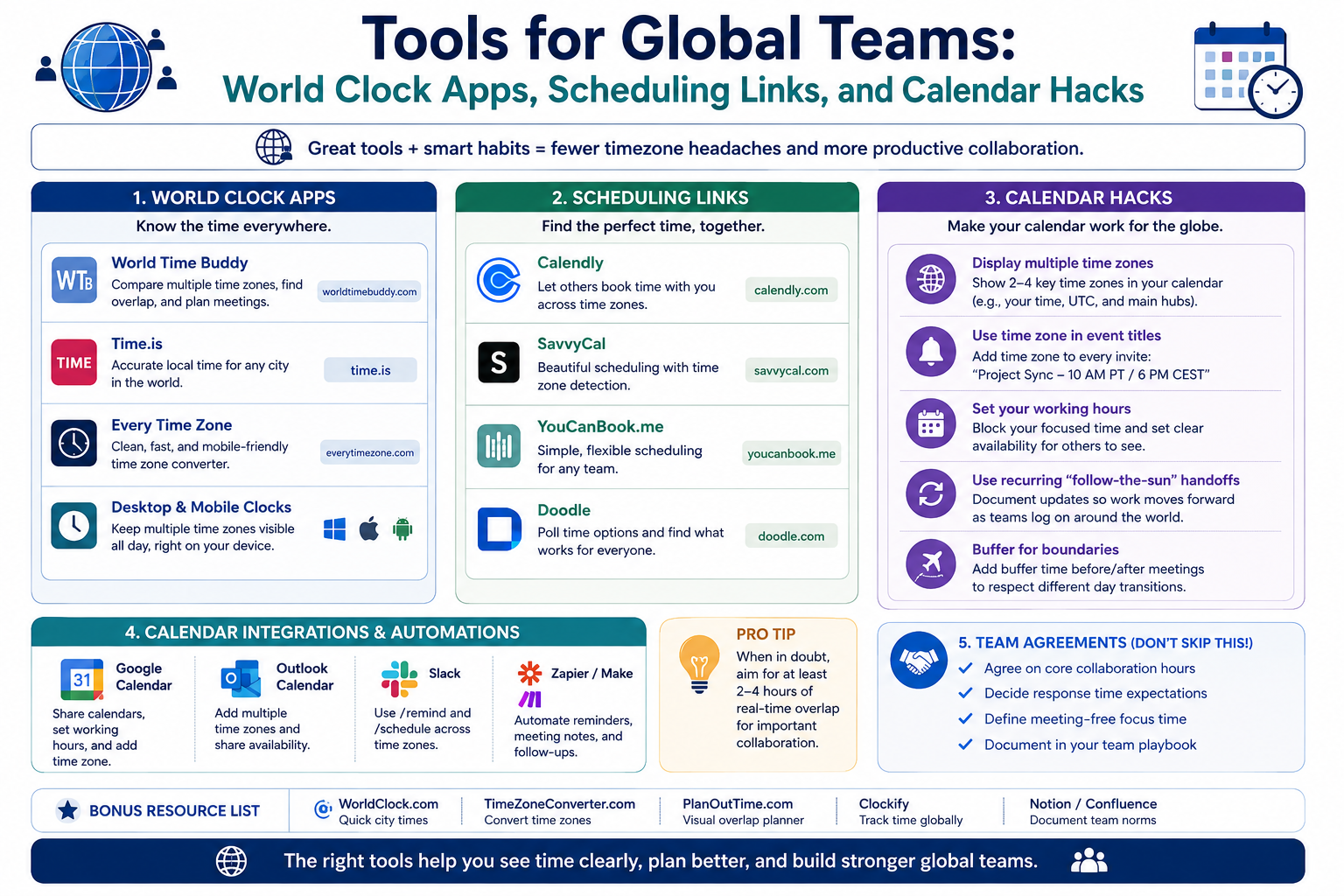
Use the free time zone converter here →
The Short Answer: What Is the 4-Hour Overlap Rule?
The 4-Hour Overlap Rule states that a global team needs at least four hours of shared working time per day to collaborate effectively without relying entirely on async communication.
| Aspect | Details |
|---|---|
| The rule | Minimum 4 hours of daily overlap |
| Why 4 hours | Enough for a meeting plus focused collaboration |
| Below 4 hours | Async becomes mandatory, friction rises |
| Above 6 hours | Healthy, comfortable collaboration |
| Zero overlap | Follow-the-sun only, very hard for most work |
| Key exception | Fully async teams can go lower |
| Best practice | Design for 4+, aim for 6 |
Why 4 Hours? The Math Behind the Rule
What Four Hours Buys You
Four hours is not arbitrary. It is the minimum needed to fit the essential real-time activities of a working team.
| Activity | Time Needed |
|---|---|
| Daily standup | 15–30 min |
| One working session | 1–2 hours |
| One meeting | 30–60 min |
| Informal chat | 30 min |
| Buffer and transitions | 30–60 min |
| Total | ~4 hours |
Why Less Than 4 Hours Breaks Down
With fewer than four hours, teams can only fit one activity per day. Everything else must be async.
| Overlap | What Fits |
|---|---|
| 4+ hours | Standup + meeting + collaboration |
| 3 hours | Standup + one meeting |
| 2 hours | One meeting only |
| 1 hour | A rushed call |
| 0 hours | Nothing live |
Why More Than 6 Hours Is Not Necessary
Once you have six hours of overlap, additional overlap has diminishing returns. Teams still benefit from async work and time zone diversity.
| Overlap | Marginal Benefit |
|---|---|
| 4–6 hours | Strong |
| 6–8 hours | Modest |
| 8+ hours | Minimal |
The Overlap Tiers
Not all overlap is equal. Teams fall into distinct tiers based on how many hours they share.
| Tier | Overlap | Collaboration Quality |
|---|---|---|
| Excellent | 6+ hours | Real-time by default |
| Healthy | 4–6 hours | Balanced sync and async |
| Workable | 2–4 hours | Async-first, sync for key moments |
| Difficult | 1–2 hours | Async-heavy, limited live work |
| Follow-the-sun | 0 hours | Fully async, handoff-driven |
Tier Details
Excellent (6+ hours)
| Aspect | Details |
|---|---|
| Meetings | Easy to schedule |
| Collaboration | Spontaneous |
| Async need | Low |
| Example | New York and London |
Healthy (4–6 hours)
| Aspect | Details |
|---|---|
| Meetings | Scheduled, not spontaneous |
| Collaboration | Structured |
| Async need | Moderate |
| Example | New York and São Paulo |
Workable (2–4 hours)
| Aspect | Details |
|---|---|
| Meetings | Limited, must be prioritized |
| Collaboration | Mostly async |
| Async need | High |
| Example | London and Dubai |
Difficult (1–2 hours)
| Aspect | Details |
|---|---|
| Meetings | Rare, scheduled carefully |
| Collaboration | Async-first |
| Async need | Very high |
| Example | New York and Tokyo |
Follow-the-sun (0 hours)
| Aspect | Details |
|---|---|
| Meetings | Almost never |
| Collaboration | Fully async |
| Async need | Total |
| Example | San Francisco and Bangalore |
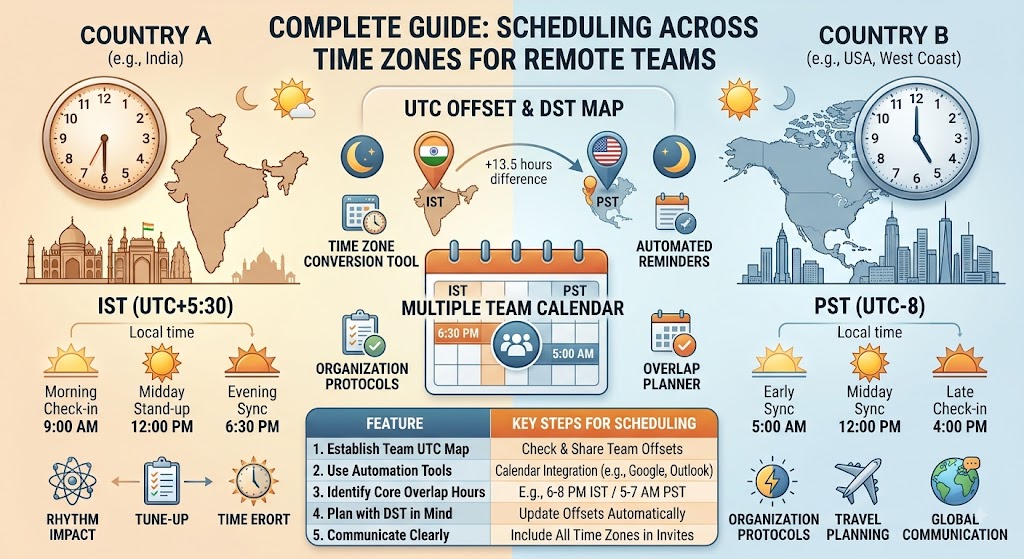
How to Calculate Your Team's Overlap
Step-by-Step
| Step | Action |
|---|---|
| 1 | List each team member's time zone |
| 2 | Convert working hours to UTC |
| 3 | Find the intersection of all working hours |
| 4 | Count the overlapping hours |
| 5 | Compare to the 4-hour rule |
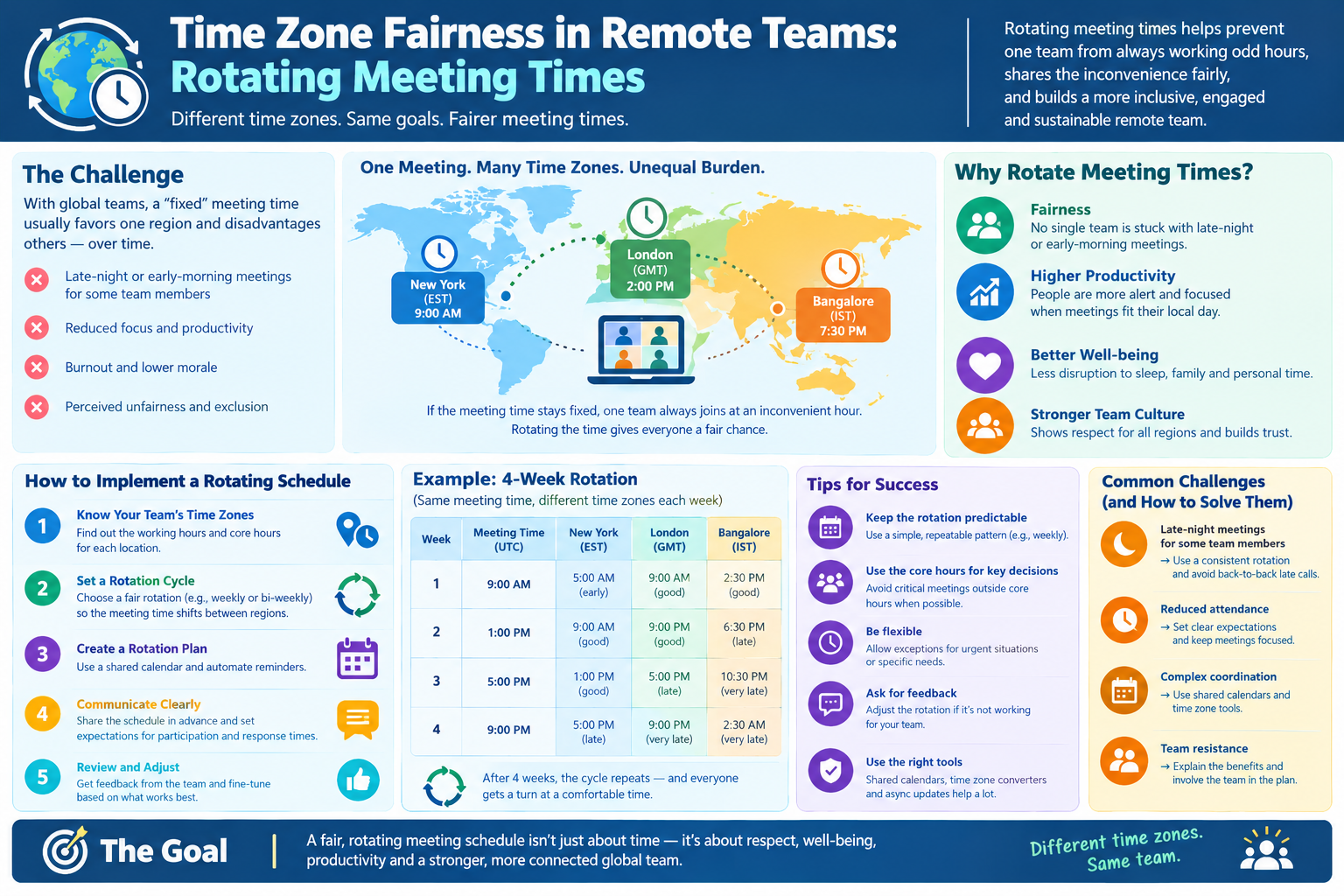
Example Calculation
A team with members in San Francisco (UTC−08:00), London (UTC+00:00), and Bangalore (UTC+05:30).
| Person | Working Hours (UTC) |
|---|---|
| San Francisco | 17:00–02:00 |
| London | 08:00–17:00 |
| Bangalore | 03:30–12:30 |
| Intersection | None |
Result: Zero overlap. This team is follow-the-sun only.
A Better Example
A team with members in New York (UTC−05:00), London (UTC+00:00), and São Paulo (UTC−03:00).
| Person | Working Hours (UTC) |
|---|---|
| New York | 14:00–23:00 |
| London | 08:00–17:00 |
| São Paulo | 11:00–20:00 |
| Intersection | 14:00–17:00 |
Result: Three hours of overlap. Workable, but below the 4-hour rule.
Full Team vs Sub-Groups
Not everyone needs to overlap with everyone. What matters is that everyone overlaps with someone.
| Approach | Requirement |
|---|---|
| Full team overlap | Ideal but rare |
| Sub-group overlap | Often sufficient |
| Hub-and-spoke | One region bridges others |
| Paired overlap | Each person overlaps with a partner |
What to Do When You Have Less Than 4 Hours
Option 1: Shift Working Hours
Some team members can shift their hours earlier or later to create overlap.
| Shift | Effect |
|---|---|
| Early start | Overlap with east |
| Late finish | Overlap with west |
| Split shift | Overlap with both |
| Flexible hours | Choose own overlap window |
Option 2: Designate Overlap Hours
If you cannot shift hours, protect the overlap you have.
| Rule | Example |
|---|---|
| No meetings outside overlap | Keep overlap free |
| Reserve for collaboration | Not status updates |
| Rotate who attends | Share the burden |
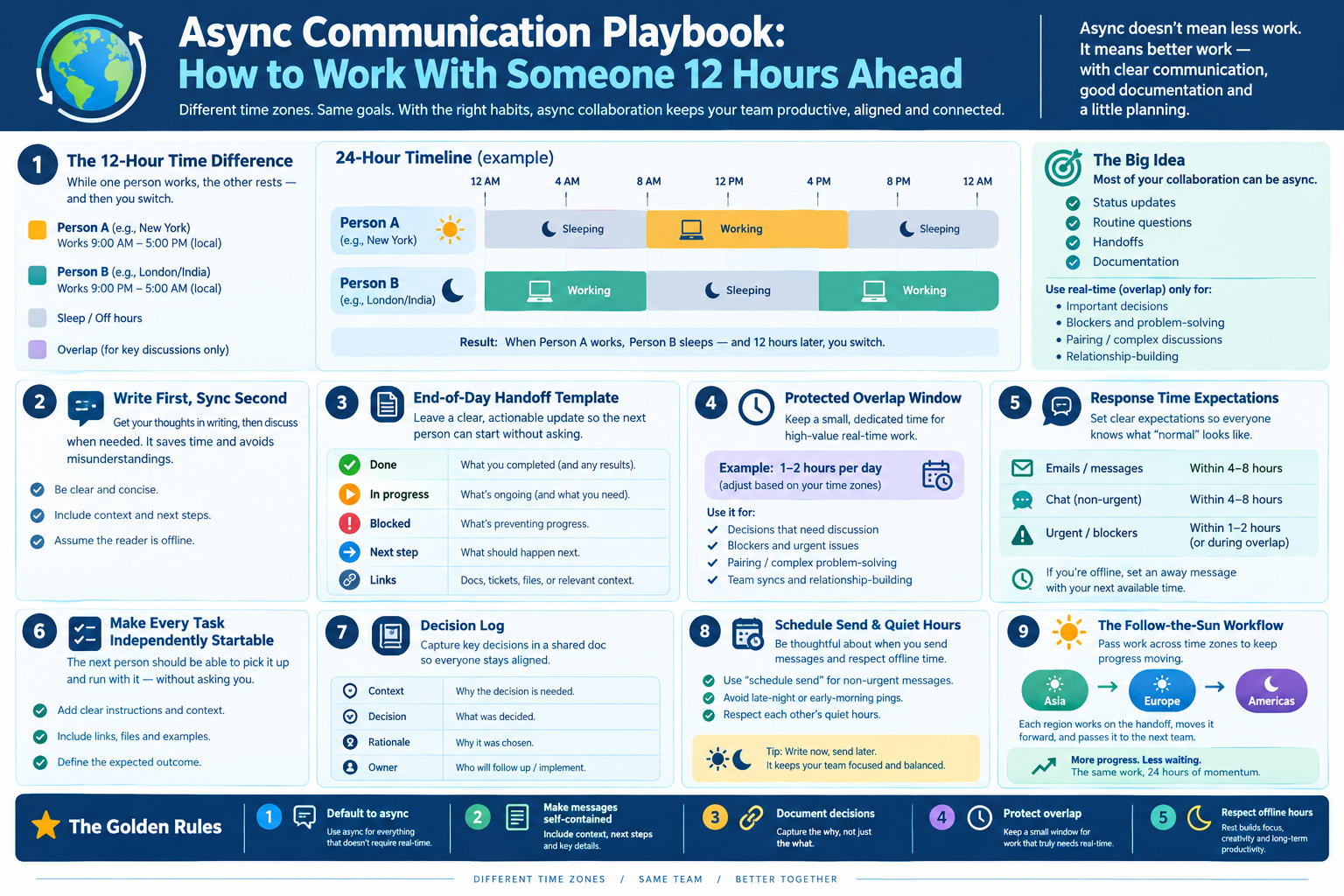
| Record everything | Absentees catch up |
Option 3: Go Async-First
Below four hours, async becomes the default mode of work.
| Async Practice | Purpose |
|---|---|
| Written updates | Replace standups |
| Decision docs | Replace meetings |
| Recorded videos | Replace presentations |
| Issue trackers | Replace status pings |
| Handoff notes | Replace live transfer |
Option 4: Use a Bridge Person
A bridge person overlaps with two or more groups and relays information between them.
| Aspect | Details |
|---|---|
| Who | Someone in a middle time zone |
| Role | Relay context and decisions |
| Benefit | Connects otherwise separate groups |
| Risk | Bottleneck if overused |
Option 5: Accept Follow-the-Sun
Some teams embrace zero overlap as a feature, not a bug.
| Benefit | Explanation |
|---|---|
| 24-hour progress | Work never stops |
| Faster turnaround | Overnight handoffs |
| Global coverage | Always someone online |
| Deep focus | Long uninterrupted blocks |
The Overlap Decision Matrix
Use this to decide how to structure your team.
| Overlap | Recommended Mode |
|---|---|
| 6+ hours | Sync-friendly, light async |
| 4–6 hours | Balanced sync and async |
| 2–4 hours | Async-first, protected overlap |
| 1–2 hours | Async-heavy, minimal sync |
| 0 hours | Follow-the-sun, handoff-driven |
Quick Reference Card
━━━━━━━━━━━━━━━━━━━━━━━━━━━━━━━━━━━━━━━━━━━━━━━━━━━━━━━━━━
      4-HOUR OVERLAP RULE CHEAT SHEET
━━━━━━━━━━━━━━━━━━━━━━━━━━━━━━━━━━━━━━━━━━━━━━━━━━━━━━━━━━

THE RULE:
  Global teams need at least 4 hours of daily overlap
  Aim for 6+ for comfortable collaboration

WHY 4 HOURS:
  Standup (30 min) + meeting (60 min) + collaboration (2 hr)
  + buffer = ~4 hours

OVERLAP TIERS:
  6+ hours  → Excellent
  4–6 hours → Healthy
  2–4 hours → Workable
  1–2 hours → Difficult
  0 hours   → Follow-the-sun

WHAT FITS:
  4+ hours → Standup + meeting + collaboration
  3 hours  → Standup + one meeting
  2 hours  → One meeting only
  1 hour   → A rushed call
  0 hours  → Nothing live

IF BELOW 4 HOURS:
  1. Shift working hours
  2. Protect and reserve overlap
  3. Go async-first
  4. Use a bridge person
  5. Embrace follow-the-sun

KEY INSIGHT:
  Not everyone needs to overlap with everyone
  Each person needs to overlap with someone

━━━━━━━━━━━━━━━━━━━━━━━━━━━━━━━━━━━━━━━━━━━━━━━━━━━━━━━━━━
         Check live conversions at: /timezone-converter
━━━━━━━━━━━━━━━━━━━━━━━━━━━━━━━━━━━━━━━━━━━━━━━━━━━━━━━━━━
Frequently Asked Questions
What is the 4-Hour Overlap Rule?
The 4-Hour Overlap Rule states that a global team needs at least four hours of shared working time per day to collaborate effectively without relying entirely on async communication.
Why is four hours the minimum?
Four hours is enough to fit a standup, a meeting, a focused collaboration session, and buffer time. Fewer hours means only one activity fits per day.
Is four hours enough for a global team?
It is the minimum, not the ideal. Six or more hours is more comfortable. Four hours works if the team is disciplined about async practices.
What if our team has zero overlap?
Zero overlap teams must operate fully async using follow-the-sun handoffs. This can work well for some workflows but is very hard for others.
How do I calculate overlap for my team?
Convert each member's working hours to UTC, find the intersection across all members, and count the overlapping hours.
Does everyone need to overlap with everyone?
No. What matters is that everyone overlaps with someone. Sub-group or paired overlap can be sufficient.
What is a bridge person?
A bridge person is a team member in a middle time zone who overlaps with two or more groups and relays information between them.
Can you have too much overlap?
Yes, in a sense. If everyone is in the same time zone, you lose the benefits of global coverage and follow-the-sun productivity.
What is the best overlap for a global team?
Four to six hours is the sweet spot: enough for real-time collaboration without eliminating the benefits of async work.
How do I create overlap if my team is spread across 12 hours?
Shift some working hours, designate a protected overlap window, use a bridge person, or accept follow-the-sun and invest heavily in async documentation.
Final Thoughts
The 4-Hour Overlap Rule is not a law of nature. It is a practical guideline born from the realities of distributed work. Four hours is enough to keep a team feeling like a team — enough for a standup, a meeting, and a real conversation.
Below four hours, you can still succeed. But you must be deliberate about async practices, documentation, and handoffs. Above six hours, you have comfort — but you may also be less global than you think.
Three things to remember:
- Four hours is the minimum. Below it, async becomes mandatory
- Six hours is comfortable. Aim higher if you can
- Not everyone needs to overlap. Each person needs to overlap with someone
Check time zone conversions instantly → /timezone-converter
Tags: 4 hour overlap rule, minimum time zone overlap, global team collaboration, time zone overlap calculator, distributed team scheduling, how much overlap do global teams need, remote team time zones, async vs sync work, follow the sun, time zone converter