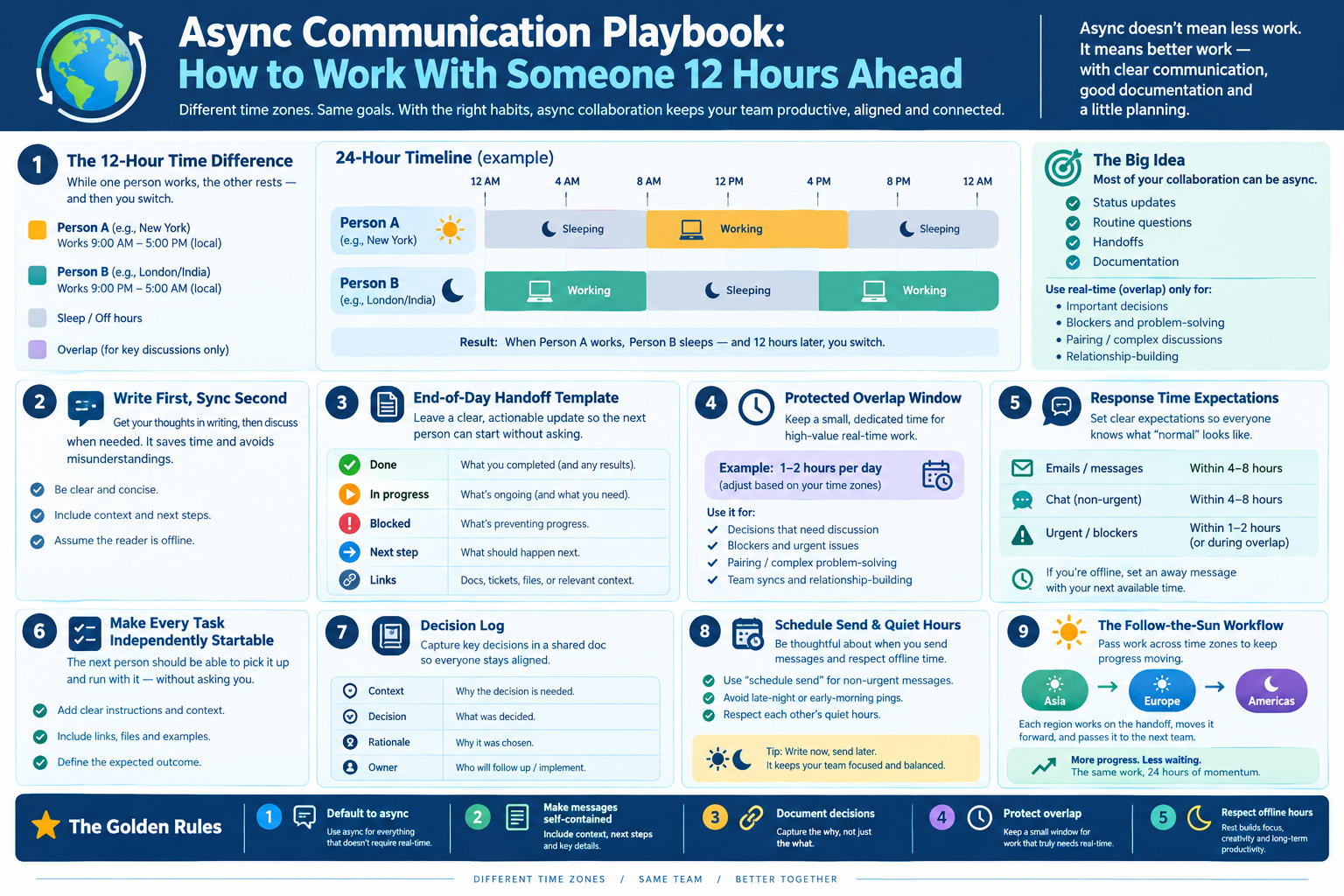
Async Communication Playbook: How to Work With Someone 12 Hours Ahead
Working with someone 12 hours ahead is one of the hardest coordination problems in modern work. When you start your day, they are finishing theirs. When you have a question, they are asleep. When they reply, you are offline.
But a 12-hour gap is not a curse. It is a design problem — and it can be solved.
This playbook explains how to build a working relationship across a 12-hour time zone gap using asynchronous communication.
Use the free time zone converter here →
The Short Answer: What Makes 12 Hours Hard
A 12-hour gap means zero overlap during normal working hours. Every interaction must be asynchronous unless someone works unusual hours.
| Aspect | Details |
|---|---|
| Overlap | Almost none during standard hours |
| Communication mode | Async by default |
| Main risk | Blocked work, slow decisions |
| Main opportunity | Follow-the-sun productivity |
| Key tool | Written documentation |
| Key habit | End-of-day handoffs |
| Key metric | Turnaround per cycle, not per hour |
Why 12 Hours Is the Hardest Gap
The Overlap Math
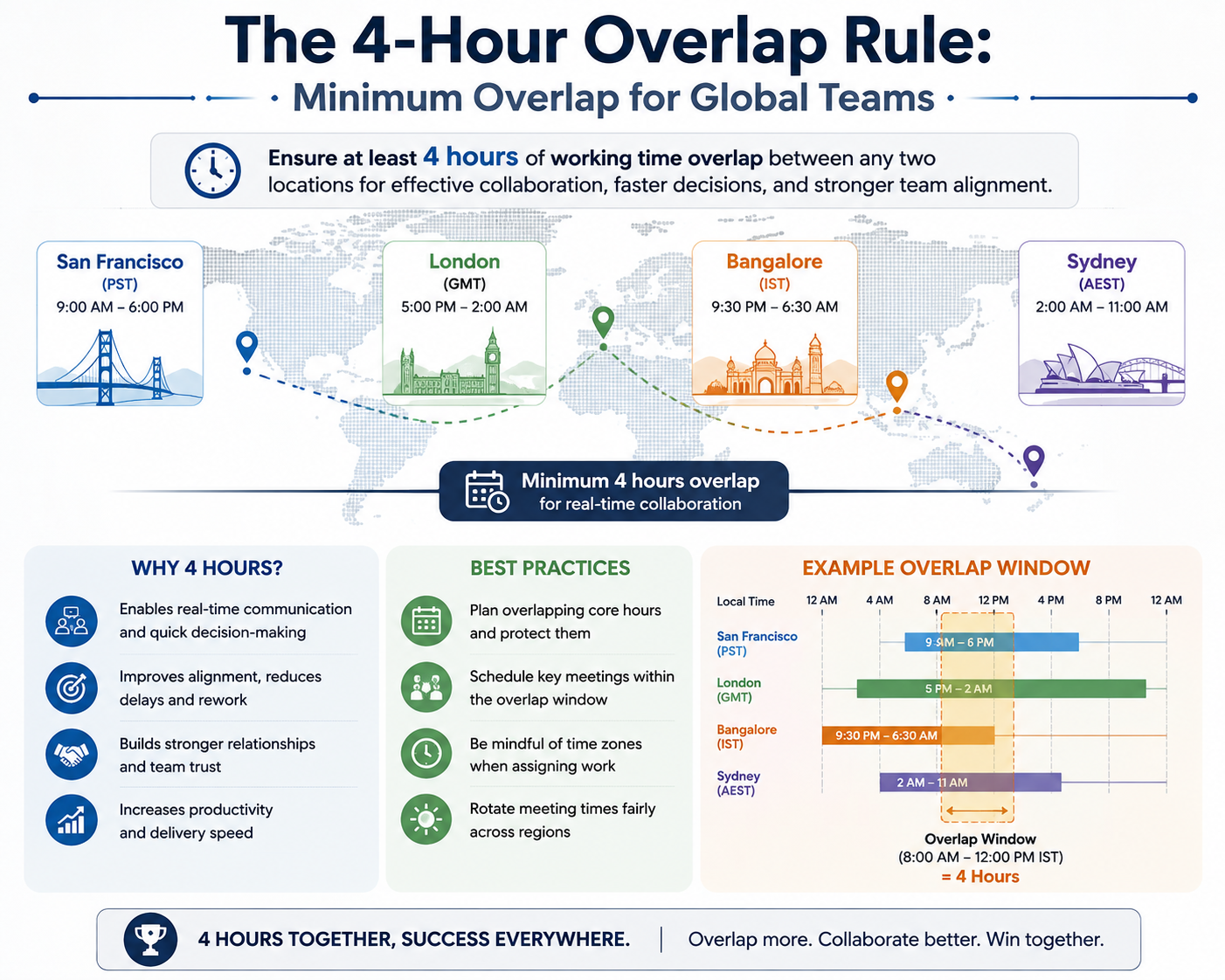
Most people work roughly 09:00–18:00 local time. A 12-hour gap means one person's working hours fall entirely outside the other's.
| Scenario | Overlap |
|---|---|
| Same time zone | 8+ hours |
| 3 hours apart | 5–6 hours |
| 6 hours apart | 2–3 hours |
| 9 hours apart | 0–1 hours |
| 12 hours apart | 0 hours |
The Compounding Problem
With zero overlap, every message takes a full day to get a response. A simple question-and-answer cycle can stretch across two days.
| Step | Day |
|---|---|
| You send a question | Day 1, your morning |
| They read it | Day 1, their morning |
| They reply | Day 2, your morning |
| You follow up | Day 2, your morning |
| They respond | Day 3, your morning |
Three days for a two-message exchange. This is the latency tax of a 12-hour gap.
Principle 1: Async by Default
What It Means
Assume every message will be read hours later by someone who cannot ask you a follow-up question in real time. Write accordingly.
| Async Habit | Why It Helps |
|---|---|
| Write complete messages | No back-and-forth needed |
| Include context | Reader lacks your context |
| State the ask clearly | No ambiguity about what you need |
| Add deadlines | Reader knows urgency |
| Anticipate questions | Reduces follow-up cycles |
The Complete Message Template
Use this structure for every significant message:
CONTEXT: What is the background?
ASK: What do I need from you?
DEADLINE: When do I need it?
OPTIONS: What are the possible paths?
MY RECOMMENDATION: What do I think we should do?
This single template eliminates most follow-up cycles.
Principle 2: Documentation Is the Interface
Why Docs Matter More Than Meetings
With no overlap, written artifacts become the shared workspace. If it is not written down, it does not exist for the other person.
| Artifact | Purpose |
|---|---|
| Design docs | Capture decisions and rationale |
| Decision logs | Record what was decided and why |
| Runbooks | Step-by-step operational guides |
| Status updates | Daily or weekly progress |
| FAQ docs | Answer recurring questions |
| Meeting notes | Share what was discussed |
The Golden Rule
If a decision is not documented, it will be relitigated. In a 12-hour gap, undocumented decisions cause repeated debates that waste days.
Documentation Standards
| Standard | Practice |
|---|---|
| Timestamp everything | Include UTC time |
| Name owners | Who is responsible |
| State status | Draft, review, approved |
| Link sources | Reference related docs |
| Update, don't duplicate | Keep one source of truth |
Principle 3: The Handoff Ritual
What a Handoff Is
A handoff is a structured end-of-day message that transfers context to the other person so they can continue work while you sleep.
| Element | Purpose |
|---|---|
| What I did | Progress update |
| What is blocked | Needs their attention |
| What is next | Their priority |
| Open questions | Decisions needed |
| Links | Relevant docs and tickets |
Handoff Template
HANDOFF — [Date]

DONE:
  • Completed X
  • Reviewed Y

BLOCKED:
  • Waiting on Z from you

NEXT FOR YOU:
  • Please review the design doc
  • Approve the deploy ticket

OPEN QUESTIONS:
  • Should we use option A or B?

LINKS:
  • Design doc: [link]
  • Ticket: [link]
Why It Works
The handoff turns the 12-hour gap into a relay race. You do not lose time — you hand off and the other person continues.
Handoff Cadence
| Frequency | Best For |
|---|---|
| Daily | Active projects |
| Every other day | Steady state |
| Weekly | Long-running work |
Principle 4: Protect the Overlap
Find Any Overlap
Even a 12-hour gap often has 1–2 hours of overlap if someone shifts slightly.
| Your Hours | Their Hours | Overlap |
|---|---|---|
| 09:00–18:00 | 21:00–06:00 | 0 hours |
| 07:00–16:00 | 19:00–04:00 | 0 hours |
| 06:00–15:00 | 18:00–03:00 | 0 hours |
| 07:00–16:00 | 18:00–03:00 | 1 hour (18:00–19:00) |
If You Find Overlap, Use It For
| Priority | Activity |
|---|---|
| 1 | Relationship building |
| 2 | Complex decisions |
| 3 | Brainstorming |
| 4 | Conflict resolution |
| 5 | Mentorship |
What Not to Use Overlap For
- Status updates (use async)
- Simple questions (use async)
- Information sharing (use docs)
Principle 5: Batch and Batch Again
Why Batching Matters
Sending one message at a time creates many round trips. Batching all questions into one message creates one round trip.
| Approach | Round Trips | Days to Resolve |
|---|---|---|
| One at a time | 5 | 5 |
| Batched | 1 | 1 |
What to Batch
| Batch Type | Example |
|---|---|
| Questions | All questions in one message |
| Reviews | All PRs in one request |
| Updates | Daily digest, not constant pings |
| Decisions | Decision log updated weekly |
When Not to Batch
| Urgency | Action |
|---|---|
| Critical outage | Contact immediately |
| Time-sensitive | Flag clearly |
| Everything else | Batch |
Principle 6: Choose the Right Tool
Tool Selection
| Need | Tool Type | Why |
|---|---|---|
| Long-form | Docs | Preserves context |
| Quick questions | Chat | Fast, informal |
| Tracking | Issue tracker | Status visible |
| Code review | Pull requests | Line-level comments |
| Decisions | Decision log | Permanent record |
| Urgent | Phone/video | Real-time |
Tool Rules
| Rule | Explanation |
|---|---|
| Chat is not documentation | Move decisions to docs |
| Docs are not chat | Do not expect instant replies |
| Trackers are not email | Use status fields |
| Email is not urgent | It waits |
Principle 7: Measure Cycles, Not Hours
The Wrong Metric
Do not measure response time in hours. With a 12-hour gap, that metric is meaningless.
The Right Metric
Measure cycle time — how long a full loop takes.
| Metric | Meaning |
|---|---|
| Turnaround | Days per exchange |
| Blocked time | How long work waits |
| Decision latency | Time from proposal to decision |
| Handoff quality | How often work resumes smoothly |
Target Cycle Times
| Work Type | Target Turnaround |
|---|---|
| Urgent bug | Same day (with overlap) |
| Normal task | 1–2 days |
| Design decision | 2–5 days |
| Strategic | 1–2 weeks |
A Day in the Life: 12-Hour Gap Example
| Your Time | Their Time | Activity |
|---|---|---|
| 09:00 | 21:00 | You read their handoff |
| 09:30 | 21:30 | You continue their work |
| 12:00 | 00:00 | They sleep |
| 17:00 | 05:00 | You write your handoff |
| 18:00 | 06:00 | You log off |
| 21:00 | 09:00 | They read your handoff |
| 21:30 | 09:30 | They continue your work |
Result: Two full workdays of progress in one calendar day.
Quick Reference Card
━━━━━━━━━━━━━━━━━━━━━━━━━━━━━━━━━━━━━━━━━━━━━━━━━━━━━━━━━━
     ASYNC PLAYBOOK — 12-HOUR GAP CHEAT SHEET
━━━━━━━━━━━━━━━━━━━━━━━━━━━━━━━━━━━━━━━━━━━━━━━━━━━━━━━━━━

CORE PRINCIPLES:
  1. Async by default — write complete messages
  2. Documentation is the interface
  3. Handoff at end of day
  4. Protect any overlap you find
  5. Batch questions and updates
  6. Choose the right tool
  7. Measure cycles, not hours

COMPLETE MESSAGE TEMPLATE:
  CONTEXT → ASK → DEADLINE → OPTIONS → RECOMMENDATION

HANDOFF TEMPLATE:
  DONE → BLOCKED → NEXT FOR YOU → OPEN QUESTIONS → LINKS

BATCHING RULE:
  5 messages = 5 days. 1 batched message = 1 day.

TOOL RULES:
  Long-form → Docs
  Quick     → Chat
  Tracking  → Issue tracker
  Urgent    → Video call

TARGET TURNAROUND:
  Urgent bug → Same day
  Normal     → 1–2 days
  Design     → 2–5 days

━━━━━━━━━━━━━━━━━━━━━━━━━━━━━━━━━━━━━━━━━━━━━━━━━━━━━━━━━━
         Check live conversions at: /timezone-converter
━━━━━━━━━━━━━━━━━━━━━━━━━━━━━━━━━━━━━━━━━━━━━━━━━━━━━━━━━━
Frequently Asked Questions
How do you work with someone 12 hours ahead?
Treat async as the default. Write complete messages, document decisions, do end-of-day handoffs, batch questions, and measure progress by cycle time rather than response time.
Is a 12-hour time zone gap good or bad?
It can be either. It eliminates real-time collaboration but enables follow-the-sun productivity if you build strong async habits.
What is the best tool for a 12-hour gap?
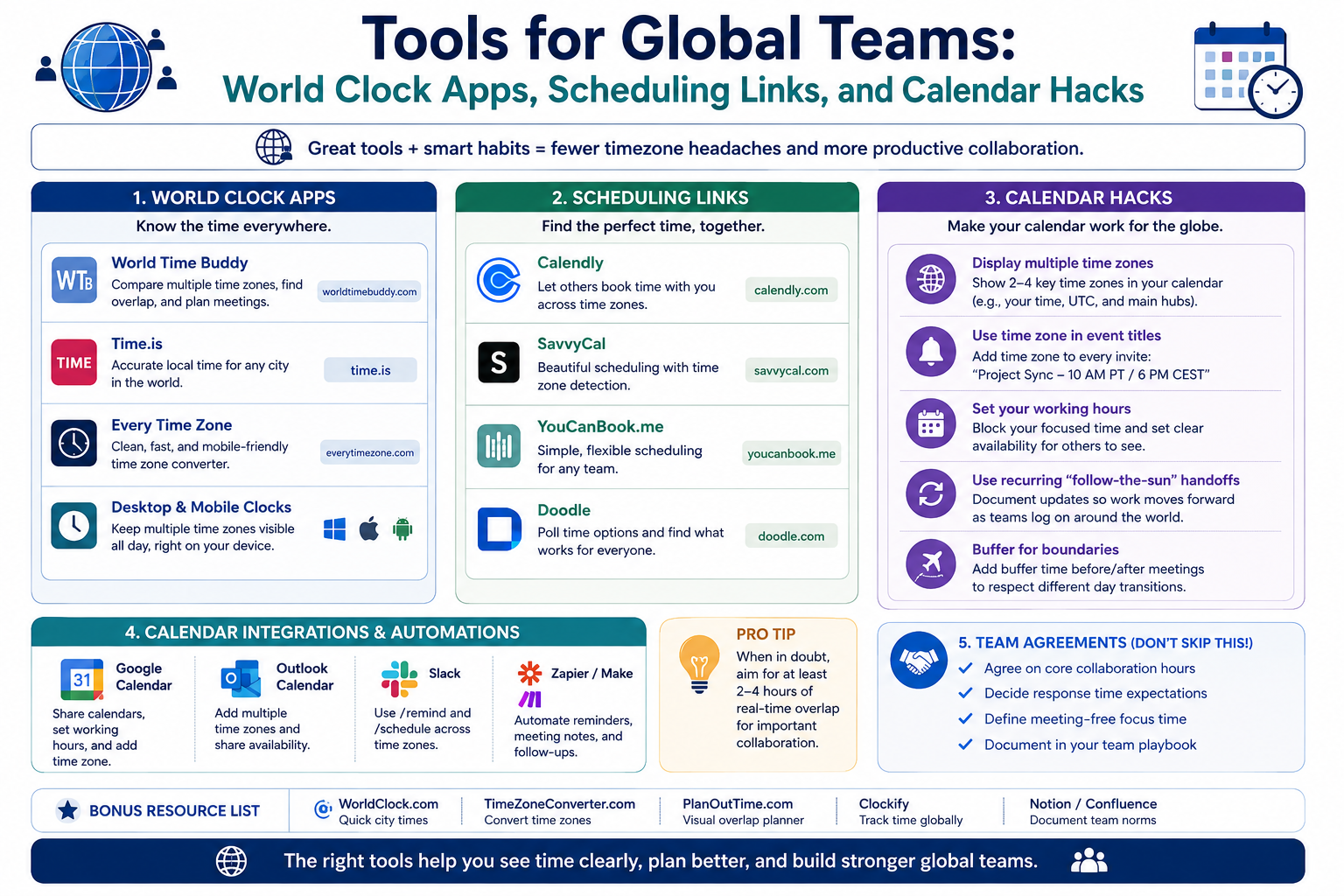
Use a mix: docs for decisions, chat for quick questions, issue trackers for status, and video calls only for complex or sensitive discussions.
How often should you do handoffs?
Daily for active projects, every other day for steady state, and weekly for long-running work.
What should a handoff include?
What you did, what is blocked, what is next for them, open questions, and links to relevant docs and tickets.
Should you ever schedule meetings across a 12-hour gap?
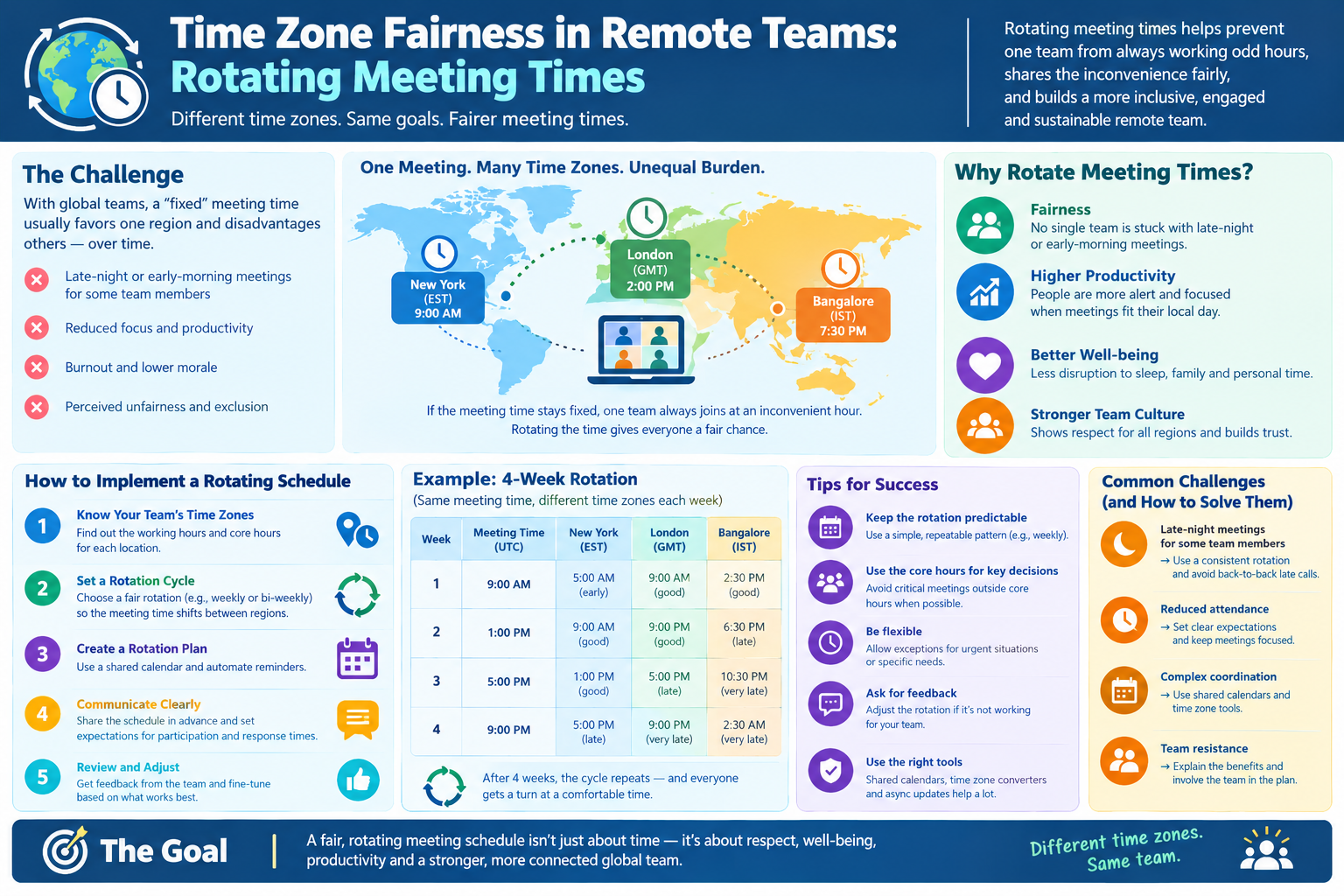
Only when necessary. Rotate inconvenient times fairly, or find a small overlap window and protect it for high-value discussions.
How do you avoid endless back-and-forth?
Batch questions into a single complete message with context, the ask, a deadline, options, and your recommendation.
What metric should you track?
Track cycle time — how long a full exchange takes — rather than how quickly someone replies in hours.
What is the biggest mistake in async work?
Sending incomplete messages that require follow-up. Every missing detail adds a full day of latency.
Final Thoughts
A 12-hour time zone gap is not a barrier. It is a workflow design challenge. Teams that master async communication turn the gap into an advantage — work continues around the clock, and no one is waiting for the other to wake up.
Three things to remember:
- Async is the default. Write messages that need no follow-up
- Handoffs are the heartbeat. End every day by passing the baton
- Documentation is the interface. If it is not written, it does not exist
Check time zone conversions instantly → /timezone-converter
Tags: async communication playbook, working with someone 12 hours ahead, time zone collaboration, distributed team handoff, follow the sun workflow, remote work time zones, async documentation, meeting scheduling across time zones, time zone overlap, time zone converter