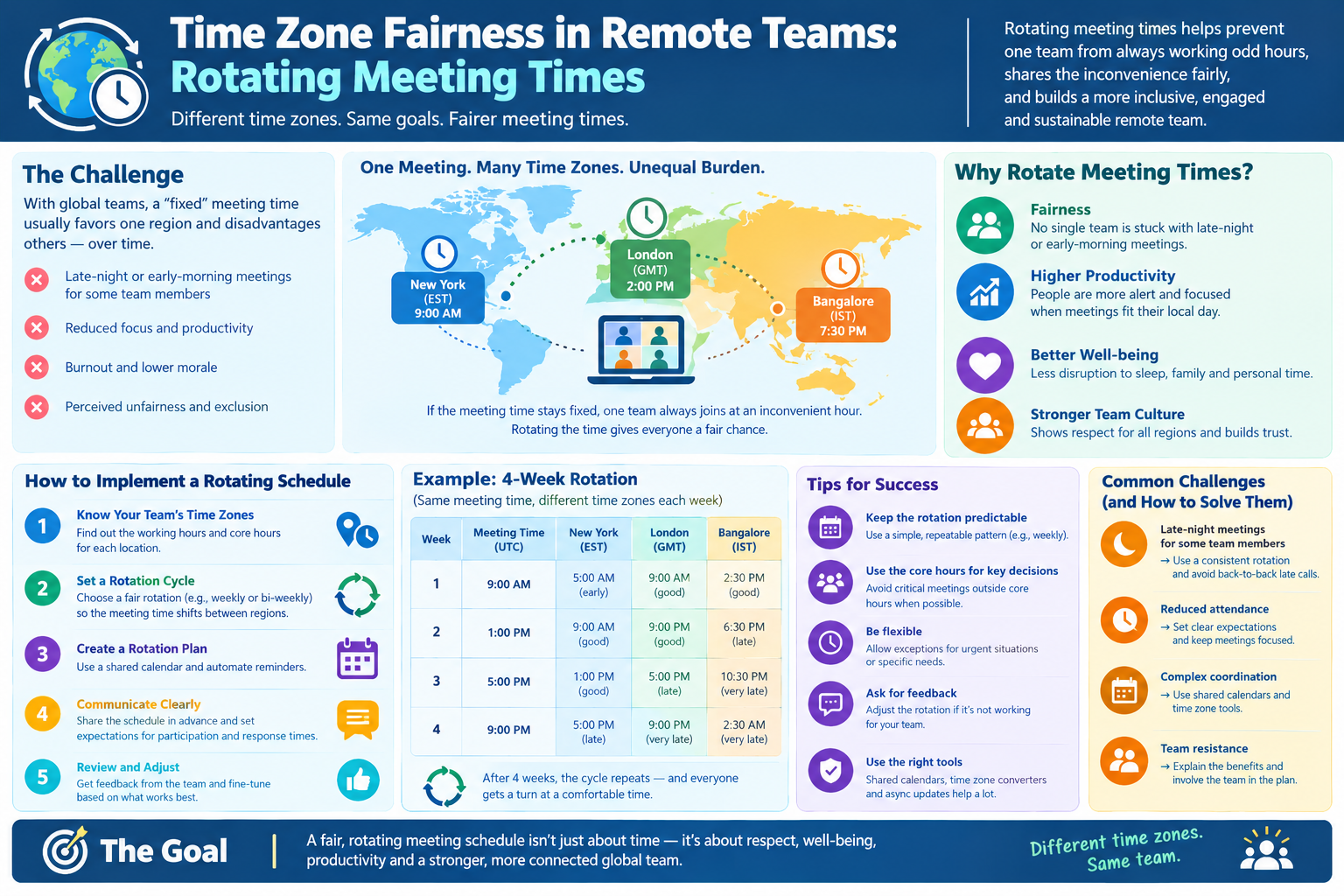
Time Zone Fairness in Remote Teams: Rotating Meeting Times
In every distributed team, there is a quiet imbalance. Someone always gets the good meeting time. Someone always wakes up at 6 AM or stays up until 11 PM. Over months and years, that burden accumulates — and it lands on the same people.
This is the problem of time zone fairness. It is one of the most overlooked issues in remote work, and one of the most damaging to morale and retention.
This guide explains the problem and offers practical solutions, including rotating meeting times.
Use the free time zone converter here →
The Short Answer: What Is Time Zone Fairness?
Time zone fairness means distributing the burden of inconvenient meeting times evenly across a distributed team, rather than letting the same people always absorb the cost.
| Aspect | Details |
|---|---|
| The problem | Inconvenient meeting hours fall on the same people |
| The cause | Headquarters time zone dominates scheduling |
| The effect | Resentment, burnout, turnover |
| The solution | Rotate times, reduce meetings, go async |
| Key principle | Burden should be shared, not concentrated |
| Hardest case | 12-hour gaps with zero overlap |
| Best practice | Async by default, meetings by exception |
The Hidden Cost of Time Zone Privilege
What Is Time Zone Privilege?
Time zone privilege is the unearned advantage of living in or near the headquarters time zone. Meetings are scheduled around your working hours. You never take a call at midnight. You never miss your child's bedtime for a status update.
| Privilege | Burden |
|---|---|
| Meetings at 10 AM | Meetings at 10 PM |
| Full participation | Partial or tired participation |
| Visible to leadership | Less visible |
| Career advancement | Career stagnation |
| Normal sleep | Disrupted sleep |
Why It Persists
The problem is structural, not personal. It happens because:
| Cause | Explanation |
|---|---|
| HQ default | Schedules follow headquarters |
| Seniority bias | Leaders live near HQ |
| Invisibility | Remote burden is not seen |
| Convenience | Easy option is the unfair one |
| No policy | No one is responsible for fairness |
The Long-Term Damage
| Effect | Explanation |
|---|---|
| Burnout | Chronic sleep disruption |
| Resentment | Feeling like a second-class teammate |
| Turnover | People leave for fairer teams |
| Silence | Remote staff stop speaking up |
| Talent loss | Companies lose global talent |
The Meeting Time Burden Calculator
How to Measure Unfairness
Not all inconvenient hours are equal. A useful way to think about it is a burden score.
| Local Time | Burden Level | Score |
|---|---|---|
| 09:00–17:00 | Ideal | 0 |
| 08:00–09:00 | Mild | 1 |
| 17:00–18:00 | Mild | 1 |
| 07:00–08:00 | Moderate | 2 |
| 18:00–20:00 | Moderate | 2 |
| 06:00–07:00 | High | 3 |
| 20:00–22:00 | High | 3 |
| 05:00–06:00 | Severe | 4 |
| 22:00–00:00 | Severe | 4 |
| 00:00–05:00 | Extreme | 5 |
How to Use It
| Step | Action |
|---|---|
| 1 | List all recurring meetings |
| 2 | Score each participant's burden |
| 3 | Total the burden per person |
| 4 | Compare across the team |
| 5 | Rotate to balance totals |
If one person consistently scores higher, the schedule is unfair.
The Rotating Meeting Times Solution
What It Is
Instead of fixing a meeting at one time, rotate the time so that the inconvenience moves around the team.
| Approach | Fairness |
|---|---|
| Fixed time | Same people always burdened |
| Rotating time | Burden shared across the team |
How to Rotate
| Rotation Type | Description |
|---|---|
| Weekly | Different time each week |
| Biweekly | Rotate every two weeks |
| Monthly | Rotate each month |
| Quarterly | Rotate each quarter |
Rotation Example: 4-Person Team
A team spanning US Pacific, US Eastern, UK, and India.
| Week | Meeting Time (UTC) | Most Burdened |
|---|---|---|
| Week 1 | 16:00 UTC | India (late evening) |
| Week 2 | 13:00 UTC | US Pacific (early morning) |
| Week 3 | 09:00 UTC | US Pacific (night) |
| Week 4 | 06:00 UTC | US Pacific and India |
Making Rotation Work
| Requirement | Why |
|---|---|
| Publish schedule early | People can plan |
| Record meetings | Absentees can catch up |
| Keep meetings short | Less burden overall |
| Share notes | Async participation |
| Rotate agenda too | Not just time |
Reduce the Number of Meetings
The Best Fix Is Fewer Meetings
The most effective way to improve fairness is to have fewer meetings. Every meeting you cancel removes a burden entirely.
| Question | If Yes |
|---|---|
| Could this be a doc? | Cancel the meeting |
| Could this be async? | Cancel the meeting |
| Could this be smaller? | Split it |
| Could this be less frequent? | Reduce cadence |
| Could this be recorded? | Record it |
Meeting Audit Template
| Meeting | Purpose | Could Be Async? | Decision |
|---|---|---|---|
| Daily standup | Status | Yes | Convert to async |
| Weekly sync | Updates | Partly | Shorten, record |
| Monthly review | Decisions | No | Keep, rotate |
| Ad hoc calls | Problems | Often | Default to chat |
The Async-First Rule
If a meeting can be replaced by a document, replace it. Meetings should be reserved for discussion, debate, and decisions — not information transfer.
Fair Meeting Design Principles
Principle 1: Rotate Inconvenience
No single person or region should always take the inconvenient slot.
Principle 2: Record Everything
If someone cannot attend, they should still be able to participate.
| Artifact | Purpose |
|---|---|
| Recording | Full context |
| Transcript | Searchable |
| Notes | Key points |
| Decisions | What was agreed |
| Actions | Who does what |
Principle 3: Make Attendance Optional Where Possible
| Meeting Type | Attendance |
|---|---|
| Decision | Required for decision-makers |
| Status | Optional, async alternative |
| Brainstorm | Encouraged but recorded |
| Social | Voluntary |
Principle 4: Cap the Burden
| Rule | Example |
|---|---|
| Max inconvenient meetings per person per week | 1 |
| Max meeting length | 30 minutes |
| Min break between meetings | 10 minutes |
| No meetings during local night | 22:00–06:00 |
Principle 5: Compensate When You Cannot Rotate
If a meeting truly must be fixed, compensate those who bear the burden.
| Compensation | Example |
|---|---|
| Flexible hours | Late start next day |
| Time off in lieu | Half day for midnight calls |
| Recorded attendance | Not required to attend live |
| Public recognition | Acknowledge the sacrifice |
The Fairness Checklist
Use this before scheduling any recurring meeting.
| Check | Question |
|---|---|
| ☐ | Is this meeting necessary? |
| ☐ | Can it be async? |
| ☐ | Who bears the burden? |
| ☐ | Is the burden shared over time? |
| ☐ | Will it be recorded? |
| ☐ | Will notes be shared? |
| ☐ | Is attendance required? |
| ☐ | Is the time published in advance? |
| ☐ | Does anyone have it during their night? |
| ☐ | Is there a compensation plan? |
Quick Reference Card
━━━━━━━━━━━━━━━━━━━━━━━━━━━━━━━━━━━━━━━━━━━━━━━━━━━━━━━━━━
   TIME ZONE FAIRNESS — ROTATING MEETINGS CHEAT SHEET
━━━━━━━━━━━━━━━━━━━━━━━━━━━━━━━━━━━━━━━━━━━━━━━━━━━━━━━━━━

THE PROBLEM:
  Same people always get inconvenient meeting times
  Time zone privilege concentrates at headquarters

THE COST:
  Burnout, resentment, turnover, lost global talent

THE SOLUTION:
  1. Rotate meeting times
  2. Reduce the number of meetings
  3. Go async by default
  4. Record everything
  5. Compensate when rotation is impossible

BURDEN SCORE:
  09:00–17:00 → 0 (ideal)
  08:00–09:00 → 1
  07:00–08:00 → 2
  06:00–07:00 → 3
  05:00–06:00 → 4
  00:00–05:00 → 5 (extreme)

ROTATION CADENCE:
  Weekly / Biweekly / Monthly / Quarterly
  Publish schedule early, rotate agenda too

FAIRNESS RULES:
  • Max 1 inconvenient meeting per person per week
  • Max 30 minutes per meeting
  • No meetings during local night (22:00–06:00)
  • Record and share everything

GOLDEN RULE:
  If it can be a document, it should not be a meeting

━━━━━━━━━━━━━━━━━━━━━━━━━━━━━━━━━━━━━━━━━━━━━━━━━━━━━━━━━━
         Check live conversions at: /timezone-converter
━━━━━━━━━━━━━━━━━━━━━━━━━━━━━━━━━━━━━━━━━━━━━━━━━━━━━━━━━━
Frequently Asked Questions
What is time zone fairness?
Time zone fairness means distributing the burden of inconvenient meeting times evenly across a distributed team, rather than concentrating it on the same people.
What is time zone privilege?
Time zone privilege is the unearned advantage of living near headquarters, where meetings are scheduled around your working hours.
How do rotating meeting times work?
Instead of fixing a meeting at one time, the time rotates on a weekly, biweekly, or monthly basis so the inconvenience moves around the team.
How often should meeting times rotate?
Weekly or biweekly for most teams. Monthly or quarterly rotations are too slow to feel fair.
What if a meeting cannot rotate?
Compensate those who bear the burden with flexible hours, time off in lieu, optional attendance, or recorded sessions.
Should every meeting be rotated?
No. Rotate recurring meetings where the same people would otherwise always be inconvenienced. One-off meetings can be scheduled as needed.
What is the biggest fix for time zone unfairness?
Fewer meetings. Every meeting you cancel or convert to async removes a burden entirely.
How do you measure meeting burden?
Score each participant's local time against a burden scale, then total it per person and compare across the team.
Is it fair to hold meetings during someone's night?
Generally no. If unavoidable, rotate who takes the night slot and offer compensation.
What is the async-first rule?
If a meeting can be replaced by a document, replace it. Reserve meetings for discussion, debate, and decisions.
Final Thoughts
Time zone fairness is not about perfect equality. It is about visible, shared burden. When people see that inconvenience rotates, they tolerate it. When they see it always lands on them, they leave.
The best distributed teams treat meeting times as a resource to be allocated fairly — and they default to async whenever possible.
Three things to remember:
- Rotate the inconvenience. No one should always take the bad slot
- Fewer meetings is fairer. Cancel or convert anything that can be async
- Record and share everything. Participation should not require attendance
Check time zone conversions instantly → /timezone-converter
Tags: time zone fairness remote teams, rotating meeting times, distributed team meeting equity, time zone privilege, fair meeting scheduling, async alternatives, global team collaboration, inconvenient meeting hours, time zone burden, time zone converter