How to Manage a Team in 5+ Time Zones Without Burnout
Managing a team is hard. Managing a team spread across 5 or more time zones is a different job entirely. The overlap shrinks, the meeting times multiply, and the burden of coordination lands squarely on you.
Done badly, this leads straight to manager burnout: 5 AM calls, 11 PM check-ins, and a calendar that never stops. Done well, it becomes a sustainable, high-performing global team.
This guide explains how to manage across 5+ time zones without burning out.
Use the free time zone converter here →
The Short Answer: Async by Default, Sync by Exception
The core principle is simple: make async the default, and treat live meetings as the exception. The fewer synchronous meetings you have, the fewer time zone problems you create — for yourself and your team.
| Principle | Practice |
|---|---|
| Async by default | Written updates replace standups |
| Sync by exception | Meetings only when necessary |
| Rotate meetings | Share the inconvenience |
| Document everything | If it is not written, it does not exist |
| Protect your energy | Cap your own inconvenient hours |
| Delegate | Build local leaders |
| Measure cycles | Not response times |
Why 5+ Time Zones Causes Burnout
The Math of Overlap
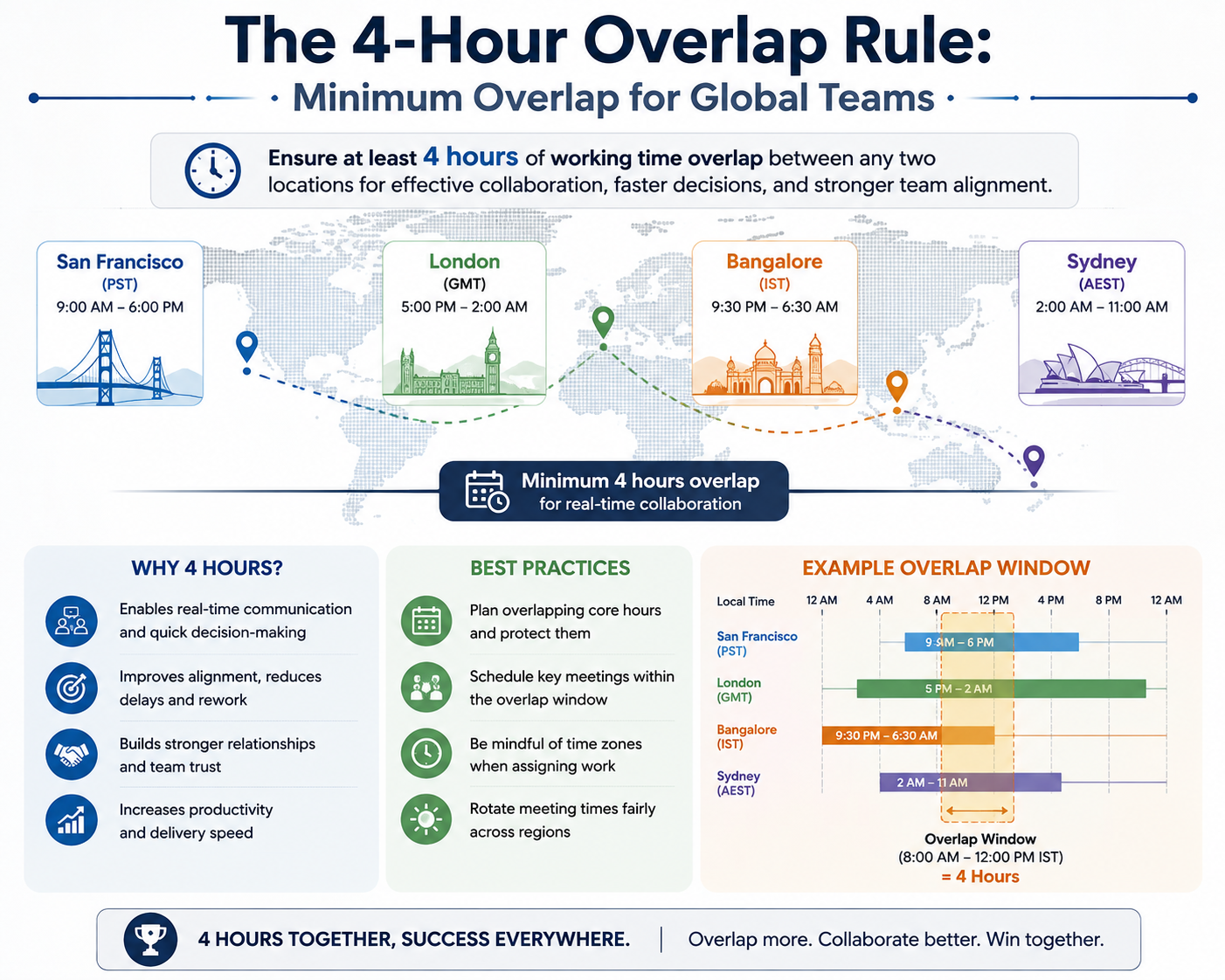
With 5+ time zones, the overlap window shrinks dramatically. In many cases, there is no overlap at all during normal working hours.
| Team Spread | Overlap |
|---|---|
| 1–2 zones | 6–8 hours |
| 3 zones | 3–5 hours |
| 4 zones | 1–3 hours |
| 5+ zones | 0–1 hours |
The Manager's Trap
When overlap disappears, the manager often tries to be everywhere at once. This is the path to burnout.
| Trap | Consequence |
|---|---|
| Attending every meeting | 5 AM to 11 PM days |
| Being the bridge | Never offline |
| Answering instantly | No deep work |
| Skipping breaks | Exhaustion |
| No delegation | Single point of failure |
The Warning Signs
| Sign | What It Means |
|---|---|
| Calendar fully booked | No thinking time |
| Calls before 7 AM or after 9 PM | Unsustainable |
| No lunch breaks | Running on empty |
| Weekend work | Boundaries gone |
| Dreading Mondays | Burnout approaching |
Strategy 1: Go Async-First
What Async Means
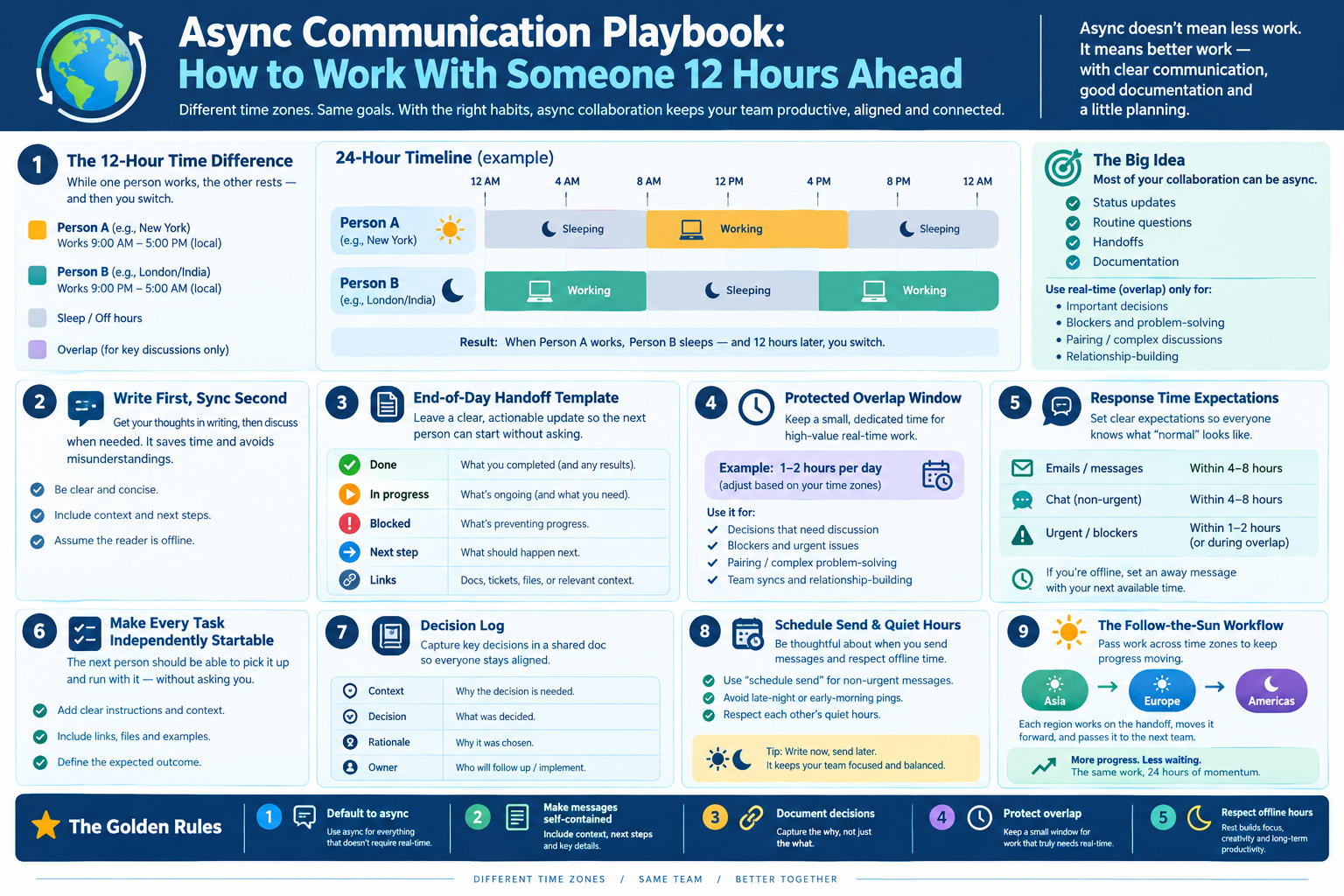
Asynchronous work means communication happens without requiring both parties online at once. It is the only scalable way to manage across 5+ time zones.
| Sync (Live) | Async (Written) |
|---|---|
| Meetings | Documents |
| Calls | Recorded video |
| Instant chat | Threaded messages |
| Standups | Written updates |
| Decisions in meetings | Decision logs |
What to Convert to Async
| Activity | Async Alternative |
|---|---|
| Daily standup | Written update thread |
| Status report | Shared doc |
| Progress review | Recorded video |
| Info session | FAQ document |
| Decision meeting | Decision doc with comments |
| 1:1 check-in | Written reflection + optional call |
The Async Update Template
WEEKLY UPDATE — [Name]

DONE:
  • Completed X
  • Shipped Y

IN PROGRESS:
  • Working on Z

BLOCKED:
  • Waiting on A

NEEDS DECISION:
  • B or C?

NEXT WEEK:
  • Plan to do D
Why It Works
| Benefit | Explanation |
|---|---|
| No time zone dependency | Read anytime |
| Written record | Searchable |
| Deep work | No interruptions |
| Scalable | Works for any team size |
Strategy 2: Rotate Meetings Fairly
When You Must Meet Live
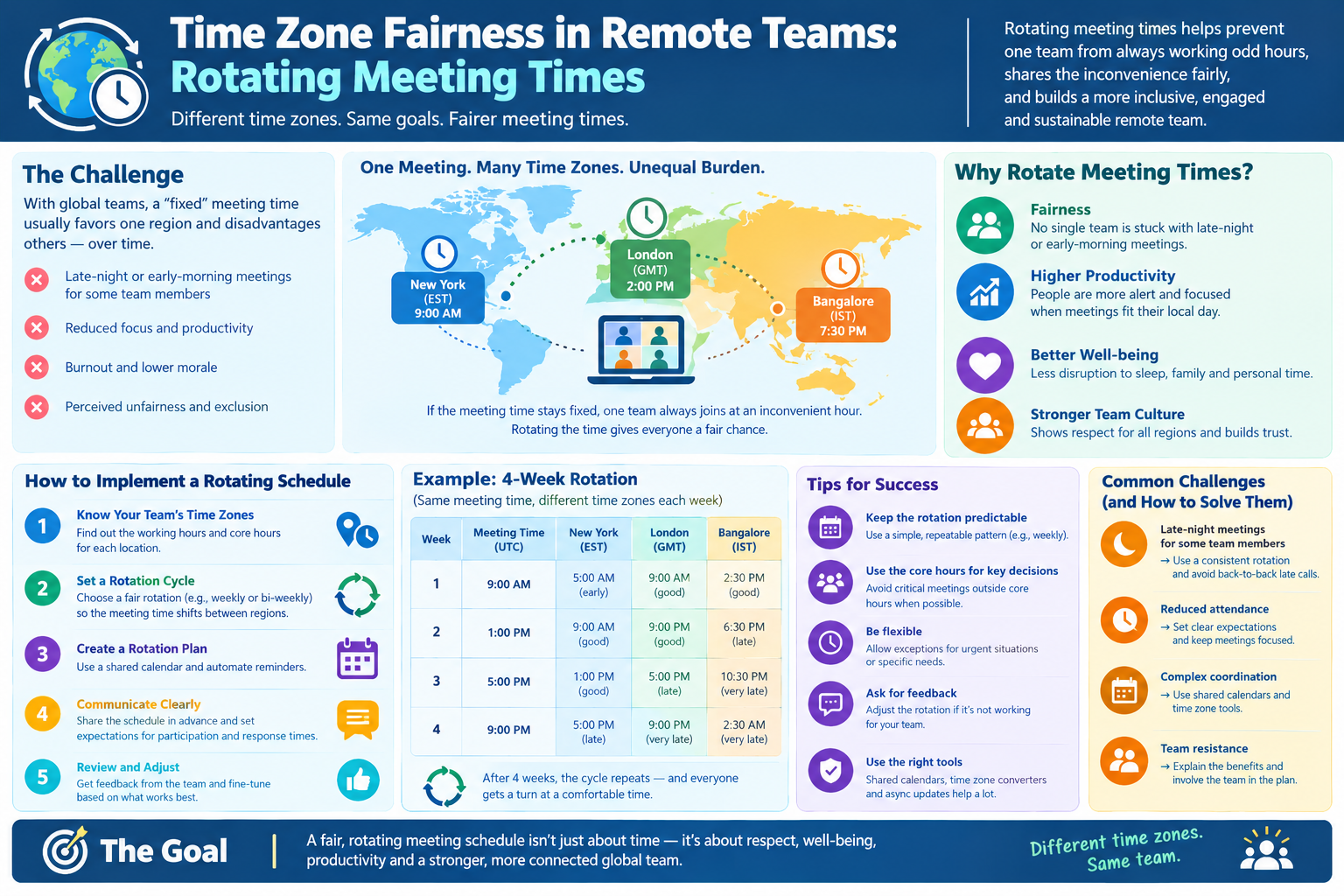
Some meetings cannot be async: brainstorming, conflict resolution, relationship building. For these, rotate the time.
| Rotation Type | Best For |
|---|---|
| Weekly | Active teams |
| Biweekly | Steady state |
| Monthly | Long-running projects |
The Rotation Schedule
| Week | Time (UTC) | Most Burdened |
|---|---|---|
| Week 1 | 14:00 | Asia-Pacific |
| Week 2 | 08:00 | US West |
| Week 3 | 22:00 | Europe |
| Week 4 | 12:00 | Everyone equally |
Rotation Rules
| Rule | Why |
|---|---|
| Publish in advance | People can plan |
| Include UTC | No ambiguity |
| Rotate agenda too | Not just time |
| Record everything | Async participation |
| Cap late calls | Max one per person per week |
What to Record
| Artifact | Purpose |
|---|---|
| Recording | Full context |
| Transcript | Searchable |
| Notes | Key points |
| Decisions | What was agreed |
| Actions | Who does what |
Strategy 3: Document Everything
Why Documentation Is Non-Negotiable
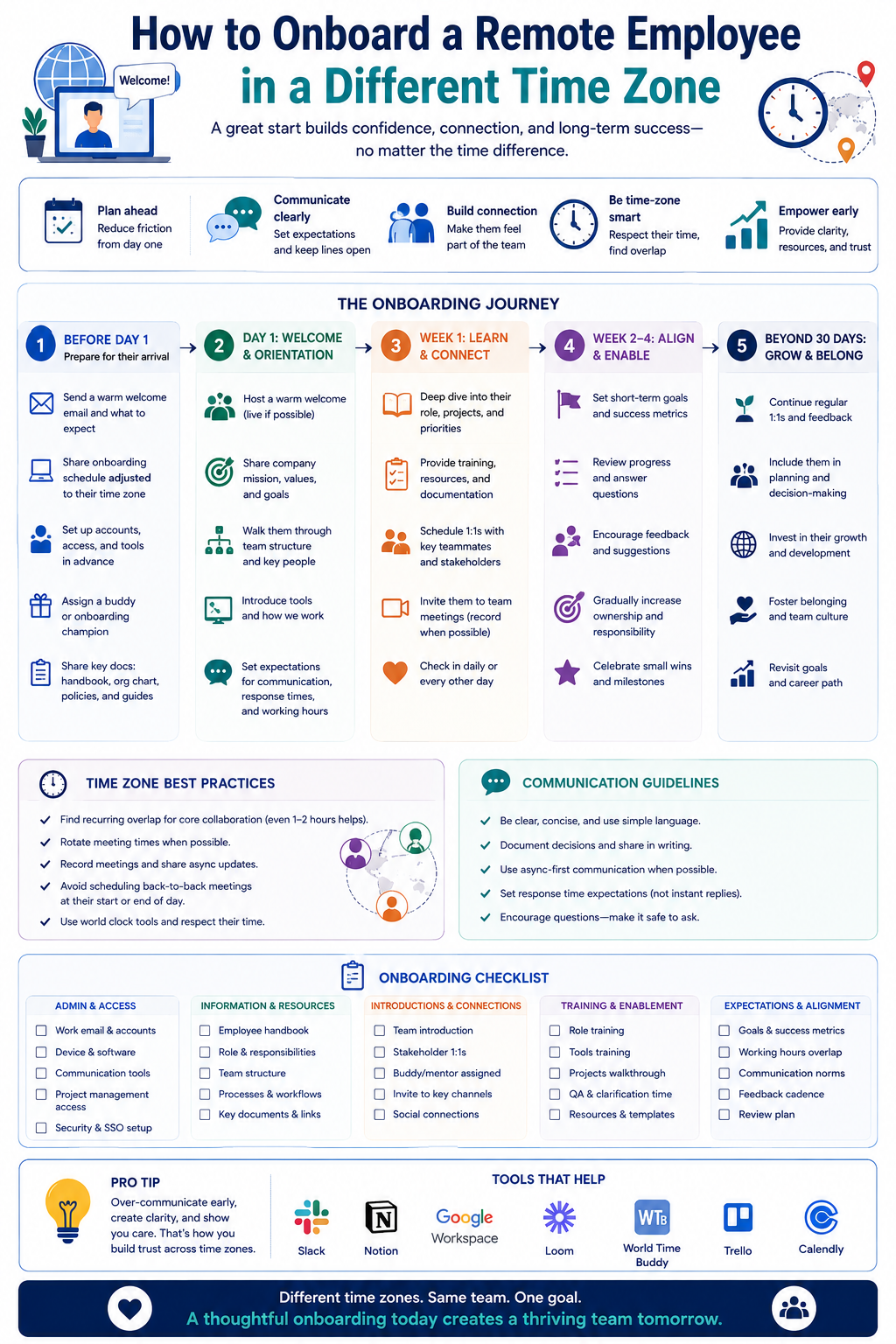
With 5+ time zones, you cannot answer every question in real time. Documentation becomes your proxy.
| Without Docs | With Docs |
|---|---|
| Same questions repeatedly | Answers available 24/7 |
| You are the bottleneck | Team is self-sufficient |
| Context lost | Context preserved |
| Onboarding is slow | Onboarding is fast |
What to Document
| Document | Purpose |
|---|---|
| Decision log | What was decided and why |
| Runbooks | Step-by-step guides |
| Team handbook | How we work |
| Onboarding doc | New hire guide |
| FAQ | Common questions |
| Meeting notes | What was discussed |
Documentation Standards
| Standard | Practice |
|---|---|
| Timestamp everything | Include UTC |
| Name owners | Who is responsible |
| State status | Draft, review, approved |
| Link sources | Reference related docs |
| Update, don't duplicate | One source of truth |
The Golden Rule
If it is not written, it does not exist. In a 5+ time zone team, undocumented decisions will be relitigated endlessly.
Strategy 4: Protect Your Own Energy
You Are Not Immune to Burnout
Managers often sacrifice their own wellbeing for the team. This is noble but unsustainable.
| Sacrifice | Cost |
|---|---|
| 5 AM calls | Sleep disruption |
| 11 PM check-ins | Family time lost |
| No lunch | Exhaustion |
| Weekend work | No recovery |
Your Personal Rules
| Rule | Example |
|---|---|
| Cap inconvenient hours | Max 2 per week |
| No calls after 9 PM | Unless emergency |
| No calls before 7 AM | Unless emergency |
| Protect lunch | Non-negotiable |
| One day off per weekend | Real rest |
| Block focus time | 2 hours daily |
The Emergency Exception
Emergencies happen. Define what counts as an emergency and handle them without guilt.
| Emergency | Not Emergency |
|---|---|
| Outage | Status update |
| Security breach | Non-blocking question |
| Customer crisis | Routine decision |
| Safety issue | Scheduling request |
Strategy 5: Build Local Leaders
The Delegation Solution
You cannot be everywhere. Delegate to local leaders in each major time zone.
| Time Zone Hub | Local Leader Role |
|---|---|
| Asia-Pacific | Team lead, first responder |
| Europe | Team lead, decision-maker |
| Americas | Team lead, coordinator |
What to Delegate
| Task | Why Delegate |
|---|---|
| Daily standups | Local lead runs it |
| First-line questions | Reduce your load |
| Status collection | Local lead aggregates |
| Decision-making | Empower local leads |
| Conflict resolution | Local lead handles first |
The Hub-and-Spoke Model
| Aspect | Details |
|---|---|
| Hubs | Local leaders in each region |
| Spokes | Team members in each hub |
| Bridge | You connect the hubs |
| Benefit | No single point of failure |
Building Trust
| Practice | Why |
|---|---|
| Clear expectations | No ambiguity |
| Decision authority | Empower them |
| Regular 1:1s | Stay connected |
| Public recognition | Build credibility |
| Support, don't micromanage | Trust their judgment |
Strategy 6: Measure Cycles, Not Hours
The Wrong Metric
Do not measure response time in hours. With 5+ time zones, that metric is meaningless and encourages burnout.
The Right Metric
Measure cycle time — how long a full loop takes.
| Metric | Meaning |
|---|---|
| Turnaround | Days per exchange |
| Blocked time | How long work waits |
| Decision latency | Time from proposal to decision |
| Handoff quality | How often work resumes smoothly |
Target Cycle Times
| Work Type | Target Turnaround |
|---|---|
| Urgent bug | Same day (with overlap) |
| Normal task | 1–2 days |
| Design decision | 2–5 days |
| Strategic | 1–2 weeks |
Why This Protects You
| Benefit | Explanation |
|---|---|
| No instant-response pressure | Fewer interruptions |
| Realistic expectations | Sustainable pace |
| Focus on outcomes | Not activity |
| Async-friendly | Works across zones |
Strategy 7: Use the Right Tools
Tool Categories
| Category | Purpose |
|---|---|
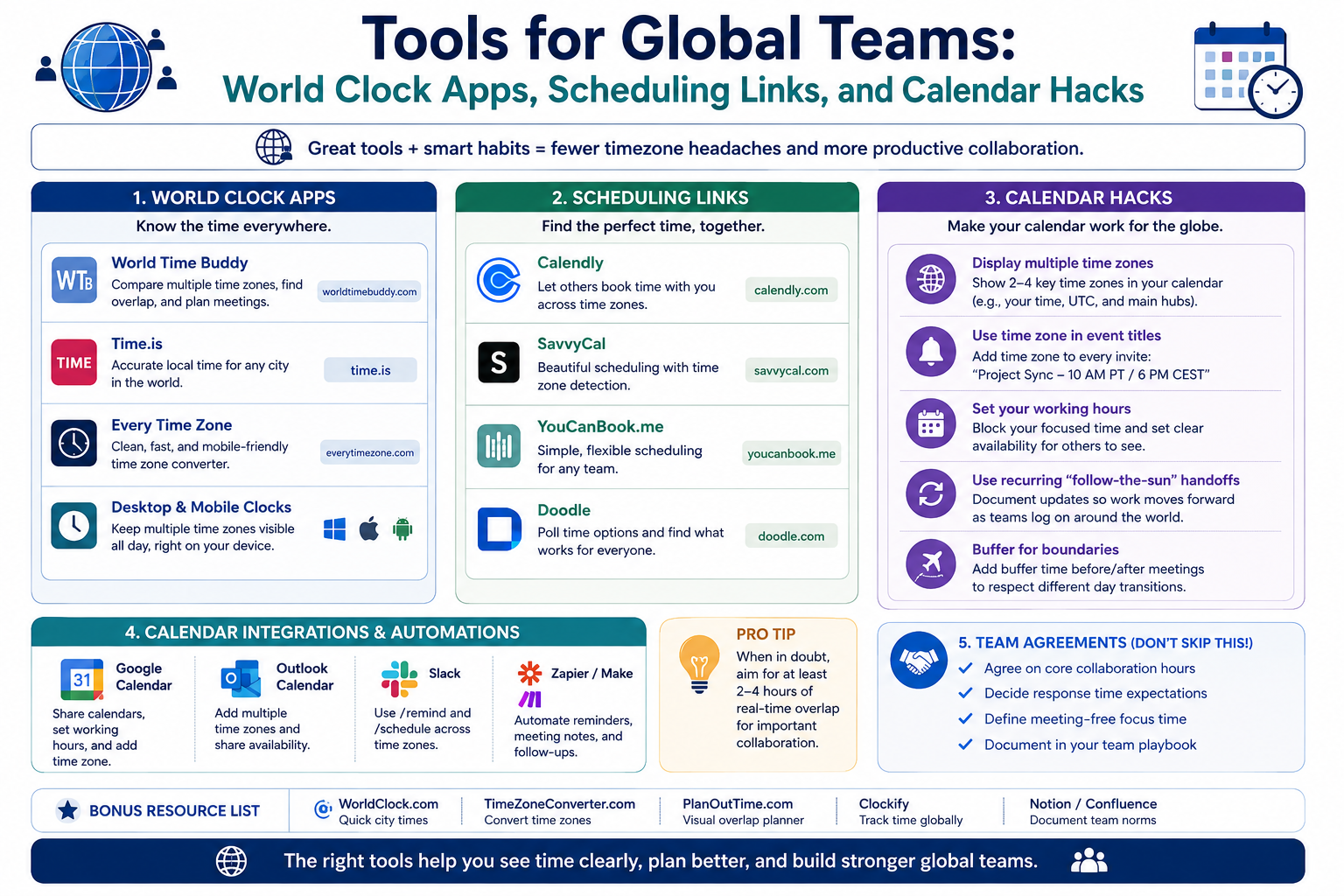
| World clock | See multiple zones |
| Scheduling links | Automatic conversion |
| Async video | Replace live calls |
| Documentation | Shared knowledge |
| Issue tracker | Track work |
| Time zone converter | Specific conversions |
World Clock Setup
Keep these clocks visible at all times:
| Clock | Purpose |
|---|---|
| Your local time | Daily life |
| UTC | Universal reference |
| Each team hub | Coordination |
Scheduling Link Rules
| Rule | Why |
|---|---|
| Set buffer times | Avoid back-to-back |
| Limit daily meetings | Protect focus |
| Block focus time | Prevent overbooking |
| Use round-robin | Share the load |
| Include time zone | Prevent confusion |
Strategy 8: Design for Follow-the-Sun
Turning Time Zones into an Advantage
Instead of fighting time zones, use them. Follow-the-sun means work passes from team to team across the globe.
| Time (UTC) | Location | Activity |
|---|---|---|
| 00:00–08:00 | Asia-Pacific | Development |
| 08:00–16:00 | Europe | Review |
| 16:00–00:00 | Americas | Deployment |
What Makes It Work
| Requirement | Why |
|---|---|
| Strong documentation | Context transfers |
| Clear handoffs | Work continues |
| Defined ownership | No confusion |
| Async communication | No waiting |
The Handoff Template
HANDOFF — [Date]

DONE:
  • Completed X

BLOCKED:
  • Waiting on Y

NEXT FOR YOU:
  • Please review Z

OPEN QUESTIONS:
  • A or B?

LINKS:
  • Design doc: [link]
Common Mistakes to Avoid
| Mistake | Why It Hurts |
|---|---|
| Attending every meeting | No time for anything else |
| No delegation | Single point of failure |
| No documentation | You are the bottleneck |
| No rotation | Same people always burdened |
| Instant response culture | Constant interruption |
| No personal limits | Burnout |
| Measuring hours | Wrong incentives |
| Ignoring local leaders | Untapped capacity |
Quick Reference Card
━━━━━━━━━━━━━━━━━━━━━━━━━━━━━━━━━━━━━━━━━━━━━━━━━━━━━━━━━━
   MANAGING 5+ TIME ZONES WITHOUT BURNOUT — CHEAT SHEET
━━━━━━━━━━━━━━━━━━━━━━━━━━━━━━━━━━━━━━━━━━━━━━━━━━━━━━━━━━

CORE PRINCIPLE:
  Async by default, sync by exception

EIGHT STRATEGIES:
  1. Go async-first
  2. Rotate meetings fairly
  3. Document everything
  4. Protect your own energy
  5. Build local leaders
  6. Measure cycles, not hours
  7. Use the right tools
  8. Design for follow-the-sun

ASYNC CONVERSIONS:
  Standup    → Written update thread
  Status     → Shared doc
  Review     → Recorded video
  Info       → FAQ document
  Decision   → Decision doc

ROTATION SCHEDULE:
  Week 1 → 14:00 UTC (Asia burdened)
  Week 2 → 08:00 UTC (US West burdened)
  Week 3 → 22:00 UTC (Europe burdened)
  Week 4 → 12:00 UTC (balanced)

PERSONAL RULES:
  Max 2 inconvenient hours per week
  No calls after 9 PM or before 7 AM
  Protect lunch
  One day off per weekend
  Block 2 hours focus time daily

DELEGATION MODEL:
  Hub-and-spoke
  Local leaders in each region
  You connect the hubs

CYCLE TIME TARGETS:
  Urgent bug  → Same day
  Normal      → 1–2 days
  Design      → 2–5 days
  Strategic   → 1–2 weeks

FOLLOW-THE-SUN:
  Asia-Pacific → Development
  Europe       → Review
  Americas     → Deployment

GOLDEN RULE:
  You cannot be everywhere. Design the system so you do not have to be.

━━━━━━━━━━━━━━━━━━━━━━━━━━━━━━━━━━━━━━━━━━━━━━━━━━━━━━━━━━
         Check live conversions at: /timezone-converter
━━━━━━━━━━━━━━━━━━━━━━━━━━━━━━━━━━━━━━━━━━━━━━━━━━━━━━━━━━
Frequently Asked Questions
How do I manage a team in 5+ time zones without burning out?
Make async the default, rotate live meetings, document everything, build local leaders, and protect your own energy with personal limits. Do not try to be everywhere at once.
How many time zones is too many?
There is no hard limit, but 5+ time zones means overlap shrinks to nearly zero. At that point, async-first is mandatory, not optional.
How do I avoid 5 AM and 11 PM calls?
Cap your inconvenient hours, rotate meeting times, delegate to local leaders, and convert as much as possible to async. If a call must happen at an odd hour, rotate it and compensate.
What should I delegate to local leaders?
Daily standups, first-line questions, status collection, and initial decision-making. Local leaders reduce your load and provide faster responses in their region.
How often should I meet my team live?
As infrequently as possible. Use async for status, updates, and routine decisions. Reserve live meetings for brainstorming, conflict resolution, and relationship building.
What is the right metric for a distributed team?
Measure cycle time — how long a full exchange takes — not response time in hours. This encourages sustainable async work.
How do I document effectively across time zones?
Use a decision log, runbooks, a team handbook, and an FAQ. Timestamp everything in UTC, name owners, and keep one source of truth.
What is follow-the-sun?
Follow-the-sun is a workflow where work passes between teams in different time zones, enabling near-continuous progress around the clock.
How do I protect my own wellbeing as a global manager?
Set personal rules: cap inconvenient hours, no calls after 9 PM or before 7 AM, protect lunch, take one day off per weekend, and block focus time daily.
What is the biggest mistake in managing across time zones?
Trying to attend every meeting and be available at all hours. This leads directly to burnout and is unsustainable. Design the system so you do not have to be everywhere.
Final Thoughts
Managing a team across 5+ time zones is not about working harder. It is about designing a system that works without you. Async by default. Rotate meetings. Document everything. Build local leaders. Protect your energy.
Done well, a global team becomes an advantage: work continues around the clock, and you are not the bottleneck. Done badly, it becomes a recipe for burnout. The choice is in the design.
Three things to remember:
- Async by default. Fewer meetings means fewer time zone problems
- Build local leaders. You cannot be everywhere
- Protect your energy. Burnout helps no one
Check time zone conversions instantly → /timezone-converter
Tags: manage team 5 time zones, managing distributed teams without burnout, async first management, time zone burnout manager, global team leadership, rotating meeting times, remote team documentation, time zone management strategies, distributed team burnout, time zone converter