The Economic Impact of Time Zones on Global Business
Time zones are not just a convenience for travelers. They are a structural force that shapes when markets open, when deals close, and which companies can compete globally.
A software team in Bangalore loses a day of collaboration with a client in San Francisco. A trader in London has a four-hour window to reach Tokyo. A remote worker in Lisbon is paid based on a New York schedule.
Time zones create winners and losers in the global economy. This guide explains how.
Use the free time zone converter here →
The Short Answer: Why Time Zones Matter for Business
Time zones determine when people can work together, which directly affects productivity, cost, and competitiveness.
| Aspect | Details |
|---|---|
| Core issue | Business hours overlap determines collaboration |
| Best overlap | New York–London (about 5 hours) |
| Worst gap | US West Coast–India (almost none) |
| Economic effect | Trillions in trade, hiring, and market timing |
| Key advantage | Follow-the-sun workflows |
| Key disadvantage | Coordination costs and delays |
| Modern shift | Remote work is redistributing opportunity |
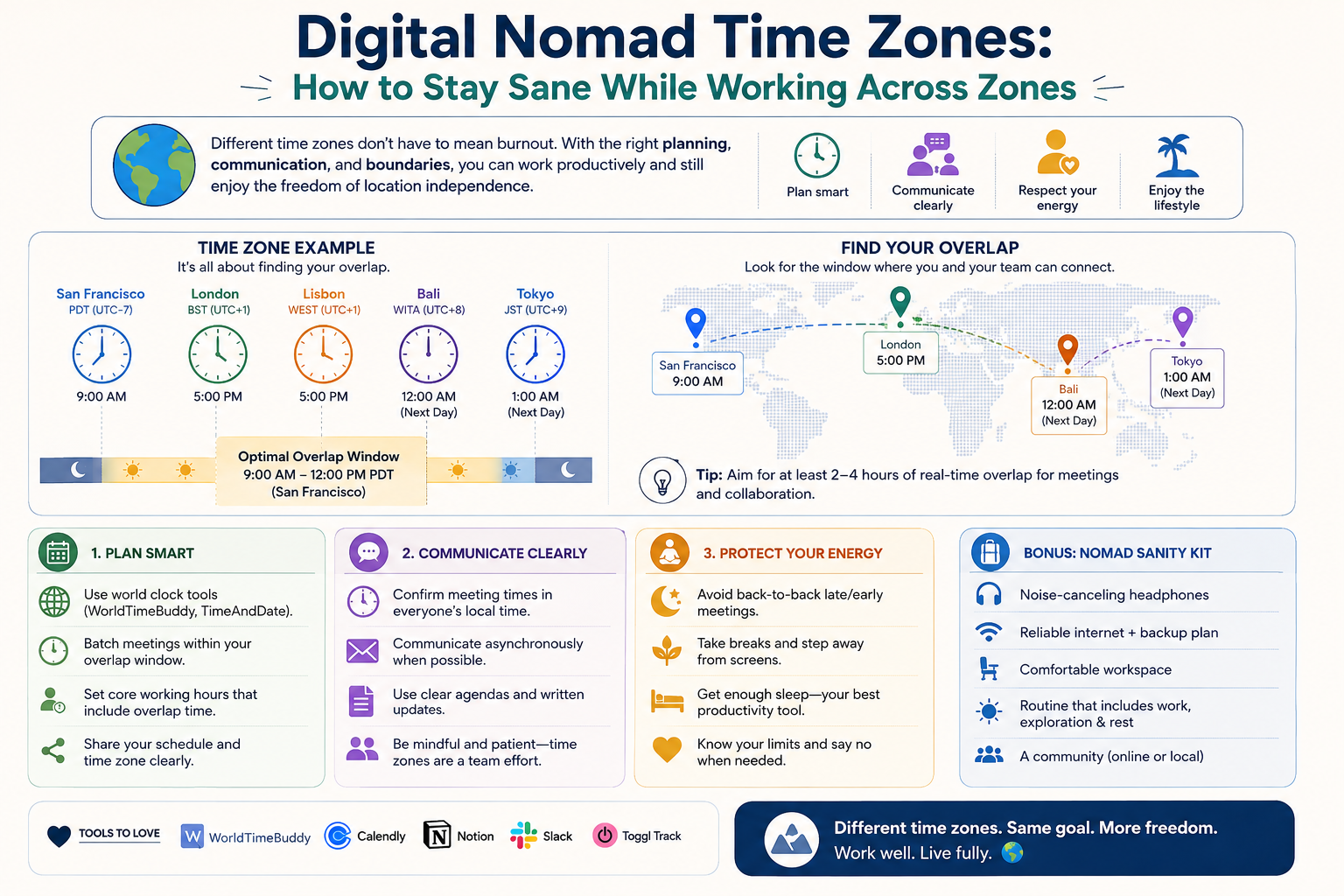
The Business Hours Overlap Problem
Why Overlap Matters
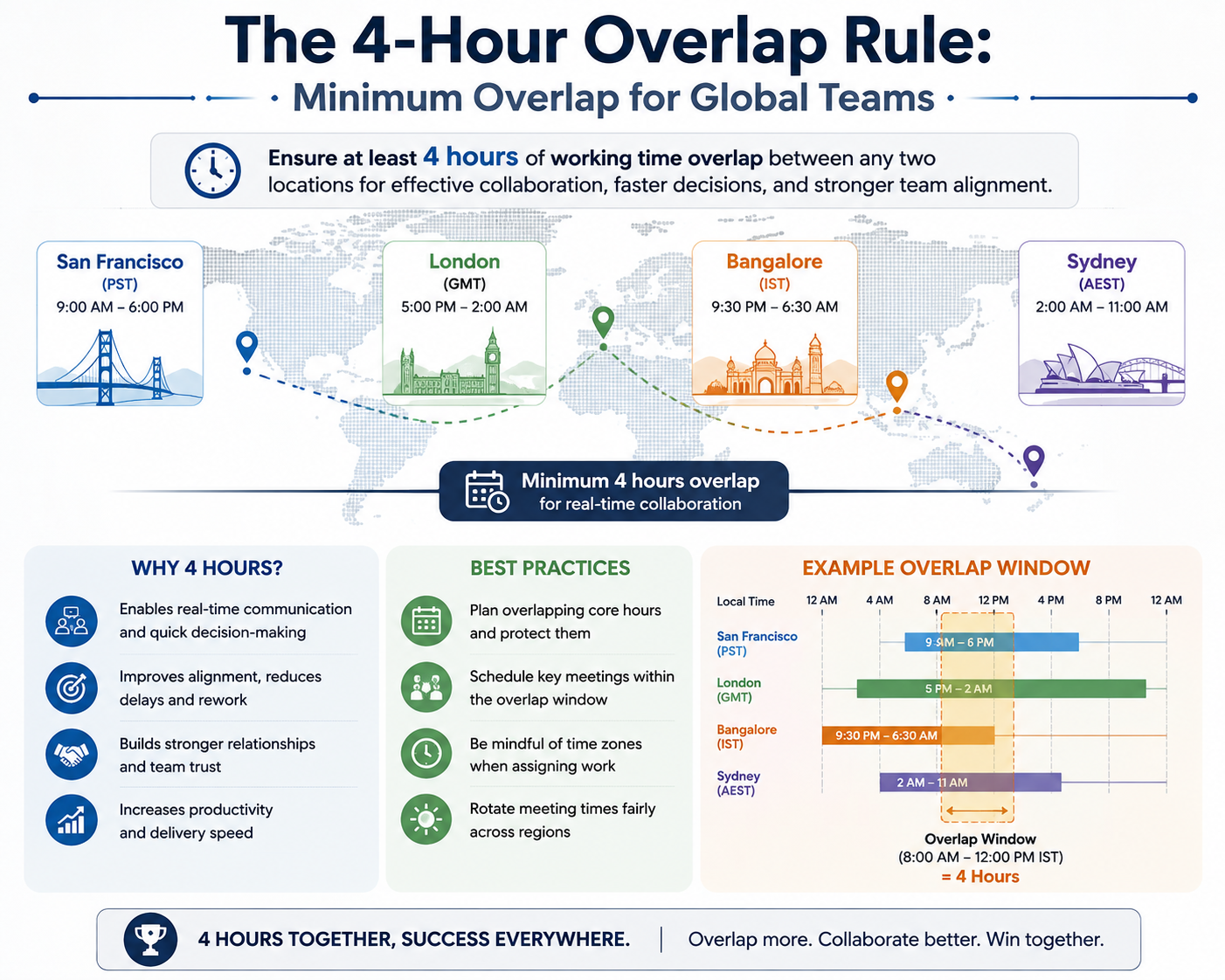
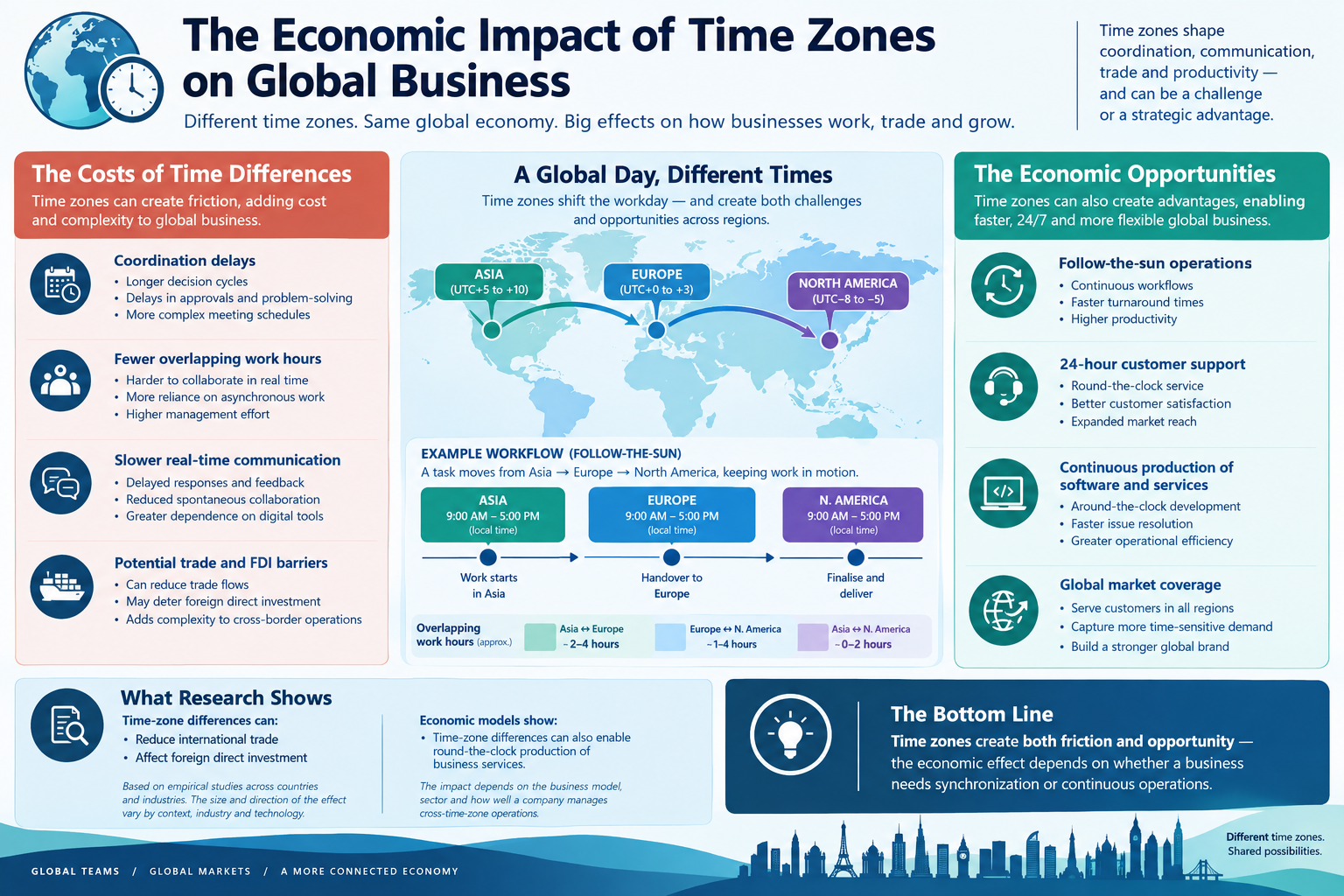
Most business still happens in real time — calls, meetings, negotiations, support. If two teams do not share working hours, collaboration slows dramatically.
| Overlap | Collaboration Quality |
|---|---|
| 6+ hours | Excellent — same-day turnaround |
| 3–5 hours | Good — some real-time work |
| 1–2 hours | Poor — rushed or scheduled |
| 0 hours | Very difficult — one side always off |
Major Market Overlaps
| Pair | Overlap | Notes |
|---|---|---|
| New York – London | ~5 hours | World's most important business corridor |
| London – Frankfurt | ~1 hour | Near-total overlap |
| New York – São Paulo | ~3 hours | Good overlap |
| London – Dubai | ~3 hours | Strong overlap |
| Tokyo – Sydney | ~1 hour | Close alignment |
| New York – Tokyo | ~0 hours | Almost no overlap |
| San Francisco – Bangalore | ~0 hours | Nearly impossible live |
The New York–London Corridor
The New York–London pair is the most economically significant time zone relationship in the world. Their overlap supports the largest bilateral trade and investment relationship on Earth.
| Aspect | Details |
|---|---|
| Overlap | About 5 hours |
| Markets | NYSE and LSE both active |
| Trade volume | Trillions in annual flows |
| Finance | Foreign exchange and bonds |
| Why it works | Shared language and legal tradition |
Follow-the-Sun: Turning Time Zones into an Advantage
What It Is
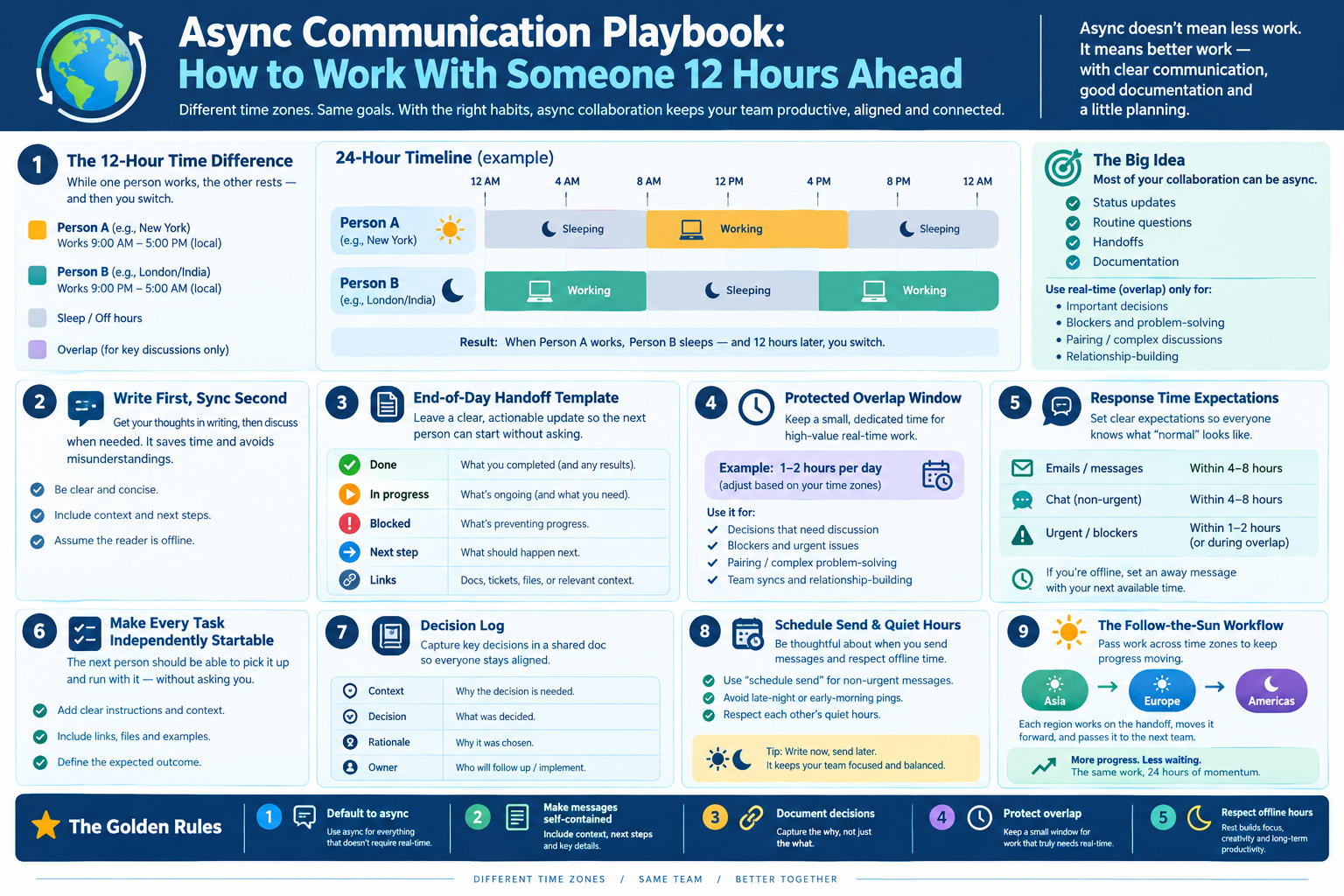
Follow-the-sun is a workflow where work passes from team to team across time zones, allowing near-continuous progress.
| Aspect | Details |
|---|---|
| Definition | Work moves across time zones as the day progresses |
| Benefit | 24-hour productivity |
| Used by | Tech support, software development, manufacturing |
| Requirement | Strong documentation and handoffs |
| Challenge | Coordination and communication overhead |
Example Workflow
| Time (UTC) | Location | Activity |
|---|---|---|
| 00:00–08:00 | Asia-Pacific | Development and testing |
| 08:00–16:00 | Europe | Review and integration |
| 16:00–00:00 | Americas | Deployment and support |
Who Benefits Most
| Industry | Benefit |
|---|---|
| Software | Continuous development |
| Customer support | 24/7 coverage |
| Manufacturing | Round-the-clock production |
| Financial services | Global market coverage |
Time Zone Arbitrage: Cheap Labor Meets Distant Markets
What It Is
Time zone arbitrage means hiring workers in low-cost time zones who can serve clients in high-cost time zones.
| Aspect | Details |
|---|---|
| Definition | Using time zone differences for cost advantage |
| Example | India serving US clients |
| Benefit | Lower labor costs |
| Challenge | Overlap limits real-time work |
| Result | Outsourcing and offshoring booms |
The Outsourcing Map
| Client Region | Service Region | Overlap |
|---|---|---|
| US East | Latin America | 3–5 hours |
| US West | Philippines | 0–2 hours |
| UK | India | 4–5 hours |
| UK | Eastern Europe | 1–2 hours |
| Australia | Philippines | 2–3 hours |
Why Some Pairs Work Better
| Factor | Explanation |
|---|---|
| Overlap | More hours means real-time work |
| Language | Shared language reduces friction |
| Cost | Lower wages create savings |
| Infrastructure | Reliable internet and power |
| Legal | Stable business environment |
Latin America has become a major destination for US companies because of its strong overlap. India dominates UK outsourcing for the same reason.
Financial Markets: Time Zones Set the Rhythm
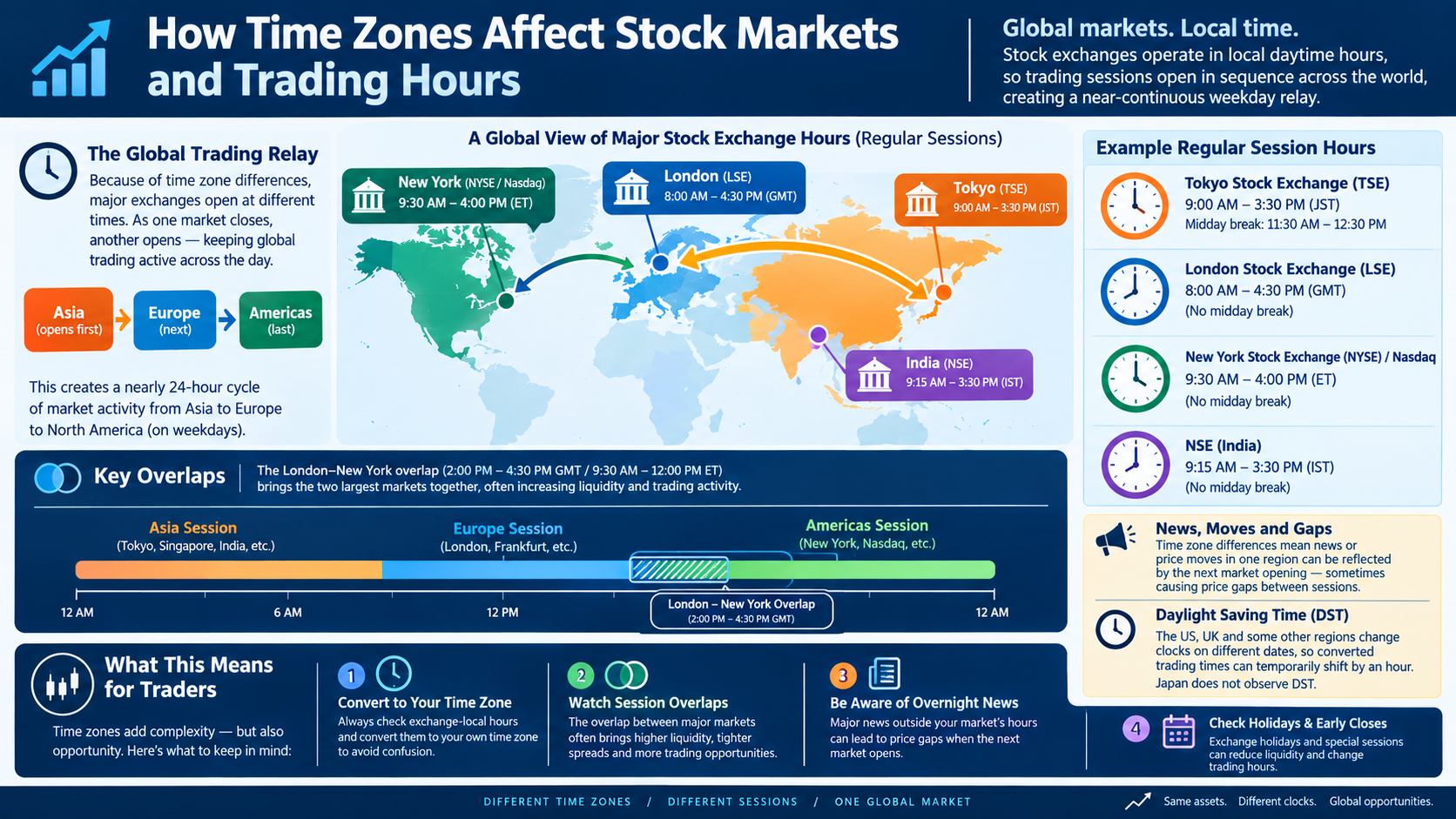
Market Hours Around the World
| Market | Local Hours | UTC Hours |
|---|---|---|
| Tokyo (TSE) | 09:00–15:00 | 00:00–06:00 |
| London (LSE) | 08:00–16:30 | 08:00–16:30 |
| New York (NYSE) | 09:30–16:00 | 14:30–21:00 |
| Sydney (ASX) | 10:00–16:00 | 00:00–06:00 |
The Trading Day Overlap
The global trading day is a relay race between markets.
| Session | Markets Active |
|---|---|
| Asian session | Tokyo, Sydney, Hong Kong |
| European session | London, Frankfurt, Paris |
| US session | New York, Chicago, Toronto |
| Overlap: London–NY | Most liquid hours |
Why the London–New York Overlap Matters
The London–New York overlap is when the world's two largest financial centers are both active. This is when most foreign exchange and bond trading happens.
| Aspect | Details |
|---|---|
| Overlap | About 4 hours |
| Volume | Peak forex and bond trading |
| Liquidity | Highest of the day |
| Volatility | Often elevated |
The Asia Gap
When New York closes, there is a gap before Asia fully opens. This gap creates thinner liquidity and larger price swings.
| Gap | Effect |
|---|---|
| NY close to Tokyo open | Low liquidity |
| Weekend gaps | Price jumps on Monday open |
| Holiday mismatches | Unexpected volatility |
Remote Work: The Time Zone Revolution
How Remote Work Changed the Equation
Remote work decoupled jobs from locations. Workers can now live in one time zone and work for a company in another — sometimes with surprising results.
| Change | Impact |
|---|---|
| Location independence | Workers choose where to live |
| Salary arbitrage | Companies hire globally |
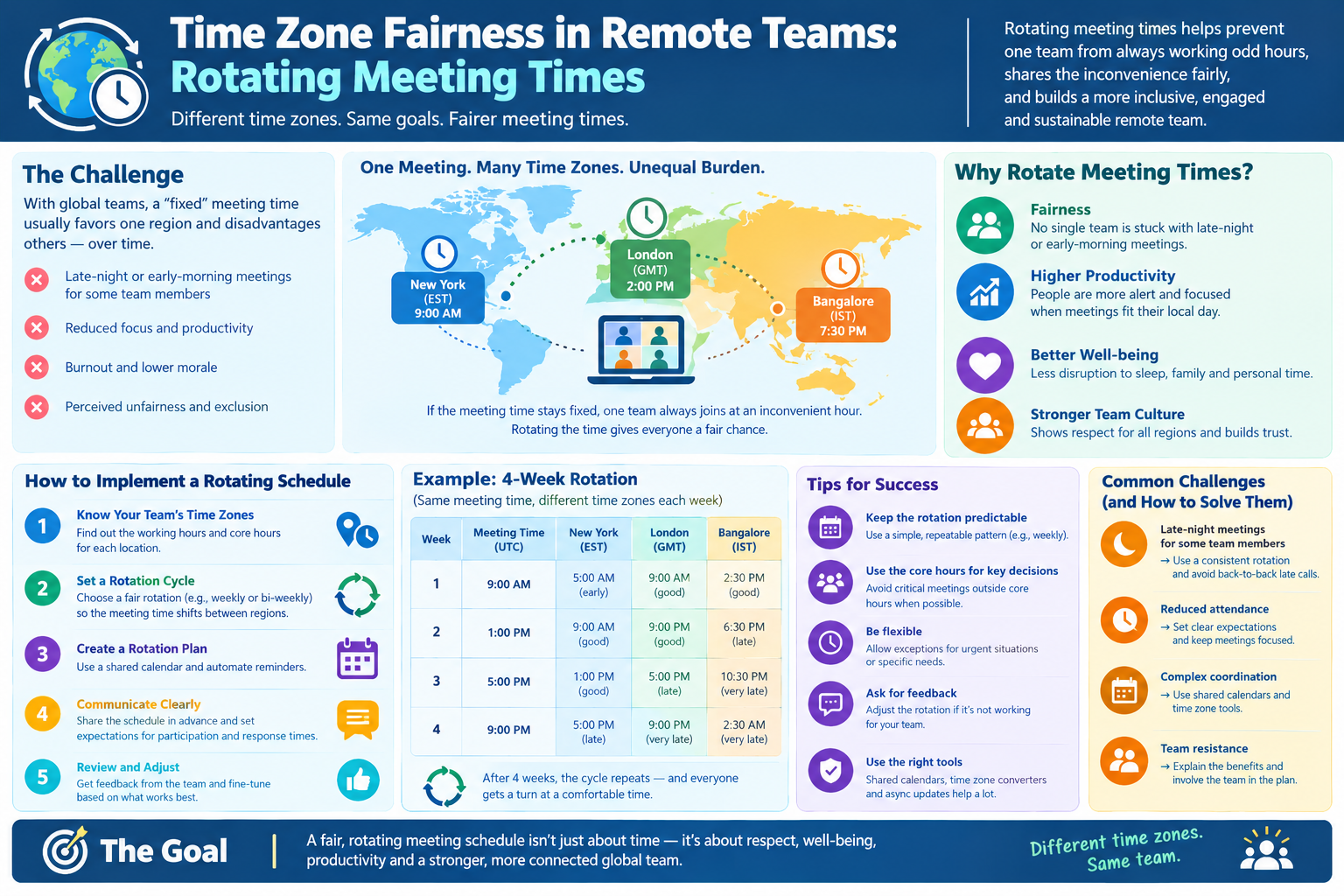
| Overlap requirements | Still a limiting factor |
| Async work | Reduces time zone friction |
The Rise of Async Work
Asynchronous work means communication happens without requiring both parties online at once. This reduces time zone dependence.
| Async Tool | Purpose |
|---|---|
| Docs and wikis | Shared knowledge |
| Recorded video | Updates without meetings |
| Issue trackers | Task handoffs |
| Pull requests | Code review across zones |
Which Time Zones Win?
| Region | Advantage |
|---|---|
| Latin America | Overlaps with US |
| Eastern Europe | Overlaps with Western Europe |
| Portugal | Overlaps with UK and US East |
| India | Overlaps with UK and Middle East |
| Philippines | Overlaps with Australia |
Portugal has become a popular remote work hub because it shares the UK's time zone and is only a few hours ahead of the US East Coast.
The Cost of Time Zone Friction
Direct Costs
| Cost | Explanation |
|---|---|
| Travel | Flights and hotels for meetings |
| Scheduling | Time spent coordinating calls |
| Delays | Decisions wait for the next day |
| Overtime | Early or late calls |
| Duplication | Work redone due to miscommunication |
Indirect Costs
| Cost | Explanation |
|---|---|
| Slower innovation | Less spontaneous collaboration |
| Weaker relationships | Fewer informal interactions |
| Cultural gaps | Distance amplifies misunderstanding |
| Talent limits | Some regions excluded from roles |
Quantifying the Loss
Studies on distributed teams consistently find that time zone difference is one of the strongest predictors of communication breakdown — stronger than physical distance itself.
| Factor | Effect on Communication |
|---|---|
| Same time zone | Baseline |
| 1–2 hours apart | Minor reduction |
| 3–5 hours apart | Moderate reduction |
| 6+ hours apart | Severe reduction |
| 10+ hours apart | Near-total async |
Quick Reference Card
━━━━━━━━━━━━━━━━━━━━━━━━━━━━━━━━━━━━━━━━━━━━━━━━━━━━━━━━━━
      TIME ZONES & GLOBAL BUSINESS CHEAT SHEET
━━━━━━━━━━━━━━━━━━━━━━━━━━━━━━━━━━━━━━━━━━━━━━━━━━━━━━━━━━

KEY OVERLAPS:
  New York – London    → ~5 hours (world's top corridor)
  London – Frankfurt   → ~1 hour
  New York – São Paulo → ~3 hours
  London – Dubai       → ~3 hours
  New York – Tokyo     → ~0 hours
  SF – Bangalore       → ~0 hours

FOLLOW-THE-SUN:
  Asia-Pacific → Europe → Americas
  Enables near 24-hour productivity

TIME ZONE ARBITRAGE:
  US East → Latin America (3–5 hr overlap)
  UK → India (4–5 hr overlap)
  Australia → Philippines (2–3 hr overlap)

MARKET SESSIONS (UTC):
  Tokyo   → 00:00–06:00
  London  → 08:00–16:30
  New York → 14:30–21:00
  London–NY overlap = peak liquidity

REMOTE WORK WINNERS:
  Latin America (US overlap)
  Eastern Europe (EU overlap)
  Portugal (UK + US East overlap)
  India (UK + Middle East overlap)

COST OF DISTANCE:
  6+ hours apart = severe communication breakdown

━━━━━━━━━━━━━━━━━━━━━━━━━━━━━━━━━━━━━━━━━━━━━━━━━━━━━━━━━━
         Check live conversions at: /timezone-converter
━━━━━━━━━━━━━━━━━━━━━━━━━━━━━━━━━━━━━━━━━━━━━━━━━━━━━━━━━━
Frequently Asked Questions
How do time zones affect global business?
Time zones determine when teams can work together in real time. Limited overlap slows decisions, raises costs, and reduces collaboration quality.
What is the most important time zone overlap for business?
The New York–London overlap, roughly five hours, supports the world's largest bilateral trade and investment relationship.
What is follow-the-sun?
Follow-the-sun is a workflow where work passes between teams in different time zones, enabling near-continuous progress around the clock.
What is time zone arbitrage?
Time zone arbitrage means hiring workers in lower-cost time zones who can still serve clients in higher-cost regions during overlapping hours.
Why is Latin America popular for US outsourcing?
Latin America shares several hours of overlap with US business hours, making real-time collaboration practical and cost-effective.
How do time zones affect financial markets?
Market hours determine when exchanges are open. Overlaps like London–New York create peak liquidity, while gaps between sessions reduce it.
Does remote work reduce time zone problems?
Partly. Async tools reduce dependence on live meetings, but overlap still matters for collaboration, mentorship, and urgent decisions.
Which time zones benefit most from remote work?
Regions that overlap with major markets — Latin America, Eastern Europe, Portugal, and India — benefit most.
How much does time zone difference cost companies?
Costs include travel, scheduling overhead, delays, and reduced innovation. Studies show time zone difference predicts communication breakdown more strongly than physical distance.
Final Thoughts
Time zones are an invisible tax on global business. They slow decisions, limit collaboration, and shape which regions can compete for which jobs. But they also create opportunities — follow-the-sun workflows, outsourcing advantages, and remote work markets that did not exist a generation ago.
Three things to remember:
- Overlap is everything. A few hours of shared time determines what is possible
- Time zones create winners and losers. Latin America, Eastern Europe, and India benefit from proximity to big markets
- Async work is changing the rules. But it has not eliminated the value of shared hours
Check time zone conversions instantly → /timezone-converter
Tags: economic impact of time zones, time zones and global business, New York London overlap, Asia Pacific time zone gap, time zone arbitrage, remote work time zones, business hours overlap, stock market time zones, outsourcing time zones, time zone converter