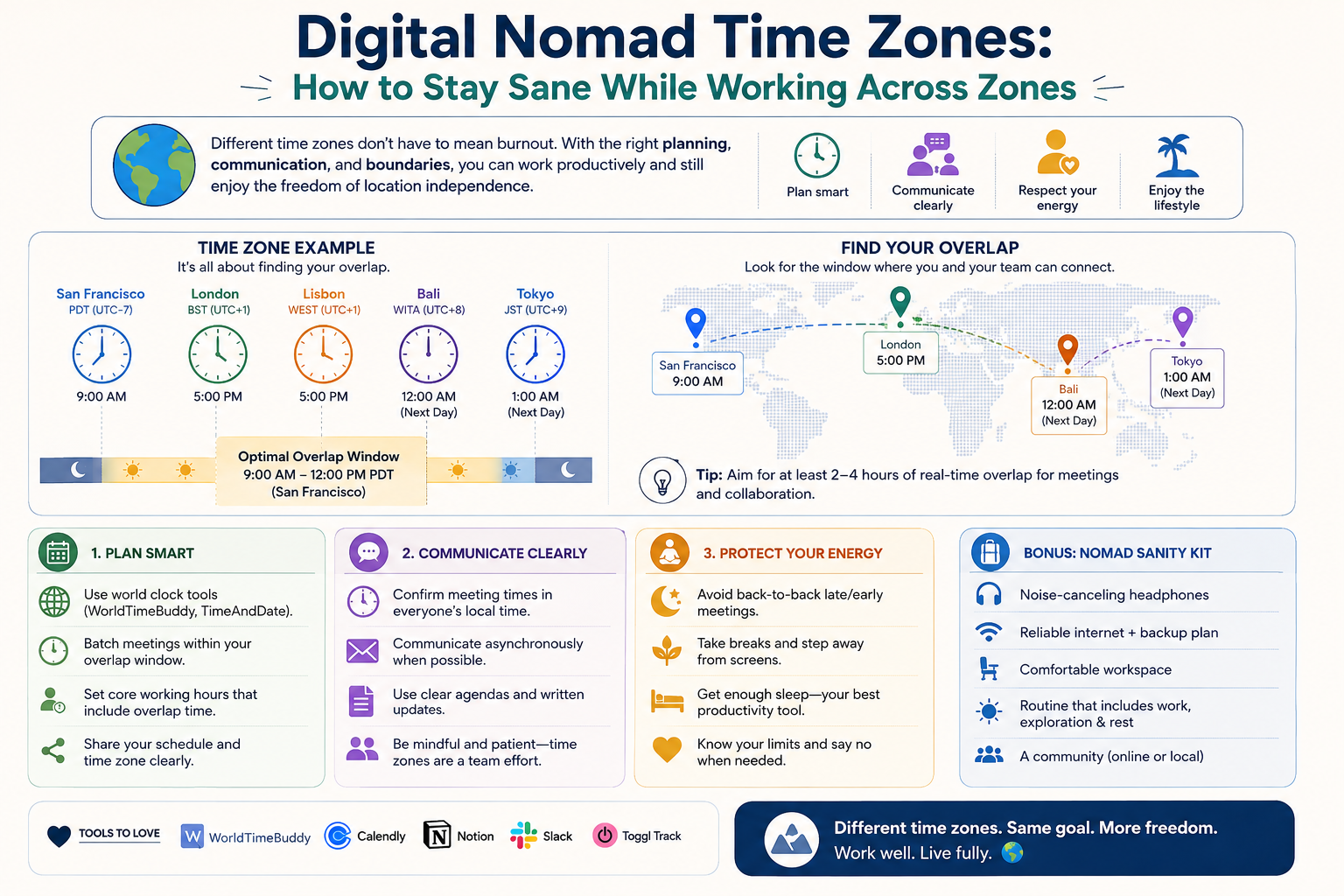
Digital Nomad Time Zones: How to Stay Sane While Working Across Zones
The digital nomad dream is simple: work from anywhere. The reality is messier. Every new country means a new time zone, a new sleep schedule, and a new set of client calls at strange hours.
Do it wrong, and you end up exhausted, unproductive, and disconnected from everyone you work with. Do it right, and time zones become a manageable part of the lifestyle.
This guide explains how to stay sane while working across time zones as a digital nomad.
Use the free time zone converter here →
The Short Answer: What Makes Nomad Time Zones Hard
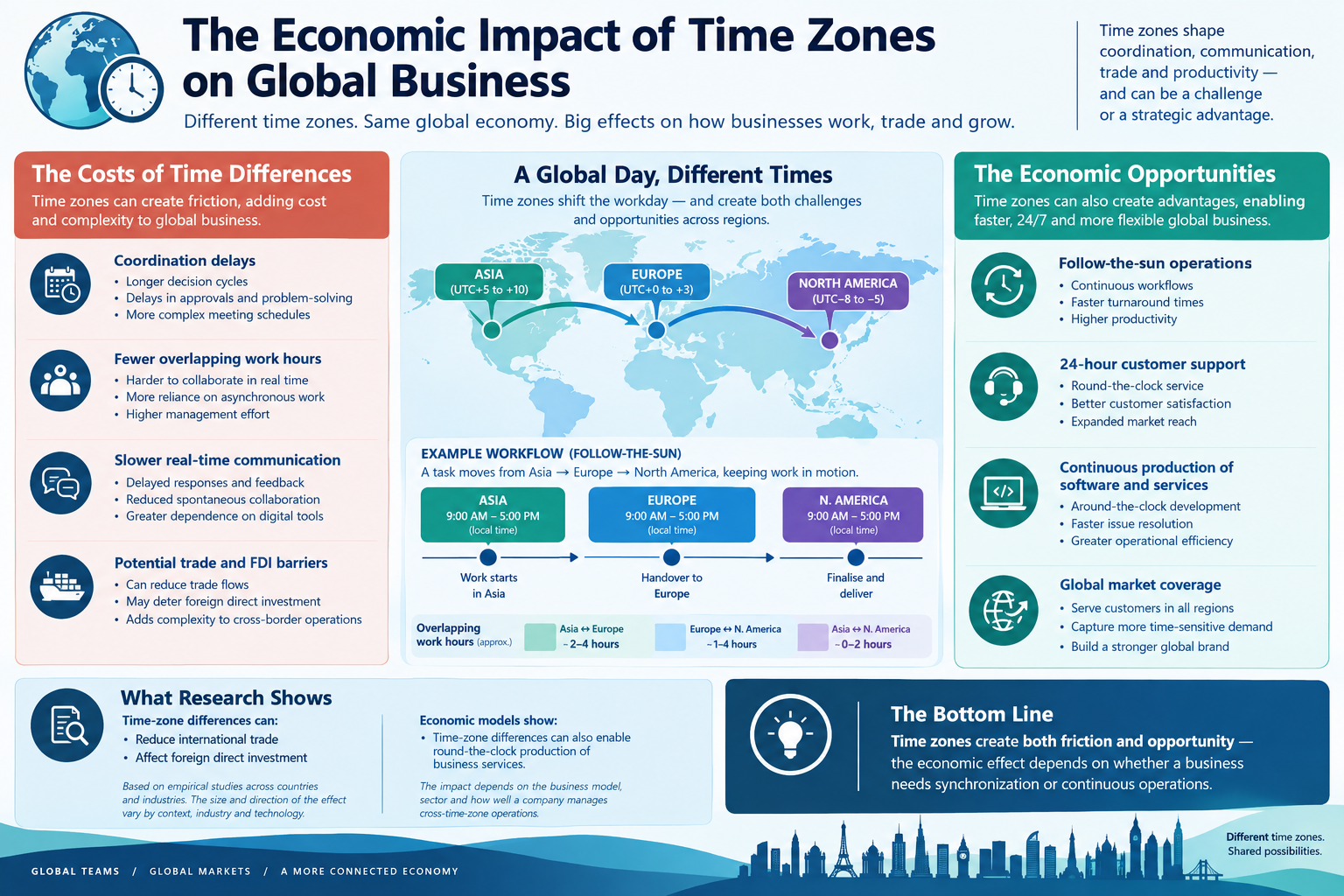
Digital nomads face three overlapping time zone problems: jet lag, client overlap, and social isolation. Each needs a different solution.
| Problem | Cause | Solution |
|---|---|---|
| Jet lag | Rapid time zone shifts | Gradual adaptation, light control |
| Client overlap | Working across zones | Fixed base zone, async work |
| Social isolation | Odd hours vs local life | Local community, boundaries |
| Sleep disruption | Irregular schedule | Consistent sleep window |
| Burnout | Always "on call" | Protect offline hours |
Problem 1: Jet Lag and Constant Time Zone Shifts
Why It Hurts
Every time you cross multiple time zones, your body clock falls out of sync with local time. This causes fatigue, poor sleep, digestive issues, and reduced focus.
| Time Zones Crossed | Recovery Time |
|---|---|
| 1–2 | 1 day |
| 3–5 | 2–3 days |
| 6–8 | 4–5 days |
| 9–12 | 1–2 weeks |
Why Nomads Struggle More
Tourists deal with jet lag once. Nomads deal with it repeatedly. This creates chronic circadian disruption that accumulates over months.
| Factor | Impact |
|---|---|
| Frequent travel | No time to adapt |
| Irregular sleep | Body clock never settles |
| Work demands | Cannot rest properly |
| New environments | Light and noise disrupt sleep |
How to Reduce Jet Lag
| Strategy | How It Helps |
|---|---|
| Fly east gradually | Easier than flying west |
| Shift bedtime before travel | Pre-adapt to new zone |
| Use light strategically | Morning light advances clock |
| Avoid late caffeine | Protects sleep |
| Stay hydrated | Reduces fatigue |
| Arrive a day early | Buffer before work |
The Slow Travel Rule
Stay in each location for at least one month. This gives your body time to adapt and reduces the frequency of jet lag.
| Stay Length | Effect |
|---|---|
| 1–3 days | Constant jet lag |
| 1 week | Still adjusting |
| 2–4 weeks | Adapted, then move |
| 1–3 months | Fully adapted, productive |
Problem 2: Client and Team Overlap
The Core Tension
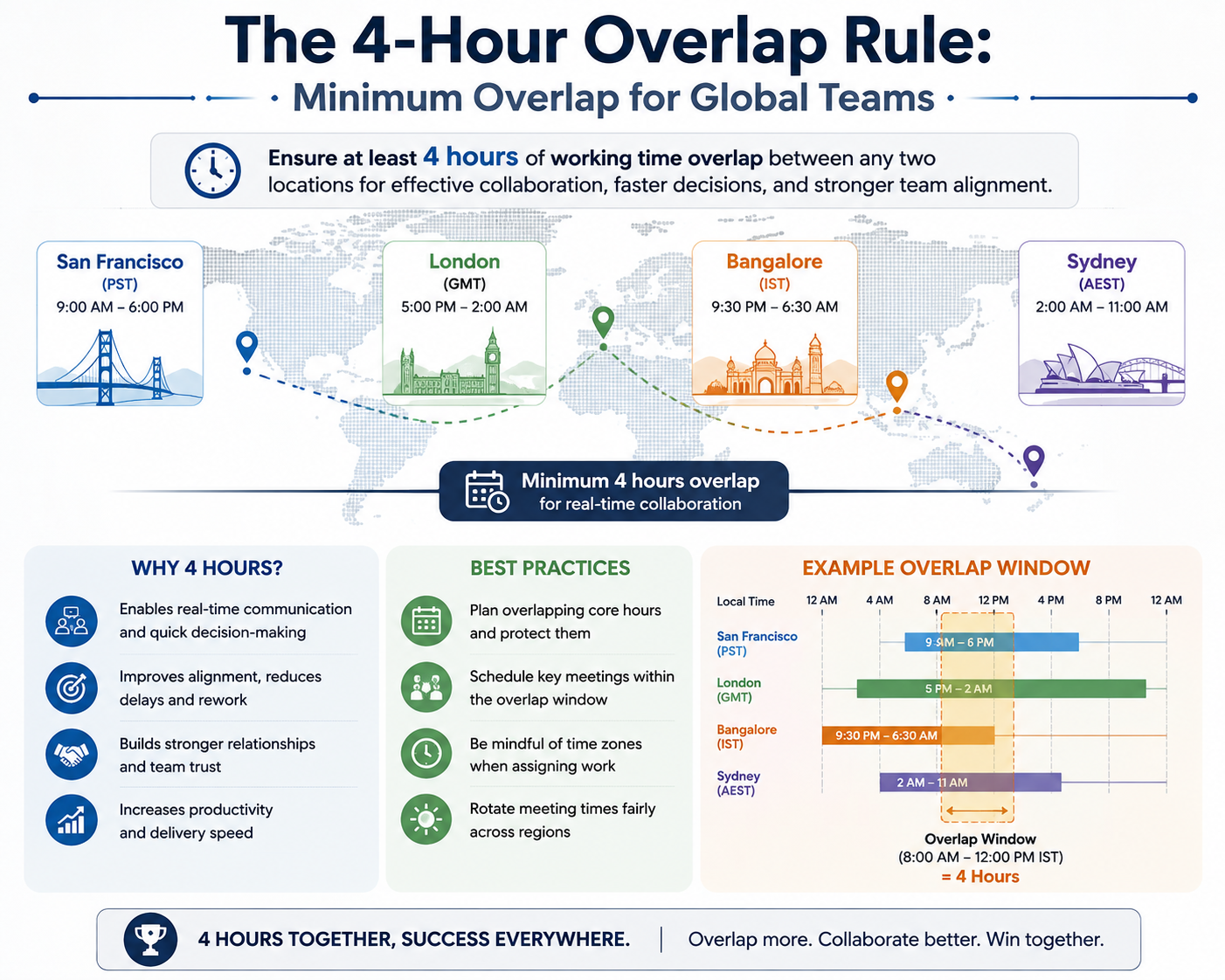
Your clients and team work on their schedule. You are somewhere else. If your working hours do not overlap, collaboration becomes difficult.
| Overlap | Collaboration |
|---|---|
| 4+ hours | Comfortable |
| 2–4 hours | Workable |
| 1–2 hours | Difficult |
| 0 hours | Fully async |
Strategy 1: Choose a Base Time Zone
Many nomads pick a base time zone and work those hours, regardless of where they are.
| Base Zone | Works Well For |
|---|---|
| UTC−05:00 (US East) | US clients |
| UTC−08:00 (US West) | Tech and startups |
| UTC+00:00 (London) | European clients |
| UTC+01:00 (Central Europe) | EU clients |
| UTC+05:30 (India) | Indian and Middle East clients |
How to Choose Your Base Zone
| Question | Consideration |
|---|---|
| Who are my clients? | Match their zone |
| What are my work hours? | Keep them consistent |
| Where do I want to live? | Balance lifestyle and work |
| Can I go async? | Less need for overlap |
Strategy 2: Follow the Sun
Some nomads move west slowly, staying in the same relative time zone as their clients. This keeps their schedule consistent while they travel.
| Month | Location | Local Time vs Client |
|---|---|---|
| January | Portugal | +0 hours |
| February | Morocco | +0 hours |
| March | Senegal | −1 hour |
| April | Brazil | −3 hours |
Strategy 3: Go Async-First
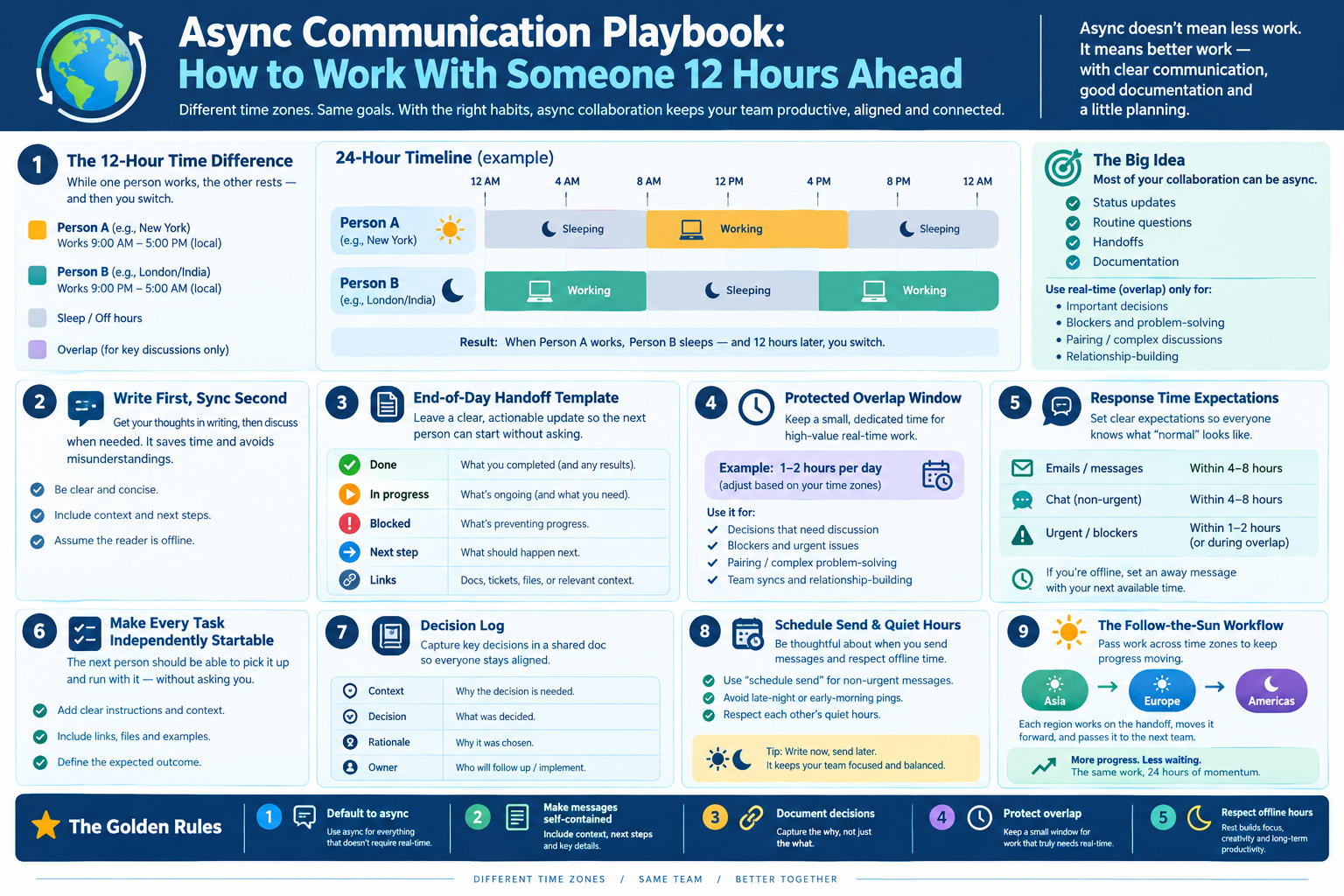
If overlap is impossible, build your work around async communication.
| Async Practice | Purpose |
|---|---|
| Written updates | Replace meetings |
| Recorded videos | Replace calls |
| Clear documentation | Reduce questions |
| Handoff notes | Keep work moving |
| Response windows | Set expectations |
Problem 3: Sleep and Health
The Foundation: Consistent Sleep
The single most important health habit for nomads is a consistent sleep window. Pick a time and stick to it, even as you move.
| Habit | Benefit |
|---|---|
| Fixed sleep time | Body clock stays stable |
| Fixed wake time | Better energy |
| Dark, cool room | Better sleep quality |
| No screens before bed | Easier sleep onset |
| Morning light | Resets body clock |
Protecting Sleep From Client Calls
Late-night client calls are the biggest threat to nomad sleep. Set boundaries.
| Rule | Example |
|---|---|
| No calls after 10 PM local | Reschedule or async |
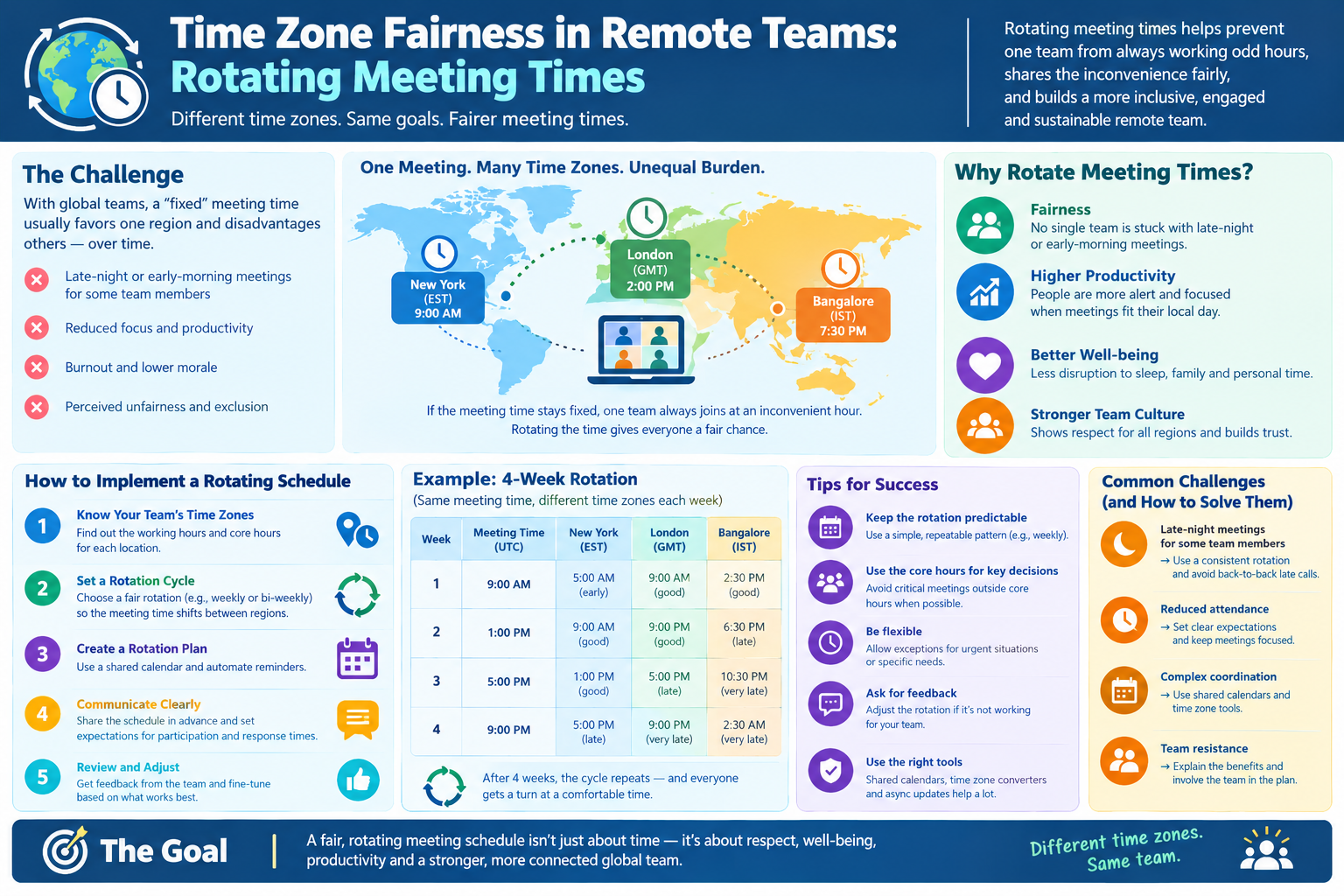
| Rotate late calls | Share burden |
| Cap late calls per week | Maximum one |
| Compensate with late starts | Recover sleep |
| Record instead of attend | Async participation |
The Recovery Day
After a late-night call or a long flight, take a recovery day. Do not schedule anything demanding.
| Situation | Recovery |
|---|---|
| Call after midnight | Late start next day |
| Red-eye flight | Full rest day |
| Major time zone shift | 2–3 light days |
Problem 4: Social Life and Isolation
The Odd Hours Problem
When you work US hours from Asia, your free time falls when locals are asleep. This makes friendships and community hard.
| Working Hours | Local Social Life |
|---|---|
| US hours from Europe | Overlap with evening |
| US hours from Asia | Almost none |
| EU hours from Asia | Overlap with evening |
| EU hours from Americas | Overlap with morning |
How to Build Community
| Strategy | How It Helps |
|---|---|
| Join coworking spaces | Meet other nomads |
| Attend local events | Build local ties |
| Find nomad communities | Shared experience |
| Schedule social time | Protect it like work |
| Choose nomad hubs | More people in same situation |
Popular Nomad Hubs by Time Zone
| Hub | Time Zone | Works Well For |
|---|---|---|
| Lisbon | UTC+00:00 | EU and US East |
| Bali | UTC+08:00 | Asia and Australia |
| Medellín | UTC−05:00 | US clients |
| Chiang Mai | UTC+07:00 | Asia and Europe |
| Mexico City | UTC−06:00 | US clients |
| Tbilisi | UTC+04:00 | Europe and Middle East |
The Nomad Time Zone Toolkit
Essential Tools
| Tool | Purpose |
|---|---|
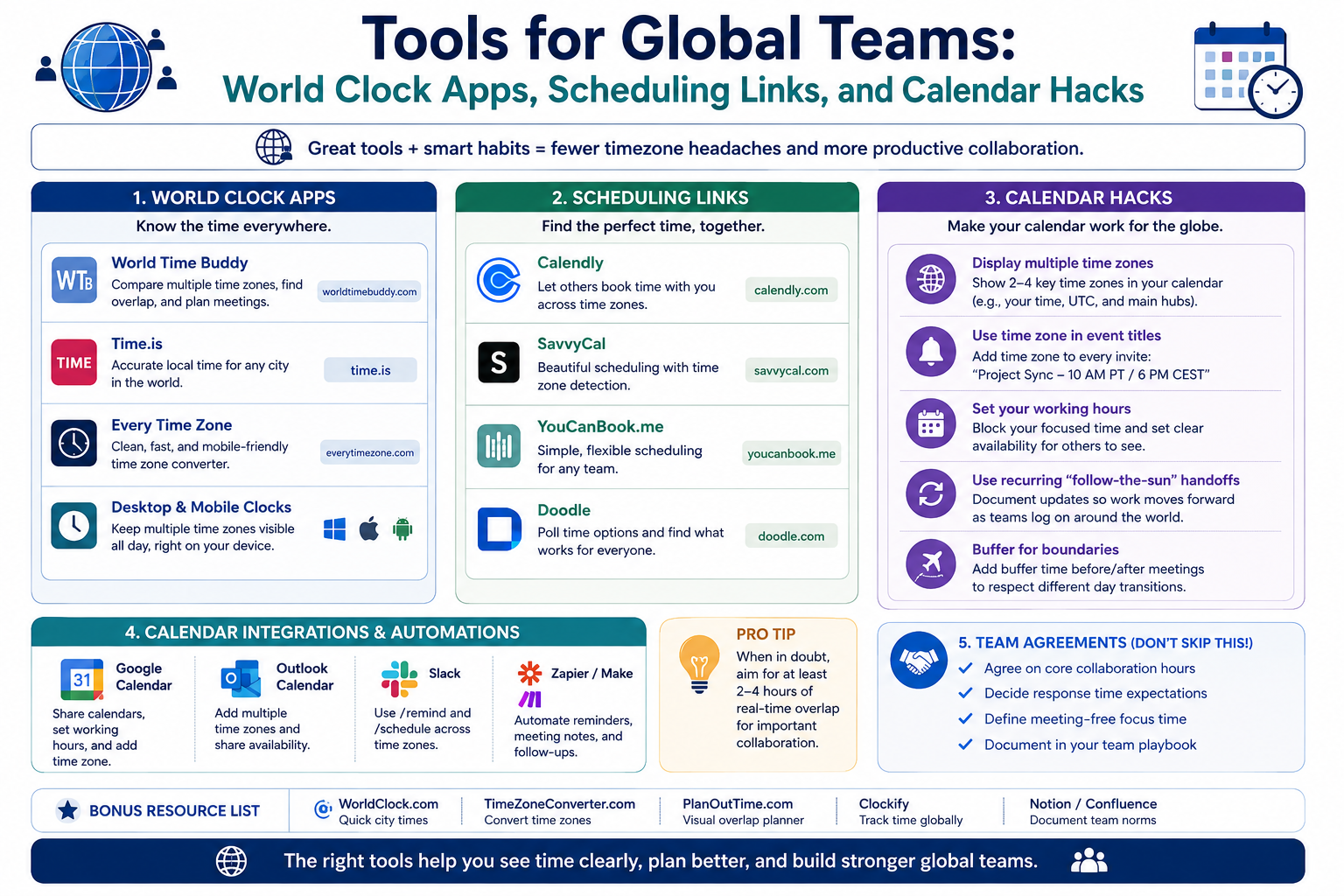
| Time zone converter | Plan calls |
| World clock | See multiple zones |
| Calendar with zones | Avoid mistakes |
| Async video | Replace live calls |
| VPN | Access home services |
The World Clock Setup
Keep these zones visible at all times:
| Clock | Purpose |
|---|---|
| Your local time | Daily life |
| Client time zone | Work scheduling |
| Team time zone | Collaboration |
| UTC | Universal reference |
A Practical Nomad Schedule
Example: US Client, Based in Europe
| Local Time | Activity |
|---|---|
| 07:00–09:00 | Morning routine, exercise |
| 09:00–12:00 | Deep work (client asleep) |
| 12:00–13:00 | Lunch |
| 14:00–18:00 | Client overlap, calls |
| 18:00–20:00 | Local social time |
| 20:00–22:00 | Wind down |
Example: US Client, Based in Asia
| Local Time | Activity |
|---|---|
| 06:00–09:00 | Personal time |
| 09:00–12:00 | Local activities |
| 13:00–15:00 | Deep work |
| 20:00–00:00 | Client overlap |
| 00:00–01:00 | Wind down |
| 01:00–09:00 | Sleep |
Quick Reference Card
━━━━━━━━━━━━━━━━━━━━━━━━━━━━━━━━━━━━━━━━━━━━━━━━━━━━━━━━━━
   DIGITAL NOMAD TIME ZONES — CHEAT SHEET
━━━━━━━━━━━━━━━━━━━━━━━━━━━━━━━━━━━━━━━━━━━━━━━━━━━━━━━━━━

THREE CORE PROBLEMS:
  1. Jet lag — frequent time zone shifts
  2. Client overlap — working across zones
  3. Social isolation — odd hours vs local life

JET LAG RULES:
  • Stay 1+ month per location
  • Shift bedtime before travel
  • Use morning light to adapt
  • Arrive a day early for work

CLIENT OVERLAP STRATEGIES:
  • Choose a base time zone
  • Follow the sun (move west slowly)
  • Go async-first
  • 4+ hours overlap = comfortable

SLEEP PROTECTION:
  • Fixed sleep and wake times
  • No calls after 10 PM local
  • Cap late calls at one per week
  • Take recovery days

NOMAD HUBS BY ZONE:
  Lisbon      → UTC+00:00 (EU + US East)
  Medellín    → UTC−05:00 (US clients)
  Bali        → UTC+08:00 (Asia + Australia)
  Chiang Mai  → UTC+07:00 (Asia + Europe)
  Tbilisi     → UTC+04:00 (EU + Middle East)

ESSENTIAL TOOLS:
  Time zone converter, world clock, async video

━━━━━━━━━━━━━━━━━━━━━━━━━━━━━━━━━━━━━━━━━━━━━━━━━━━━━━━━━━
         Check live conversions at: /timezone-converter
━━━━━━━━━━━━━━━━━━━━━━━━━━━━━━━━━━━━━━━━━━━━━━━━━━━━━━━━━━
Frequently Asked Questions
How do digital nomads handle time zones?
Most choose a base time zone, work consistent hours, protect their sleep, and rely on async communication when overlap is limited.
What is the best time zone for a digital nomad?
It depends on your clients. If you work with US clients, UTC−05:00 to UTC+01:00 works well. For EU clients, UTC+00:00 to UTC+03:00 is ideal.
How do you avoid jet lag as a nomad?
Stay in each location for at least a month, shift your bedtime before travel, use morning light to adapt, and take recovery days after long flights.
Should digital nomads work local hours or client hours?
Most work client hours to maintain overlap, even if it means odd local hours. Some go async-first instead.
How do you stay social as a nomad with odd hours?
Join coworking spaces, attend local events, choose nomad hubs, and schedule social time as seriously as work.
What if my clients are 12 hours away?
You will have almost no overlap. Go async-first, use recorded updates, and accept that live calls will be rare and scheduled carefully.
How many late-night calls are too many?
More than one per week is a warning sign. Cap late calls, rotate them, and compensate with late starts.
What is the biggest mistake nomads make with time zones?
Ignoring sleep. Chronic sleep disruption destroys productivity, mood, and health faster than any other nomad problem.
Do nomads need a fixed schedule?
Yes. A consistent sleep and work schedule is the foundation of staying sane across time zones.
Final Thoughts
Time zones are one of the hardest parts of the digital nomad life — and one of the least discussed. The freedom to work from anywhere comes with the cost of working across everywhere.
The nomads who thrive are the ones who choose a base zone, protect their sleep, build local community, and go async when needed. The ones who burn out are the ones who try to be everywhere at once.
Three things to remember:
- Choose a base time zone. Work consistent hours, wherever you are
- Protect your sleep. It is the foundation of everything else
- Slow down. Stay longer, travel less, adapt fully
Check time zone conversions instantly → /timezone-converter
Tags: digital nomad time zones, working across time zones, nomad jet lag, how to manage time zones while traveling, remote work time zones, client calls across time zones, base time zone nomad, digital nomad sleep, time zone converter, nomad burnout