Permanent DST vs Standard Time: Which Is Better for Health and Energy?
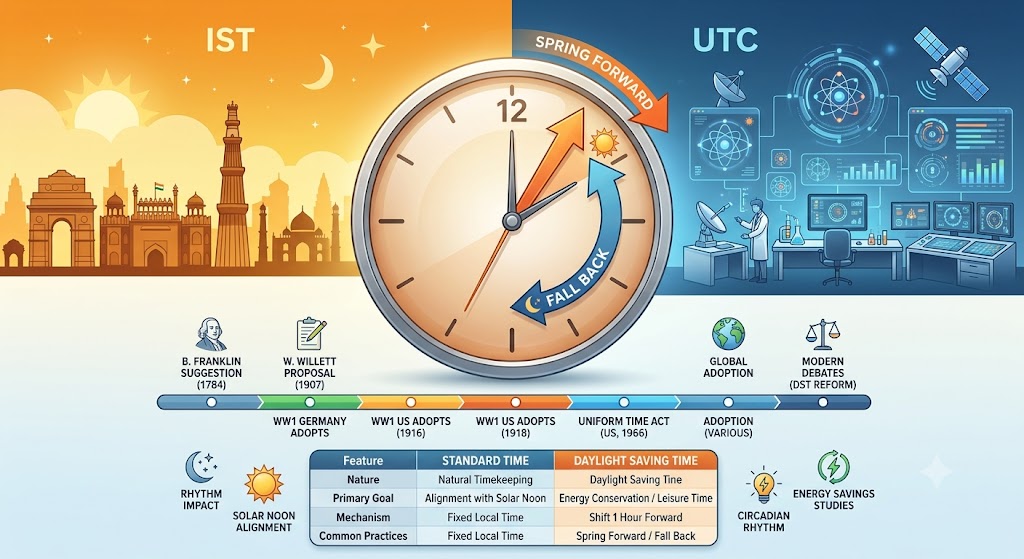
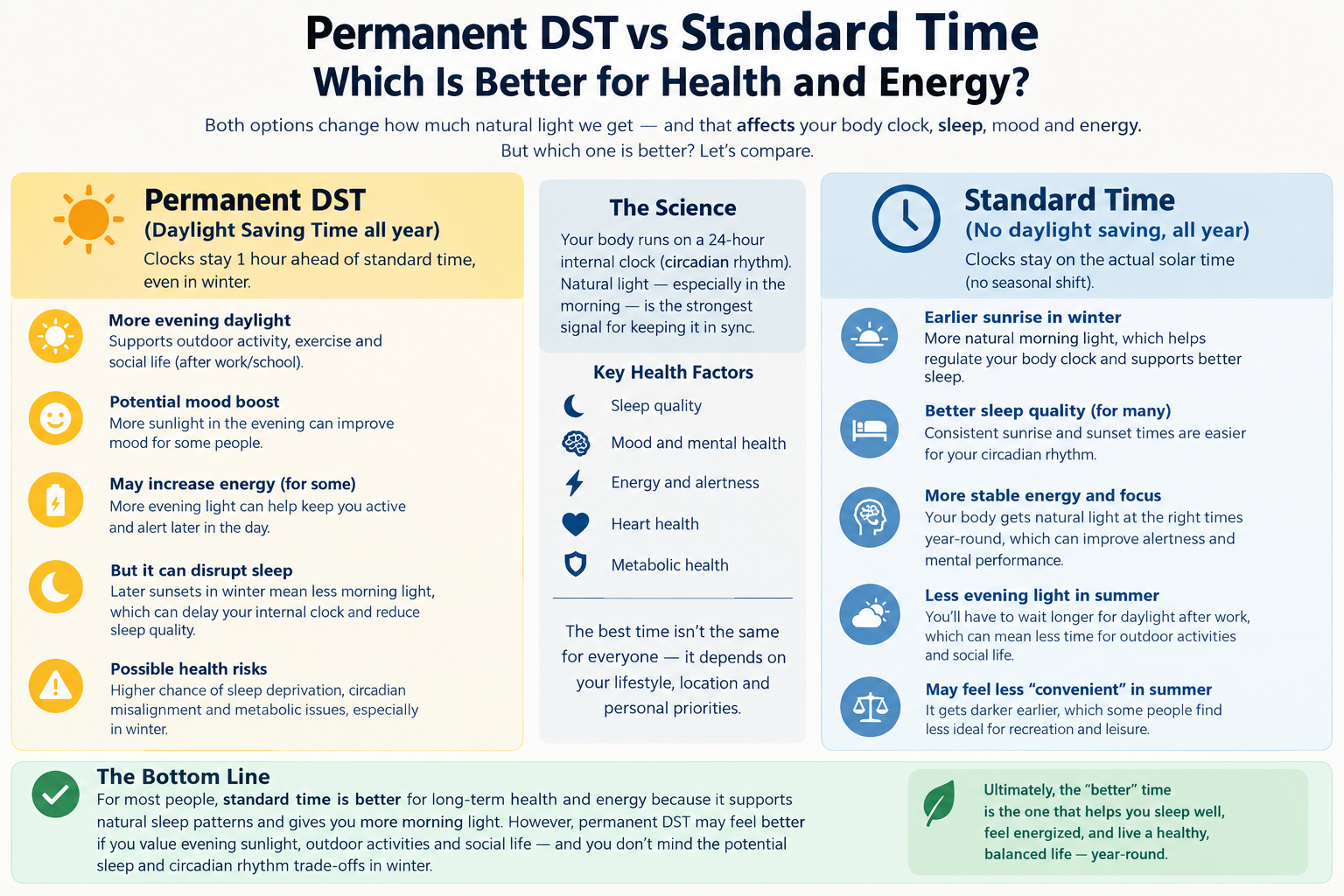
Every year, lawmakers propose making Daylight Saving Time permanent. Every year, sleep scientists push back. The debate sounds simple — more evening sunlight versus more morning sunlight — but the science is far more one-sided than most people realize.
The short version: from a health perspective, permanent standard time wins clearly. From an energy perspective, neither option saves much — and DST may even cost more.
This guide breaks down the evidence on both sides.
Use the free time zone converter here →
The Short Answer: Which Is Better?
Permanent Standard Time (pST) is better for health. Neither option delivers meaningful energy savings, and permanent DST may slightly increase energy use.
| Question | Answer |
|---|---|
| Better for health? | Permanent Standard Time |
| Better for energy? | Roughly a wash — DST may increase use |
| What sleep scientists say | Permanent Standard Time |
| What most legislators propose | Permanent Daylight Saving Time |
| Historical verdict | Permanent DST was tried and repealed |
| Main health issue | Circadian misalignment from dark mornings |
The Core Science: Circadian Rhythm and Morning Light
Why Morning Light Matters
The human body runs on an internal clock — the circadian rhythm — that is set primarily by light exposure. Morning light advances the clock; evening light delays it.
| Light Exposure | Effect on Body Clock |
|---|---|
| Bright morning light | Advances clock, improves alertness |
| Evening light | Delays clock, disrupts sleep |
| Dark mornings | Causes chronic misalignment |
| Long bright evenings | Delays sleep onset |
What Permanent DST Does
Permanent DST shifts clocks forward one hour year-round. This means:
| Season | Effect of Permanent DST |
|---|---|
| Summer | Similar to current DST |
| Winter | Sunrise up to 1 hour later |
| Result | Millions wake and commute in darkness |
| Consequence | Chronic circadian misalignment |
What Permanent Standard Time Does
Permanent Standard Time keeps clocks aligned with the sun's position. Morning light arrives when the body expects it.
| Season | Effect of Permanent Standard Time |
|---|---|
| Summer | Sunrises very early |
| Winter | Sunrises at natural time |
| Result | Morning light resets body clock |
| Consequence | Better sleep, better health |
Health: The Evidence Favors Standard Time
Sleep Medicine Organizations Agree
Major sleep and health organizations have taken formal positions supporting permanent standard time.
| Organization | Position |
|---|---|
| American Academy of Sleep Medicine (AASM) | Supports permanent standard time |
| Sleep Research Society (SRS) | Supports permanent standard time |
| Society for Research on Biological Rhythms | Opposes permanent DST |
| British Sleep Society | Opposes permanent DST |
| European Sleep Research Society | Favors standard time |
The AASM has stated that permanent standard time is the optimal choice because it best aligns with human circadian biology.
Health Outcomes Compared
| Health Metric | Permanent Standard Time | Permanent Daylight Saving Time |
|---|---|---|
| Circadian alignment | Better | Worse |
| Sleep duration | Better | Reduced |
| Sleep quality | Better | Worse |
| Seasonal depression | Lower | Higher |
| Obesity risk | Lower | Higher |
| Metabolic health | Better | Worse |
| Cardiovascular risk | Lower | Higher |
| Teen sleep | Better | Much worse |
The Morning Darkness Problem
When clocks shift forward permanently, winter mornings stay dark longer. This is the single biggest health argument against permanent DST.
| Problem | Explanation |
|---|---|
| Dark commutes | People travel to work and school in darkness |
| No morning light signal | Body clock does not reset properly |
| Delayed sleep | Harder to fall asleep at night |
| Chronic sleep debt | Accumulates across the season |
Teens Are Especially Vulnerable
Adolescents already have delayed circadian rhythms. Permanent DST makes this worse by removing morning light during school hours.
| Issue | Impact on Teens |
|---|---|
| Early school start | Already challenging |
| Dark mornings | Worsens sleep deprivation |
| Academic performance | Negatively affected |
| Mental health | Increased risk |
The 1974 Experiment: Permanent DST Failed
What Happened
The United States actually tried permanent DST during the 1973–1974 energy crisis. Congress passed the Emergency Daylight Saving Time Energy Conservation Act in December 1973, and permanent DST began on January 6, 1974.
| Aspect | Details |
|---|---|
| Law | Emergency Daylight Saving Time Energy Conservation Act |
| Start | January 6, 1974 |
| Initial support | About 79% of Americans |
| Outcome | Repealed within a year |
| Reason | Public backlash over dark mornings |
Why It Failed
| Problem | Details |
|---|---|
| Dark winter mornings | Children waited for school buses in darkness |
| Safety concerns | Parents worried about traffic accidents |
| Public mood | Support collapsed rapidly |
| Congressional response | Repealed in October 1974 |
The experiment lasted less than a year. Support dropped so fast that Congress restored standard time before the following winter.
Russia's Similar Failure
| Aspect | Details |
|---|---|
| Year | 2011 |
| Change | Moved to permanent DST |
| Result | Public dissatisfaction |
| Reversal | 2014 — switched to permanent standard time |
Energy: Does DST Actually Save Anything?
The Original Argument
DST was promoted as an energy-saving measure. The idea: more evening daylight means less artificial lighting.
| Argument | Reality |
|---|---|
| Less evening lighting | Modest savings |
| More morning heating | Offsets savings |
| More evening cooling | Offsets savings |
| Modern lighting | LEDs use far less power |
What Modern Research Shows
| Study | Finding |
|---|---|
| Indiana (2008) | DST increased electricity use slightly |
| California (2007) | Minimal or no savings |
| Australia (2007) | Small savings in some areas |
| US nationwide studies | Savings under 0.5% at best |
| Recent reviews | Effect is negligible or negative |
The famous 2008 Indiana study found that DST actually increased residential electricity consumption, because people used more air conditioning and heating.
Why Savings Have Shrunk
| Factor | Impact |
|---|---|
| LED lighting | Lighting is a small share of energy use |
| Air conditioning | Dominates summer energy use |
| Heating | Dominates winter energy use |
| Behavior changes | People drive and shop more with longer evenings |
Permanent DST and Energy
| Season | Effect |
|---|---|
| Summer | Similar to current DST |
| Winter | Darker mornings may increase heating and lighting |
| Net effect | Likely no savings, possibly a small increase |
Comparing the Options
| Factor | Permanent Standard Time | Permanent Daylight Saving Time |
|---|---|---|
| Morning light in winter | Yes | No |
| Circadian alignment | Strong | Poor |
| Sleep health | Better | Worse |
| Teen health | Better | Worse |
| Energy savings | Minimal | Minimal or negative |
| Public preference | Less popular | More popular |
| Scientific support | Strong | Weak |
| Historical success | Stable | Failed twice |
Quick Reference Card
━━━━━━━━━━━━━━━━━━━━━━━━━━━━━━━━━━━━━━━━━━━━━━━━━━━━━━━━━━
    PERMANENT DST vs STANDARD TIME — CHEAT SHEET
━━━━━━━━━━━━━━━━━━━━━━━━━━━━━━━━━━━━━━━━━━━━━━━━━━━━━━━━━━

HEALTH WINNER: Permanent Standard Time
  • Morning light resets the body clock
  • Better sleep, mood, and metabolic health
  • Supported by AASM, SRS, and sleep researchers
  • Permanent DST causes chronic circadian misalignment

ENERGY WINNER: Neither
  • Savings are under 0.5%, often zero
  • Indiana study found DST increased electricity use
  • LEDs have reduced lighting's share of energy
  • Permanent DST may raise winter heating and lighting

HISTORY:
  • US tried permanent DST in 1974 — repealed in months
  • Russia tried it in 2011 — reversed in 2014
  • Reason for failure: dark winter mornings

KEY CONFLICT:
  • Public prefers permanent DST (evening light)
  • Scientists prefer permanent standard time (morning light)

BEST PRACTICE:
  • If abolishing clock changes, choose standard time
  • Avoid permanent DST for health reasons

━━━━━━━━━━━━━━━━━━━━━━━━━━━━━━━━━━━━━━━━━━━━━━━━━━━━━━━━━━
         Check live conversions at: /timezone-converter
━━━━━━━━━━━━━━━━━━━━━━━━━━━━━━━━━━━━━━━━━━━━━━━━━━━━━━━━━━
Frequently Asked Questions
Is permanent daylight saving time better for health?
No. Sleep and circadian scientists overwhelmingly favor permanent standard time. Permanent DST causes chronic circadian misalignment by delaying winter sunrise, forcing people to wake in darkness.
What do sleep scientists recommend?
The American Academy of Sleep Medicine and other major sleep organizations recommend permanent standard time as the healthiest option.
Does daylight saving time save energy?
Modern research shows savings are negligible — often under 0.5%, and sometimes negative. A 2008 Indiana study found DST actually increased electricity consumption.
Why did the US try permanent DST in 1974?
It was passed as an energy-saving measure during the 1973 oil crisis. Public support collapsed because children went to school in darkness, and it was repealed within a year.
Which is better for teens?
Permanent standard time. Teens already have delayed body clocks, and permanent DST removes morning light, worsening sleep deprivation.
Why do people prefer permanent DST?
People enjoy longer evening daylight for recreation and errands. Public opinion tends to favor evening light, even though health evidence favors morning light.
Has permanent DST ever worked anywhere?
No major long-term success exists. The US and Russia both tried it and reversed course within a few years.
What should countries do instead?
If abolishing seasonal clock changes, the scientifically supported choice is permanent standard time. If keeping clock changes, the current system is at least predictable.
Is permanent standard time popular?
Less so than permanent DST. Many people dislike early sunsets, even though the health evidence favors standard time.
Final Thoughts
The debate over permanent DST versus standard time pits what people want against what the science supports. People like evening light. But human biology runs on morning light.
Permanent DST has been tried twice at national scale — in the US in 1974 and Russia in 2011 — and failed both times. Energy savings are negligible, and the health costs are real.
Three things to remember:
- Health favors standard time. Morning light is essential for the body clock
- Energy savings are a myth. DST saves little or nothing, and may cost more
- Permanent DST has failed before. The 1974 US experiment collapsed in months
Check time zone conversions instantly → /timezone-converter
Tags: permanent DST vs standard time, is permanent daylight saving time healthy, daylight saving time energy savings, permanent standard time benefits, circadian rhythm DST, sleep scientists standard time, 1974 daylight saving experiment, Sunshine Protection Act, AASM position on DST, time zone converter