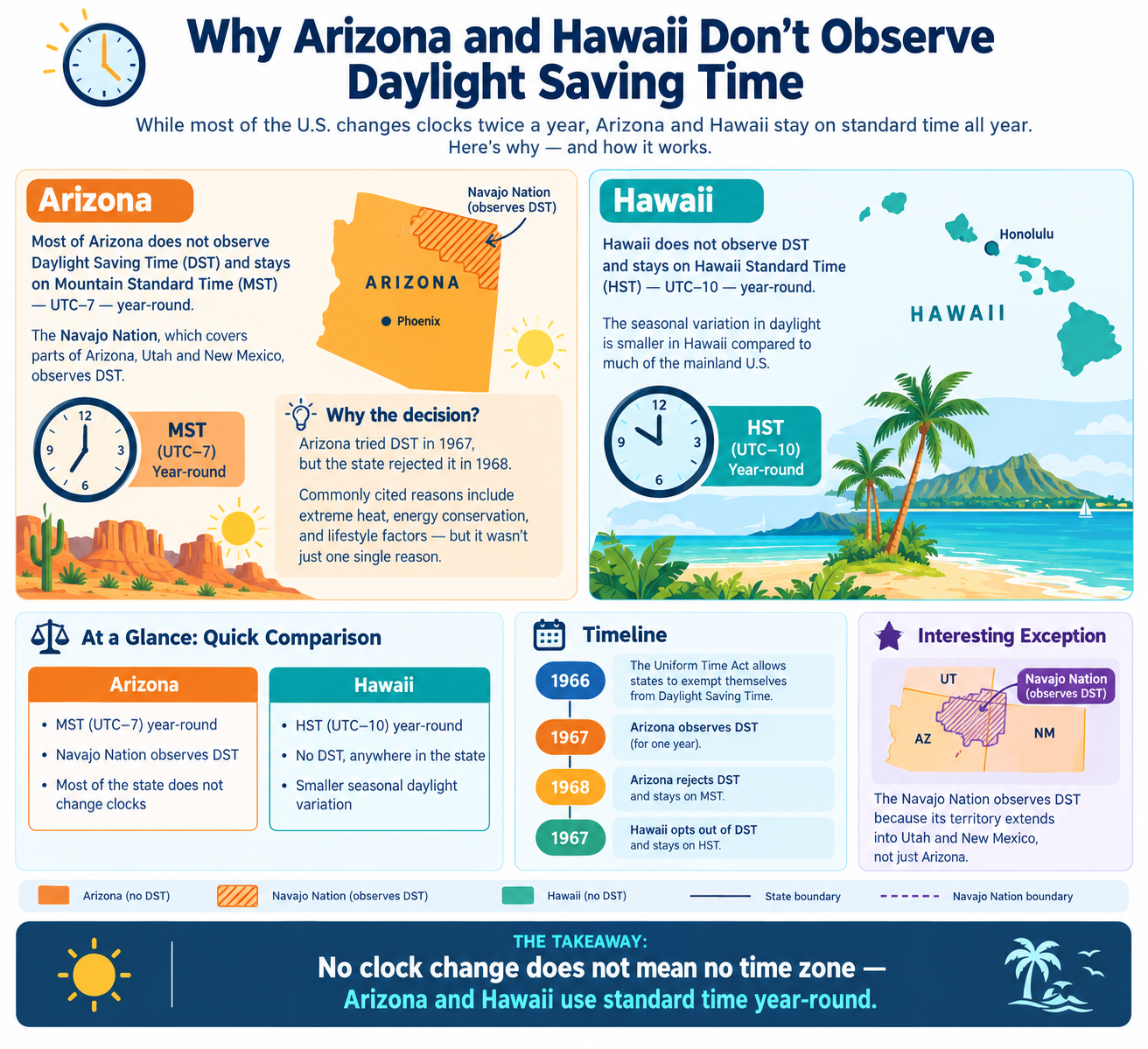
Why Arizona and Hawaii Don't Observe Daylight Saving Time
Every spring and fall, 48 US states perform the same ritual: clocks spring forward, then fall back. But two states sit it out entirely. Arizona and Hawaii never change their clocks.
They are not being stubborn. They are being practical. The reasons behind their exemptions are rooted in climate, geography, and a federal law that gives states a choice.
This guide explains why these two states opted out, how the Navajo Nation became an exception, and what it means for travelers and businesses.
Use the free time zone converter here →
The Short Answer: Why They Opted Out
Arizona and Hawaii do not observe Daylight Saving Time because extending evening daylight offers them no practical benefit — and in Arizona's case, it actually costs more energy.
| Aspect | Details |
|---|---|
| States that skip DST | Arizona (except Navajo Nation) and Hawaii |
| Arizona's reason | Extreme desert heat — longer evenings mean more air conditioning |
| Hawaii's reason | Near the equator — daylight hours barely change year-round |
| Legal basis | Uniform Time Act of 1966 allows state exemptions |
| Arizona exemption year | 1968 |
| Hawaii exemption year | 1967 |
| Arizona time | Mountain Standard Time (UTC−07:00) year-round |
| Hawaii time | Hawaii Standard Time (UTC−10:00) year-round |
The Legal Foundation: The Uniform Time Act of 1966
What the Law Says
The Uniform Time Act of 1966 established a nationwide system for Daylight Saving Time. But it included a crucial provision: states could exempt themselves from DST as long as the entire state did so.
| Aspect | Details |
|---|---|
| Law | Uniform Time Act of 1966 |
| Purpose | Standardize DST dates nationwide |
| Key provision | States may exempt themselves entirely |
| Enforcement | Department of Transportation (DOT) |
| Result | Arizona and Hawaii opted out |
The Amendment of 1972
In 1972, the law was amended to allow states split between time zones to exempt part of the state rather than the whole. This later became relevant for Indiana and other divided regions.
Why This Matters
Without this law, Arizona and Hawaii would have been forced to observe DST. The exemption clause gave them the legal room to prioritize local needs over national uniformity.
Arizona: The Desert Climate Problem
The Core Reason: Heat
Arizona's decision to skip DST is almost entirely about temperature. In the desert climate, the last thing residents want is an extra hour of scorching evening sunlight.
| Aspect | Details |
|---|---|
| Climate | Desert, extreme summer heat |
| Problem | DST would extend hot evening hours |
| Energy impact | More air conditioning, not less |
| Practical effect | People prefer cooler evenings |
| Result | Year-round Mountain Standard Time |
The Energy Argument
When Arizona sought its exemption in 1968, Governor Jack Williams presented evidence that DST would actually waste energy, not conserve it. Higher evening temperatures would force residents to run air conditioners longer.[citation:4]
| Argument | Explanation |
|---|---|
| DST goal | Conserve energy by reducing evening lighting |
| Arizona reality | Evening heat drives air conditioning use |
| Net effect | DST increases energy consumption |
| Conclusion | Standard time is more efficient |
The Timeline
| Year | Event |
|---|---|
| 1918 | Arizona observes "War Time" DST during WWI |
| 1942-1944 | Observes War Time during WWII |
| 1967 | Last year Arizona observed DST |
| 1968 | Arizona Legislature exempts the state |
| 1974 | Formal federal exemption granted |
Arizona has remained on Mountain Standard Time (MST) year-round since 1968.[citation:10][citation:17]
Hawaii: The Equator Advantage
The Core Reason: Location
Hawaii is located near the equator, where daylight hours remain relatively constant throughout the year. The traditional justification for DST — capturing more evening daylight in summer — simply doesn't apply.
| Aspect | Details |
|---|---|
| Location | Near the equator |
| Daylight variation | Minimal between seasons |
| DST benefit | Negligible |
| Result | Year-round Hawaii Standard Time |
Why Daylight Doesn't Change Much
At higher latitudes, summer days are much longer than winter days. DST helps shift that extra daylight into evening hours. Near the equator, the difference between summer and winter daylight is only about an hour or two — not enough to justify disrupting schedules.
| Latitude | Summer Daylight | Winter Daylight | Difference |
|---|---|---|---|
| Hawaii (~21°N) | ~13 hours | ~11 hours | ~2 hours |
| New York (~41°N) | ~15 hours | ~9 hours | ~6 hours |
| London (~51°N) | ~16.5 hours | ~8 hours | ~8.5 hours |
The Timeline
| Year | Event |
|---|---|
| 1967 | Hawaii exempts itself from DST |
| Since then | Remains on Hawaii Standard Time year-round |
Hawaii has never observed DST since the Uniform Time Act took effect.[citation:3][citation:7]
The Navajo Nation Exception: A Split Within a State
The Complication
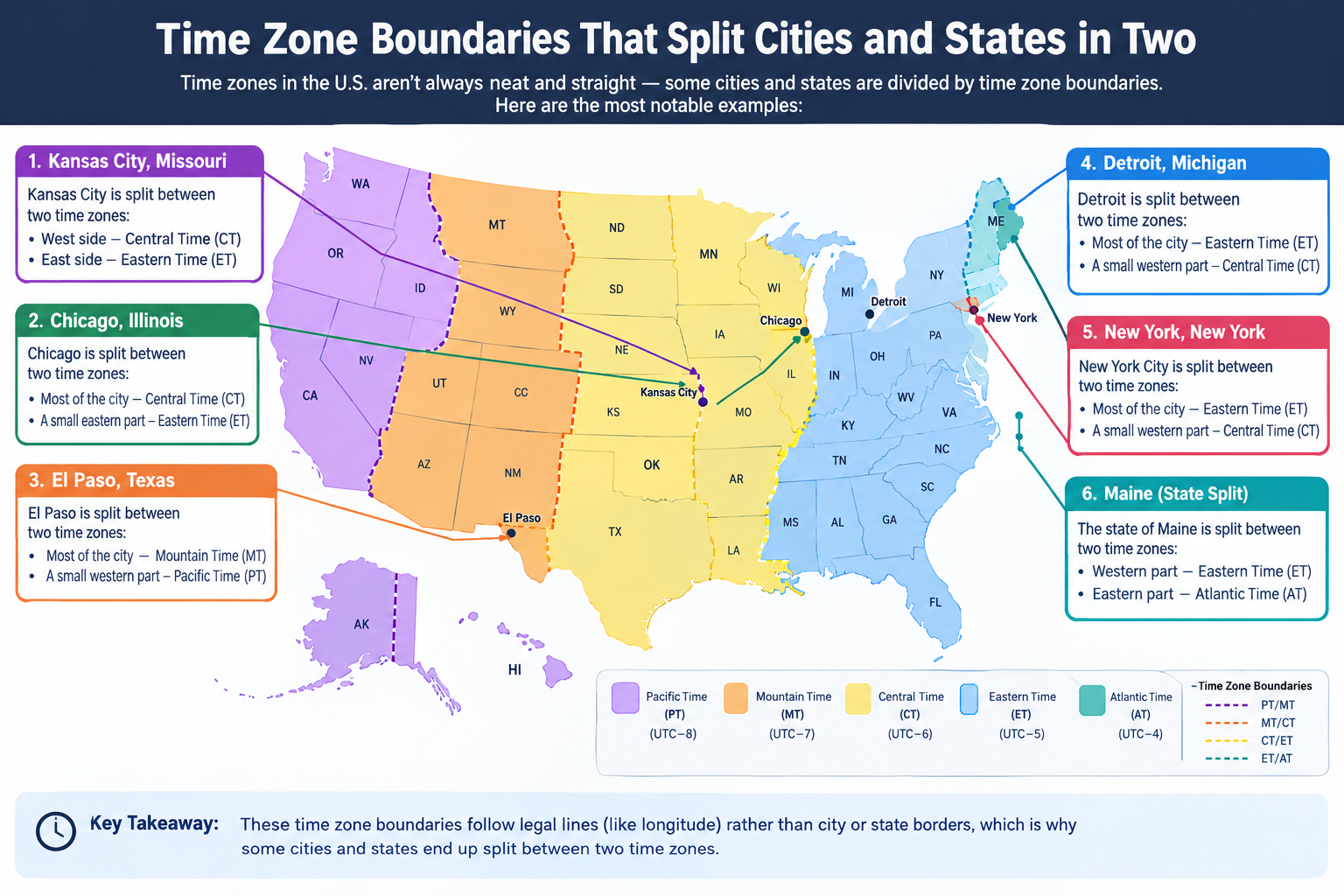
Most of Arizona does not observe DST. But the Navajo Nation, which spans parts of Arizona, New Mexico, and Utah, does observe it.
| Aspect | Details |
|---|---|
| Who observes DST | Navajo Nation |
| Who does not | Rest of Arizona |
| Why Navajo observes | Reservation extends into DST-observing states |
| Result | Time difference within Arizona during summer |
Why the Navajo Nation Observes DST
The Navajo Nation's territory extends into New Mexico and Utah, both of which observe DST. To keep a consistent time across the entire reservation, the Navajo Nation follows the national DST schedule.[citation:5][citation:16]
The "Daylight Saving Doughnut"
Within the Navajo Nation lies the Hopi Nation, which does not observe DST. This creates a confusing nested time zone structure.
| Area | DST Status |
|---|---|
| Most of Arizona | No DST |
| Navajo Nation | Observes DST |
| Hopi Nation (inside Navajo) | No DST |
| Small Navajo enclave (inside Hopi) | Observes DST |
Driving through this region in summer can require changing your clock multiple times.[citation:17]
Practical Effect
| Season | Navajo Nation | Rest of Arizona |
|---|---|---|
| Summer (DST) | UTC−06:00 (MDT) | UTC−07:00 (MST) |
| Winter (Standard) | UTC−07:00 (MST) | UTC−07:00 (MST) |
During summer, the Navajo Nation is one hour ahead of the rest of Arizona.[citation:10]
What This Means for Travelers and Businesses
For Travelers
| Situation | What to Know |
|---|---|
| Visiting Arizona in summer | Same time as California (Pacific Daylight Time) |
| Visiting Arizona in winter | Same time as Colorado (Mountain Standard Time) |
| Visiting Navajo Nation in summer | One hour ahead of Phoenix |
| Visiting Hawaii | Time never changes |
For Businesses
| Challenge | Explanation |
|---|---|
| Scheduling across states | Arizona's offset shifts relative to other states twice a year |
| Software systems | Some calendars mishandle Arizona's unique status |
| Cross-state coordination | Navajo Nation adds another layer |
Arizona's relationship to other time zones changes seasonally:
| Season | Arizona Matches |
|---|---|
| Summer | Pacific Daylight Time (UTC−07:00) |
| Winter | Mountain Standard Time (UTC−07:00) |
The offset stays the same, but what it matches changes.[citation:2]
Quick Reference Card
━━━━━━━━━━━━━━━━━━━━━━━━━━━━━━━━━━━━━━━━━━━━━━━━━━━━━━━━━━
     ARIZONA & HAWAII — NO DST CHEAT SHEET
━━━━━━━━━━━━━━━━━━━━━━━━━━━━━━━━━━━━━━━━━━━━━━━━━━━━━━━━━━

STATES THAT SKIP DST:
  Arizona (except Navajo Nation)
  Hawaii

WHY ARIZONA SKIPS:
  • Desert heat — DST would extend hot evenings
  • More air conditioning = more energy use
  • Exempted in 1968
  • Stays on Mountain Standard Time (UTC−07:00) year-round

WHY HAWAII SKIPS:
  • Near the equator
  • Daylight hours barely change year-round
  • DST offers no benefit
  • Exempted in 1967
  • Stays on Hawaii Standard Time (UTC−10:00) year-round

NAVAJO NATION EXCEPTION:
  • Observes DST (spans Arizona, New Mexico, Utah)
  • Keeps consistent time across reservation
  • One hour ahead of rest of Arizona in summer

LEGAL BASIS:
  Uniform Time Act of 1966 — states may exempt themselves

━━━━━━━━━━━━━━━━━━━━━━━━━━━━━━━━━━━━━━━━━━━━━━━━━━━━━━━━━━
         Check live conversions at: /timezone-converter
━━━━━━━━━━━━━━━━━━━━━━━━━━━━━━━━━━━━━━━━━━━━━━━━━━━━━━━━━━
Frequently Asked Questions
Why doesn't Arizona observe daylight saving time?
Arizona skips DST because of its extreme desert heat. Extending evening daylight would force residents to run air conditioners longer, increasing energy consumption rather than conserving it.[citation:4][citation:11]
Why doesn't Hawaii observe daylight saving time?
Hawaii is near the equator, where daylight hours remain relatively constant throughout the year. The traditional benefits of DST — more evening daylight in summer — do not apply.[citation:18]
When did Arizona stop observing DST?
Arizona last observed DST in 1967. The state legislature exempted Arizona in 1968, and it has remained on Mountain Standard Time year-round since then.[citation:10][citation:17]
When did Hawaii stop observing DST?
Hawaii exempted itself from DST in 1967, the year after the Uniform Time Act took effect.[citation:3]
Does any part of Arizona observe DST?
Yes. The Navajo Nation, which spans parts of Arizona, New Mexico, and Utah, observes DST. The rest of Arizona does not.[citation:5][citation:7]
Why does the Navajo Nation observe DST?
The Navajo Nation's territory extends into New Mexico and Utah, which observe DST. To keep a consistent time across the entire reservation, the Navajo Nation follows the national DST schedule.[citation:16]
What time zone is Arizona in?
Most of Arizona is on Mountain Standard Time (MST), which is UTC−07:00, year-round. During summer, it effectively matches Pacific Daylight Time.[citation:2][citation:17]
What time zone is Hawaii in?
Hawaii is on Hawaii Standard Time (HST), which is UTC−10:00, year-round.[citation:7]
Can other states opt out of DST?
Yes. The Uniform Time Act of 1966 allows any state to exempt itself from DST as long as the entire state does so. Several states have considered it.[citation:1][citation:14]
Final Thoughts
Arizona and Hawaii did not opt out of Daylight Saving Time out of stubbornness. They opted out because DST simply does not work for them. Arizona's desert heat makes longer evenings a burden, not a benefit. Hawaii's equatorial location makes the seasonal daylight shift negligible.
Three things to remember:
- Arizona skips DST because of heat. Longer evenings mean more air conditioning, not less
- Hawaii skips DST because of location. Near the equator, daylight barely changes
- The Navajo Nation is the exception. It observes DST to stay consistent across state lines
Check time zone conversions instantly → /timezone-converter
Tags: why Arizona doesn't observe daylight saving time, why Hawaii doesn't observe DST, states that don't do daylight saving time, Arizona desert climate DST, Hawaii equator daylight saving, Navajo Nation DST, Uniform Time Act 1966, Arizona Mountain Standard Time, Hawaii Standard Time, time zone converter