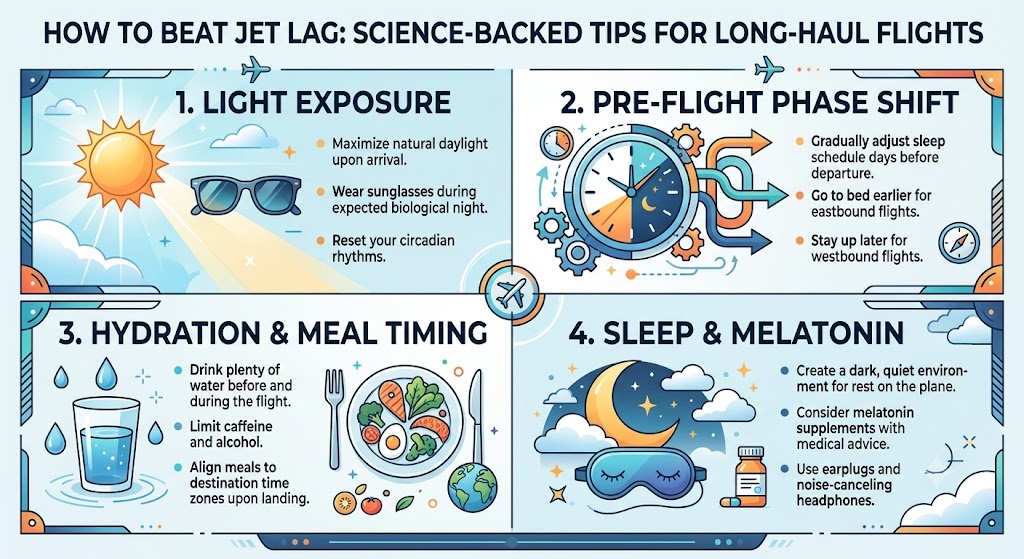
How to Beat Jet Lag: Science-Backed Tips for Long-Haul Flights
Jet lag is not just a nuisance. It is a circadian rhythm disorder — a mismatch between your internal body clock and the local time at your destination. It affects mood, concentration, physical performance, and sleep quality [citation:1][citation:7].
The good news: jet lag is predictable, and science has identified effective strategies to prevent and reduce it. The key is timing — when you sleep, when you see light, and when you take melatonin.
This guide explains the science and gives you a practical plan for before, during, and after your flight.
Use the free time zone converter here →
The Short Answer: What Actually Works
The most effective jet lag strategies are timed light exposure, strategic melatonin use, and gradual sleep shifting before travel [citation:2]. General travel tips like hydration and avoiding alcohol help, but they are secondary.
| Strategy | Evidence Level | When to Use |
|---|---|---|
| Timed light exposure | Strong | Before, during, after |
| Melatonin | Strong | During flight, at destination |
| Pre-flight sleep shifting | Strong | 2–3 days before |
| Strategic napping | Moderate | At destination |
| Hydration | Supportive | Throughout |
| Avoiding alcohol | Supportive | Throughout |
| Caffeine timing | Moderate | Strategic use |
Why Jet Lag Happens: The Science
Your Circadian Rhythm
Your body runs on a 24-hour internal clock called the circadian rhythm. It controls sleep, body temperature, hormone release, and alertness [citation:1].
| Factor | Role |
|---|---|
| Suprachiasmatic nucleus (SCN) | Master clock in the brain |
| Light | Primary signal that sets the clock |
| Melatonin | Hormone that signals darkness |
| Temperature | Shifts with circadian phase |
Why Travel Breaks It
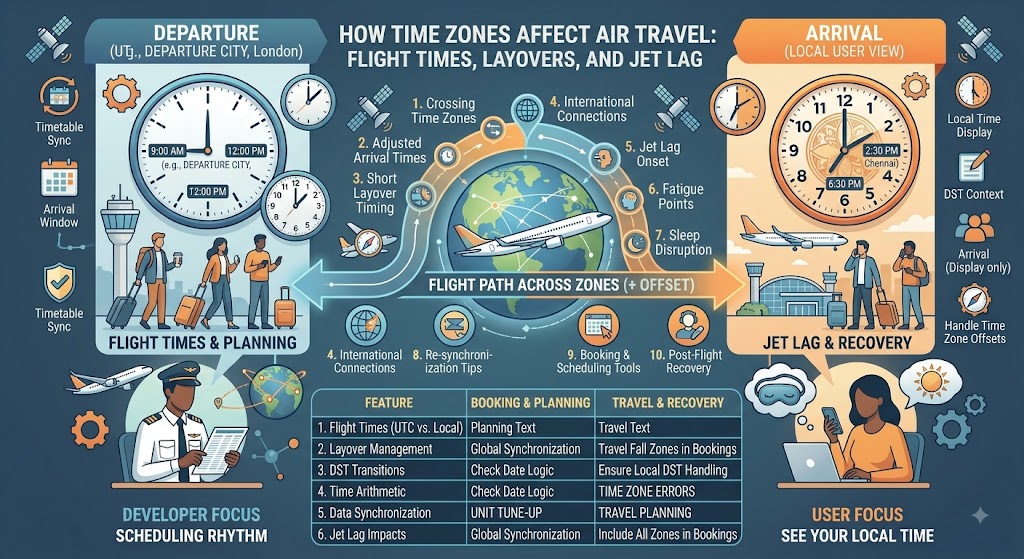
When you fly across time zones, your internal clock stays on home time. Your body thinks it is midnight when the local clock says noon [citation:7].
| Problem | Result |
|---|---|
| Clock mismatch | Sleepiness at wrong times |
| Melatonin timing | Released at wrong phase |
| Temperature rhythm | Out of sync |
| Digestion | Disrupted |
East vs West: Which Is Worse?
Eastward travel is harder than westward travel. Your circadian rhythm is slightly longer than 24 hours, so it is naturally easier to delay (stay up later) than to advance (go to bed earlier) [citation:2].
| Direction | Adaptation Rate | Difficulty |
|---|---|---|
| Westward | ~1.5 hours/day | Easier |
| Eastward | ~1 hour/day | Harder |
Rule of thumb: It takes about one day per time zone to fully adjust [citation:1][citation:12].
Before Your Flight: Pre-Flight Preparation
Shift Your Sleep Schedule
Start adjusting your sleep 2–3 days before departure [citation:2].
| Direction | Adjustment |
|---|---|
| Traveling east | Go to bed 1 hour earlier each night |
| Traveling west | Go to bed 1 hour later each night |
Example (Eastward, 3 days before):
| Day | Bedtime |
|---|---|
| Day 1 | 10:00 PM |
| Day 2 | 9:30 PM |
| Day 3 | 9:00 PM |
| Day 4 (travel day) | 8:30 PM |
Even 1–2 days of pre-shifting helps reduce jet lag [citation:18].
Arrive Early for Important Events
If you have a critical meeting or performance, arrive 2+ days early to allow your body to adapt [citation:1][citation:9].
Start Well-Rested
Begin your trip well-rested. Starting with sleep debt makes jet lag worse [citation:12].
During Your Flight: Onboard Strategies
Set Your Watch to Destination Time
As soon as you board, set your watch and devices to the destination time zone. This helps you mentally shift [citation:1][citation:16].
Sleep According to Destination Time
| Destination Time | Action |
|---|---|
| Night | Try to sleep |
| Day | Stay awake, stay active |
Do not sleep just because you are tired. Sleep if it matches bedtime at your destination [citation:1].
Stay Hydrated, Avoid Alcohol
| Do | Avoid |
|---|---|
| Drink water frequently | Alcohol |
| Eat light meals | Heavy meals |
| Move around | Excess caffeine |
Why: Dehydration worsens jet lag symptoms. Alcohol disrupts sleep quality and causes dehydration [citation:1][citation:2].
Move Around
Get up and walk periodically during the flight to reduce stiffness and improve circulation [citation:1].
At Your Destination: The First 48 Hours
Get Morning Light (If Traveling East)
Eastward travel: Seek morning sunlight to advance your clock. Avoid bright light in the evening [citation:8][citation:16].
| Time | Action |
|---|---|
| Morning | Go outside, get bright light |
| Afternoon | Wear sunglasses if needed |
| Evening | Dim lights, avoid screens |
Get Evening Light (If Traveling West)
Westward travel: Seek late-afternoon and evening light to delay your clock. Avoid bright light in the morning [citation:8][citation:16].
| Time | Action |
|---|---|
| Morning | Wear sunglasses |
| Afternoon | Get sunlight |
| Evening | Bright light helps delay |
Take Short Naps Only
If you are exhausted during the day, take a short nap (20–30 minutes). Avoid long naps, which make it harder to sleep at night [citation:2][citation:9].
Eat at Local Meal Times
Adjust your meal schedule to local time as quickly as possible [citation:16].
Exercise, But Not Late
Stick with your exercise routine, but avoid exercising late in the evening — it can keep you awake [citation:1].
Melatonin: What the Science Says
How It Works
Melatonin is a hormone your body releases in darkness to signal sleep time. Taken as a supplement at the right time, it can help shift your circadian rhythm [citation:2].
Evidence
A Cochrane review found that melatonin reduced jet lag in 8 of 10 studies, especially for flights crossing 5+ time zones [citation:12].
Dosage and Timing
| Aspect | Recommendation |
|---|---|
| Dose | 0.5–5 mg |
| When (eastward) | At destination bedtime |
| When (westward) | At destination bedtime |
| Higher doses | Not more effective |
Timing is critical. Taken at the wrong time, melatonin can worsen jet lag by shifting your clock the wrong way [citation:12].
Safety Note
Melatonin is not right for everyone. Consult a doctor, especially if you take other medications or have health conditions [citation:1][citation:9].
Quick Reference Card
━━━━━━━━━━━━━━━━━━━━━━━━━━━━━━━━━━━━━━━━━━━━━━━━━━━━━━━━━━
        BEAT JET LAG — CHEAT SHEET
━━━━━━━━━━━━━━━━━━━━━━━━━━━━━━━━━━━━━━━━━━━━━━━━━━━━━━━━━━

CORE SCIENCE:
  Circadian rhythm = 24-hour body clock
  Light is the primary signal
  Eastward travel is harder
  Adaptation: ~1 day per time zone

BEFORE FLIGHT (2–3 days):
  East → bed 1 hour earlier each night
  West → bed 1 hour later each night
  Arrive early for important events
  Start well-rested

DURING FLIGHT:
  Set watch to destination time
  Sleep only if it is night at destination
  Stay hydrated, avoid alcohol
  Move around periodically

AT DESTINATION:
  East → morning light, avoid evening light
  West → evening light, avoid morning light
  Short naps only (20–30 min)
  Eat at local meal times

MELATONIN:
  Dose: 0.5–5 mg
  Take at destination bedtime
  Timing is critical
  Consult doctor first

WHAT DOES NOT WORK:
  Alcohol for sleep
  Long daytime naps
  Ignoring local time

GOLDEN RULE:
  Light and timing are everything.

━━━━━━━━━━━━━━━━━━━━━━━━━━━━━━━━━━━━━━━━━━━━━━━━━━━━━━━━━━
         Check live conversions at: /timezone-converter
━━━━━━━━━━━━━━━━━━━━━━━━━━━━━━━━━━━━━━━━━━━━━━━━━━━━━━━━━━
Frequently Asked Questions
What is the fastest way to get over jet lag?
The fastest approach is timed light exposure combined with strategic melatonin. Get morning light if you traveled east, evening light if you traveled west, and take melatonin at the correct local bedtime [citation:2][citation:8].
Is eastward or westward travel worse?
Eastward travel is generally harder. Your body clock is slightly longer than 24 hours, making it easier to delay (westward) than advance (eastward). Adaptation is about 1.5 hours per day westward and 1 hour per day eastward [citation:2].
How much melatonin should I take for jet lag?
Research suggests 0.5–5 mg. Doses above 5 mg are not more effective. Timing matters more than dose — take it at the correct local bedtime [citation:12].
When should I take melatonin?
Take it at your destination's bedtime, starting the day you arrive. For eastward travel, it helps advance your clock. For westward travel, the benefit is smaller [citation:12].
Does alcohol help with jet lag?
No. Alcohol disrupts sleep quality, causes dehydration, and worsens jet lag symptoms. Avoid it before and during your flight [citation:1][citation:2].
Should I nap when I arrive?
Short naps (20–30 minutes) can help you stay alert. Long naps interfere with nighttime sleep and make adaptation slower [citation:2][citation:9].
How long does jet lag last?
It typically takes about one day per time zone crossed to fully adjust. For a 6-hour time difference, expect roughly 6 days for complete adaptation [citation:1][citation:12].
Does exercise help with jet lag?
Exercise can help you stay awake during the day, but avoid it late in the evening, as it can interfere with sleep [citation:1].
What should I eat during a long-haul flight?
Eat light meals and stay hydrated. Avoid heavy meals and alcohol. Try to align meal times with your destination's schedule [citation:1][citation:16].
Can I prevent jet lag entirely?
You cannot eliminate it completely, but you can significantly reduce its severity with pre-flight sleep shifting, timed light exposure, and correctly timed melatonin [citation:2].
Final Thoughts
Jet lag is not random. It follows the rules of circadian biology. Your body clock responds to light, darkness, and timing — and you can use that knowledge to adapt faster.
The most effective strategies are also the simplest: shift your sleep before you go, use light strategically at your destination, and take melatonin at the right time. Everything else — hydration, movement, avoiding alcohol — supports those core interventions.
Three things to remember:
- Light is the primary signal. Time your exposure to shift your clock
- East is harder than west. Plan more adaptation time for eastward trips
- Timing beats dosage. For melatonin, when you take it matters most
Check time zone conversions instantly → /timezone-converter
Tags: how to beat jet lag, jet lag prevention science, circadian rhythm travel, melatonin jet lag dosage, timed light exposure jet lag, pre-flight sleep adjustment, long-haul flight tips, jet lag recovery, eastward vs westward travel, time zone converter