Countries That Have Changed Their Time Zone (and Why)
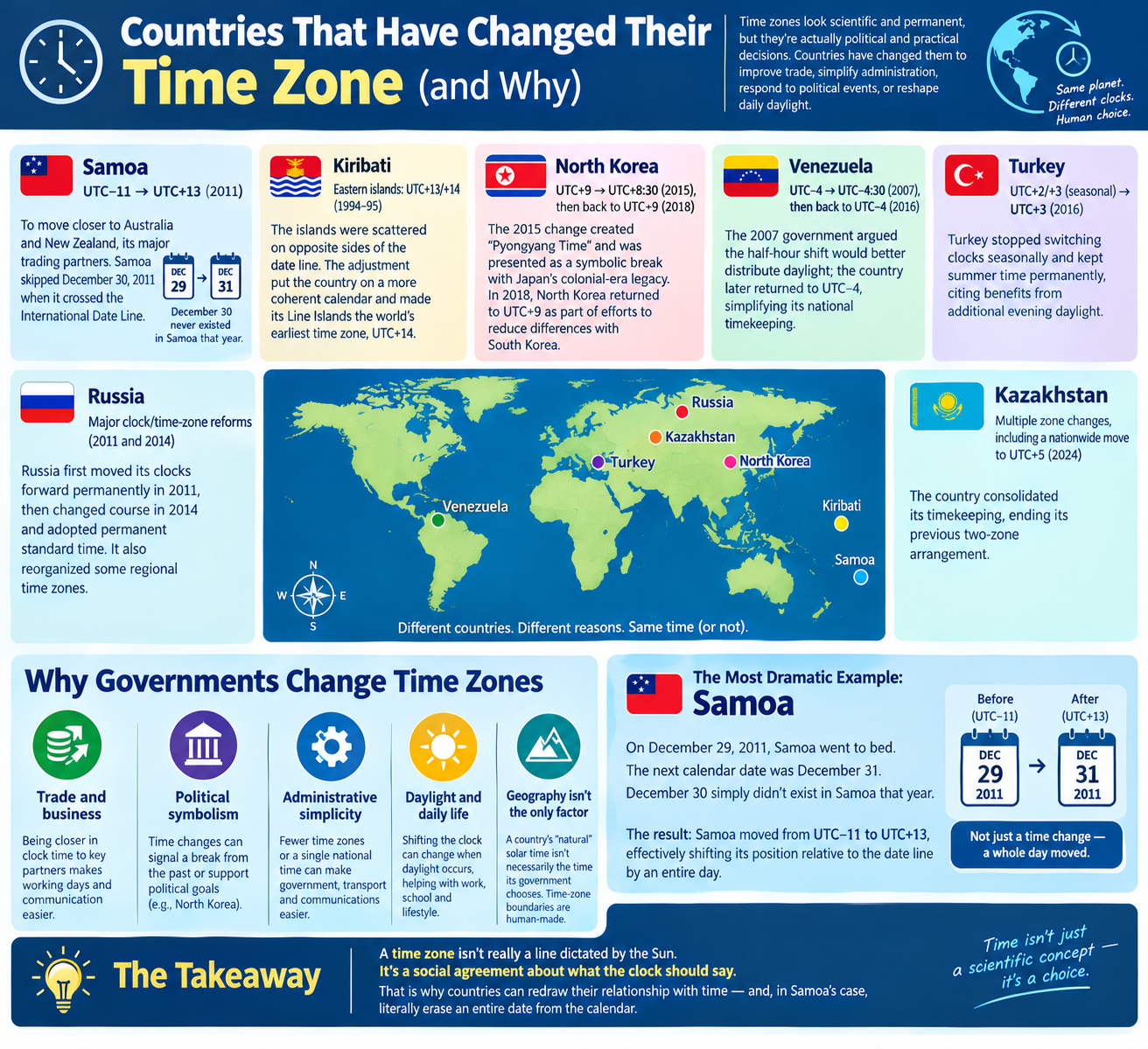
Time zones look permanent, but they are not. Countries change them constantly — sometimes for practical reasons, sometimes for political ones, and sometimes for reasons that are purely symbolic.
The result is a patchwork of offsets that reflects history as much as geography. This guide explores the most notable time zone changes of the modern era and the motivations behind them.
Use the free time zone converter here →
The Short Answer: Why Countries Change Time Zones
The reasons fall into four broad categories: politics, economics, geography, and identity. Often, more than one applies.
| Reason | Example |
|---|---|
| Political statement | North Korea, Crimea |
| National unity | China, India |
| Trade alignment | Samoa, Venezuela |
| Historical legacy | Spain |
| Geographic reality | Nepal, India (tea gardens) |
| Energy concerns | Sri Lanka (historical) |
North Korea: The Political 30 Minutes
The Change
On August 15, 2015, North Korea moved its clocks back 30 minutes, creating its own time zone: Pyongyang Time (UTC+08:30) [citation:1][citation:4].
| Aspect | Details |
|---|---|
| Date | August 15, 2015 |
| Change | Moved back 30 minutes |
| New offset | UTC+08:30 |
| Reason | 70th anniversary of liberation from Japan |
Why It Happened
North Korea's official news agency framed the change as erasing the legacy of Japanese colonial rule, calling the Japanese alteration of Korean time "an unpardonable crime" [citation:5]. The move reverted North Korea to the time zone the Korean peninsula used before Japanese occupation in 1910 [citation:5].
The Reaction
The change created a 30-minute time difference with South Korea and Japan. Critics called it a symbolic gesture with little practical benefit [citation:1].
China: Five Time Zones to One
The Change
Before 1949, China had five time zones. After the Communist Party took power, all were abolished except Beijing Time (UTC+08:00) [citation:1][citation:4].
| Aspect | Before | After |
|---|---|---|
| Time zones | 5 | 1 |
| Offset | Varies | UTC+08:00 |
| Reason | Simplify governance |
The Consequences
In western regions like Tibet and Xinjiang, the sun rises two hours later than the clock suggests. Residents often wake in darkness to align with Beijing [citation:1]. Some unofficially set their clocks back two hours — a practice sometimes interpreted as disloyalty [citation:1].
Samoa: Skipping a Day
The Change
In 2011, Samoa jumped across the International Date Line, moving from the east side to the west side [citation:14][citation:15].
| Aspect | Before | After |
|---|---|---|
| Side of dateline | East | West |
| Alignment | Americas | Australia, NZ |
| Date skipped | — | December 30, 2011 |
Why It Happened
Samoa's biggest trading partners were New Zealand and Australia, both on the west side of the dateline. The 23-hour gap made business difficult [citation:14].
Prime Minister Tuilaepa Sailele Malielegaoi called the move "common sense" [citation:14]. However, many Samoans were confused and unhappy, and the tourism industry lost its "last place on Earth to see the sunset" marketing angle [citation:15].
Venezuela: The Half-Hour Return
The Change
In 2007, President Hugo Chávez moved Venezuela from UTC−04:00 to UTC−04:30, restoring a half-hour offset the country had used until 1965 [citation:1][citation:5][citation:8].
| Aspect | Before | After |
|---|---|---|
| Offset | UTC−04:00 | UTC−04:30 |
| Reason | Political, social |
Why It Happened
Chávez said he did not want schoolchildren waking up in darkness [citation:8]. Critics saw it as a political statement against U.S. influence and a way to assert independence from international standards [citation:1].
The move put a strain on an economy already facing power shortages, as lights went on earlier in the evening [citation:1]. Venezuela later reverted to UTC−04:00 in 2016 [citation:4].
Spain: The Nazi Time Zone Legacy
The Change
Until the 1940s, Spain used the same time zone as Britain and Portugal (UTC+00:00). In 1940, General Franco moved Spain to Central European Time (UTC+01:00) [citation:1][citation:2][citation:5].
| Aspect | Before | After |
|---|---|---|
| Offset | UTC+00:00 | UTC+01:00 |
| Year | 1940 | — |
| Reason | Allegiance with Nazi Germany |
Why It Happened
The move is widely attributed to Franco's desire to align with Nazi Germany [citation:2][citation:5]. Spain never reverted. Today, the country is geographically aligned with Portugal and the UK but observes Central European Time.
The consequences are cultural: Spain is known for late dinners, long lunches, and later working hours than its European peers [citation:2].
Other Notable Changes
Nepal: The 15-Minute Statement
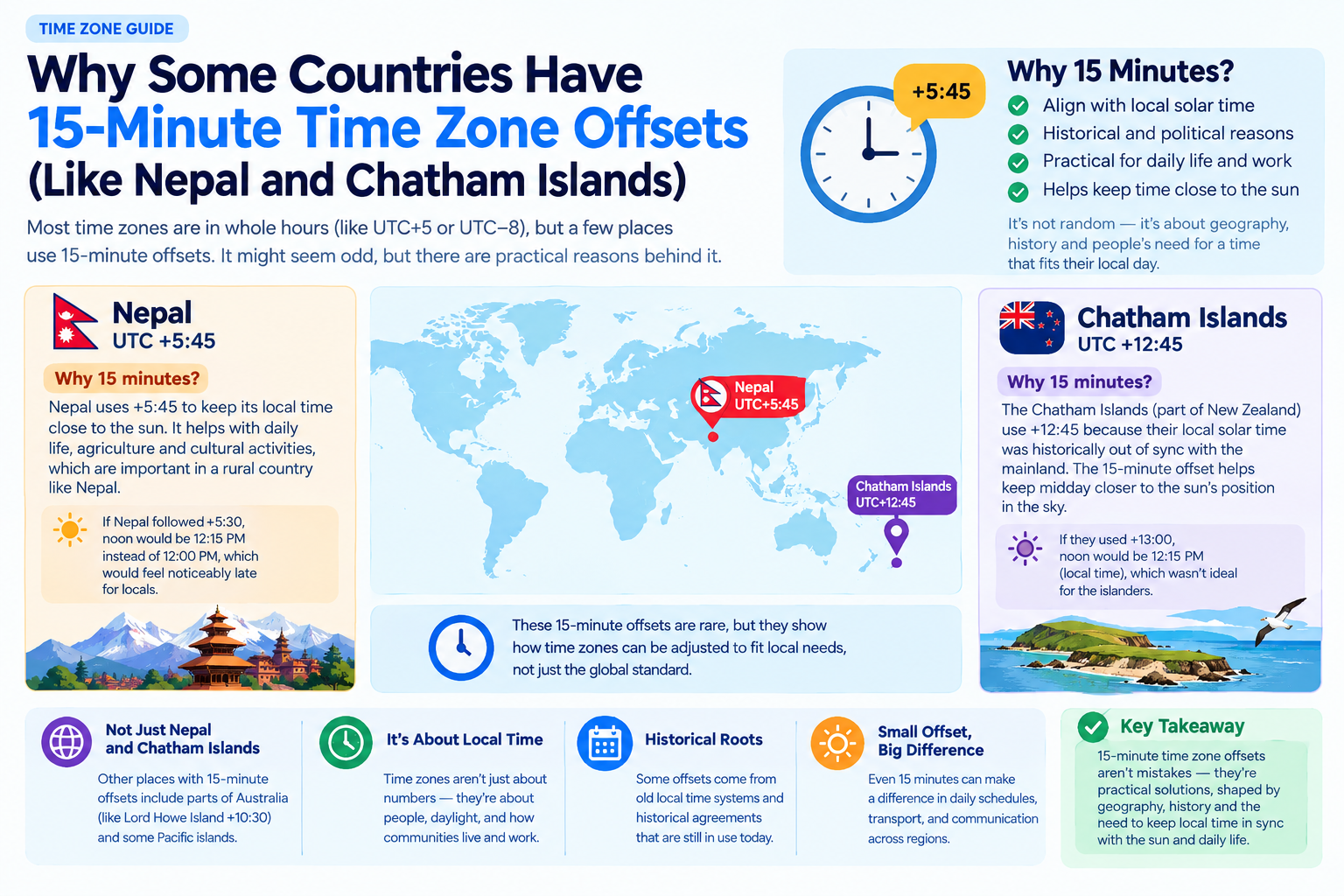
In 1956, Nepal moved to UTC+05:45 to mark the time the sun passes over a famous mountain [citation:1]. Proposals to align with India (UTC+05:30) have gone nowhere [citation:1].
India: Tea Garden Time
India unified its time zones upon independence, but in Assam, many tea plantations unofficially use "tea garden time" — one hour ahead of IST — so field workers have more daylight [citation:1][citation:4].
Sri Lanka: Two Times at Once
In 1996, Sri Lanka's government moved clocks back 30 minutes during a power crisis. Tamil Tiger rebels refused to follow, creating two simultaneous time zones in one country [citation:1].
Crimea: Joining Moscow
After Russia's annexation in 2014, Crimea moved forward two hours to synchronize with Moscow, abandoning daylight saving time [citation:1][citation:4].
Quick Reference Card
━━━━━━━━━━━━━━━━━━━━━━━━━━━━━━━━━━━━━━━━━━━━━━━━━━━━━━━━━━
   COUNTRIES THAT CHANGED TIME ZONES — CHEAT SHEET
━━━━━━━━━━━━━━━━━━━━━━━━━━━━━━━━━━━━━━━━━━━━━━━━━━━━━━━━━━

WHY COUNTRIES CHANGE TIME ZONES:
  • Political statement
  • National unity
  • Trade alignment
  • Historical legacy
  • Geographic reality

NOTABLE CHANGES:

NORTH KOREA (2015):
  Moved back 30 minutes → UTC+08:30
  Reason: Erase Japanese colonial legacy

CHINA (1949):
  5 time zones → 1 (Beijing Time)
  Reason: Simplify governance, unity

SAMOA (2011):
  Jumped dateline → UTC+13:00
  Reason: Align with Australia, NZ
  Skipped December 30, 2011

VENEZUELA (2007):
  UTC−04:00 → UTC−04:30
  Reason: Political, social

SPAIN (1940):
  UTC+00:00 → UTC+01:00
  Reason: Franco's allegiance with Nazi Germany

OTHER:
  Nepal    → UTC+05:45 (1956)
  India    → Tea garden time (unofficial)
  Sri Lanka → Two times (1996)
  Crimea   → Moscow Time (2014)

GOLDEN RULE:
  Time zones reflect politics, not just geography.

━━━━━━━━━━━━━━━━━━━━━━━━━━━━━━━━━━━━━━━━━━━━━━━━━━━━━━━━━━
         Check live conversions at: /timezone-converter
━━━━━━━━━━━━━━━━━━━━━━━━━━━━━━━━━━━━━━━━━━━━━━━━━━━━━━━━━━
Frequently Asked Questions
Why do countries change their time zones?
Countries change time zones for political, economic, and geographic reasons. Sometimes it is a symbolic statement, sometimes a practical alignment with trading partners, and sometimes a legacy of historical events.
Why did North Korea change its time zone?
North Korea moved its clocks back 30 minutes in 2015 to mark the 70th anniversary of liberation from Japan and to erase what it called the legacy of Japanese colonial rule [citation:1][citation:5].
Why does China have only one time zone?
China abolished its five time zones in 1949 to simplify governance and promote national cohesion. The practical result is that western regions experience very late sunrises [citation:1].
Why did Samoa change its time zone?
Samoa jumped across the International Date Line in 2011 to align its calendar with Australia and New Zealand, its main trading partners [citation:14].
Why is Spain on Central European Time?
Spain moved to Central European Time in 1940 under General Franco, reportedly to align with Nazi Germany. The country never reverted, despite being geographically aligned with Portugal and the UK [citation:1][citation:5].
Why did Venezuela change its time zone?
President Hugo Chávez moved Venezuela to a half-hour offset in 2007, citing social reasons. Critics saw it as a political statement. Venezuela later reverted to UTC−04:00 [citation:1][citation:4].
What is "tea garden time" in India?
In Assam, many tea plantations unofficially set their clocks one hour ahead of Indian Standard Time so field workers have more daylight [citation:1].
Why did Sri Lanka have two time zones?
In 1996, the government moved clocks back 30 minutes during a power crisis. Tamil Tiger rebels refused to follow, creating two simultaneous time zones until the rebels were defeated in 2009 [citation:1].
Why did Crimea change its time zone?
After Russia's annexation in 2014, Crimea moved forward two hours to synchronize with Moscow and abandoned daylight saving time [citation:1].
Is time zone change common?
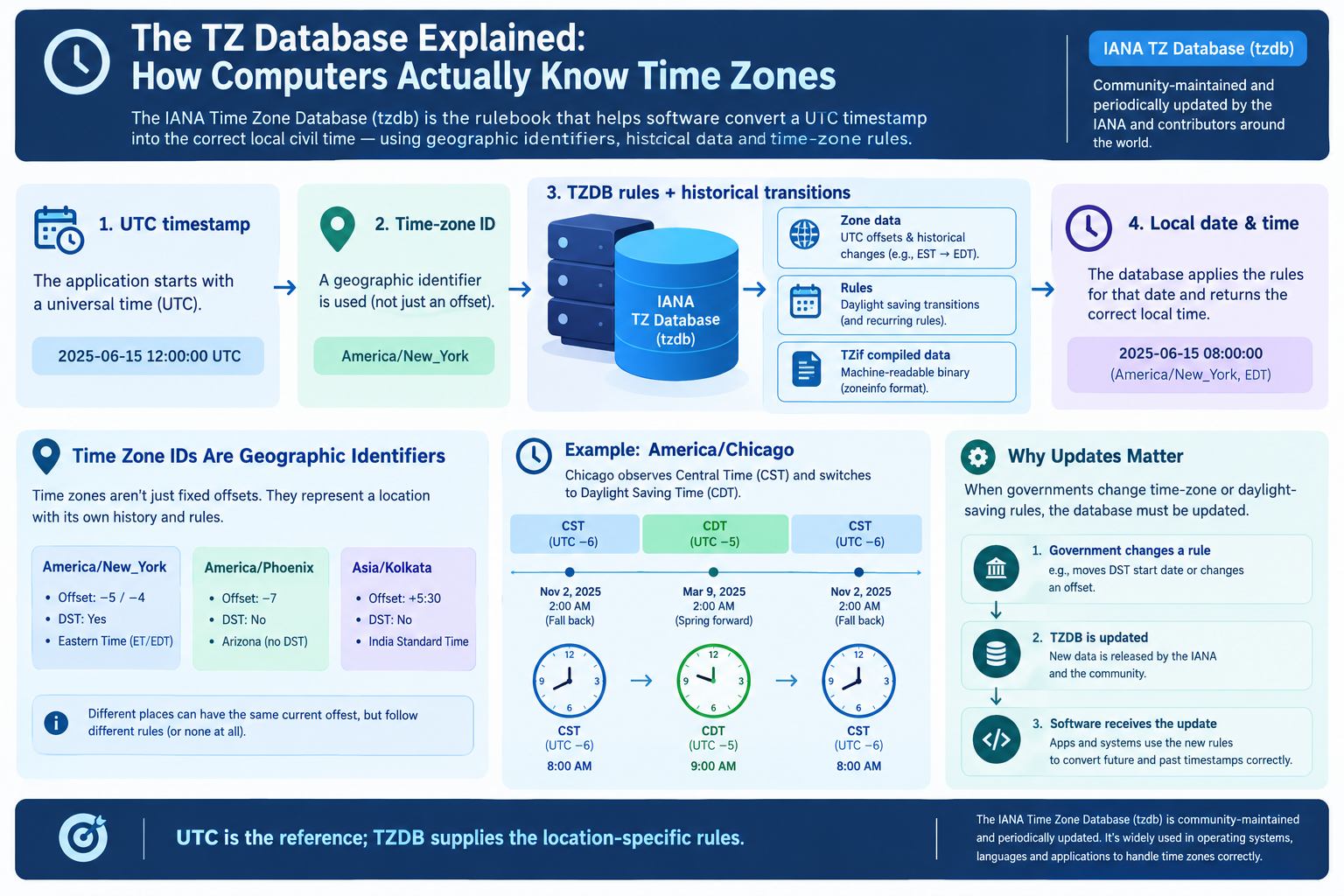
Yes. Countries change time zones regularly for a variety of reasons. The IANA time zone database is updated several times a year to reflect these changes.
Final Thoughts
Time zones are not natural laws. They are human decisions, made and remade for reasons that often have nothing to do with the sun. North Korea moved its clocks to make a political point. China unified its zones to strengthen national cohesion. Samoa jumped the dateline to do business. Spain still lives on Nazi time.
Understanding these changes explains why the world's time zones look so messy — and why they keep changing.
Three things to remember:
- Time zones are political. They reflect power, identity, and history
- Practical needs drive changes. Trade and governance matter most
- Nothing is permanent. Countries change their clocks whenever they choose
Check time zone conversions instantly → /timezone-converter
Tags: countries that changed time zones, why countries change time zones, North Korea time zone change, China single time zone, Samoa dateline change, Venezuela half hour time zone, Spain Nazi time zone, politics of time zones, time zone history, time zone converter