The Most Confusing Time Zone Questions People Ask Google
Time zones confuse everyone. Even people who work with them daily still get tripped up by abbreviations, daylight saving transitions, and the strange cases of half-hour offsets and single-zone countries.
Every day, millions of people search Google for answers to the same time zone questions. This guide answers the most common ones — clearly and without jargon.
Use the free time zone converter here →
The Short Answer: What Confuses People Most
The biggest sources of confusion are abbreviations (IST, CST, BST mean multiple things), GMT vs UTC, daylight saving time, and countries with unusual time zones like China, India, and Nepal.
| Confusion Source | Why It's Confusing |
|---|---|
| Abbreviations | Same letters, different zones |
| GMT vs UTC | Used interchangeably but different |
| DST | Shifts twice a year |
| Half-hour zones | Not all zones are whole hours |
| Single-zone countries | China is wider than the US |
| Date line | Can arrive before you left |
Question 1: What Is the Difference Between IST and EST?
The Short Answer
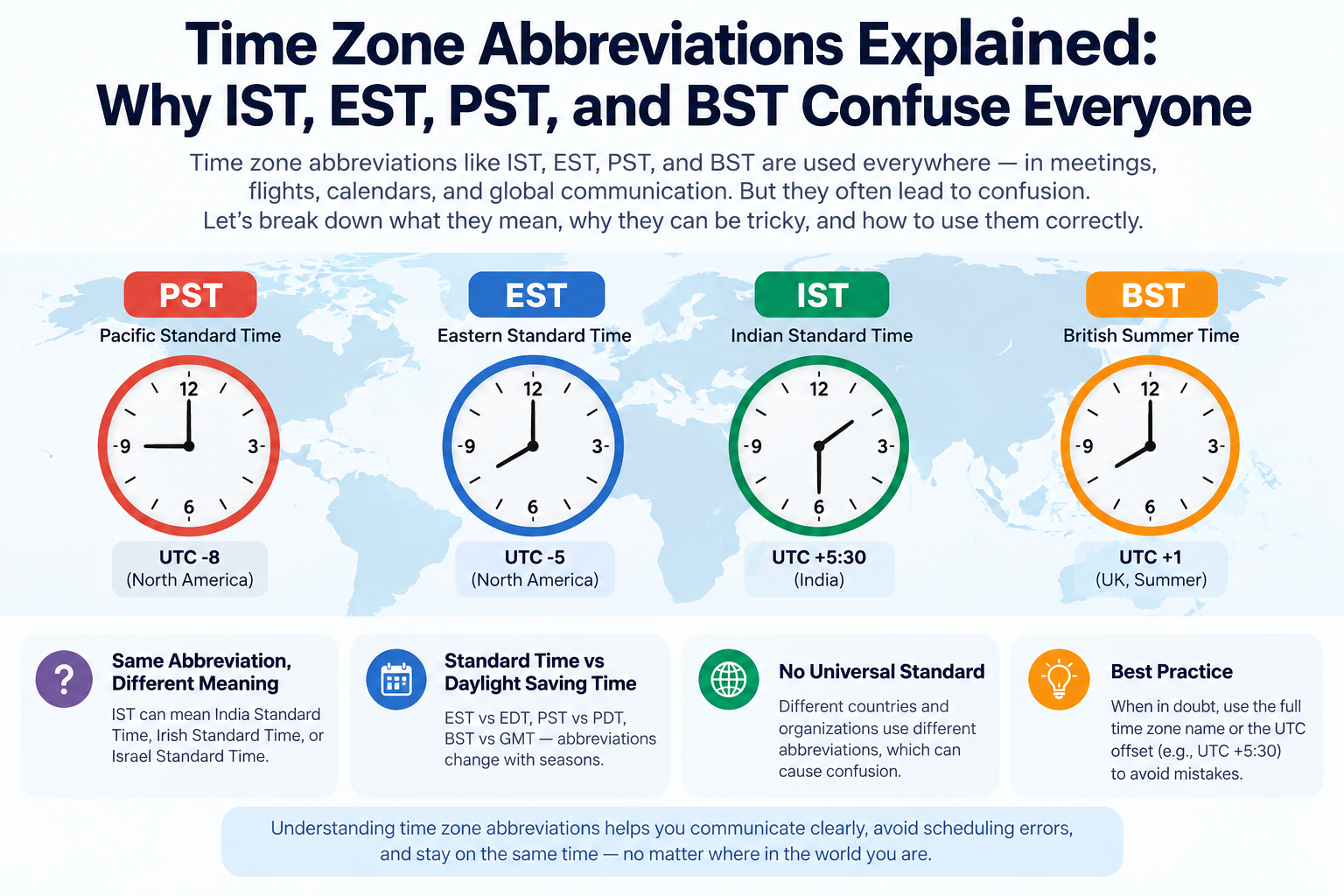
IST and EST are completely different time zones. IST usually means India Standard Time (UTC+05:30), while EST means Eastern Standard Time (UTC−05:00). The difference is 10.5 hours.
| Abbreviation | Meaning | Offset |
|---|---|---|
| IST | India Standard Time | UTC+05:30 |
| EST | Eastern Standard Time | UTC−05:00 |
| Difference | — | 10.5 hours |
Why It's Confusing
IST is ambiguous. It can mean:
| Meaning | Offset |
|---|---|
| India Standard Time | UTC+05:30 |
| Irish Standard Time | UTC+01:00 |
| Israel Standard Time | UTC+02:00 |
Without context, you cannot know which IST someone means.
The Fix
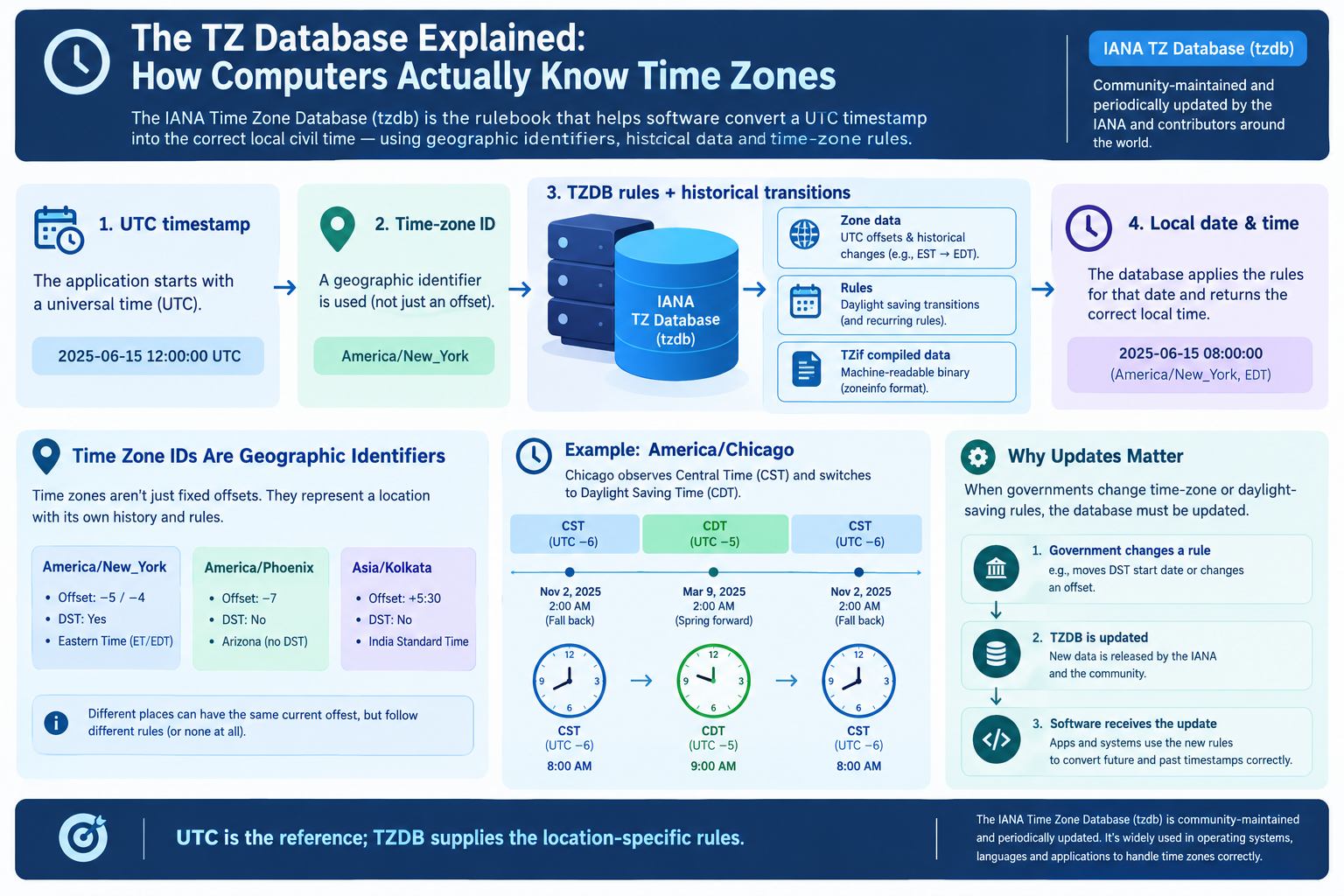
Always use numeric offsets (UTC+05:30) or IANA time zone IDs (Asia/Kolkata) instead of abbreviations.
Question 2: Is GMT the Same as UTC?
The Short Answer
For everyday purposes, yes. GMT and UTC show the same time. But they are not technically the same thing.
| Aspect | GMT | UTC |
|---|---|---|
| Type | Time zone | Time standard |
| Based on | Earth's rotation | Atomic clocks |
| Leap seconds | No | Yes |
| Common use | UK winter time | Global reference |
Why It's Confusing
Both show UTC+00:00, and most people use them interchangeably. The difference only matters in precise scientific contexts.
The Fix
Use UTC when precision matters. Use GMT informally or when referring to UK winter time.
Question 3: Why Does China Have Only One Time Zone?
The Short Answer
China spans five geographic time zones but uses only one: Beijing Time (UTC+08:00). The government unified the country's time in 1949 to simplify administration and promote national cohesion.
| Aspect | Details |
|---|---|
| Geographic zones | 5 |
| Official zones | 1 |
| Offset | UTC+08:00 |
| Unified in | 1949 |
The Consequence
In western regions like Xinjiang, the sun can rise at 10:00 AM by the clock. Some residents unofficially use UTC+06:00 to better match the sun.
Why It's Confusing
A country the size of China using one time zone seems impossible, especially when the US — which is similar in width — uses four (plus Alaska and Hawaii).
Question 4: How Many Time Zones Are There?
The Short Answer
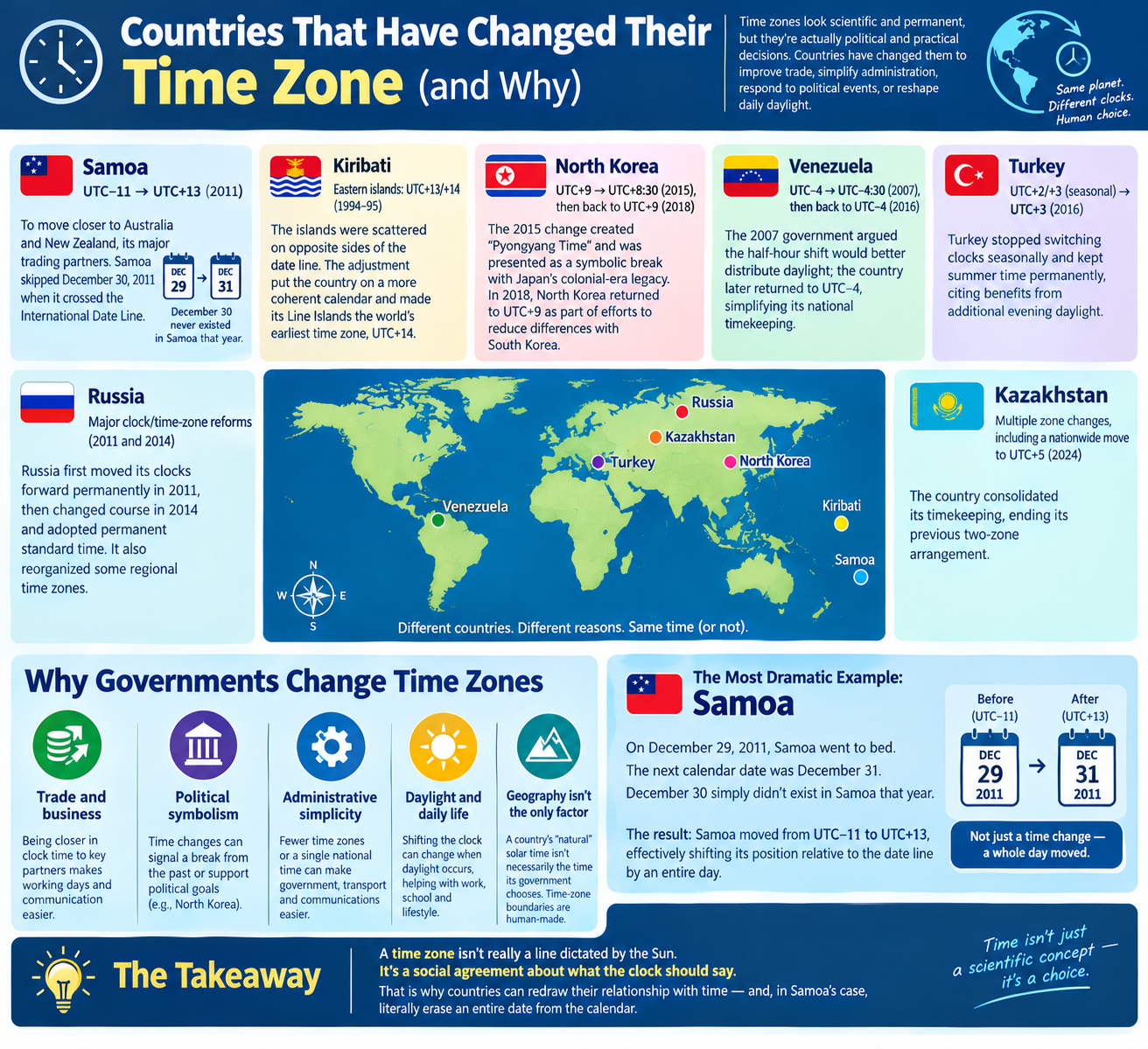
There are 24 standard time zones in theory, but in practice there are 38 time zones in use today, ranging from UTC−12:00 to UTC+14:00.
| Count | Number |
|---|---|
| Theoretical | 24 |
| In use today | 38 |
| Westernmost | UTC−12:00 |
| Easternmost | UTC+14:00 |
| Total spread | 26 hours |
Why It's Confusing
The theoretical 24 zones are based on 15-degree longitude slices. But countries have chosen offsets that do not align perfectly with those slices.
Why More Than 24?
| Reason | Example |
|---|---|
| Half-hour offsets | India, Iran |
| 45-minute offsets | Nepal |
| Date line bends | Kiribati |
| Political choices | China, Russia |
Question 5: What Is UTC and Why Does It Matter?
The Short Answer
UTC (Coordinated Universal Time) is the world's primary time standard. It is based on atomic clocks and is the reference for all time zones.
| Aspect | Details |
|---|---|
| Full name | Coordinated Universal Time |
| Abbreviation | UTC (compromise between English and French) |
| Based on | Atomic clocks |
| Role | Global reference |
| Leap seconds | Yes |
Why It's Confusing
The abbreviation UTC does not match either the English (CUT) or French (TUC) word order. It was chosen as a compromise.
Why It Matters
UTC is used in aviation, computing, science, and international communication. It is the only time standard that works everywhere.
Question 6: Do All Countries Observe Daylight Saving Time?
The Short Answer
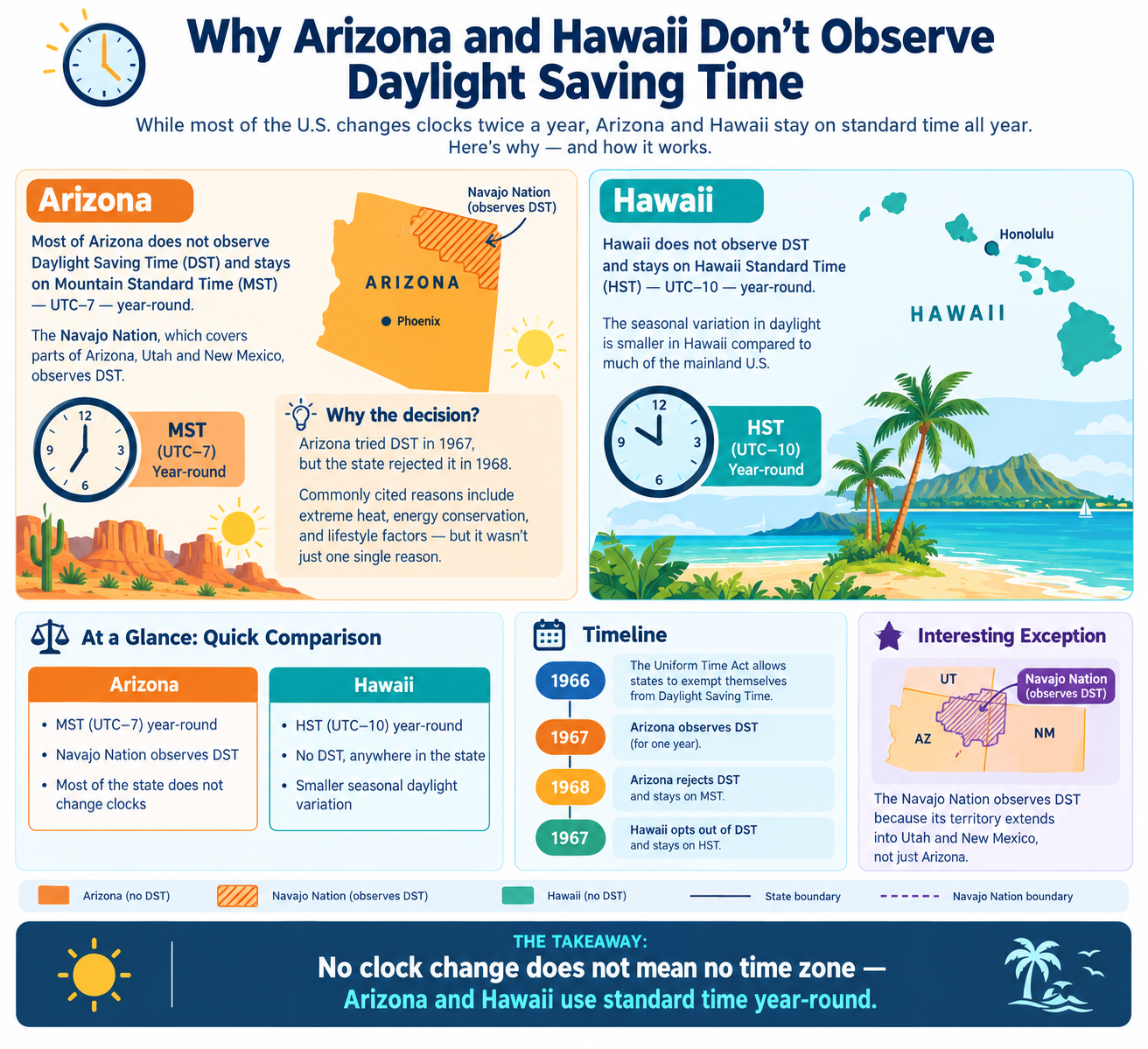
No. About 70 countries observe DST, while most do not. Countries near the equator usually skip it because daylight hours barely change.
| Region | DST? |
|---|---|
| United States | Yes (most states) |
| Arizona, Hawaii | No |
| United Kingdom | Yes |
| Most of Europe | Yes |
| India | No |
| China | No |
| Japan | No |
| Most of Africa | No |
Why It's Confusing
DST rules vary by country, state, and even region. Arizona and Hawaii skip it. The Navajo Nation within Arizona observes it.
Question 7: Why Do Some Time Zones Have 30-Minute Offsets?
The Short Answer
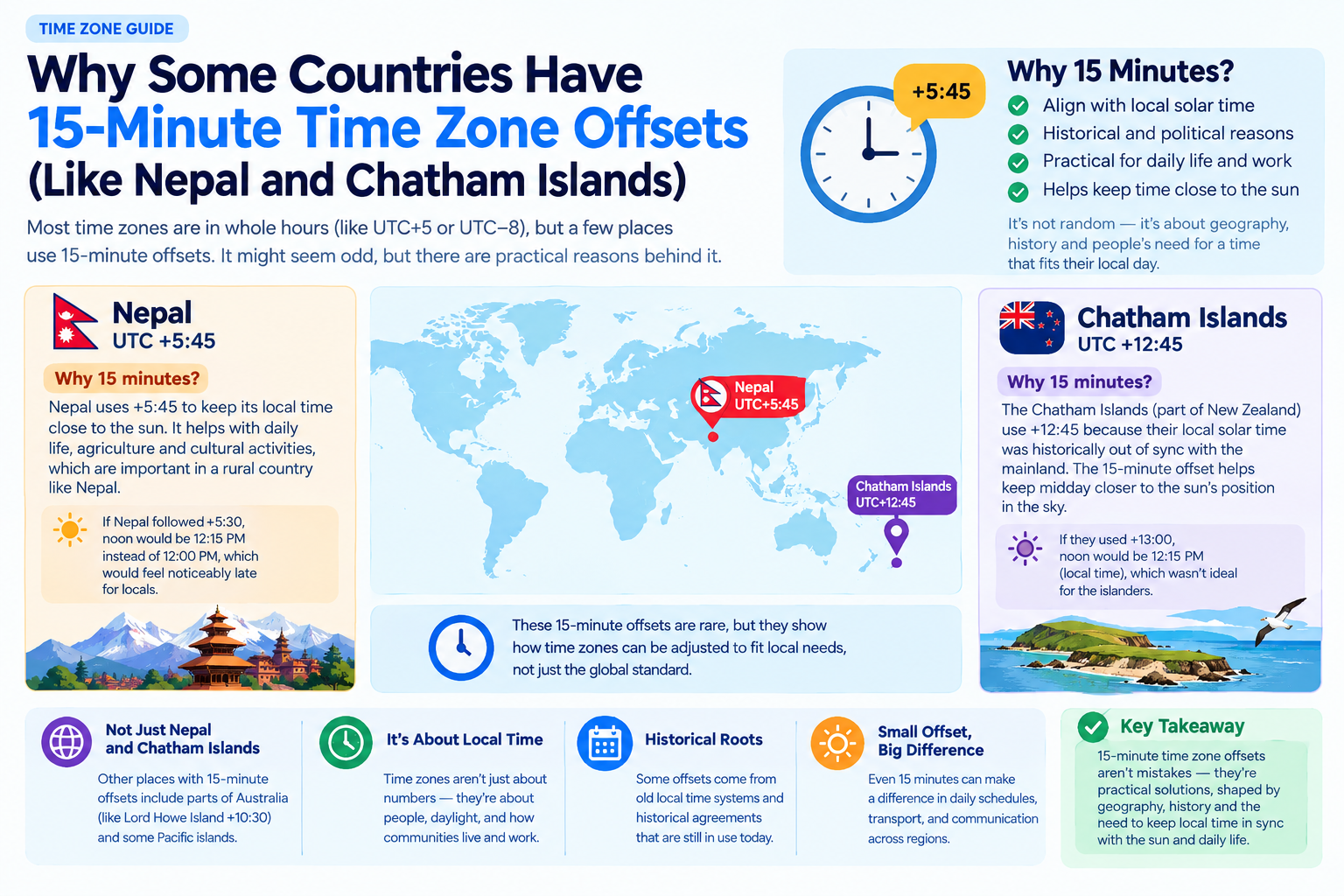
Some countries use 30-minute or 45-minute offsets because a whole-hour offset does not match their solar time.
| Country | Offset |
|---|---|
| India | UTC+05:30 |
| Iran | UTC+03:30 |
| Myanmar | UTC+06:30 |
| Newfoundland | UTC−03:30 |
| Nepal | UTC+05:45 |
Why It's Confusing
Most people assume all time zones are whole hours apart. The 30-minute and 45-minute zones break that assumption.
Why They Exist
| Reason | Example |
|---|---|
| Solar alignment | India, Iran |
| Colonial legacy | India |
| Historical | Newfoundland |
| National identity | Nepal |
Question 8: Can You Arrive Before You Left?
The Short Answer
Yes. Crossing the International Date Line can make you arrive before you departed in local time.
| Flight | Departure | Arrival |
|---|---|---|
| Tokyo → Honolulu | 20:00 JST | 08:00 HST same day |
| Auckland → LA | 19:00 NZST | 12:00 PDT same day |
The arrival time appears before the departure time in local terms.
Why It's Confusing
The date line separates calendar days. Flying east across it means you gain a day; flying west means you lose one.
Question 9: What Time Zone Is the Moon In?
The Short Answer
The Moon has no time zone. Each mission uses its own reference, usually the time zone of its mission control on Earth. A unified standard called Coordinated Lunar Time (LTC) is being developed.
| Aspect | Details |
|---|---|
| Time zone | None |
| Current practice | Mission-specific |
| Proposed standard | Coordinated Lunar Time (LTC) |
| Time difference | Moon clocks run faster |
Why It's Confusing
People assume the Moon must have a time zone like Earth. It does not — and because of relativity, clocks on the Moon tick faster than on Earth.
Question 10: Why Is Nepal 15 Minutes Ahead of India?
The Short Answer
Nepal uses UTC+05:45 and India uses UTC+05:30. The 15-minute difference exists because Nepal chose its own offset in 1986 to align with a local meridian and assert independence from India.
| Country | Offset |
|---|---|
| India | UTC+05:30 |
| Nepal | UTC+05:45 |
| Difference | 15 minutes |
Why It's Confusing
A 15-minute time zone difference is unusual and seems arbitrary. It is one of the smallest time zone differences between neighboring countries.
Quick Reference Card
━━━━━━━━━━━━━━━━━━━━━━━━━━━━━━━━━━━━━━━━━━━━━━━━━━━━━━━━━━
   MOST CONFUSING TIME ZONE QUESTIONS — CHEAT SHEET
━━━━━━━━━━━━━━━━━━━━━━━━━━━━━━━━━━━━━━━━━━━━━━━━━━━━━━━━━━

IST vs EST:
  IST = India (UTC+05:30) / Ireland (UTC+01:00) / Israel (UTC+02:00)
  EST = Eastern Standard Time (UTC−05:00)
  Difference: 10.5 hours (India vs US Eastern)

GMT vs UTC:
  Same time for everyday purposes
  GMT = time zone (Earth's rotation)
  UTC = time standard (atomic clocks)

CHINA'S SINGLE ZONE:
  Spans 5 geographic zones
  Uses only 1: Beijing Time (UTC+08:00)
  Unified in 1949

HOW MANY TIME ZONES:
  24 theoretical
  38 in use today
  Range: UTC−12:00 to UTC+14:00

UTC:
  Coordinated Universal Time
  Global reference
  Based on atomic clocks

DST:
  ~70 countries observe it
  Most near equator do not
  Arizona and Hawaii skip it

HALF-HOUR ZONES:
  India (UTC+05:30)
  Iran (UTC+03:30)
  Myanmar (UTC+06:30)
  Newfoundland (UTC−03:30)
  Nepal (UTC+05:45)

ARRIVE BEFORE YOU LEFT:
  Yes, crossing the date line eastward

MOON TIME:
  No time zone
  Coordinated Lunar Time (LTC) proposed

NEPAL vs INDIA:
  15 minutes apart

GOLDEN RULE:
  If you are confused by time zones, you are not alone.

━━━━━━━━━━━━━━━━━━━━━━━━━━━━━━━━━━━━━━━━━━━━━━━━━━━━━━━━━━
         Check live conversions at: /timezone-converter
━━━━━━━━━━━━━━━━━━━━━━━━━━━━━━━━━━━━━━━━━━━━━━━━━━━━━━━━━━
Frequently Asked Questions
What is the difference between IST and EST?
IST usually means India Standard Time (UTC+05:30), while EST means Eastern Standard Time (UTC−05:00). The difference is 10.5 hours. IST is ambiguous and can also mean Irish or Israel Standard Time.
Is GMT the same as UTC?
For everyday purposes, yes. GMT is a time zone based on Earth's rotation, while UTC is a time standard based on atomic clocks. They show the same time.
Why does China have one time zone?
China unified its time in 1949 to simplify administration and promote national cohesion. The country spans five geographic zones but uses only Beijing Time (UTC+08:00).
How many time zones are there?
There are 24 theoretical time zones, but 38 are in use today, ranging from UTC−12:00 to UTC+14:00.
What is UTC?
UTC stands for Coordinated Universal Time. It is the world's primary time standard, based on atomic clocks, and serves as the reference for all time zones.
Do all countries observe daylight saving time?
No. About 70 countries observe DST. Most countries near the equator do not, and some regions like Arizona and Hawaii skip it.
Why do some time zones have 30-minute offsets?
Some countries use 30-minute or 45-minute offsets because a whole-hour offset does not match their solar time or history. Examples include India, Iran, Myanmar, and Nepal.
Can you arrive before you left?
Yes. Crossing the International Date Line eastward can make you arrive before you departed in local time.
What time zone is the Moon in?
The Moon has no time zone. Each mission uses its own reference. A unified standard called Coordinated Lunar Time (LTC) is being developed.
Why is Nepal 15 minutes ahead of India?
Nepal uses UTC+05:45 and India uses UTC+05:30. Nepal chose its own offset in 1986 to align with a local meridian and assert independence from India.
Final Thoughts
Time zones confuse everyone. The abbreviations are ambiguous, the offsets are inconsistent, and the rules change with politics and daylight saving. But understanding the basics — UTC, IANA time zone IDs, and the difference between offsets and zones — solves most of the confusion.
Three things to remember:
- Abbreviations are ambiguous. Use UTC offsets instead
- GMT and UTC show the same time. The difference is technical
- Not all zones are whole hours. India, Nepal, and Iran prove it
Check time zone conversions instantly → /timezone-converter
Tags: most confusing time zone questions, IST vs EST difference, GMT vs UTC difference, why does China have one time zone, what is UTC, how many time zones are there, half hour time zones explained, daylight saving time confusion, time zone questions answered, time zone converter