ISO 8601: The Only Date Format Developers Should Use
Ask ten developers what date it is and you may get ten different formats. 09/22/2026. 22/09/2026. 22-09-2026. September 22, 2026. Some of these mean different dates depending on where you live.
There is one format that avoids all of this ambiguity: ISO 8601.
It is the international standard for representing dates and times, and it is the only format most developers should ever need.
This guide explains what ISO 8601 is, why it wins, and how to use it correctly.
Use the free time zone converter here →
The Short Answer: What Is ISO 8601?
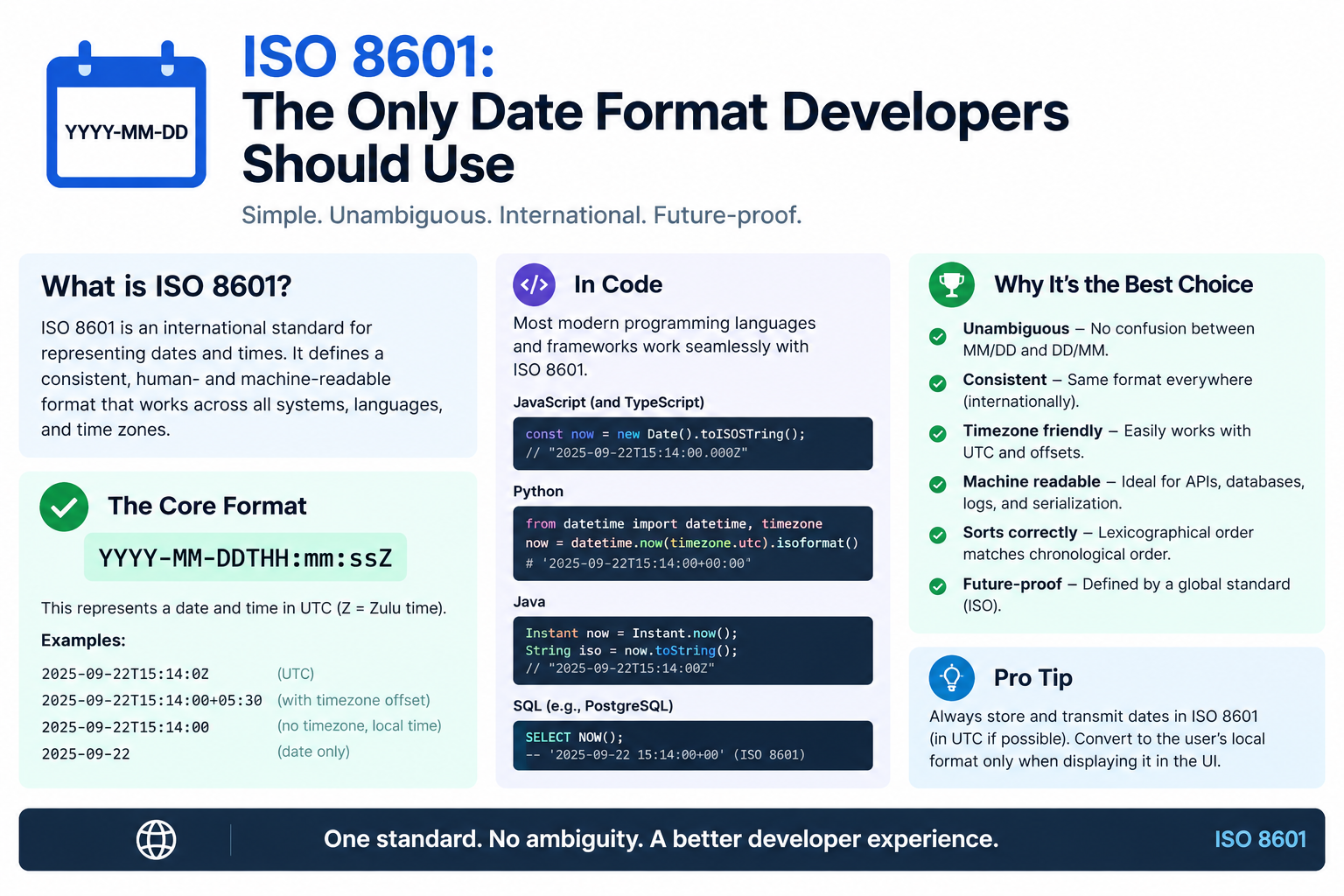
ISO 8601 is an international standard for representing dates and times in a clear, unambiguous, machine-readable format.
| Aspect | Details |
|---|---|
| What it is | International date and time standard |
| Date format | YYYY-MM-DD |
| Time format | HH:MM:SS |
| Combined | YYYY-MM-DDTHH:MM:SSZ |
| Time zone | Offset or Z for UTC |
| Maintained by | ISO (International Organization for Standardization) |
| Related standard | RFC 3339 (a profile of ISO 8601) |
| Why it wins | Unambiguous, sortable, global |
The Problem With Other Formats
The Ambiguity Disaster
Consider the date 03/04/2026. What does it mean?
| Region | Interpretation |
|---|---|
| United States | March 4, 2026 |
| United Kingdom | 3 April 2026 |
| Japan | Often invalid or misinterpreted |
The same string means two different dates. This causes real bugs, missed deadlines, and broken software.
Common Formats and Their Problems
| Format | Example | Problem |
|---|---|---|
| US | 09/22/2026 | Ambiguous with UK |
| UK | 22/09/2026 | Ambiguous with US |
| European | 22.09.2026 | Not widely recognized |
| Written | September 22, 2026 | Long, locale-dependent |
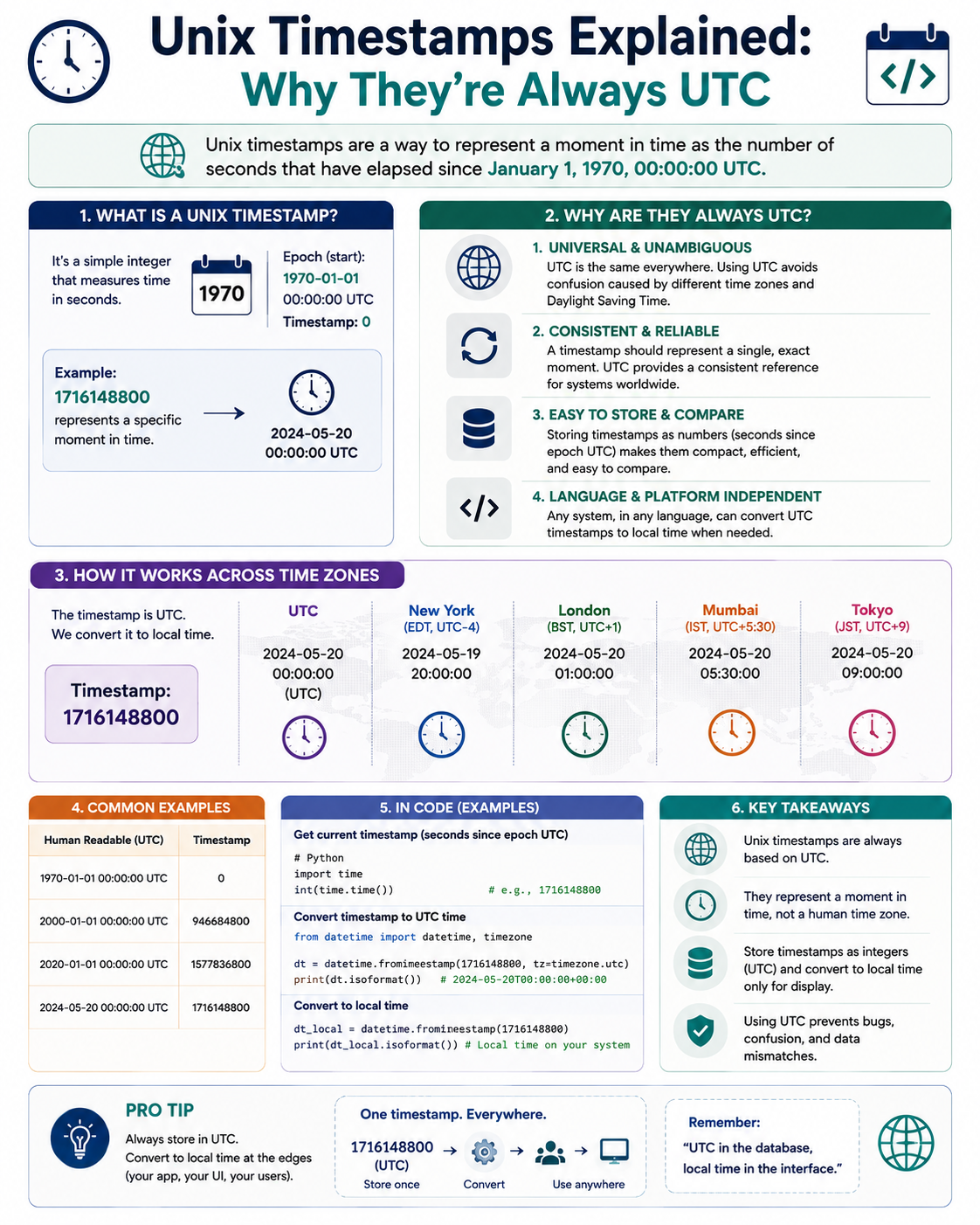
| Unix | 1758499200 | Not human-readable |
Why Ambiguity Matters
| Consequence | Explanation |
|---|---|
| Data corruption | Wrong dates stored |
| Missed deadlines | Wrong interpretation |
| API failures | Parsing errors |
| Legal risk | Contracts misinterpreted |
| Debugging pain | Hard to trace |
The ISO 8601 Date Format: YYYY-MM-DD
The Basic Format
| Component | Meaning | Example | |-----------|---------| | YYYY | Four-digit year | 2026 | | MM | Two-digit month | 09 | | DD | Two-digit day | 22 | | Full date | Combined | 2026-09-22 |
Why This Order Wins
| Reason | Explanation |
|---|---|
| Big to small | Year, then month, then day |
| Sortable | Alphabetical order = chronological order |
| Unambiguous | No confusion possible |
| Fixed width | Always 10 characters |
| Locale-free | Same everywhere |
Sorting Example
| Date | ISO 8601 | Sorts Correctly? |
|---|---|---|
| Jan 5, 2026 | 2026-01-05 | Yes |
| Feb 3, 2026 | 2026-02-03 | Yes |
| Dec 1, 2026 | 2026-12-01 | Yes |
With ISO 8601, sorting dates as strings gives the correct chronological order automatically.
ISO 8601 Time Format
The Basic Format
| Component | Meaning | Example |
|---|---|---|
| HH | Two-digit hour (00–23) | 14 |
| MM | Two-digit minute | 30 |
| SS | Two-digit second | 45 |
| Full time | Combined | 14:30:45 |
Combined Date and Time
| Format | Example |
|---|---|
| Date + T + Time | 2026-09-22T14:30:45 |
| With UTC | 2026-09-22T14:30:45Z |
| With offset | 2026-09-22T14:30:45+05:30 |
| With milliseconds | 2026-09-22T14:30:45.123Z |
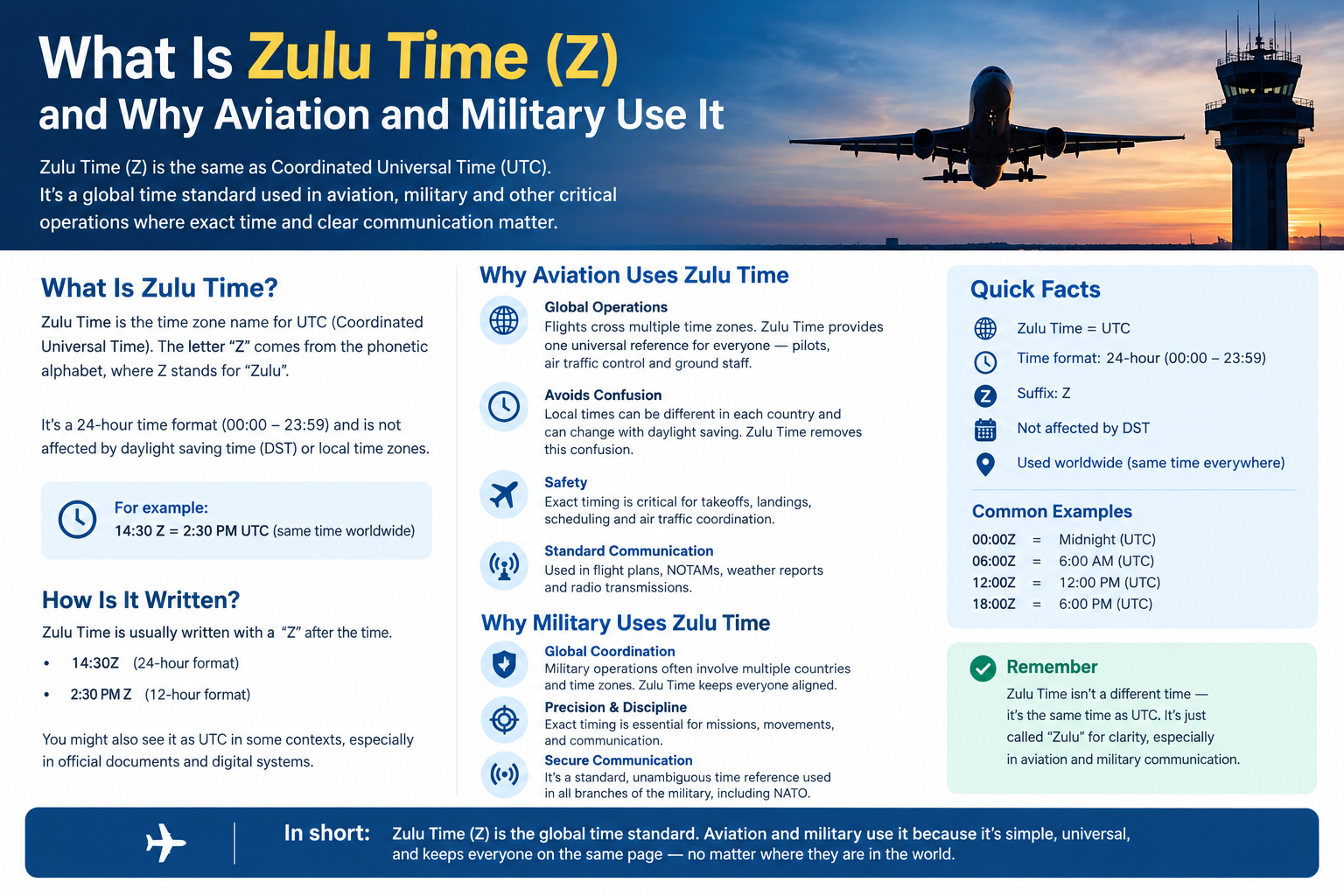
The T separates the date from the time. The Z means UTC (Zulu time).
Fractional Seconds
| Precision | Example |
|---|---|
| Seconds | 14:30:45 |
| Milliseconds | 14:30:45.123 |
| Microseconds | 14:30:45.123456 |
| Nanoseconds | 14:30:45.123456789 |
Use the precision you need — no more, no less.
Time Zone Offsets in ISO 8601
How Offsets Work
ISO 8601 uses a +HH:MM or −HH:MM suffix to indicate the time zone offset from UTC.
| Format | Meaning |
|---|---|
| Z | UTC (zero offset) |
| +00:00 | UTC (explicit) |
| +05:30 | India Standard Time |
| −05:00 | US Eastern Standard Time |
| −04:00 | US Eastern Daylight Time |
| +01:00 | Central European Time |
Examples Around the World
The same instant, written in different zones:
| Zone | ISO 8601 |
|---|---|
| UTC | 2026-09-22T12:00:00Z |
| New York (EDT) | 2026-09-22T08:00:00−04:00 |
| London (BST) | 2026-09-22T13:00:00+01:00 |
| India (IST) | 2026-09-22T17:30:00+05:30 |
| Tokyo (JST) | 2026-09-22T21:00:00+09:00 |
| Sydney (AEST) | 2026-09-22T22:00:00+10:00 |
Why Offsets Beat Abbreviations
| Abbreviation | Problem | ISO Offset |
|---|---|---|
| EST | Ambiguous, changes with DST | −05:00 |
| IST | India, Ireland, or Israel | +05:30 |
| CST | China, US Central, or Cuba | −06:00 |
| BST | Britain or Bangladesh | +01:00 |
Rule: Use numeric offsets, never abbreviations.
ISO 8601 vs RFC 3339
What Is RFC 3339?
RFC 3339 is a profile of ISO 8601 created for internet protocols. It is stricter and easier to parse.
| Aspect | ISO 8601 | RFC 3339 |
|---|---|---|
| Scope | Very broad | Narrow subset |
| Parsing | Complex | Simple |
| Use case | General standard | Internet and APIs |
| Required offset | Optional | Required |
| Example | 2026-09-22T14:30 | 2026-09-22T14:30:00Z |
Which Should You Use?
| Situation | Recommendation |
|---|---|
| APIs | RFC 3339 |
| Databases | ISO 8601 |
| Logs | RFC 3339 |
| Human display | ISO 8601 |
| Interchange | RFC 3339 |
For most developers, RFC 3339 is the practical choice because it is a strict, unambiguous subset of ISO 8601.
Other ISO 8601 Formats
Week Dates
ISO 8601 also defines week dates, which use week numbers instead of months.
| Format | Meaning |
|---|---|
| YYYY-Www | Year and week |
| YYYY-Www-D | Year, week, and day |
| 2026-W39 | Week 39 of 2026 |
| 2026-W39-2 | Tuesday of week 39 |
Note: ISO weeks start on Monday. Week 1 is the week containing the first Thursday of the year.
Ordinal Dates
| Format | Meaning |
|---|---|
| YYYY-DDD | Year and day of year |
| 2026-265 | 265th day of 2026 |
Durations
| Format | Meaning |
|---|---|
| P1Y | 1 year |
| P3M | 3 months |
| P10D | 10 days |
| PT5H | 5 hours |
| PT30M | 30 minutes |
| P1Y2M3DT4H5M6S | Full duration |
Intervals
| Format | Meaning |
|---|---|
| Start/End | 2026-09-01/2026-09-30 |
| Start/Duration | 2026-09-01/P30D |
| Duration/End | P30D/2026-09-30 |
Best Practices for Developers
Storing Dates
| Practice | Why |
|---|---|
| Store in UTC | No ambiguity |
| Use ISO 8601 format | Standard, sortable |
| Include the offset | Preserves context |
| Use a date library | Avoid manual parsing |
| Never store abbreviations | Ambiguous |
Displaying Dates
| Practice | Why |
|---|---|
| Convert to local time | User-friendly |
| Include the zone | Prevents confusion |
| Use locale formatting | Respects user preference |
| Keep ISO for APIs | Machine-readable |
API Design
| Practice | Example |
|---|---|
| Accept ISO 8601 | 2026-09-22T14:30:00Z |
| Return RFC 3339 | 2026-09-22T14:30:00+00:00 |
| Require offsets | Never allow bare dates for instants |
| Document the format | State ISO 8601 explicitly |
| Reject ambiguous input | 09/22/2026 should fail |
Common Mistakes
| Mistake | Why It Hurts |
|---|---|
| Using MM/DD/YYYY in APIs | Ambiguous |
| Omitting time zone | Wrong interpretation |
| Storing local time | Breaks across zones |
| Using abbreviations | Not unique |
| Manual parsing | Error-prone |
| Ignoring RFC 3339 | Inconsistent APIs |
Quick Reference Card
━━━━━━━━━━━━━━━━━━━━━━━━━━━━━━━━━━━━━━━━━━━━━━━━━━━━━━━━━━
        ISO 8601 — CHEAT SHEET
━━━━━━━━━━━━━━━━━━━━━━━━━━━━━━━━━━━━━━━━━━━━━━━━━━━━━━━━━━

DATE:      YYYY-MM-DD          → 2026-09-22
TIME:      HH:MM:SS            → 14:30:45
DATETIME:  YYYY-MM-DDTHH:MM:SS → 2026-09-22T14:30:45
UTC:       Add Z               → 2026-09-22T14:30:45Z
OFFSET:    Add ±HH:MM          → 2026-09-22T14:30:45+05:30

WHY IT WINS:
  • Unambiguous — no MM/DD vs DD/MM confusion
  • Sortable — alphabetical = chronological
  • Fixed width — easy to parse
  • Locale-free — same everywhere
  • Machine-readable — ideal for APIs

TIME ZONE RULES:
  Use Z for UTC
  Use ±HH:MM for offsets
  Never use abbreviations (EST, IST, CST)

ISO 8601 vs RFC 3339:
  ISO 8601  → Broad standard
  RFC 3339  → Strict subset, best for APIs

OTHER FORMATS:
  Week    → 2026-W39-2
  Ordinal → 2026-265
  Duration → P1Y2M3DT4H5M6S
  Interval → 2026-09-01/2026-09-30

BEST PRACTICE:
  Store UTC. Format ISO 8601. Convert at display.

━━━━━━━━━━━━━━━━━━━━━━━━━━━━━━━━━━━━━━━━━━━━━━━━━━━━━━━━━━
         Check live conversions at: /timezone-converter
━━━━━━━━━━━━━━━━━━━━━━━━━━━━━━━━━━━━━━━━━━━━━━━━━━━━━━━━━━
Frequently Asked Questions
What is ISO 8601?
ISO 8601 is an international standard for representing dates and times. Its core date format is YYYY-MM-DD, and its core time format is HH:MM:SS.
Why should developers use ISO 8601?
It is unambiguous, sortable, fixed-width, locale-free, and machine-readable. It eliminates the confusion caused by formats like MM/DD/YYYY.
What is the difference between ISO 8601 and RFC 3339?
RFC 3339 is a strict subset of ISO 8601 designed for internet protocols. It requires a time zone offset and is easier to parse.
What does the Z mean in 2026-09-22T14:30:45Z?
The Z stands for Zulu time, which means UTC. It indicates zero offset from Coordinated Universal Time.
Can ISO 8601 include time zone offsets?
Yes. Use +HH:MM or −HH:MM after the time, such as 2026-09-22T14:30:45+05:30 for India Standard Time.
What is the T in ISO 8601?
The T separates the date portion from the time portion. For example, 2026-09-22T14:30:45.
Does ISO 8601 support durations?
Yes. Durations use the P format, such as P1Y for one year or PT30M for thirty minutes.
What are ISO week dates?
Week dates use the format YYYY-Www-D, such as 2026-W39-2. ISO weeks start on Monday.
Should I use ISO 8601 or Unix timestamps?
Use ISO 8601 for human-readable and API contexts. Use Unix timestamps for compact storage and arithmetic.
Why are abbreviations like EST bad in APIs?
Abbreviations are not globally unique and change with daylight saving time. Numeric offsets like −05:00 are unambiguous.
What is the best date format for an API?
RFC 3339, which is a strict subset of ISO 8601. Always include a time zone offset.
Final Thoughts
ISO 8601 is one of those standards that quietly makes software better. It removes ambiguity, enables sorting, and works the same way in every country. There is almost no reason to use any other format for dates and times in code.
Three things to remember:
- Use YYYY-MM-DD. Big to small, always unambiguous
- Always include the offset. Z for UTC, ±HH:MM for others
- Prefer RFC 3339 for APIs. It is a strict, parseable subset
Check time zone conversions instantly → /timezone-converter
Tags: ISO 8601 date format, why use ISO 8601, YYYY-MM-DD format, ISO 8601 UTC offset, RFC 3339 vs ISO 8601, ISO 8601 duration, week dates, date format best practices, timestamp format API, time zone converter